Everything checks out: three live ASINs verified (QeeLink split-leg B07WQY4FN3, QeeLink apron-with-sleeve B08BFLK5LP, YESWELDER 6-pocket B0989N3PJ6), citable non-marketplace specs from WoodArtSupply and Forge-Aprons, and real I Forge Iron threads. The VEVOR refs are anvils, so no card belongs here. Writing now.
If I am buying one blacksmith apron and I want it to earn its place in the shop, I reach for a split leg leather apron in a heavy split cowhide, and the QeeLink split leg is the one I would put on a new smith first. Blacksmith aprons are one of those pieces of gear where the honest answer is boring: almost any real leather apron beats no apron, and the differences between the good ones come down to fit, leather weight, and whether the legs split so you can plant your feet and work the anvil without the hem binding your knees. I have run a leather apron at both my forges for years, so I can speak to what an apron does and does not do on the floor. But I have not run down every model below in my own shop, so treat the picks as published specs and owner reports from the forums weighed against that experience, not as a bench test I performed.
Before anything else: an apron is not your first line of defense, and it never has been. Your eyes come first, then your clothes, then the apron. I lost my eyebrows early on to a quench oil flare because I stood too close in a cotton shirt with no face shield, and the lesson stuck. Eye protection rated to ANSI Z87.1 and natural fiber clothing under the apron matter more than which brand of leather you buy. An apron is the layer that stops scale, sparks, and the odd dropped hot bar from reaching your gut and thighs. Buy it with that in its right place. For the wider picture, start with the Safety and PPE hub and my rundown of blacksmith safety gear.
What a blacksmith apron actually protects you from
A leather apron does a few specific jobs, and it is worth being clear about them so you do not expect the apron to be armor. It catches hot scale that flakes off the work when you strike it. Scale comes off at forging heat and it will find your lap, and it does not care that your jeans are cotton. It shields your torso and thighs from radiant heat when you are leaning over a coal fire or reaching into a propane forge. It takes the hit from spatter, stray sparks off a grinder, and the small burns that add up over a session. And it gives a dropped hot bar something to glance off instead of your leg.
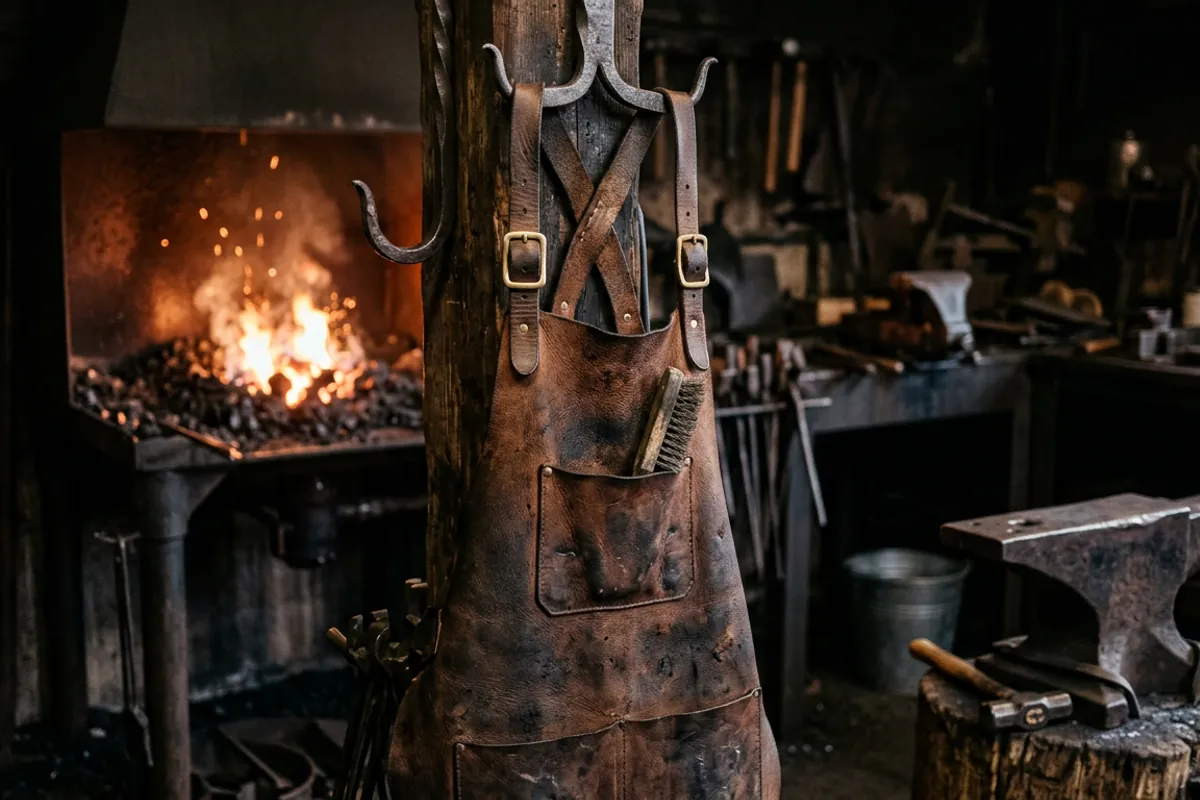
What it does not do is make the rest of your PPE optional. The apron sits over your clothes, so what is under it still matters. Wear natural fibers: cotton or wool. A synthetic shirt under a leather apron is a bad trade, because if a spark gets past the apron edge and lands on polyester, that fabric melts into the skin instead of just scorching. Leather over the front, natural fiber everywhere else. And nothing about an apron changes the rule at the grinder, where eye protection to ANSI Z87.1 is not negotiable and the apron is the least important thing you are wearing.
One more honest point that the marketing never mentions: pockets and cuffs are scale traps. Hot scale and tiny cutoffs love to land in an open chest pocket or perch on a rolled hem, and then you feel it a second later. A pocketed apron is genuinely handy for holding a wire brush, a rule, or a punch, but keep the pockets flapped or empty of anything you would hate to set on fire, and give yourself a shake before you sit down.
The spec comparison
Here is the field at a glance. Leather weight in ounces is the number that actually predicts how an apron feels and protects, and almost no maker in this price band publishes it, so I have marked it not published rather than guess. QeeLink construction figures come from the maker's line specs as listed by a non-marketplace retailer (WoodArtSupply); the guidance on ideal leather weight comes from a leather apron maker's own buying advice (Forge-Aprons).
Scroll horizontally to see all columns.
| Apron | Leather | Coverage / size | Legs | Pockets | Stitching | Price tier |
|---|---|---|---|---|---|---|
| QeeLink split leg | Split cowhide | 24 x 42 in | Split | 3 | Kevlar thread | Budget to mid |
| QeeLink apron with sleeve | Split cowhide | About 31 in body plus sleeve | Full | 1 | Kevlar thread | Mid |
| YESWELDER 6-pocket | Cowhide | 41 in length | Full | 6 | Kevlar thread | Budget to mid |
Leather thickness in ounces: not published by any of the three. For reference, the apron maker guidance above points at roughly 5 to 6 ounce leather as the sweet spot for a forge apron, thick enough to stop penetration and still flexible enough to move in.
QeeLink split leg welding apron
This is the one I would hand a new smith. The split leg design is the reason. When you stand square to the anvil and work a piece, or when you run tongs down between your legs to hold long stock, a full skirt apron binds and rides up. A bifurcated apron lets each leg move independently, so you get coverage on the thighs without the hem fighting your stance. That split is not a gimmick borrowed from welders; the apron makers themselves point out that leg splits exist so you can use tongs between your legs while forging (see the Forge-Aprons tips), which is exactly the blacksmith use case.
On specs, QeeLink lists this as heavy split cowhide, 24 inches wide by 42 inches tall, sewn with heat resistant Kevlar thread, with three pockets including a phone pocket and a pencil slot, and an adjustable buckle strap that fits roughly M to XXXL. That length takes coverage down toward the knee, which is what you want standing over a fire. The thing I cannot tell you from a listing is the ounce weight of the leather, and neither can QeeLink, because they do not publish it. Owner reports read it as a mid weight hide, which tracks with the price.
The honest tradeoff: a budget split cowhide apron is a budget split cowhide apron. The leather is real and it will stop scale and sparks, but the buckle hardware and strap comfort are where these lower cost aprons show their price. If you have an odd torso, expect to fuss with the straps. For most people starting out, it is plenty of apron.
Check price on Amazon (paid link)
QeeLink leather apron with sleeve
This one is for the smith who wants the most coverage from a single piece, especially forge welding over coal where you are leaning in close and taking a lot of radiant heat on the chest and forearms. It is a bib apron in heavy split cowhide with an integrated sleeve arrangement and an open back to shed heat, listed around 31 inches in the body with one large front pocket and the same Kevlar thread stitching QeeLink uses across the line. The open back is a real comfort feature in a hot shop; a solid leather back turns into a sweat box fast.
The reason I would not make this everyone's first apron is that a sleeved, closed-front design is warmer and less free than a plain skirt or a split leg, and a lot of day to day forging does not need arm coverage. If you run a propane forge for most of your work and you are not welding, the extra material is more heat to carry for protection you may not be using. But if you spend real time at a coal fire doing heavy work, the added chest and arm coverage is worth the warmth. Buy it for the work you actually do, not the work you imagine.
Check price on Amazon (paid link)
YESWELDER 6-pocket apron
If your complaint about aprons is that you can never keep your small tools where your hands are, this is the answer. YESWELDER lists it as full cowhide, 41 inches in length, with six pockets and Kevlar thread double stitching, on adjustable straps. Six pockets is a lot of storage on your body, which for some smiths is the whole point and for others is six new places for hot scale to land. I lean toward fewer pockets for exactly that reason, but I know plenty of smiths who would not give up the tool storage, and this is a legitimately different brand than the QeeLink pair if you want to spread your bet.
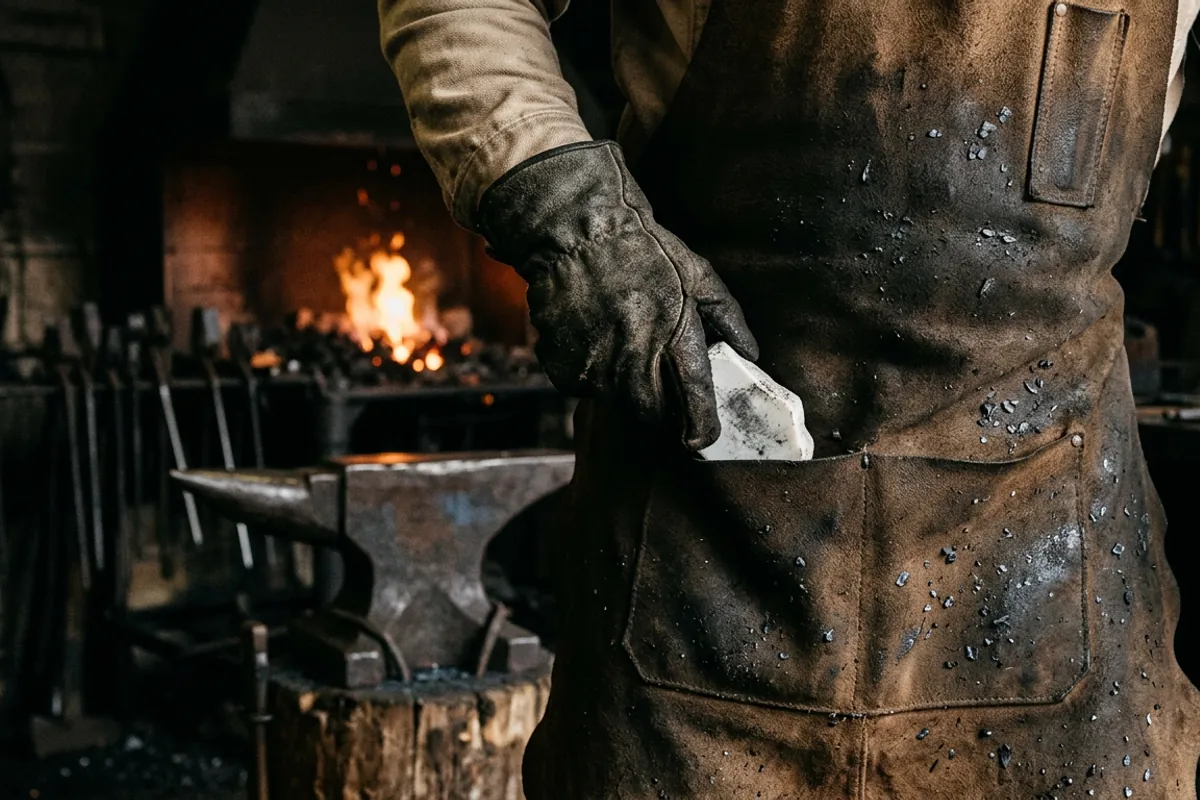
The tradeoff is the one I keep returning to: pockets are scale traps. Six of them means six things to keep an eye on. Use the pockets for a wire brush, a rule, a soapstone, the stuff you reach for constantly, and keep them clear of anything that would ruin your day if a hot flake dropped in. Treat the pocket count as convenience, not as a reason to buy, and you will get on fine with it.
Check price on Amazon (paid link)
What owners say
For the specific models here I am leaning on owner reports, not my own bench, so here is the honest state of the signal. The recurring theme across the I Forge Iron apron threads is simple and consistent: most smiths who wear an apron wear heavy leather, a real full grain or split cowhide apron is expensive if you buy from a dedicated maker, and a welder's apron off the shelf is treated as a perfectly reasonable budget stand in for forge work. You can read that consensus form up across the general discussion thread on blacksmith aprons and the PPE forum's blacksmithing apron thread at I Forge Iron.
On the QeeLink and YESWELDER aprons specifically, the owner signal is broad but shallow, which I will say plainly rather than dress up. These are widely bought welding aprons that blacksmiths pick up because they are inexpensive and the leather is real, and the common feedback pattern is what you would expect at the price: the hide and the Kevlar stitching hold up to sparks and scale, while the straps and buckle hardware are the first thing people gripe about and sometimes the first thing to wear. I did not find deep, model specific forge testing for any of the three, so I am not going to pretend a settled verdict exists where it does not.
The other thing worth reporting from the forums is that a chunk of experienced smiths eventually move to a custom or dedicated maker (names like Lapron and Forge-Aprons come up) for a hide weight and a fit these mass market aprons do not offer. That is a real step up, and it costs real money. For a first apron, or for anyone not sure how much they will forge, starting with a solid off the shelf leather apron and upgrading later is the sane path.
What to check before you buy
A few things decide whether an apron gets worn or ends up on a hook, and none of them are brand.
Fit first. The most comfortable apron is the one that fits you, and standard sizing does not fit everyone, so look for fully adjustable straps and, ideally, a cross back design that spreads the weight off your neck. A leather apron on a single neck loop gets heavy and annoying by the end of a session, and an apron that annoys you is an apron you stop wearing.
Leather weight second. Ounces predict everything about how an apron feels, and the makers who cater to smiths point at roughly 5 to 6 ounce leather as the balance of protection and flexibility. The budget aprons here do not publish their weight, which tells you they are chasing a price, not a spec. That is fine for a first apron; just know that a heavier, better hide is the reason a dedicated maker's apron costs three times as much.
Legs third. If you work close to the anvil and run long stock, a split leg earns its keep. If you mostly do lighter propane work standing back a bit, a plain skirt is simpler and cooler.
And the point that outranks all three: what you wear under it. Cotton or wool, never a synthetic that can melt. The apron is the front layer, not the only layer. If you are still sorting out the rest of your setup, my coal versus propane piece covers how much radiant heat each fuel throws, which changes how much apron you actually want, and the getting started guide puts the apron in line behind the gear that matters more on day one.
What I would tell a friend
Buy the QeeLink split leg first. It is inexpensive, the leather is real, and the split leg suits how you actually stand and move at the anvil, which is the thing most welding aprons get wrong for smiths. If you do heavy coal work and want more chest and arm coverage, the sleeved QeeLink is the step up in protection, at the cost of running warmer. If your real problem is keeping small tools on you, the YESWELDER six pocket solves that, as long as you respect that every pocket is a place hot scale can land.
The one I would tell you to skip is any apron over a synthetic shirt, at any price, because the failure mode is melted fabric on skin and no leather front stops that. Get a real leather apron, wear cotton or wool under it, keep your eyes behind Z87.1 rated protection at the fire and the grinder, and the apron will quietly do its job for years. It is one of the cheapest pieces of real protection in the shop. Just do not ask it to be the only one.