Every winter and every birthday, somebody who loves a blacksmith turns up with the same problem, and about half the time they end up asking me. They want to buy presents for blacksmiths who already seem to own a forge, an anvil, and a wall of tools they cannot name, and they are afraid of spending real money on the wrong thing. I have been forging for about twenty-five years, I teach weekend beginners, and outside the shop this is the question I get more than any other. So this is the reference I wish those folks had before they walked into a store guessing. It is not a list of products to click. It is how to think about the problem so you land on something the smith actually reaches for.
The short version is this: the best gift for a smith is almost never the exciting one. It is the boring, consumable, safety-related, or space-saving thing the smith keeps meaning to buy and never quite prioritizes over steel and fuel. Once that idea is in your head, most of the rest falls into place. If you want the companion piece with more specific categories, I wrote Blacksmithing gifts that actually get used, from the forge floor, and the whole Getting started (topic hub) is built for people circling this hobby from the outside.
Start with how far along the smith actually is
The single biggest mistake I see is buying for the smith you imagine instead of the one you know. A person who lit their first forge six months ago and a person who has been at it for a decade want completely different things, and a gift aimed at the wrong stage just sits in a corner.
If your smith is brand new, they are still assembling the basics and probably making do with substitutes. They are hammering on something that is not really an anvil, or borrowing tongs that do not fit their stock, or wearing whatever safety glasses came in a hardware bin. At that stage, almost anything that fills a genuine gap is welcome, because they have gaps everywhere. If you want to understand what that early kit really looks like, What a beginner blacksmith actually needs to start lays it out plainly.
If your smith is experienced, the calculus flips. They already own the tools they consider essential, and they have strong, specific opinions about the ones they do not own yet. That is exactly why buying them a tool is risky, and why consumables and safety gear tend to be the safer bet. A ten-year smith does not need you to guess which hammer they want. They need another twenty pounds of steel and a fresh box of abrasive belts, and they will quietly thank you every time they use them.
So before you buy anything, figure out honestly where they are. If you cannot tell, that is a signal to lean toward the categories below that work regardless of skill level.
Safety gear is the present nobody buys for themselves
If you take one thing from this whole piece, take this: safety gear is the most reliably good present for a blacksmith, and it is the category smiths most often skimp on for themselves. Steel and fuel feel like progress, so they get bought first. A second face shield or a better respirator feels like an errand, so it gets put off for months. You buying it removes that friction.
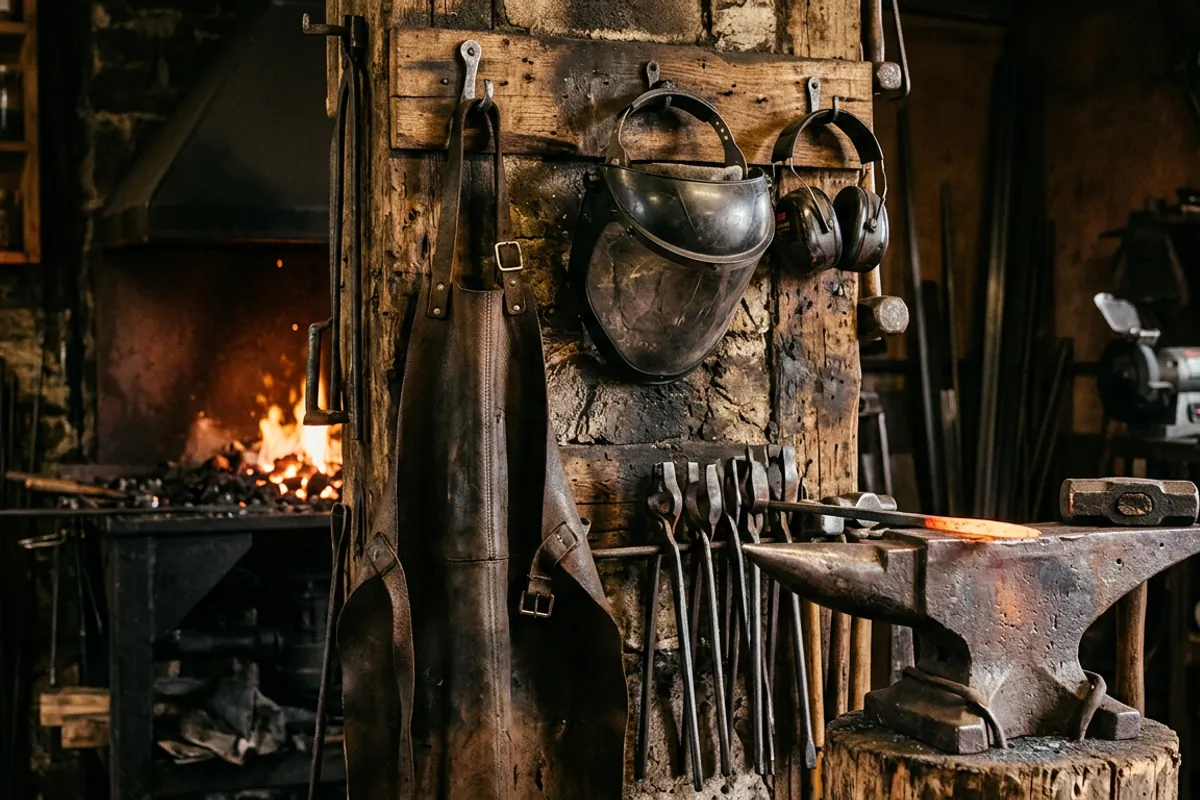
I am hard on this point for a reason. Early on, I quenched a blade in oil that was too cold, standing too close in a cotton shirt with no face shield, and the oil flared and took my eyebrows. I kept my eyesight by luck, not by anything I did right. I will never soften a safety warning to sound friendlier, and I will never treat protective gear as optional. So when I say safety gear makes a good gift, I mean it as the person who learned the hard way.
Eye protection is the anchor. The real standard to look for is ANSI Z87.1, stamped on safety glasses that are actually rated for impact, not fashion sunglasses that happen to be clear. A good pair of Z87.1 glasses, plus a full face shield for grinding and anything that throws sparks or hot scale, is a genuinely thoughtful gift. Hearing protection belongs here too, because forges, grinders, and especially power hammers are loud enough to cost a smith their hearing over the years, and muffs or good plugs are cheap insurance.
For anyone who grinds a lot, particularly knife makers, respiratory protection matters. Grinding throws a fine cloud of metal and abrasive dust that you do not want in your lungs, and a proper particulate respirator that seals to the face is a real upgrade over a loose paper mask. A leather apron in natural material protects clothing and skin from sparks and scale, and it happens to be the kind of durable, personal item that makes a nice gift. On that note, natural fibers over synthetics near heat is not a preference, it is the rule: a spark that a cotton or wool layer shrugs off will melt a synthetic shirt straight onto skin. If you want the full breakdown of what earns its place and what does not, Blacksmith safety gear: what matters and what to skip and The blacksmith aprons I would actually wear at the forge go deeper than I can here.
One honest caveat on gloves, because people always want to gift them. A good pair of leather work gloves is fine and gets used, but gloves are a debated item at the anvil. Many smiths, myself included, do not wear a glove on the hammer hand because it kills the feel and can trap hot scale against the skin. A glove on the tong hand is common. What gloves are not is a license to grab hot steel with your hands instead of tongs. Buy them as gloves, not as a shortcut around the tools that actually keep hands safe.
Consumables are the present that never goes to waste
This is my favorite category to recommend to anyone who wants a safe, always-welcome gift, because a working smith burns through consumables constantly and they never feel like clutter.
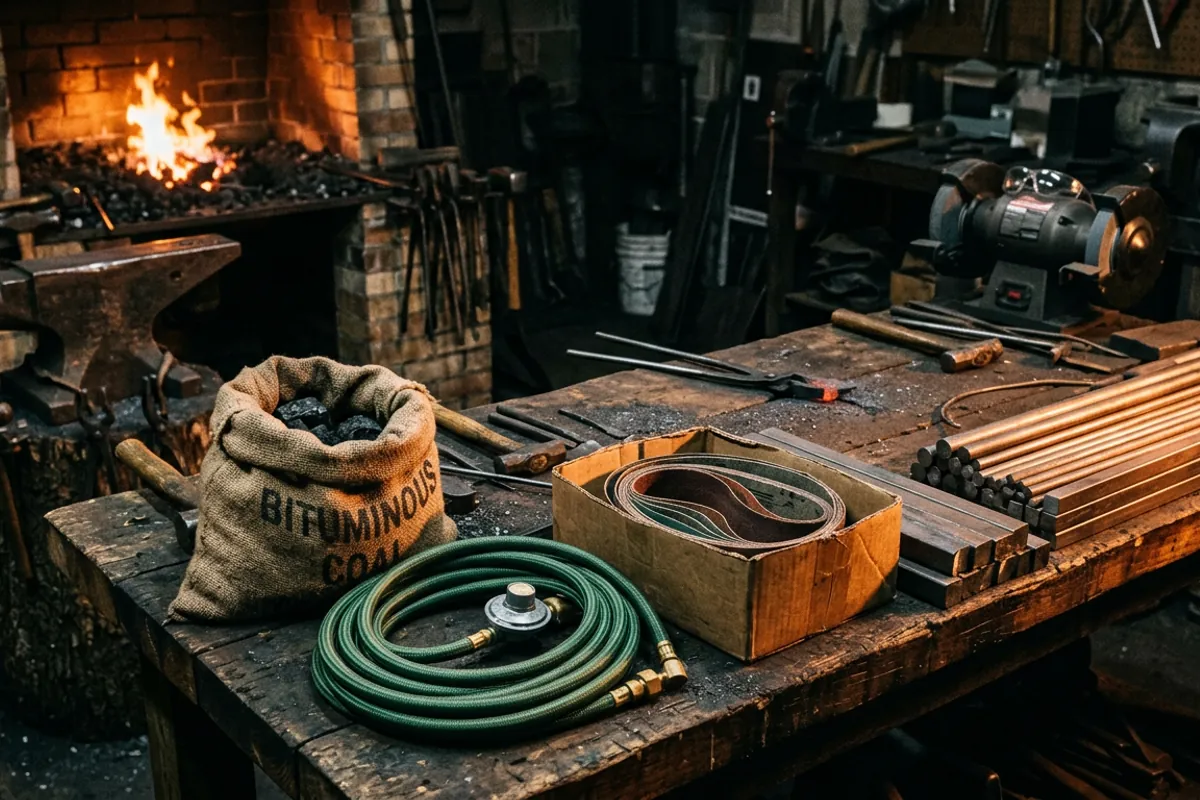
Steel is the obvious one. A bundle of clean bar stock in common sizes is something every smith uses, and running out of stock is a real and annoying thing. If you know your smith forges knives, known steels matter, because a bladesmith wants a steel with a published, testable heat treat rather than mystery metal. If they do general work, mild steel in a range of round and square sizes is safe and endlessly useful. You do not have to get the sizing perfect. Steel is steel, and a smith will find a use for whatever shows up.
Fuel is the other big consumable, and it maps to what forge they run. A coal smith burns through bituminous smithing coal, and a bag or a run of it is a genuinely practical gift. A propane smith works through tanks and refills. I run both, a coal forge for heavy stock and forge welding and a propane forge for most day-to-day work, so I can tell you either fuel is a fine thing to gift as long as you match it to the forge they actually own. If you are not sure which, that is worth a quiet question to someone who knows their setup.
Abrasives round out the category. Anyone with a grinder eats belts, and a fresh box in a mix of grits is the kind of thing a smith is always a little short on. Flap discs, files, sandpaper, cutoff wheels, and finishing supplies all fall in the same bucket. None of it is glamorous. All of it gets used. That is exactly the point.
Tools are where good intentions go wrong
Tools are the gift everyone reaches for first and the one most likely to miss, so this section is really a warning dressed up as advice.
The trouble is that the good tools are deeply personal. A hammer is sized and shaped to a smith's hand, weight preference, and the work they do, and a hammer that is wrong for them will hang on the wall forever. Tongs are worse, because tongs have to fit the specific stock they grip, and a beautiful pair that does not match anything the smith forges is decoration, not a tool. Even an anvil, the thing outsiders most want to buy as a grand gesture, is a decision most smiths want to make themselves after real thought about weight and price. My own anvil, a 148 pound Trenton I call Bessie, is the tool I have put the most hours on, and I would have been annoyed if someone had chosen it for me.
So if you are set on giving a tool, tilt toward the ones that are hard to get wrong. Simple, universal shop items like a good wire brush, a quality set of files, a bench vise, or a sturdy shop stool are useful across almost any setup. Layout and measuring tools like a decent square, dividers, or a center punch are the kind of thing smiths reach for constantly and rarely bother to upgrade. If you want to understand why the specific tools are so personal before you decide, The blacksmith hammer I would hand a beginner, and the ones I would skip and The blacksmith tongs I would buy first, and the ones I would skip show exactly where the fit problems live.
The honest move, if the smith is experienced and opinionated, is to not guess at all. Which brings us to gift cards, further down, and why they are not the cop-out they feel like.
Presents for the smith who already owns the big three
The hardest smith to buy for is the one who already has the forge, the anvil, and a hammer they love, and seems to want for nothing. They are not actually done buying. They just buy quietly, in the categories they consider unglamorous, and those are the openings.
Organization and shop comfort is a wide-open field here. Tool racks, a hardy tool holder, magnetic strips, tong racks, and simple storage make a shop work better and are things smiths rarely make time to build or buy for themselves. A good shop stool, better task lighting over the vise or anvil, or a rubber anti-fatigue mat are the kind of quality-of-life upgrades that a busy smith will notice every single session and never would have prioritized.
Reference and learning is the other reliable lane for an established smith. A good book on technique or metallurgy, or a subscription to a smithing organization, feeds the part of the hobby that never gets old. On the metallurgy front specifically, the thing an experienced smith values is real, tested data rather than folklore, and a source like Knife Steel Nerds is where the serious heat treat and steel science actually lives. Pointing a smith toward tested information is a better gift than pointing them toward another opinion.
What to skip, and why
A few categories look like great gifts and consistently disappoint, so here is where I would spend your caution.
Skip the decorative anvil-shaped everything. Novelty items shaped like anvils and hammers are fine as a stocking stuffer joke, but they are not a real gift to a working smith, and buying one as the main present tends to signal that you did not quite get what they do.
Be careful with anything marketed as a beginner blacksmith kit that bundles a tiny anvil, a hammer, and undersized tongs. Some are honest starter sets and some are junk sold on looks, and it is hard for an outsider to tell the difference. A too-light cast anvil in particular is a common trap that a new smith will outgrow or fight against almost immediately. If a kit is on your mind, read how they actually shake out first.
Skip mystery steel if your smith makes blades. A pile of unknown scrap might seem generous, but a bladesmith needs steel with a known composition and a published heat treat, because you cannot properly harden and temper what you cannot identify. General-purpose smiths are more forgiving here, but for knife work, unlabeled steel is a headache, not a help.
And skip the impulse to buy the big, expensive, personal tools as a surprise. An anvil, a power hammer, a specific hammer or tong set: these are decisions the smith wants to own. The gesture is lovely and the miss is expensive.
Classes, gift cards, and the presents you cannot wrap
Some of the best presents for blacksmiths do not fit in a box at all, and I would not want anyone to overlook them because they feel less like a real gift.
A class or workshop is close to the top of my list. Time with an experienced smith, or a session at a school or club forge, teaches things that no tool can, and it is the kind of experience most hobbyists would love and rarely book for themselves. For a beginner it can be the difference between fumbling alone and actually learning to move metal. For an experienced smith it is a chance to pick up a technique they have been circling for years.
A membership in a regional or national smithing organization is another intangible that pays off all year, through meetings, hammer-ins, and a community that answers questions a book cannot. And a gift card to a real blacksmithing supplier is not the lazy option it feels like. For an opinionated, established smith, it is often the most respectful gift you can give, because it lets them buy the exact steel, fuel, or tool they were already planning to buy, without you guessing wrong. Handing a smith the means to choose is not a failure of imagination. It is knowing them well enough to get out of the way.
Buying for a smith when you are not one
Most people reading this are not smiths themselves, and that is fine. You do not need to understand forging to give well. You need to understand the shape of the problem, and it comes down to a few honest questions.
Ask yourself where they are in the hobby, because a beginner and a veteran want opposite things. When in doubt, lean toward the categories that are hard to get wrong: safety gear, consumables like steel and fuel and abrasives, shop organization, and learning. Steer away from the personal, expensive tools unless the smith has told you exactly what they want, and treat that surprise anvil as the trap it usually is. And never talk yourself out of a gift card or a class just because it cannot be wrapped in a bow.
Do that, and you will land on presents for blacksmiths that get used, session after session, instead of gathering dust on a shelf. The smith in your life is not hard to please. They just want the boring, useful thing they keep putting off, given by someone who took the trouble to understand the work. That understanding is the real gift. Everything else is just the delivery.