When people ask me where the blacksmithing store is, they usually picture a single shop with a sign out front, a wall of hammers, and a guy behind the counter who forges for a living. That store mostly does not exist anymore, at least not the way a hardware store or a music shop does. What we call a blacksmithing store today is really a handful of different sources, each good for some things and useless for others, and knowing which is which will save you more money than any single purchase. I have bought from all of them over about twenty-five years, made plenty of bad calls early, and I want to lay the whole landscape out plainly so you can shop like someone who has done it before.
The short version is this: there is no one place to buy everything, the cheapest listing is rarely the cheapest tool once it is in your shop, and the used market is where the real value lives if you know how to read it. Everything below is me sorting out which door to walk through for which job.
What a blacksmithing store actually is today
Strip away the picture in your head and a blacksmithing store is just any source that sells the gear a smith needs: an anvil, a forge, hammers, tongs, a vise, steel, fuel, and safety gear. Those sources fall into a few buckets. There are dedicated online smithing suppliers who stock forges, refractory, tongs, and consumables aimed straight at our trade. There are the big general marketplaces where you can find an import anvil next to a phone case. There are farm and ranch stores that carry more of our stuff than people expect. There are scrap yards and salvage sellers who do not know or care what a smith wants. And there is the enormous informal used market: estate sales, auctions, forum classifieds, and the guy three towns over clearing out his late father's garage.
No single one of those covers a beginner's whole list. The mistake I see over and over is a new smith deciding one source is "the" blacksmithing store and forcing every purchase through it. You end up overpaying for an import anvil from a marketplace when a better used one sat at an auction an hour away, or you buy nothing at all because the dedicated supplier's forge was out of your budget. Treat the whole landscape as your store and shop each item where it is actually cheapest and best. My blacksmithing supplies I would actually buy first breakdown walks the specific list; this piece is about where those items come from.
The dedicated smithing suppliers
These are the closest thing to a real blacksmithing store: businesses run by people who understand the trade and stock accordingly. This is where I go for things a general retailer will not carry well. Forge burners and gas forges built for smithing, kaowool and rigidizer and forge refractory, quality tongs in a range of jaw shapes, farrier and smithing hand tools, punches and drifts, and steel in useful smithing sizes rather than whatever the hardware store had.
What you get from a dedicated supplier is fit and knowledge. The tongs are made to hold stock, not to look like tongs. The forge is rated for the temperatures we actually run. If you email them a question, someone who has lit a forge answers it. What you pay for that is a higher sticker price than the marketplace race to the bottom, and that is usually money well spent on the items that matter, forges and tongs especially.
Where I do not lean on them is the anvil. Most dedicated suppliers who carry new anvils carry the mid-tier cast options, which are fine tools, but a new anvil is the one purchase where the used market almost always wins on dollars per pound. More on that below.
The big general marketplaces
The giant online marketplaces are where most beginners start, because you can search "anvil" and get a hundred results at nine at night. They are genuinely useful for some things and a trap for others.
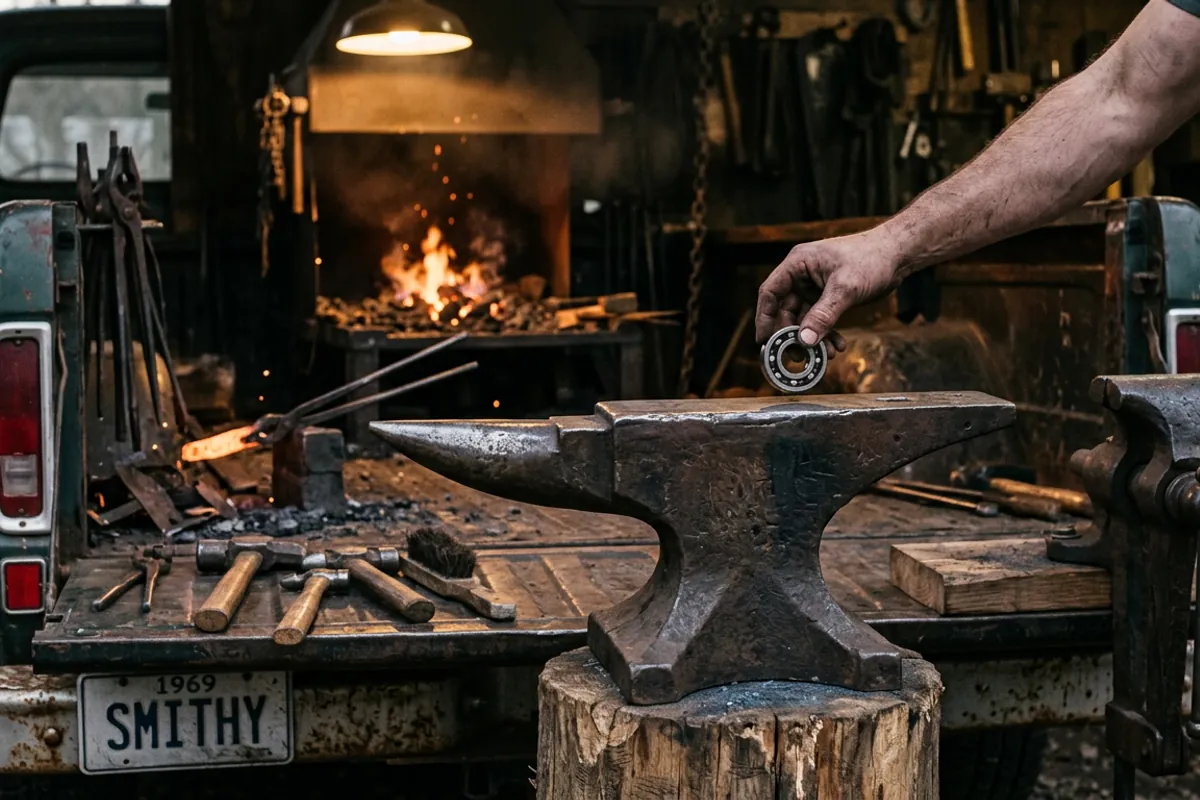
Useful for: consumables and small tools where brand barely matters, safety gear, wire brushes, files, basic hammers you will reface anyway, and reading. The reviews and Q and A sections, read skeptically, tell you what breaks. Useless or dangerous for: the big-ticket items where a photo and a spec sheet hide everything that matters. An import anvil listed at a great price may be a soft casting that dents under a hammer, and you cannot bounce a ball bearing on a JPEG. A "farrier forge" may be a tiny thing that will not bring bar stock to welding heat.
The rebound test, the ring, the condition of the face and edges, none of that survives the trip through a marketplace listing. So I use these stores for the items where I can accept whatever shows up, and I stay off them for anvils and forges unless the seller is a known brand I have already researched hard. If you are weighing a cheap import anvil from one of these, read my VEVOR anvil writeup first so you know exactly what you are and are not getting.
Farm stores, hardware stores, and salvage yards
This is the bucket people forget, and it is often the best value in the room. Farm and ranch supply stores carry more smithing-adjacent gear than their sign suggests: coal or coke in some regions, propane, angle grinders and cutoff wheels, vises, hardys, sometimes a small anvil or a forge blower. The prices are ordinary retail, no marketplace gambling, and you can put your hands on the thing before you pay.
Hardware stores are where I buy fasteners, angle iron for stands and jigs, black pipe for gas lines, and mild steel to practice on. Nothing exotic, but a beginner burns through a lot of mild steel learning to move metal, and you do not need to order that from a specialty supplier.
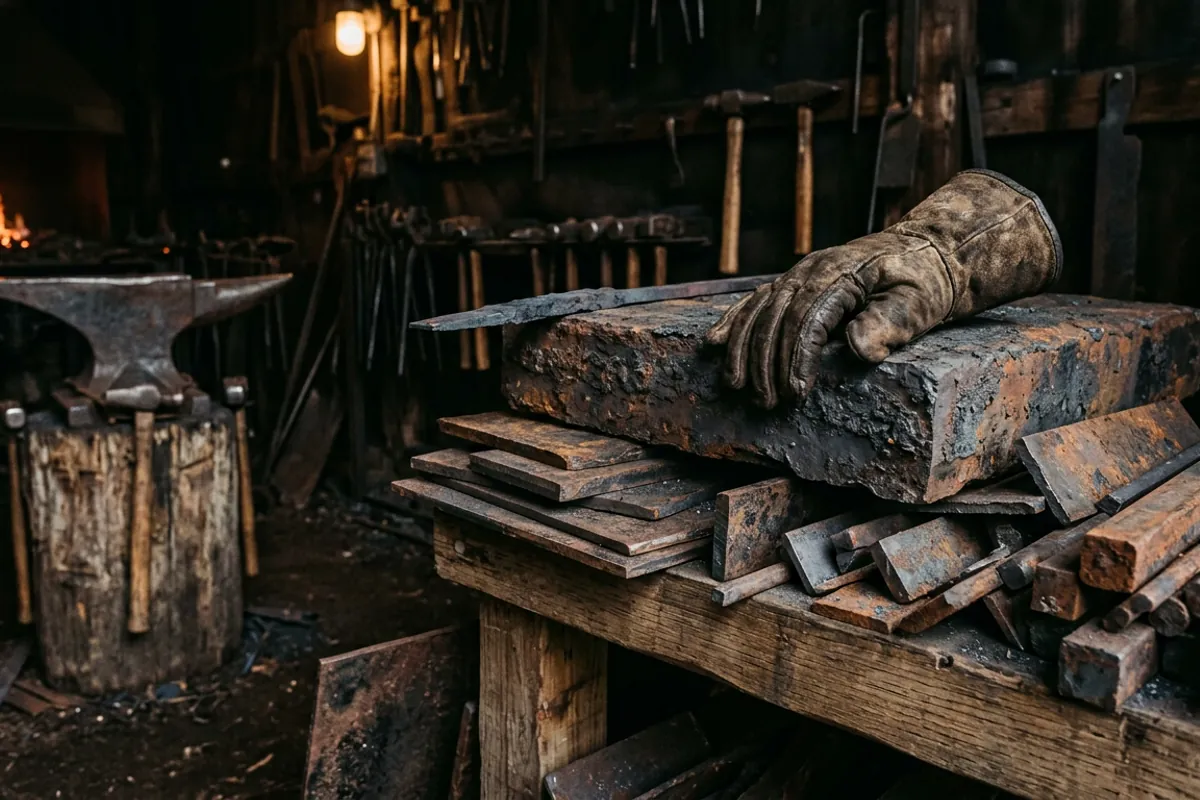
Salvage yards and scrap dealers are the sleeper. This is where cheap practice steel lives, where a slab of plate becomes a swage or a hardy, and where big industrial offcuts turn into post vise mounts and forge tables. You have to know your steel or accept that scrap is a mystery bar you should not put in a knife, but for tooling and stands it is gold. A scrap yard is not a blacksmithing store in any normal sense, and that is exactly why the prices are low. Just do not kid yourself that a chunk of unknown scrap is good knife steel; it is fine for a bending fork, not for an edge.
The used market is the real blacksmithing store
If I could send a beginner to exactly one place, it would be the used market: estate sales, farm auctions, online classifieds, local swap meets, and the tailgate sales at any blacksmithing club meet. This is where good anvils, post vises, and forges change hands at fair money, and it is where I have bought most of the tools I still use. Bessie, my 148 pound Trenton, came off the used market and has outlasted every newer tool in the shop.
The reason the used market wins is simple. A quality vintage anvil was made from forged or tool steel and has already survived a century of work; a comparable new anvil costs real money. A post vise from the old tool makers is better than most of what is sold new. And sellers who inherited this stuff often have no idea what it is worth, which cuts both ways: sometimes you steal it, sometimes they think their rusty cast-iron ASO is worth a fortune. Your job is to know more than the seller about the one thing you are buying.
That means learning to test before you hand over cash. For an anvil, that is rebound and ring and a hard look at the face and edges, and I lay the whole process out in how to buy used anvils for sale without getting a paperweight. The single most expensive mistake in this whole hobby is buying a heavy lump of cast iron because it was cheap and called an anvil. Cheap and wrong is not a deal.
Where to find the used listings
Local is better than shipped for anything heavy, because freight on a 150 pound anvil can equal the tool. I watch farm auction listings, estate sale aggregators, and the classifieds section of the smithing forums, where sellers at least know what they have. Blacksmithing club meets almost always have a tailgate area, and that is the friendliest used market there is: the guy selling the anvil will let you bounce a bearing on it and tell you its history. Join a club before you spend real money. The people are worth more than the tools.
What actually goes in the cart, in order
New smiths ask me for a shopping list, so here is how I sequence a first outfit across all these stores, spending in the order that gets you forging soonest.
First, the anvil, from the used market. This is the tool you build the shop around and the one most worth patience. A solid anvil in the 100 to 150 pound range will serve you for decades. If you want the full reasoning on size, I wrote what size anvil do you actually need, and the honest truth is that weight class and rebound matter far more than brand.
Second, the forge. A dedicated supplier or a careful build. Beginners do well with a propane forge for even heat and easy running; coal is wonderful and messier and better for heavy stock and forge welding. That coal-versus-propane choice deserves its own thought, and I have run both for years.
Third, a hammer and a pair of tongs. A ball or cross pein hammer in a weight you can swing all afternoon, not the heaviest one on the rack, from a dedicated supplier or a marketplace if you are willing to reface it. Tongs from a smithing supplier, sized to your stock, because bad tongs that do not grip will fling hot steel and teach you nothing but bad habits.
Fourth, a vise, ideally a post vise off the used market, because it is built to take hammering that a bench vise is not.
Fifth, steel and fuel, from farm stores, hardware stores, and scrap for practice, and from a proper supplier when you move to knife steel that needs a known composition.
And running through all of it, before the first heat: safety gear.
Safety gear is not the place to bargain hunt
I lead with this every time because I learned it the hard way. Early on I quenched a blade in oil that was too cold, standing too close in a cotton shirt with no face shield. The oil flared and took my eyebrows, and I kept my eyesight by luck alone. That is why I will not let a beginner treat protective gear as the leftover line item.
Buy eye protection rated to ANSI Z87.1 and wear it every time steel is hot or a grinder is running. Wear natural fibers, cotton, wool, or leather, near heat, never synthetics that melt onto skin. Get a real face shield for grinding and for quenching, hearing protection for power tools, and leather for your hands and your feet. You can buy all of this at a farm store, a hardware store, or a marketplace, and here the cheapest reputable version that meets the standard is fine, because the standard is what matters, not the brand. What is not fine is skipping it or buying a costume-grade face shield that shatters. I put the full rundown in blacksmith safety gear: what matters and what to skip, and I do not soften any of it.
Shopping the whole landscape without getting burned
Pull it together and the blacksmithing store is a map, not an address. Dedicated suppliers for forges, tongs, and refractory. Marketplaces for consumables and small tools, never for anvils you cannot test. Farm and hardware stores for fuel, mild steel, and gear you want to touch first. Scrap yards for cheap tooling steel and stands. And the used market, above all, for the anvil and the post vise that will outlast you.
The habit that keeps you out of trouble is matching the source to the risk. Low-risk items, buy anywhere cheap that meets spec. High-risk items, the ones where a photo hides a fatal flaw, buy where you can test in person or from a source that has earned your trust. Learn the tests before you shop the used market, join a club so you are not shopping alone, and never, ever save money on the gear that protects your eyes. Do that and you will spend less, own better tools, and get to the part that matters, which is standing at the anvil making something. If you want a wider tour of the shop and how these pieces fit together, the rest of the More from the shop hub is where I keep it.