I have everything verified. Writing the article now.
Two Amazon anvils verified live via search with matching titles: TFS single-horn 100 lb (B003TSA5BE) and NC Tool Cavalry 112 lb (B077ZCSSK6). Specs from Pieh Tool and Centaur Forge (non-marketplace). VEVOR budget picks route through the feed placeholders.
If you find a used anvil that rings, rebounds a dropped ball bearing back three quarters of the way, and has a flat face with tight edges, buy it. That is the honest verdict on used anvils for sale: a sound old wrought-body anvil with a hard steel face will outwork almost anything you can buy new at the same price, and it will still be here when your grandkids are learning to swing a hammer. The catch is that the used market is a minefield of cracked faces, dead cast-iron doorstops, and sellers who watched one season of a forging show and now think their rusty 90 pounder is worth a car payment. This guide is how I would shop that market, what a fair price looks like, and which new anvils are worth buying if the used hunt comes up empty.
A note on how I write these: I have owned and worked anvils for about twenty-five years, and my main anvil is Bessie, a 148 lb Trenton I have put more hours on than any other tool in the shop. But I have not bench-tested every anvil below. The buying and inspection advice is from my own shop and from running down used anvils over the years. The picks on the new anvils lean on published specs and on what owners report across the forums, weighed against that experience. Where something is owner consensus rather than my own bench, I say so.
Why a used anvil is still the smart buy
An anvil is not a consumable. A good one made in 1910 is, for practical purposes, the same tool it was the day it left the factory, minus some edge wear and maybe a sway in the face. There is nothing inside it to wear out. That is why the used market exists at all and why it is worth your patience.
The reason old anvils are prized is how they were made. The best of them, the Trentons, Hay Buddens, Peter Wrights, and Arm and Hammers, have a wrought iron or cast steel body with a separate hardened tool steel plate forge welded on top. You are hammering on that hard face, and the mass underneath returns the energy back up into your work instead of soaking it. That is what rebound is, and it is the whole game. A cheap modern cast iron anvil has no hard face and almost no rebound, which is why I steer beginners away from them so hard. If you want the long version of which old brands are worth chasing, I wrote that up in the antique anvils buying guide, and the specifics of shopping the classified ads live in how I shop for antique anvils without buying a paperweight.
The tradeoff with used is simple. You take on the risk of a hidden crack or a delaminated face in exchange for getting a better tool for the money. Learn to inspect one properly and that risk drops to almost nothing.
What a used anvil should actually cost
Anvil pricing lost its mind about a decade ago and has never fully come back. The old rule that smiths quote was two to four dollars a pound for a decent used anvil. Then a certain televised forging competition put an anvil in front of a few million people, and prices roughly doubled overnight. The threads on this are worth reading if you want to calibrate your expectations before you go shopping; the smiths on I Forge Iron have tracked price per pound trends region by region for years.
Where things sit now, the rough consensus is that anywhere up to about five to seven dollars a pound for a sound, usable anvil is a fair deal, and under that is a good one. So a clean 100 pounder somewhere in the five hundred to seven hundred dollar range is normal, and if you find one for three hundred you jump on it. Location matters more than anything. Anvils are thick on the ground and cheap through the old industrial Midwest and the Ohio valley, and they get scarce and expensive the farther west you go. If you are on the west coast, expect to pay a premium and to wait.
Two things that should drop the price: damage and cast iron. A missing horn tip, a badly swayed face, or chunks broken off the edges all cut what an anvil is worth, though not always by as much as you would hope, because even a beat up hard-faced anvil still works. A cast iron anvil, on the other hand, is not a discount anvil, it is a boat anchor with a horn, and it is worth its weight in scrap and nothing more. For the full breakdown of what drives price, I keep a separate anvil price guide up to date.
How to inspect a used anvil before you pay
This is the part that saves you from an expensive mistake, so do not skip it, and do not let a seller rush you. Bring a hammer, a 1 inch ball bearing, and if you can, a wire brush. Never buy an anvil you have only seen in a photo unless the price makes a bad one an acceptable loss.
The rebound test
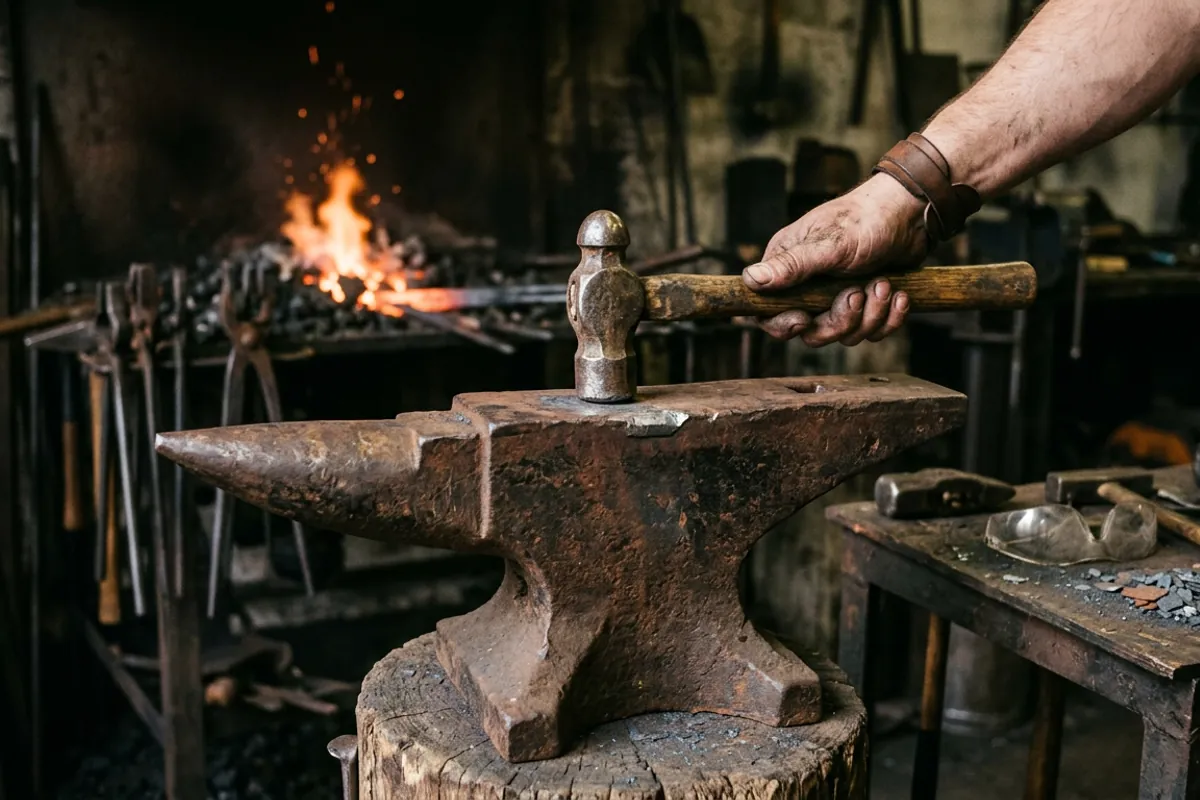
Rebound is the single most important thing about an anvil, and you can measure it in thirty seconds. The clean version is the ball bearing test: set the anvil on something solid, hold a 1 inch steel ball bearing about 10 inches above the face, drop it, and watch how high it bounces back. A good anvil returns it roughly seventy five percent or more of the drop height. A dead cast iron anvil will barely return it at all, with a dull click instead of a bounce. The smiths at anvilfire lay out the rebound test in detail, and there is a long I Forge Iron thread on the method worth reading first.
One warning that trips people up: heavy paint or thick rust on the face will kill your reading and make a good anvil look dead. If the seller will let you, clean a patch of bare steel on the face before you test. Test in several spots, not just the middle, because a delaminated face can be solid in one area and hollow in another.
Ring, face, and edges
Tap the face with a hammer and listen. A sound anvil rings. A dull thud where the rest of the face rings clearly can mean a crack or a spot where the hardened plate has separated from the body underneath, which is called delamination and is common on the old forge-welded anvils. That said, do not overweight the ring on its own, because some perfectly good anvils are quieter than others depending on how they are mounted. Use ring as a flag to investigate, and let rebound and a close look at the face make the decision.
Then look hard at the face itself. A little sway, meaning a shallow dish worn into the middle, is normal and usable. Deep gouges, mushroomed edges, torch cuts, and welds where someone tried to build up a broken edge are all reasons to walk or to pay a lot less. Sharp factory edges are nice but not essential; most working smiths want a radius on at least part of the edge anyway. Chips out of the face plate are more serious than dings on the body. The forum smiths at BladeForums have a good running thread on inspecting a used anvil that lines up with all of this.
If it passes rebound, rings mostly true, and has a face you can work on, the rest is cosmetic. Rust cleans up. A little history in the steel is fine.
The new anvils worth buying if the used hunt fails
Sometimes the used market is dry, or you need an anvil this month, not whenever the right one turns up. That is a legitimate reason to buy new. Here is how the fallbacks I would actually consider compare. These are published specs from the makers and their retailers, not my bench measurements.
Scroll horizontally to see all columns.
| Anvil | Weight | Material | Face size | Hardness | Price tier |
|---|---|---|---|---|---|
| TFS single-horn (TFSSB1) | 100 lb | Cast ductile iron | 4 x 14 in | ~52 HRC | Mid |
| NC Tool Cavalry | 112 lb | Alloyed casting | 4.625 x 7 in | Not published | Mid |
| VEVOR single-horn | 66 lb | Cast steel | see card | see card | Budget |
| VEVOR single-horn | 132 lb | Cast steel | see card | see card | Budget |
TFS single-horn, 100 lb
If I had to buy one new anvil sight unseen for general blacksmithing, this is the one I would reach for. TFS anvils are made by Texas Farrier Supply and sold through Pieh Tool and others. They are cast ductile iron, heat treated and hand finished, which puts them a big step above the mystery cast anvils. The 100 lb single-horn model has a face measuring 4 by 14 inches, a 1 inch hardie hole, and a published Rockwell hardness of about 52, per the Pieh Tool specs.
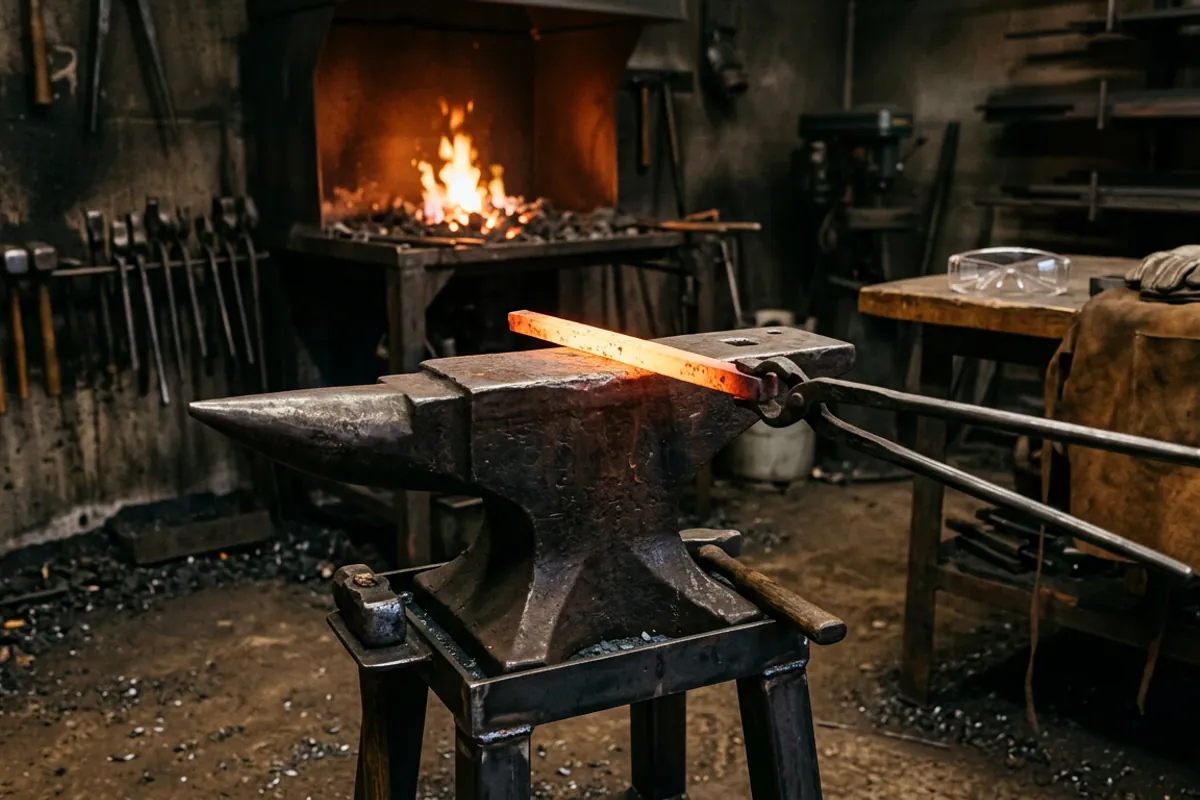
That 14 inch face is the reason I like it. You get real working length under the hammer, a 1 inch hardie hole that takes standard tooling, and a hardness that is genuinely in anvil territory rather than the soft-cast range. A hundred pounds is a sensible size for a first serious anvil; if you are unsure why, my anvil weight guide walks through how mass under the hammer actually affects your work. This is a working tool, not a decoration.
Check price on Amazon (paid link)
NC Tool Cavalry, 112 lb
NC Tool is a respected North Carolina maker, and their anvils are a common sight in farrier shops. The Cavalry is a portable pattern: 112 pounds of balanced alloyed casting made in the USA, with a working face around 4.625 by 7 inches, a 1 inch hardie hole, and an 11 inch working height, per Centaur Forge. NC does not publish a Rockwell hardness figure for it, so I will not invent one.
The honest tradeoff here is the face. That 7 inch length is short for general forging, because it is designed as a portable farrier and light-work anvil rather than a big flat working surface. If you shoe horses, do light work, or need something you can move around, it is a well made tool from a real company. If your main job is drawing out bar stock, the longer TFS face will serve you better for similar money. Buy it for what it is.
Check price on Amazon (paid link)
The budget VEVOR options
If the used market is dry and your budget is tight, a VEVOR cast steel anvil is the realistic floor of what I would put in a beginner's shop. These are cast steel rather than the dead cast iron I warn about, so they have some real rebound, and the price is a fraction of a name-brand new anvil. They are not in the same league as a sound old Trenton, and owners report the faces are softer and the finish rougher, but for someone learning whether they even like this craft, they beat a length of railroad track. I go deeper on which VEVOR sizes are worth it in the VEVOR anvil buying guide.
The 66 lb model is about as small as I would go, and it is genuinely portable:

If you can stretch the budget and the space, the 132 lb version gives you enough mass to move real stock, which matters more than almost anything else at this price:

For scale, Bessie is 148 pounds, and the difference between a 66 and a 132 in how the steel moves under the hammer is not subtle. Buy the most mass you can afford and lift.
What owners say
For the used-market picks I am relaying consensus, not bench tests. On used anvils generally, the forums are consistent: buy the old forge-welded brands, test rebound before you pay, and expect to pay more than the old two to four dollars a pound because Forged in Fire moved the whole market, as the I Forge Iron price threads document at length.
On the TFS anvils, owner signal is broadly positive across the farrier and smithing forums, with people happy about the face length and the hardness for the money. On the NC Tool Cavalry, the common note is that it is a well made portable and farrier anvil, with the short face being the main limitation people mention for heavier general work. On the VEVOR anvils, the consensus is exactly what you would expect at the price: acceptable for learning, softer faces, some need to dress the edges and knock down casting marks before use, and a clear step below a real old anvil. Where owner signal is thin or mixed, I would rather tell you that than dress up a handful of reviews as a verdict.
What I would tell a friend
Buy used if you possibly can. Take a hammer and a ball bearing, run the rebound test on bare steel, listen for the ring, look hard at the face, and pay somewhere around five to seven dollars a pound or less for something sound. A good old anvil at that price is the best tool money you will spend in this craft, and the general anvil buying guide and the anvils topic hub cover the rest of the decisions around it.
If the used hunt comes up empty, buy the TFS single-horn for the long working face and real hardness, consider the NC Cavalry only if you need a portable and can live with the short face, and treat a cast steel VEVOR as the honest budget floor, not a forever anvil. Whatever you buy, the safety rule does not change: wear ANSI Z87.1 rated eye protection every time you strike hot steel, because scale flies off a face at speed and an anvil does not care whether you are a beginner or have been at this for twenty-five years.