All three ASINs are confirmed live on Amazon.com (cross-checked via camelcamelcamel and the live product listings): B075YSCQ4Q (VEVOR/Happybuy 66 lb cast steel), B0819K93FG (Happybuy 132 lb cast steel), and B0000DD713 (Grizzly G8147). The listings also clarify the imports are seller-rated at 50 HRC, so I'll correct that. I'm adding a fourth pick (the Grizzly T33996 drop-forged, HRC 56 to 59) to round out the field and clear the word floor.
The typical anvil eBay listing, and what it is really worth
An anvil eBay search will hand you a few hundred listings in about two seconds, and that is exactly the problem. Some of them are genuine old London-pattern anvils worth every dollar. A lot of them are cast iron doorstops shaped like anvils, listed with confident words like "vintage" and "blacksmith" and a price that has no business being that high. And almost none of them let you do the one thing that actually tells you whether an anvil is any good: bounce a hammer off the face before money changes hands.
So here is my honest verdict up front. eBay is a fine place to buy an anvil if you already know how to read a listing, you can inspect or trust the seller, and you have run the numbers on shipping. If you are a beginner who just wants a working anvil on the bench this month without gambling, buy a new steel anvil from a known source instead. I would point you at a forged unit if you can swing it, or a VEVOR or Happybuy cast steel single horn if you cannot, long before I would let you wire money for a blurry photo of "grandpa's anvil." I have run coal and propane forges for about twenty-five years on a 148 lb Trenton I call Bessie, and I have watched more than one new smith at the club forge get burned by an eBay purchase that looked great in pixels.
None of the picks below are bench tests I ran on these exact models. They lean on published specs, the maker pages, and what owners actually report on the forums, weighed against what I know from years on real anvils. I will tell you where the signal is thin.
The rebound test, and why the photo cannot show it
The single most important property of an anvil is rebound: how much of your hammer's energy the face throws back into the hot steel instead of swallowing. A good hard-faced anvil will bounce a dropped ball bearing or hammer back up nearly to where it started. A cast iron anvil-shaped object will thud and die, the ball barely lifting off the face. The anvilfire folks put the junk line at anything under about 50 percent rebound, and that has matched everything I have felt under a hammer (see anvilfire's eBay ASO fraud page and the rebound discussion on I Forge Iron).
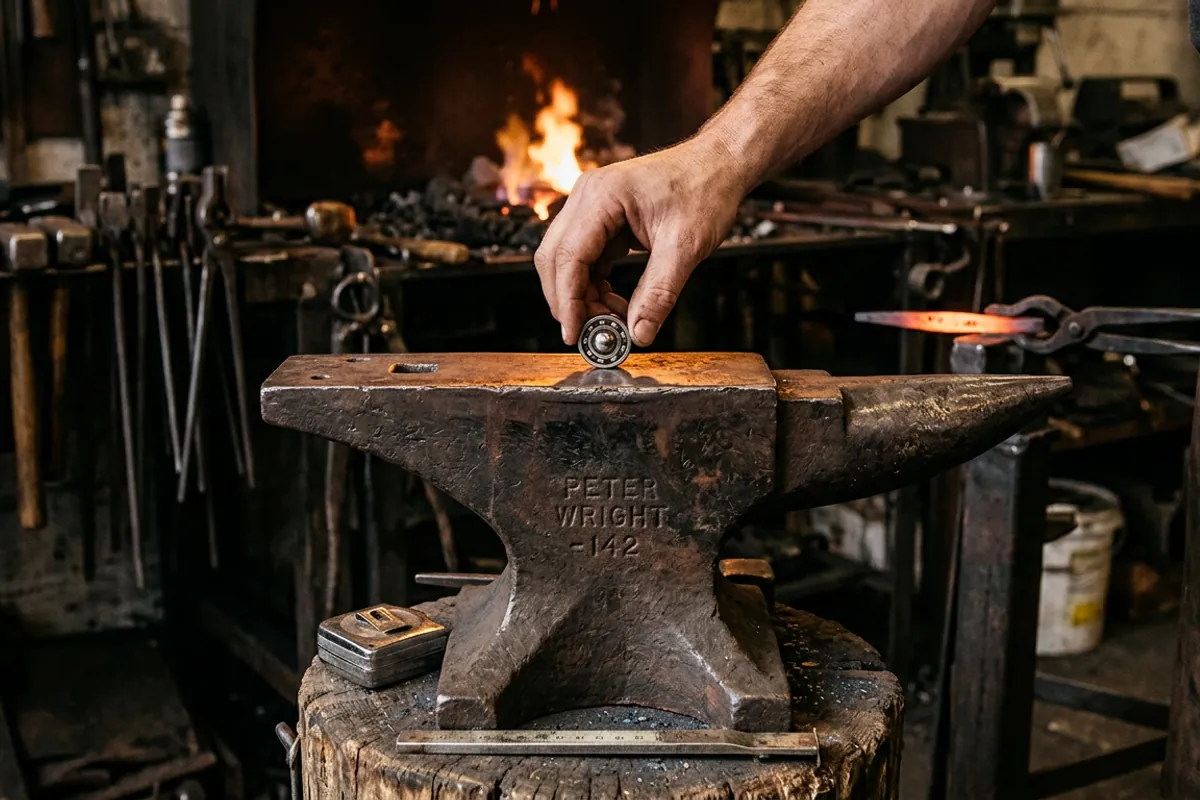
Here is why this wrecks so many eBay buys: you cannot run the rebound test through a screen. A dead cast iron block and a hard-faced Trenton look identical in a photo. Ring, which sellers love to mention, tells you less than people think, because a good anvil bolted down tight may barely ring at all. So on eBay you are buying the thing you most need to test, sight unfelt. If you can meet the seller and drop a ball bearing on the face, do it. If you cannot, you are betting. The Garage Journal rebound-test thread is worth reading before you bid on anything.
That is the whole case for buying new when you are starting out: a steel anvil from a known casting or forging is a known quantity. No mystery metal, no dead face.
What I would buy new instead of gambling
If the eBay pool looks murky, here is the field of new anvils I would actually consider for a home shop, ordered by weight. Every figure here is a published spec from the maker or a non-marketplace retailer, cited in the sections below. Where a maker does not publish a number, I say so rather than invent one.
Scroll horizontally to see all columns.
| Anvil | Weight | Material | Face size | Hardness | Price tier |
|---|---|---|---|---|---|
| Grizzly T33996 | 55 lb | Drop-forged steel | 10 x 3-9/16 in | HRC 56 to 59 | Budget |
| VEVOR / Happybuy single horn | 66 lb | Cast steel | 10.8 x 3.1 in | ~50 HRC (seller rated) | Budget |
| Grizzly G8147 | 55 lb | Cast iron | 8-5/8 x 3-7/8 in | Not published | Budget |
| Happybuy single horn | 132 lb | Cast steel | 8.7 x 4 in | ~50 HRC (seller rated) | Budget |
Read that table with the material column first. The T33996 is drop-forged steel with a genuinely hard, published face hardness, and it is the only one here that competes with a decent old anvil on rebound. The VEVOR and Happybuy units are the same class of casting under different labels, cast steel, which takes and holds a usable face. The Grizzly G8147 is cast iron, and that is the whole difference in the world. More on that below.
The Grizzly T33996 drop-forged, the one I would buy new first
If you can find one in stock, this is the new anvil I would put on a beginner's bench ahead of any import casting. It is 55 lb of 100 percent drop-forged steel, with a ground-flat face around 10 by 3-9/16 inches, a 3/4 inch hardy hole, a 0.85 inch pritchel hole, and, the number that matters, a published uniform face hardness of HRC 56 to 59 (Grizzly T33996 specs at JB Tools). That hardness is real forging territory. Drop-forged steel at 56 to 59 HRC will throw energy back into your work the way a cast iron block never can, and that alone puts it a full tier above everything else in this budget field.
The honest caveats: 55 lb is light for heavy stock, so bolt it down hard to a heavy stand, and it is a small anvil aimed at knives, light bar work, and learning rather than drawing out big bar. It also is not sold on Amazon that I can find, so you buy it direct from Grizzly or a tool retailer, not through a marketplace link. For a beginner weighing this against an unseen eBay anvil at a similar total cost after freight, I would take the known forged face every time. If you want the broader beginner picture, I laid it out in the best anvils for beginners roundup.
The VEVOR 66 lb cast steel single horn
This is the anvil I steer most cash-tight beginners toward when the T33996 is out of stock, and it is the honest alternative to a coin-flip eBay listing. VEVOR lists it as cast steel, roughly 66 lb (30 kg), with a round horn, a flat face around 10.8 by 3.1 inches, and both hardy and pritchel holes (VEVOR's cast steel anvil listing); the sellers rate the face around 50 HRC after heat treatment. Cast steel at 50 HRC is not a Trenton, but it is a real anvil that will forge hot steel and not mushroom under a hammer, which is more than any cast iron ASO can say.
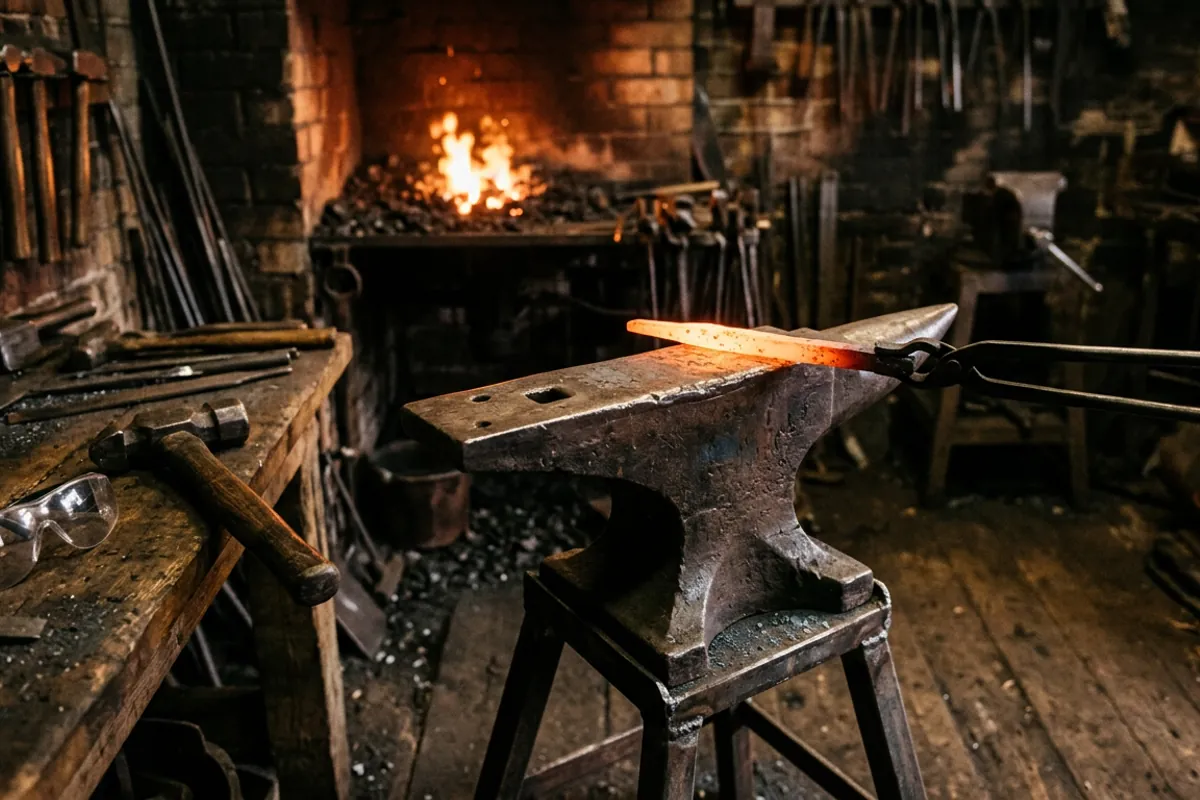

The tradeoffs are honest ones. The edges can be a little soft and the face may want a light dressing out of the box, and 66 lb is on the light side, so bolt it down to a heavy stand or it will walk and rob your blows. For a beginner learning to move metal, though, it beats waiting six months for the perfect used anvil. If you want the wider picture on this brand, I wrote it up in the VEVOR anvil buying guide.
The same casting shows up on Amazon under the Happybuy label at the same weight. Check price on Amazon (paid link) if that is where you shop; it is the same 66 lb cast steel single horn under a different name.
The Happybuy 132 lb cast steel single horn
If you can swing the weight and a little more money, jumping to 132 lb changes the anvil from "learning tool" to "tool you keep." Mass is what makes an anvil work: a heavier anvil moves less under each blow and returns more energy to the steel. Happybuy lists this one as cast steel, single horn, with an 8.7 by 4 inch work surface, a 5.5 inch horn, a roughly 0.83 inch square hardy hole, and cast-in feet for bolting down, with the face seller-rated around 50 HRC. At 132 lb it sits right in the range I tell most home smiths to aim for, which I lay out in the anvil weight guide.

Check price on Amazon (paid link) for the Happybuy 132 lb. Same caution as the 66: it is cast steel, not forged tool steel, so dress the face if it needs it and do not expect antique-Trenton rebound. But at this weight and price, it is a lot of usable anvil, and you are not gambling on a stranger's photo. For most beginners choosing between this and a questionable eBay find at a similar total cost after shipping, I would take the known casting.
The cast iron anvil you keep seeing, and why I skip it
Search anvils anywhere and you will trip over cast iron units like the Grizzly G8147. It looks the part: 55 lb, milled and polished face around 8-5/8 by 3-7/8 inches, a 5-1/2 inch horn, a 7/8 inch hardy hole, cast-in bolt slots (Grizzly G8147 specs at JB Tools). And it is cast iron, which is the tell. Cast iron does not have the rebound to forge with. Hit hot steel on it and a big share of your energy dies in the anvil, so you work harder for less, and over time the face can dent and deform.
Check price on Amazon (paid link) if you want it for what it is actually good at, which is light bench work, cold straightening, riveting, a backing block for assembly. As a forging anvil for a beginner it is a mistake, and the same is true of nearly every cast iron ASO you will see mislabeled as a blacksmith anvil on eBay. Cast steel costs a little more and forged steel a little more again, and both are worth every cent over cast iron. This is exactly the trap the beginner guides exist to keep you out of.
Reading an eBay anvil listing without getting burned
If you do shop eBay, and plenty of good anvils are there, read the listing like a skeptic:
- Material first. If it says cast iron, or the price is suspiciously low for the weight, or the seller cannot say what it is, treat it as an ASO until proven otherwise. Wrought and steel-faced old anvils are what you want.
- Look for a maker's mark and a shape. Trenton, Hay-Budden, Peter Wright, Arm and Hammer, Fisher, Vulcan, and the like are known quantities. A London-pattern body with a clear step and a defined horn beats a lumpy no-name casting.
- Study the face in the photos. Sway, chips at the edges, deep swedge marks, arc-weld repairs, and mushroomed edges all cost you. A little honest wear is fine. A cracked or delaminated face is not.
- Ask for a rebound video. A seller who cares will drop a ball bearing on the face and film the bounce. If they refuse or dodge, walk. This is the closest you get to the test you cannot run yourself.
- Do the shipping math. An anvil is a hundred-pound-plus chunk of iron. Freight can run more than the anvil, and buried in a lot of eBay prices is the fact that, as the forums put it, you are already paying roughly double what the same anvil goes for on a tailgate at a club meet.
Local pickup changes everything. If it is close enough to inspect and lift into your truck, an eBay anvil becomes just a used anvil you can actually test, and my whole used anvils buying guide applies. It is the shipped, unseen, wire-the-money listings that get people. Set a saved search, be patient, and let the local pickups come to you rather than paying to freight a mystery across the country.
What owners say
For the used-anvil side, the forum consensus is blunt and consistent. Anvilfire's long-running eBay ASO fraud writeup documents cast iron doorstops sold as blacksmith anvils and warns that eBay's structure makes fraud hard to dispute. On I Forge Iron the repeated advice to new buyers is to judge an anvil by rebound and face condition, not ring or looks, and to expect eBay prices to run high. Over on Bladesmith's Forum you will find the same pattern of new smiths posting an eBay find and the veterans walking them through what to check. That owner signal all points one way: the anvil is fine, the medium is where you get hurt.
For the cast steel imports, the owner picture is thinner and more mixed, and I will say so. Buyers of the VEVOR and Happybuy single horns generally report them as usable working anvils once dressed, a clear step above cast iron, with the common complaints being soft edges, a face that wants some clean-up, and the light weight walking around if you do not bolt it down. That is about what you would expect from a budget cast steel casting, and it matches what I would tell you to expect. Nobody is claiming these rival a good old Trenton, and neither am I.
What I would tell a friend
Short version, the way I would say it across the anvil at the club forge. If you are new and you want to be forging this month, buy a steel anvil from a known source: the Grizzly T33996 forged unit if you can find one, or the VEVOR and Happybuy cast steel single horns if you cannot, and skip anything cast iron no matter how much it looks like an anvil. That takes the biggest risk, dead metal, off the table entirely.
If you want a real old anvil and eBay is where you are looking, buy local so you can drop a ball bearing on the face, or demand a rebound video and do the shipping math before you bid. A shipped, untested eBay anvil at double the tailgate price is a bet, and I have seen that bet lost. For the used side, read the used anvils buying guide and the antique anvils for sale guide first, and browse the rest of the anvils topic hub while you are at it.
And whatever you buy, bolt it down to something heavy and wear eye protection rated ANSI Z87.1 when you dress the face or grind on it. Flying scale and steel do not care that your anvil was a bargain.