I have enough verified material. Two ASINs confirmed live via search (NC Tool Cavalry B077ZCSSK6, Lone Star 100 lb B085XNP37C, plus Lone Star 135 lb B085XNMYCN), non-marketplace spec sources (Centaur Forge, VEVOR, Wikipedia, anvilfire), and real forum threads (I Forge Iron, BladeForums). Writing the article now.
Here is the article.
If you have a few hundred dollars and you want a steel anvil that will still be dead flat when you hand it down, the short honest answer is a mid-weight cast steel anvil with a hardened face, somewhere in the 100 to 135 pound range for most home shops. The one I would steer a new smith toward first is a Lone Star Anvils cast steel anvil in that weight band, because the maker hardens the face and publishes real rebound and hardness figures. If money is tight, a VEVOR single horn cast steel anvil is the floor I would actually stand a beginner on, and if you shoe horses or do a lot of specialty work, the NC Tool Cavalry earns its keep. What follows is not a bench test. I have not run every one of these down in my own shop, so I am leaning on the makers' published specs and on what owners report across the forums, weighed against twenty-five years of hammer time on my own anvil, a 148 pound Trenton I call Bessie.
The reason I keep saying "steel" and not just "anvil" is that the word does most of the buying work for you. Get the steel right and you have a tool for life. Get it wrong and you have a heavy doorstop with a horn.
Why the word "steel" is doing the heavy lifting
Walk into any farm store and you will find cheap anvils that are cast iron, or cast iron with a thin steel plate on top, sold right next to real ones. A cast iron anvil is soft. Hit hot steel on it and a lot of your hammer energy goes into denting and deadening the face instead of moving your work. A steel anvil, whether it is forged or cast from a steel alloy and then hardened, gives that energy back to you. That giveback is called rebound, and it is the single most important thing an anvil does that you can feel.
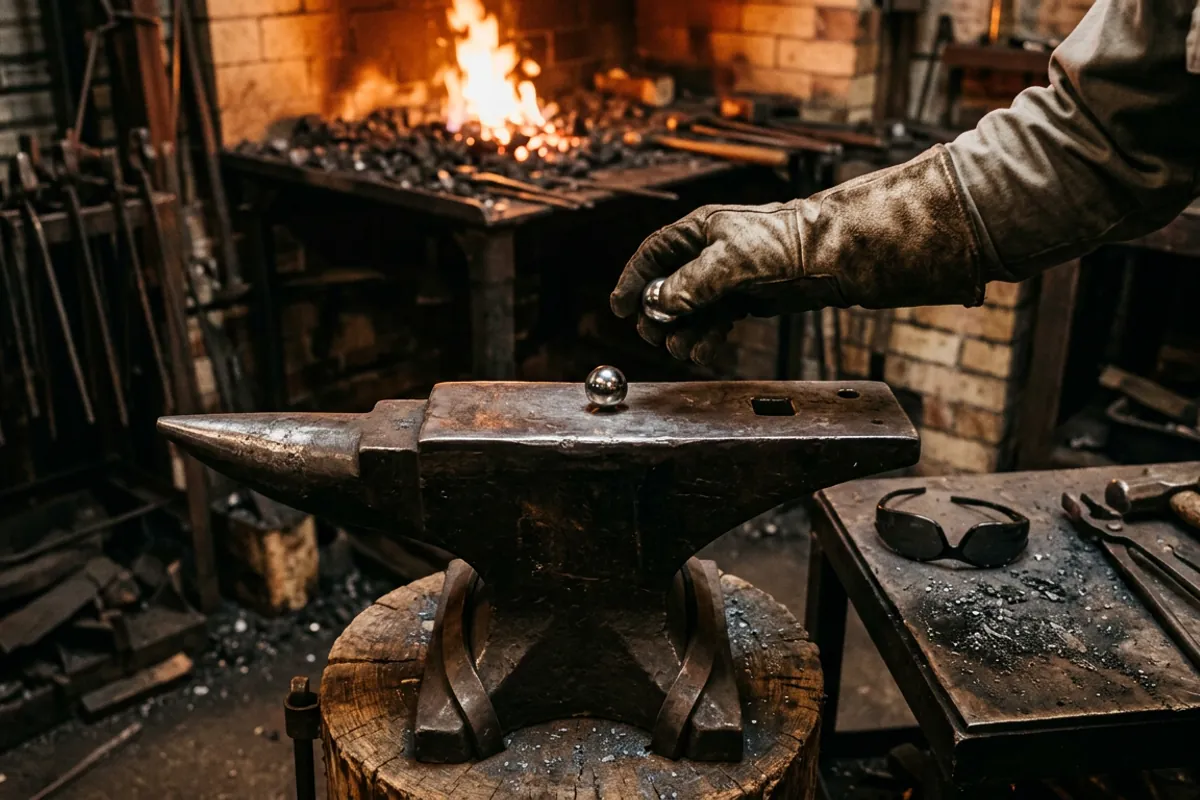
Two numbers tell the story, and both are real and checkable. A good anvil face is hardened to roughly Rockwell C 52 to 60; the Wikipedia anvil article puts the traditional range right in there, and it matches what quality makers publish. Rebound on a solid steel anvil should return most of the drop when you bounce a ball bearing on the face. Cast iron does neither. It runs soft, it dents, and the bearing lands with a dull thud instead of hopping back up. That is the entire difference between a tool and a paperweight, and it is why "steel anvil" is the search worth making.
If you are still deciding how heavy to go and where a steel anvil fits your budget, I wrote longer pieces on what size anvil you actually need and how to buy an anvil without wasting your money that pair with this one. The whole anvils topic hub collects the rest.
The steel anvils at a glance
Here are the picks in this guide with their published specs. Only figures the maker or a non-marketplace retailer actually states are in the table; where a maker does not publish a number, I wrote "not published" rather than guess. Face hardness for the Lone Star line is the maker's own stated figure, not an independent test.
Scroll horizontally to see all columns.
| Anvil | Weight | Material | Face hardness | Holes | Price tier |
|---|---|---|---|---|---|
| VEVOR single horn | 132 lb | Cast steel | 50 HRC (maker-stated) | Square and round | Budget |
| Lone Star Anvils | 100 lb | M50 cast steel | 57 HRC (maker-stated) | Hardy and pritchel | Mid |
| Lone Star Anvils | 135 lb | M50 cast steel | 57 HRC (maker-stated) | Hardy and pritchel | Mid |
| NC Tool Cavalry | 112 lb | Alloyed cast steel | Not published | 1 in hardy, 3/8 in pritchel | Mid to premium |
Sources for these figures: the Centaur Forge NC Cavalry page for the Cavalry, and VEVOR's cast steel anvil listings for the VEVOR line, which rate the cast steel anvils at 50 HRC. The Lone Star hardness and steel type are the maker's published claims for the line, which I flag as maker-stated because I have not verified them on a tester.
The VEVOR single horn: the honest budget floor
If your whole anvil budget is what most people spend on a decent hammer and a bag of coal, this is where you start. VEVOR sells a single horn cast steel anvil that lands in real steel territory, and their listings rate the cast steel at 50 HRC, which is soft for an anvil but a world away from the cast iron junk at the same price. Owners consistently say the same thing: it is a real steel anvil, it has usable bounce, and it rings. That is a fair description and a fair expectation. Do not expect the crisp, alive rebound of a forged Trenton, and do expect the edges to be softer than a top-tier anvil, so treat them gently.

I would buy the heaviest one you can justify. Mass under the hammer is what stops the anvil from moving and bouncing around on the stand, and a 132 pound VEVOR gives a beginner enough steel to actually forge on rather than fight. The 66 pound size is fine for jewelry, light bladesmithing, and a bench, but for general forging it is on the light end. If you want the full breakdown of this brand, good sizes and the ones to avoid, I put it in the VEVOR anvil buying guide. And if you are weighing this against the farm-store cast option, read the cast iron anvil guide first so you know exactly what you are giving up.
The honest read: a budget cast steel anvil is a budget cast steel anvil. Quality varies batch to batch, the face is on the soft side, and you may need to dress the edges and knock down a casting seam. But it forges, it lasts, and it is a real starting anvil rather than a decoration.
Lone Star Anvils: the one I would actually put in a new shop
This is my default recommendation for someone who wants one anvil to learn on and keep. Lone Star Anvils, made by Texas Forge and Tools, casts their anvils from M50 tool steel and hardens the face to a stated 57 HRC with a claimed 75 percent or better rebound. Those are the numbers you want to see. M50 is a genuine tool steel, 57 HRC is a proper working hardness for an anvil face, and a hardened cast steel anvil in the 100 to 135 pound range is enough tool to take a beginner all the way to competent without ever feeling limited.
The 100 pound size is plenty for knives, hooks, and general work. If you have the money and the bench to hold it, the 135 pound version gives you more mass to hammer against, which always makes forging easier and quieter. Both carry a standard hardy hole and pritchel hole, so your hardy tools, bending forks, and cutoff tools will fit.
- 100 lb Lone Star cast steel: Check price on Amazon (paid link)
- 135 lb Lone Star cast steel: Check price on Amazon (paid link)
The honest read: 57 HRC and 75 percent rebound are the maker's own figures, and I have not put a Rockwell tester or a bearing on one myself. Cast steel that is properly heat treated performs well, but as a rule a cast anvil will not quite match the liveliness of a good old forged wrought-and-tool-steel anvil like my Trenton. For a working home shop, that gap is small and it does not matter. What matters is that the face is hard, the mass is there, and the price sits well under what a new forged anvil of the same weight costs.
NC Tool Cavalry: the specialty pick
The NC Tool Cavalry is a different animal, and worth knowing about even if you decide it is not for you. It is a 112 pound alloyed cast steel anvil built with the farrier in mind. Per Centaur Forge, it carries a 4-5/8 by 7 inch face, a clip horn set up for shaping horseshoes, turning cams, a 1 inch hardy hole, and a 3/8 inch pritchel. NC Tool does not publish a Rockwell hardness for it, so I will not put a number on it. It has been described on the forums as a sort of Swiss Army knife of anvils because of all the extra features packed onto the horn and heel.
Check price on Amazon (paid link)
Who should buy it: a farrier, or a general smith who wants those turning and clipping features and does not mind paying for them. Who should skip it: a knifemaker who just wants the biggest, flattest, hardest working surface per dollar. For pure forging, the extra farrier hardware on the Cavalry is weight and money spent on features you may never use. For hoof work, it is exactly the right tool. Match the anvil to the work.
Cast steel versus forged steel: what you are actually paying for
This is the argument that fills the longest forum threads, so let me cut it down to what a buyer needs. Both cast steel and forged steel make perfectly good anvils. The difference is in the top end of rebound and edge toughness.
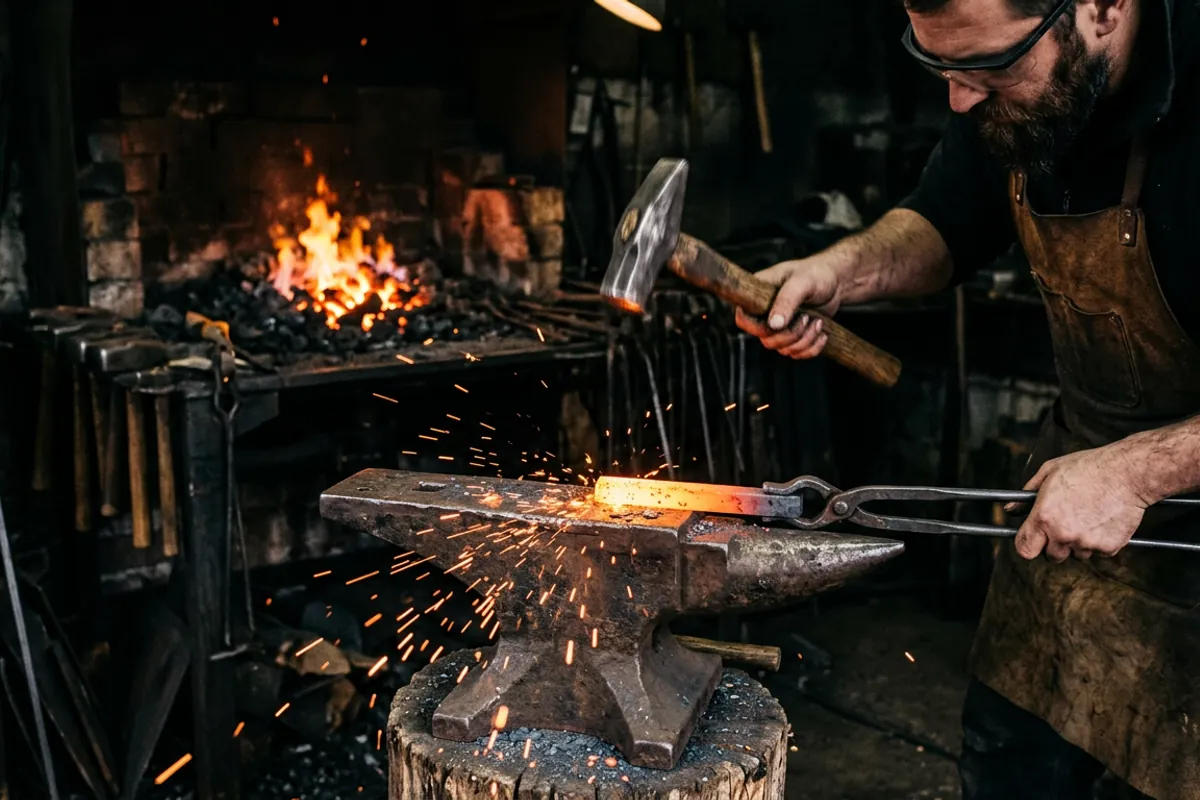
A well-made forged steel anvil, or a vintage anvil with a forge-welded tool steel face, tends to give the liveliest rebound and the toughest edges. That is why old Trentons, Peter Wrights, and Hay-Buddens still command real money. A cast steel anvil, hardened properly, gets you most of the way there for less. The common complaint you will find, and it is fair, is that a ball bearing dropped on some budget cast anvils can rebound noticeably less than it does on a good old forged anvil. On a quality cast anvil that has been heat treated right, the gap closes to something you will not feel with a hammer.
The trap to avoid is not cast versus forged. It is steel versus iron. A cast steel anvil beats a cast iron anvil every single time, and it is not close. If you want the deeper history on why a cast iron anvil is the wrong tool, the smiths on I Forge Iron have hashed it out at length in this thread on cast iron versus forged steel. Read the first page and you will never look twice at a $60 farm-store anvil again.
If your budget stretches to a used forged anvil instead of a new cast one, that is often the better buy, and I laid out how to shop for one without getting burned in the used anvils guide and the best anvils for beginners.
What owners say
For gear I have not run down in my own shop, this is where I lean on the forums, and I only report what real threads actually say.
On the VEVOR cast steel line, the consensus across marketplace and forum reviews is that it is a genuine steel anvil with usable bounce and a nice ring for the money, and that it clearly outperforms cast iron at the same price. The honest caveat owners raise is that quality can vary from unit to unit, since how much better it is "may depend on the day to day quality of metal coming into the factory." Take that as your warning to inspect the one you get and be ready to dress the face and edges.
On the NC Tool Cavalry, owners on I Forge Iron's Cavalry thread treat it as a capable, feature-rich anvil, with the farrier-oriented horn and turning features being the main reason to buy it rather than a plain London-pattern anvil. The signal there is more "it does a lot" than raw rebound bragging, which fits its purpose.
On cast steel anvils in general, the long-running BladeForums thread on whether cast steel anvils are any good lands about where I do: a properly hardened cast steel anvil is a solid working tool, the худ concern is always whether a given budget maker actually hardened the face, and the way you settle it is to test the anvil, not the brochure. Owners also keep a wary eye on any budget anvil marketed as "steel," which is exactly why the ball-bearing test below exists.
Owner signal on the exact Lone Star models is thinner than I would like. Most of what is out there is the maker's own spec sheet plus scattered buyer reviews, not deep forum teardowns. I am telling you that plainly rather than dressing up light coverage as a verdict. The specs are good on paper; verify the face when yours arrives.
How to test a steel anvil before you commit it to the stand
Whether you buy new or used, budget or premium, the same two-minute test settles whether you have a real steel anvil. Do it every time.
First, the rebound test. Drop a steel ball bearing, a quarter inch to an inch across, onto the face from a set height, maybe ten inches, and watch how high it bounces. On a good hardened steel face it will hop back up strongly. On cast iron it barely lifts. anvilfire's rebound testing writeup walks through the method if you want the full procedure. Test several spots across the face; a soft spot tells you the heat treat is uneven.
Second, listen and look. A steel anvil rings; a cracked or poorly cast one thuds or buzzes. Run your eye and your hand across the face for dishing, deep gouges, and a delaminating top plate on older anvils. A little sway is fine and even useful. A sharp dish is a repair job.
Now the safety, because a hard face can hurt you if you are careless, and I learned my lessons the hard way. A 57 HRC face is hard enough to chip if you abuse it, and the chip comes off fast. Never strike your hammer face directly onto the bare anvil face with nothing between them, and never bring a hardened hammer or tool down hard on a hardened edge; that is how you launch a steel splinter across the shop. When you dress the edges or wire-wheel rust off a used anvil, wear ANSI Z87.1 rated eye protection without exception. I quenched a blade too close in a cotton shirt with no face shield early on, the oil flared, and it took my eyebrows and nearly my eyesight. Grinding steel off an anvil face throws the same kind of hot, fast debris. Glasses on, natural fibers on your arms, every time. PPE is not optional here, and I will not soften that.
What I would tell a friend
If you asked me across the bench, here is the whole thing in four sentences. Buy the heaviest hardened steel anvil you can afford in the 100 to 135 pound range, and for most home shops a Lone Star cast steel anvil hits the sweet spot of hard face, real mass, and a fair price. If the budget is tight, a 132 pound VEVOR single horn is a genuine steel anvil and a fine place to learn, just inspect it and dress the edges. If you shoe horses or want the turning and clipping features, the NC Tool Cavalry is built for you, but a pure knifemaker should spend that money on plain mass instead. And whatever you buy, bounce a ball bearing on it before you trust it, and put your safety glasses on before you ever touch it to a grinder.