If you want the short answer, the VEVOR anvil worth putting in a shop is a cast steel one, in the heaviest weight you can afford to buy and to move, and the cast iron models sitting right next to it in the same catalog are the ones to walk past. For a tight budget that means the 66 lb cast steel single horn. If you have a little more room, the 132 lb cast steel is the one I would tell a friend to stretch for, because weight under the hammer is the thing you cannot add later. I have not run either of these down in my own shop, so here is the honest framing before we go further: this guide is built from VEVOR's published specs, retailer listings I pulled up, and owner reports from the forums, all weighed against about twenty five years of hammer time on my own anvil. Where the evidence is thin, I will say it is thin.
My anvil is Bessie, a 148 lb Trenton, and she is the ruler I measure everything against. A budget import is not going to be Bessie. The question is not whether a VEVOR is as good as a hundred year old wrought body anvil with a forge welded steel face. It is whether it moves hot steel well enough to be worth the money, and for the cast steel models the answer from owners is mostly yes, with real caveats.
What a VEVOR anvil actually is
VEVOR is an import catalog brand. They do not run a foundry with a hundred years of anvil pattern history behind it; they source tools and sell them under their own label across a lot of categories. Their anvils come out of the same general class of overseas foundries that feed several near identical labels. Happybuy listings look like the same castings with a different name on the paint, and a member on the KnifeDogs anvil choice thread said flatly that most of the Chinese anvils seem to come from the same factory. That matches what the listings look like when you line them up.
The catalog splits into two families and this is the single most important thing to get right. There are cast iron anvils, sold in weights from about 22 lb up through 132 lb, and there are cast steel anvils in a similar spread. The listings look alike, the photos look alike, the price gap is not always dramatic, and buyers mix them up constantly. Cast iron does not belong under a forging hammer. More on that below.
Both families are London pattern: horn on one end, a flat face, a step down to the cutting table, a square hardy hole and a round pritchel hole through the heel. That is the correct anatomy and it means standard tooling logic applies, as long as your hardy shanks match the hole.
If you are still working out how much anvil you need before you shop brands at all, read what size anvil do you actually need first. Buying the wrong weight cheap is still buying the wrong weight.
The published specs, side by side
Only published figures here. Where VEVOR does not state a number, it says not published rather than a guess.
Scroll horizontally to see all columns.
| Model | Weight | Material as listed | Hardness | Work surface | Hardy hole | Pritchel hole |
|---|---|---|---|---|---|---|
| VEVOR single horn, 66 lb | 66.14 lb (30 kg) | Cast steel | 50 HRC | 10.35 x 3.46 in (263 x 88 mm) | 3/4 in square | 5/8 in round |
| VEVOR single horn, 132 lb | 132 lb (60 kg) | Listed cast steel, described in the copy as drop forged | 55 HRC | Not published; overall 25.79 x 7.28 x 7.87 in, base 10 x 7.3 in | 1.38 in (35 mm) | 1.1 in (27 mm) |
| VEVOR cast iron models | 22 to 132 lb | Cast iron | Not published on most listings | Varies by model | Varies | Varies |
Those figures come from VEVOR's own product pages for the 66 lb cast steel single horn anvil and the 132 lb cast steel single horn anvil. The 66 lb figure of 50 HRC also shows on the Lowe's listing for the same anvil, which is worth noting because two independent pages agreeing on a number is better than one.
Two things in that table deserve a flag. First, the 132 lb page lives in the cast steel category but the marketing copy calls the steel drop forged. Those are different processes and both cannot be true of the same body. I would treat the material claim as cast steel, since that is the category and the price, and treat the forging language as copywriting. Second, VEVOR claims a rebound rate of over 70 percent on the 66 lb model. That is a maker claim, not a measurement I made, and rebound is exactly the spec a seller has the most incentive to round up.
The 66 lb cast steel single horn
This is the model most people mean when they type vevor anvil into a search bar. It is a small anvil by traditional standards and a perfectly usable one for knife work, small hardware, hooks, bottle openers, and general learning. The published face is 10.35 x 3.46 in, which is a narrow face. You will notice that when you try to flatten anything wide, and you will not notice it at all forging a blade from 1 in stock.
Published hardness is 50 HRC after what VEVOR describes as an 800 degree C heat treatment on the surface. Fifty is on the soft end for an anvil face. A good vintage tool steel or forge welded face sits higher, and the practical consequence of a softer face is that a missed blow with a hardened hammer or an over eager hardy tool will leave a dent instead of bouncing off. That is not a reason to skip it, but it is a reason to be tidy with your blows and to keep the face free of loose scale and cold stock.
The real limitation on this one is the 3/4 in hardy hole. Most hardy tooling you find for sale, and most plans you find online, assume something closer to 1 in. On a 3/4 in hole you will be making or buying shanks to suit, and hardy tools with tall stems in a small hole take a lot of side load on a soft casting. Plan on making your own hot cut and bending fork with 3/4 in shank stock.

Check price on Amazon (paid link)
Who it is for: someone who wants to start this month, has no line on a used anvil, and would rather forge on 66 lb of steel than on a chunk of rail. It is a real step up from a railroad track anvil, and I say that as someone whose first anvil was a length of track clamped to a stump.
The 132 lb cast steel single horn
If you can afford it and you can move it, this is the one I would buy out of the VEVOR lineup. One hundred thirty two pounds is inside the weight class that actually does the work for a general home shop, and it is close enough to Bessie that the difference is in the steel rather than the mass. The bigger body also fixes the tooling problem: the published hardy hole is 1.38 in and the pritchel is 1.1 in, so common hardy tools fit without custom shanks.
VEVOR publishes 55 HRC for this one, five points harder than the 66 lb listing. Face dimensions are not published separately; what you get is overall size, 25.79 x 7.28 x 7.87 in, on a base of 10 x 7.3 in. That means you cannot fully compare face area to another anvil before it arrives, which is annoying and which I would rather tell you than fill in with a number I made up.

Check price on Amazon (paid link)
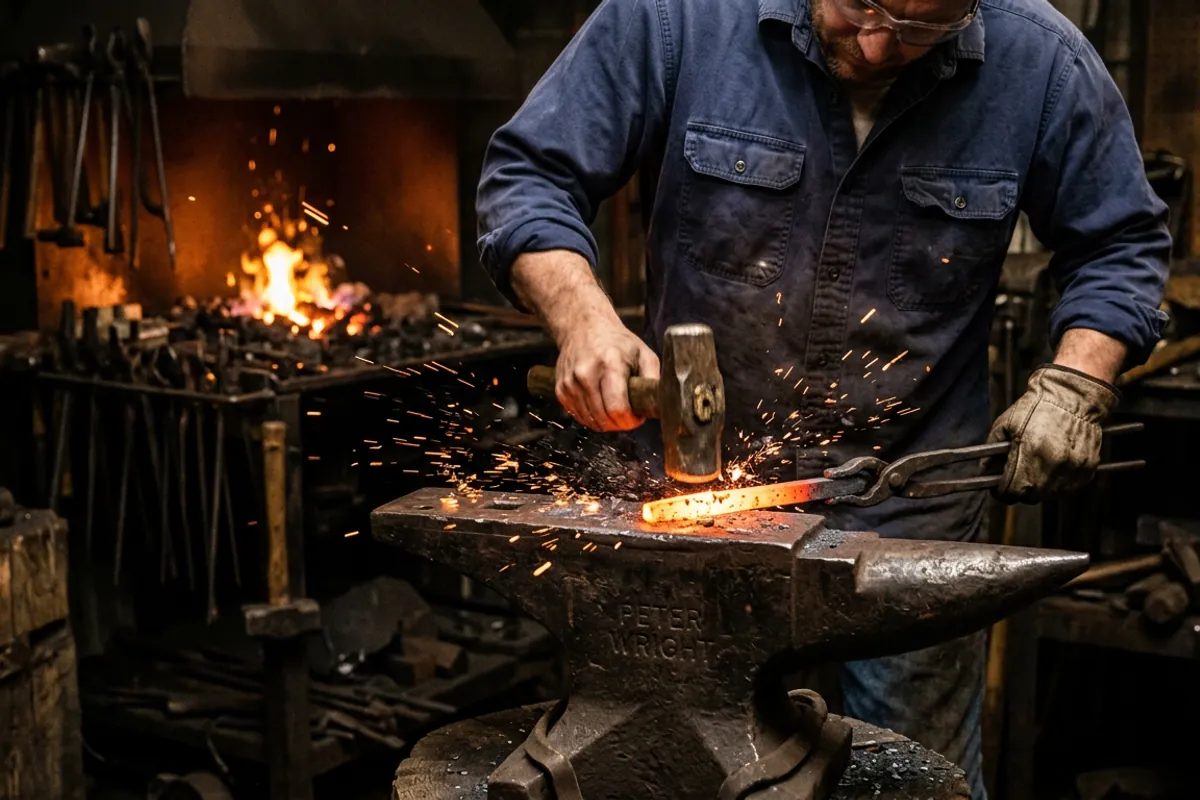
Understand what you are buying. A cast steel anvil in this price bracket is a single casting with heat treatment applied to the working surface. It is not a wrought body with a welded tool steel plate, and it is not a modern ductile or forged anvil from a maker who publishes test data. Owner reports say it moves steel. Nobody serious claims it is a Peter Wright.
Why I skip the cast iron models
VEVOR sells cast iron anvils that look, in a thumbnail, exactly like the cast steel ones. Do not buy them for forging. Cast iron does not return energy, so every hammer blow that should have bounced back into your next stroke dies in the anvil instead. Owners describe it the way I would: one buyer who moved from a small cast iron anvil to a 66 lb steel VEVOR said swinging on the cast iron was like hitting a pillow. That is the whole problem in one sentence.
There is a safety piece too. Cast iron is brittle. Hit it hard, hit it on an edge, or hit it with a hardened tool and it can chip rather than dent, and the chip leaves at speed. Whatever anvil you end up on, ANSI Z87.1 rated eye protection goes on before the hammer comes out. I have my eyebrows back but I earned that lesson the hard way with a quench tank flare up, and hot metal work does not hand out second warnings reliably.
If a cast iron doorstop shape is all your budget covers, buy a sledge head or a chunk of thick mild plate and forge on that instead. Both give you back more than cast iron will.
What owners say
I have not put a VEVOR anvil on my stand, so this section is other people's experience, attributed.
On the Vevor anvil, good or bad thread at The Garage Journal, the consensus lands about where you would expect: good enough for what they charge, a reasonable starter while you keep an eye out for a vintage anvil, and not in the same conversation as a Hay Budden. Skeptics in that same thread call it imported junk and question sponsored video reviews, which is fair skepticism to carry into any budget tool purchase.
The most useful single data point I found is on the KnifeDogs anvil choice thread, where a member who bought a 110 lb Vevor reported that the hardness in several spots is iffy, called it OK for lighter work like pickets, and said he would choose differently in hindsight. That is exactly the failure mode you would predict from a cast body with a surface heat treatment: not uniformly bad, but not uniformly good either, which means unit to unit and spot to spot variation is the risk you are accepting.
The VEVOR Anvil's thread on I Forge Iron runs on the same theme, with buyers worrying about getting a bad unit at a price that makes returning it a hassle, and the standing advice to order the steel version rather than the iron one because the listings are easy to confuse.
Over on the BladeForums beginner anvil thread, where someone asked about the 66 lb cast steel VEVOR specifically, the room did not endorse it. Members pointed at a US made small anvil instead, or at scrap steel and rail, with one blunt line worth repeating: buy the cheap one and see if it saves you any money.
The last source is VEVOR's own review pages, where a buyer reports 70 to 80 percent rebound measured with a 3/4 in bearing. Seller hosted reviews are self selecting, so I would not put much weight on that number until someone independent repeats it, but it is at least a real person describing a real test method.
Honest summary of the signal: it is decent in volume for a budget import, mostly positive for the cast steel models on general forging, and thin on anything like controlled comparative testing. Nobody is publishing rebound charts across a batch.
What you give up next to a used or forged anvil
A used anvil in the 100 to 150 lb class from a name like Trenton, Hay Budden, Peter Wright, or Arm and Hammer will usually outperform a budget casting, hold its value, and survive being handed to your kid. The catch is that finding one takes patience and knowing what to inspect, which is the whole point of what to look for in an anvil for sale.
If you want new and better rather than old and better, forged anvils from makers like Kanca sit above VEVOR in both price and quality, sold through blacksmith suppliers such as Blacksmiths Depot and Centaur Forge rather than the big marketplaces. You pay a real multiple for that step up. Whether it is worth it depends on how much forging you actually do, which for most beginners is a lot less than they plan on.
There is a third path, which is that a VEVOR gets you started now and gets resold later when the right used anvil turns up. Budget anvils hold enough of their value locally that this is not a crazy plan. My broader take on where the money should go first is in how to buy an anvil without wasting your money, and the full field across budgets is in the best anvils for beginners.
Checking and mounting one the day it lands
Whatever you order, do this before the first heat.
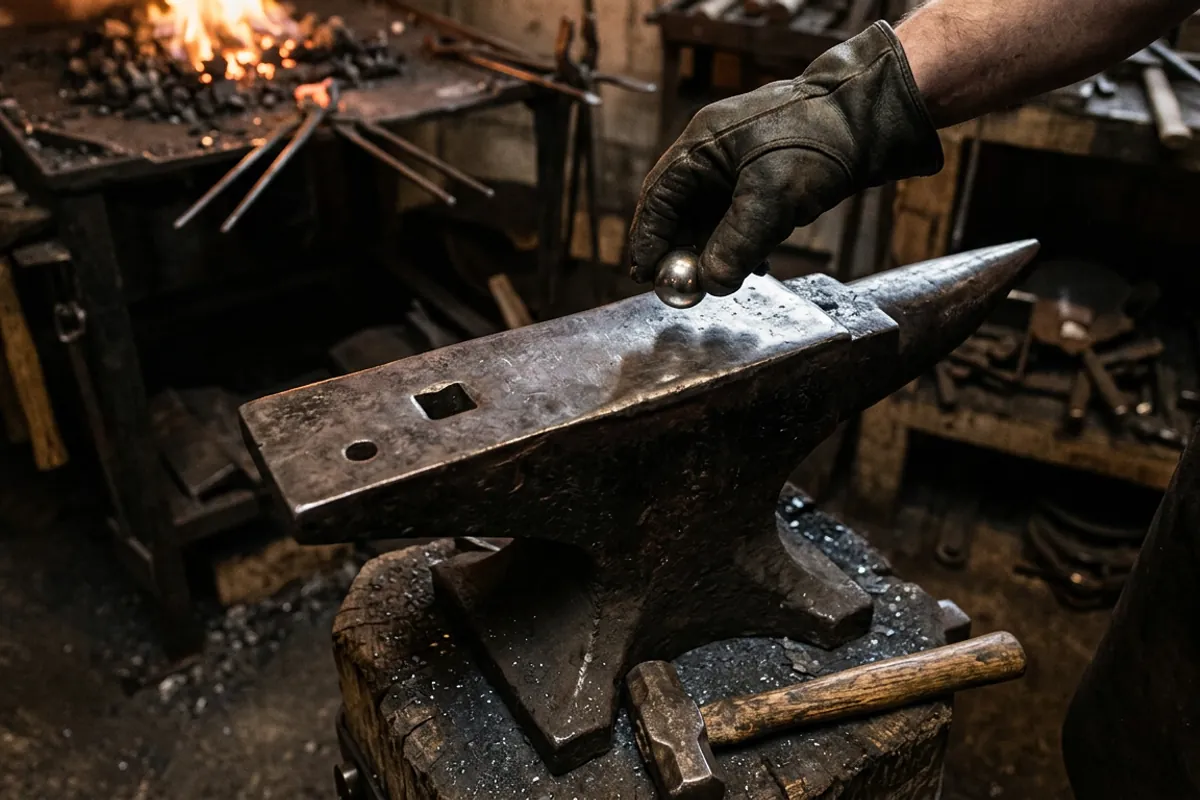
Check the face for casting flaws, a visible seam, or soft spots. Bounce a ball bearing on the face from a fixed height, in several places, and compare: hardened steel should return most of the drop, and dead spots that swallow the bearing are the iffy hardness that owners report. Do it over the sweet spot above the waist, over the heel, and near the horn. If the whole face is dead, that is a return, not a project.
Check the edges. Sharp factory edges chip and they mark your work, so dress a light radius on part of the near edge with a file and leave a section crisp for setting shoulders. Do not take a grinder to the face itself: on a casting with a surface heat treatment, grinding the face means grinding away the hardened layer.
Mount it dead solid on a stand at the height where your hammer face lands flat with your arm hanging naturally, usually knuckle height with your fist closed at your side. A bouncing anvil steals your blow and throws your accuracy off. Chain or strap it down; silicone under the feet cuts the ring, and your hearing is worth the trouble.
Then wear the gear. Z87.1 eye protection, natural fibers rather than synthetics near heat, and no gloves so loose that you cannot let go of a piece fast. The rest of what actually matters is in blacksmith safety gear.
What I would tell a friend
Buy the cast steel, not the cast iron. Buy the 132 lb if you can, the 66 lb if you cannot, and skip anything under about 50 lb unless it is going on a jeweler's bench. Bounce test it the day it arrives so a bad casting goes back inside the return window rather than sitting in your shop as a lesson. Keep watching local listings for a used anvil, because the day a good vintage one turns up at a fair price is the day the import becomes your travel anvil.
And keep the expectations honest. This is a budget casting with a hardened surface, sold cheap because it is made cheap, and the owner reports back that up: it works, it is uneven, and it is not heirloom. That is a completely reasonable trade for a first anvil. Just do not let anyone tell you it is anything more. More on the whole category, weights, patterns and what to check, lives on the anvils topic hub, and once you have the anvil sorted, the next thing to get right is the hammer you swing at it.