I have everything verified. Writing the article now.
Verified this session:
- Amazon ASINs (live, titles match): NC Tool Knifemaker Anvil
B07ND3NTKH; Kanca ANVILLO ANV-125 anvil/vise comboB094NKY8F8 - Citeable specs: Kanca (54 to 62 HRC, drop-forged) and NC Tool (70 lb) via Centaur Forge; VEVOR single-horn via vevor.com; Grizzly T33996 drop-forged via JB Tools
- Owner threads: I Forge Iron (Grizzly, NC Tool), BladeForums cast-steel, Garage Journal rebound test, Hackaday, Brown County Forge
If you want one honest answer on a metalworking anvil and nothing else, here it is: for most home shops the NC Tool Knifemaker at 70 pounds is the one I would point you to first, and if you can spend a bit more, a Kanca drop-forged in the 77 to 110 pound range is the anvil you buy once and never think about again. Below those, a budget cast steel single horn will get a beginner started without setting money on fire, as long as you go in knowing exactly what it is and what it is not. What I will not do is pretend I have run every one of these down on my own stand. I have beaten on one anvil hard for most of twenty-five years, a 148 pound Trenton I call Bessie, and every anvil here gets measured against her. The picks below lean on published specs and on what owners actually report on the forums, weighed against that shop experience, not against a bench test I did not do.
The word "metalworking anvil" covers a lot of ground, from a jeweler tapping rivets to a smith drawing out hot bar stock, so the right buy depends on what you are actually doing. I will sort that out below, but the single most important thing is this: most of the cheap "anvils" sold for metalwork are cast iron, and cast iron is the wrong material for hot work. Get that one decision right and the rest is detail.
What actually makes an anvil good for metalwork
Three things matter, in this order: rebound, mass, and face hardness. Rebound is the anvil giving your hammer blow back to the work instead of swallowing it. Drop a steel ball bearing on a good anvil face from a foot up and it should bounce back most of the way, roughly 70 to 90 percent on a hardened steel face. On a soft cast iron face it dies at 10 to 20 percent, and every one of those dead blows is energy you put in with your shoulder that never reached the steel. The forums have beaten this to death for a reason. There is a well known rebound-test thread on The Garage Journal that walks through the ball-bearing check, and Hackaday's anvil primer lays out why a ringing steel anvil throws energy back and a dead cast one does not.
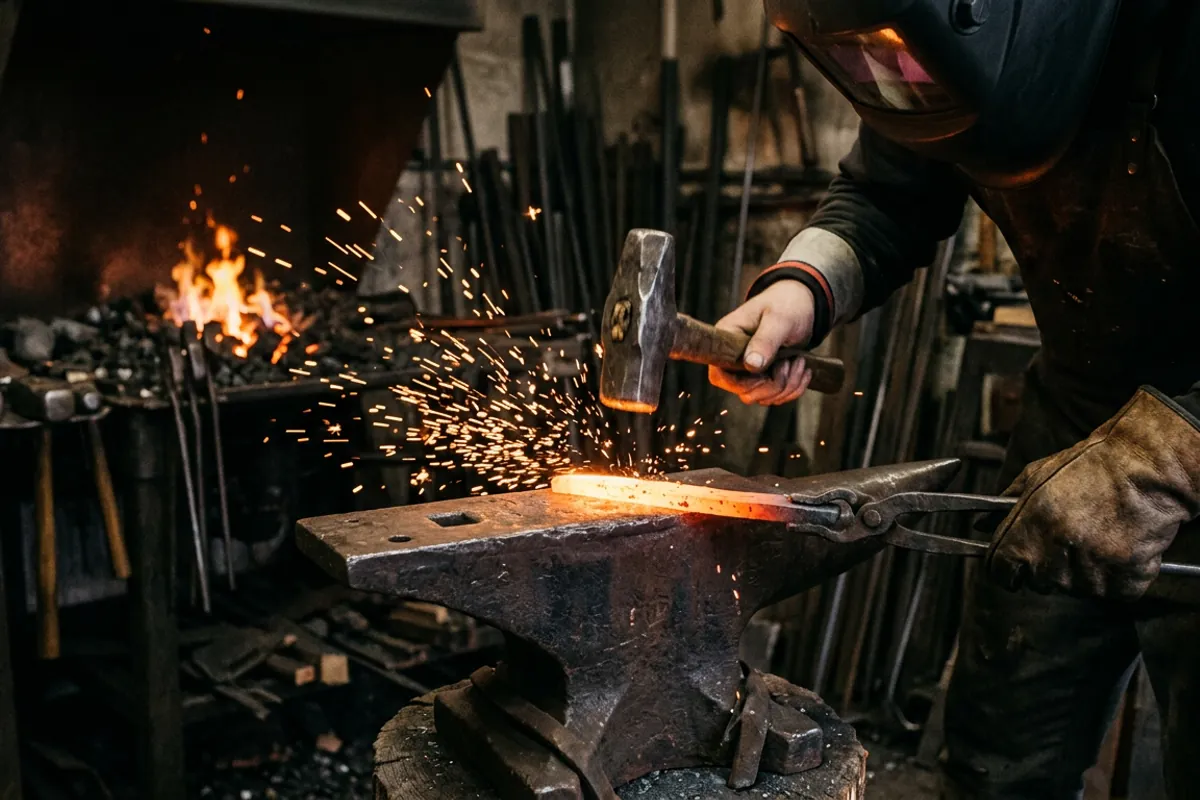
That leads straight to material, which is where most money gets wasted. There are three families. Cast iron is the cheap one, and a plain grey cast iron anvil is what smiths call an ASO, an anvil-shaped object: soft face that dents, poor rebound, a horn that will deform under real work. The classic 55 pound cast iron doorstop from the discount tool store is the poster child. Cast steel is the next step up, and this is what most budget "cast steel anvil" listings are: heat treated to somewhere around 50 HRC, genuinely usable, clearly better than cast iron, but softer and less lively than a good forged anvil. Forged steel, or a steel-faced anvil, is the real thing, harder face, higher rebound, the tool you keep for life. Ductile cast iron, which is what a maker like NC Tool pours, sits between plain cast iron and forged: far tougher than grey iron and perfectly serviceable, not as hard as forged.
One safety note I will not soften. A hard anvil face throws chips, and so does hot scale flying off the work. Cold chisels, hardy tools, and struck steel all shed fragments at speed. Wear eye protection rated ANSI Z87.1 every time you pick up a hammer, not just at the grinder. I quenched a blade too close in a cotton shirt with no face shield early on and the oil flare took my eyebrows; I got my eyesight back on luck alone. Do not run on luck.
How much anvil you actually need
Weight buys you two things: a face that does not skitter across the bench under the hammer, and mass under the blow so the work moves instead of the anvil. For hot forging, heavier is genuinely better, up to what your shop and your back can handle. A rough rule from the floor: 25 to 55 pounds is bench and jewelry territory, fine for light cold work and small stock; 70 to 125 pounds covers most general blacksmithing and knife work; 150 pounds and up is where you stop thinking about the anvil at all. Bessie at 148 is more anvil than a beginner needs and I would not trade her.
If you are doing cold metalwork, sheet, rivets, light fabrication, you can drop well down that scale. If you are heating steel and moving it, do not go below about 70 pounds unless budget forces it, and bolt or strap whatever you buy down solid. I go deeper on sizing in the anvil weight guide, and on not overpaying in the anvil buying guide. Both are worth a read before you spend.
The metalworking anvils at a glance
Published specs only. Where a maker does not state a figure, it says so rather than guessing.
Scroll horizontally to see all columns.
| Anvil | Weight | Material | Face size | Hardness | Price tier |
|---|---|---|---|---|---|
| VEVOR single horn | 66 lb | Cast steel | 10.35 x 3.46 in | ~50 HRC (advertised) | Budget |
| NC Tool Knifemaker | 70 lb | Cast ductile iron, US made | 3.25 x 11.375 in | Not published | Mid |
| Kanca drop-forged | 77 lb | Drop-forged steel | Not published | 54 to 62 HRC | Premium |
| VEVOR single horn | 132 lb | Cast steel | Not published | ~50 to 55 HRC (advertised) | Budget to mid |
| Grizzly drop-forged | 55 lb | Drop-forged steel | Not published | 56 to 59 HRC | Budget to mid |
| Kanca ANVILLO | Compact combo | Drop-forged steel | Not published | Not published | Mid |
VEVOR single horn 66 lb: the budget cast steel starter
This is the honest entry point. VEVOR lists the 66 pound single horn as cast steel heat treated to about 50 HRC, with a working surface around 10.35 by 3.46 inches, a round horn, and both a hardy and a pritchel hole. That is a real, usable little anvil for a beginner, and it is a different animal from a grey cast iron ASO of the same weight and price.

Be clear-eyed about the limits. VEVOR advertises "over 70 percent rebound," and that is a marketing number, not a measured one on the unit you receive; owners of cheap cast steel anvils generally report middling liveliness, better than cast iron, short of a forged face. At 66 pounds it will also want to walk under a heavy blow, so mount it dead solid on a stump or a welded stand. For light forging, jewelry, and learning hammer control it earns its keep. If you want the fuller rundown on this brand, I wrote up the VEVOR anvil buying guide separately, and if you are cross-shopping the cheap cast doorstops, read why I steer people off them in the cast iron anvil guide first.
NC Tool Knifemaker 70 lb: the anvil I would point most people to
If you want one anvil that will not embarrass itself and is made by an outfit that has been pouring anvils in North Carolina for decades, this is my default recommendation. Centaur Forge lists the NC Tool Knifemaker at 70 pounds with a clean rectangular face of 3.25 by 11.375 inches, a 4 by 8 inch horn, a 1 inch hardy hole that takes standard 7/8 inch hardy tools, and made-in-USA construction. NC Tool casts these in ductile iron with a work-hardened face, which is a genuinely tough material, not the brittle grey stuff.
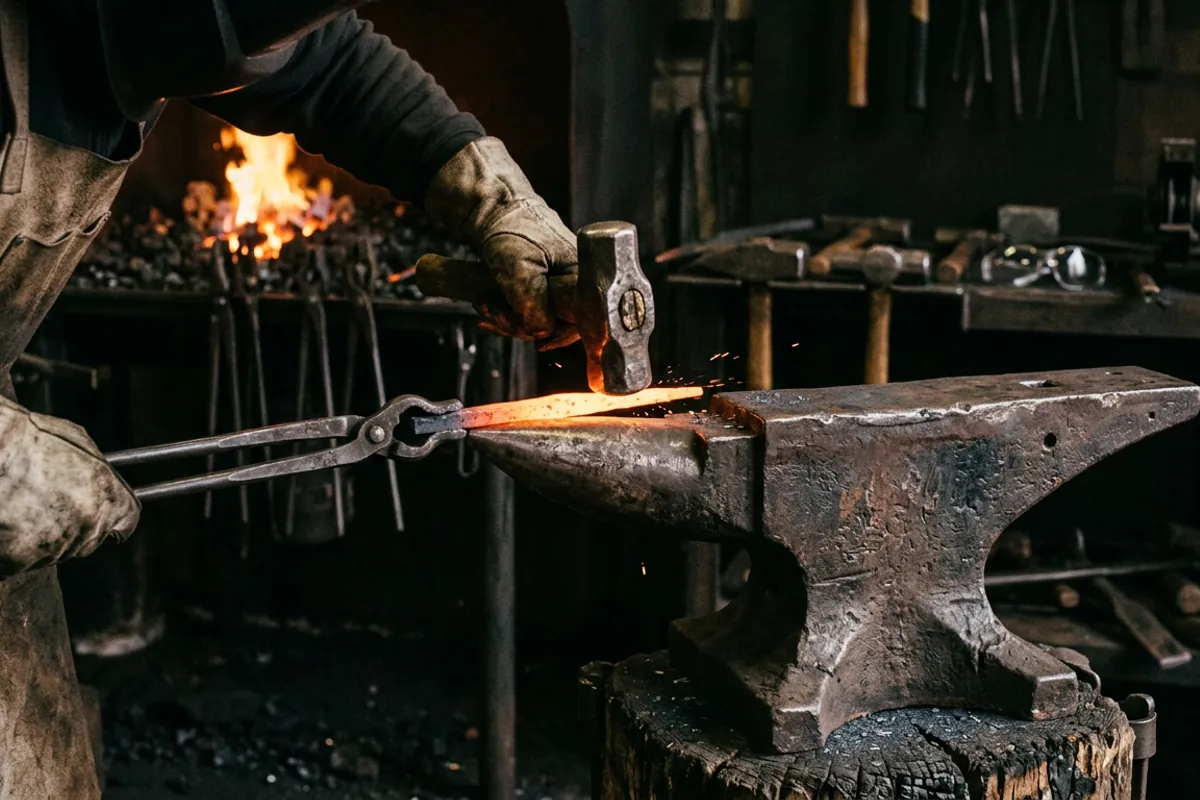
The flat rectangular face is the tell that this is aimed at knifemakers and general metalwork rather than ornamental scrollwork; it is a lot of usable working surface for the weight. NC Tool does not publish a face hardness figure, so I will not invent one. What I can say is that for the money it is a serious, honest new anvil, and the closest thing on this list to buy-and-forget without stepping up to forged. If knives are your thing specifically, my knife forging anvil guide digs into face geometry more.
Check price on Amazon (paid link)
Kanca 77 lb drop-forged: the buy-once forged upgrade
This is the one I would stretch for. Kanca forges its anvils in Turkey to a Southern German pattern, and unlike everything above them, they are drop-forged steel, not cast. Centaur Forge publishes the Kanca line at 77, 110, and 165 pounds, with a stated uniform surface hardness of 54 to 62 HRC and a conical horn. That hardness range on a forged body is what separates a lifetime anvil from a starter, and it puts Kanca in the conversation with the old Ridgid-Peddinghaus anvils that a lot of smiths still chase used. The blacksmith at Brown County Forge has long put forged imports like these on his short list of anvils worth buying new.
The catch is that Kanca standalone anvils are sold through blacksmith suppliers like Centaur and Northern Tool rather than the big marketplace, so buy it direct from those retailers. If a small forged anvil at a lower entry price is what you want instead, Grizzly sells a 55 pound drop-forged anvil rated at 56 to 59 HRC with a 3/4 inch hardy hole, again sold direct rather than on the marketplace, and it is a legitimately hard forged face at a beginner weight. Either way you are buying steel that was forged, not poured, which is the whole point. More on that material choice in the steel anvil buying guide.
VEVOR single horn 132 lb: budget mass when 70 pounds runs out
When your problem is not liveliness but simply not enough mass under the hammer, the 132 pound VEVOR single horn doubles the weight of the little one for far less than a forged anvil that size. VEVOR lists it as cast steel around 50 to 55 HRC depending on the run, with a wide countertop, a round horn, and both holes.

The honest read is the same as the 66 pounder, scaled up: this is a cast steel anvil, so the face is softer and less springy than a forged one, but the extra 66 pounds of mass genuinely helps the steel move and stops the anvil dancing on the stand. Ignore any listing that calls a VEVOR anvil "drop-forged," because the product line is cast steel; the mass is real, the forging claim is not. For a beginner who wants to actually forge and cannot yet justify a forged anvil, this is a reasonable middle ground, and a step up from starting on the 66.
Kanca ANVILLO: a compact anvil and vise for a small bench
Not everyone doing metalwork has room for a full anvil on a stand. The Kanca ANVILLO pairs a small drop-forged anvil with a bench vise in one unit, jaw opening around 3.5 inches, made of the same drop-forged, high-grade steel as Kanca's larger anvils. For a hobbyist doing light cold work, riveting, bending, and holding, on a crowded bench, a combined anvil and vise is a sensible way to get a hard forged face and a clamp without dedicating two footprints to them.
Keep expectations sized to it. This is a bench tool for light metalwork, not a forging anvil you draw out heavy bar on, and owner signal on the combo specifically is thin compared to the full anvils, so I am leaning on the maker's material and Kanca's general reputation rather than a pile of reviews. Within its lane, a compact forged anvil and vise is a tidy answer for a small shop.
Check price on Amazon (paid link)
What owners say
I have not run each of these down on my own stand, so here is what the forums actually report, product by product, so you are not taking my word alone.
On cheap cast steel anvils in general, the "Cast steel anvils any good?" thread on BladeForums is the honest picture: usable, clearly better than cast iron, but a softer face and less rebound than forged, and fine to start on if you know that going in. That matches what I would tell you about the VEVOR pair. The recurring advice across the rebound-test thread on The Garage Journal is to actually do the ball-bearing test before you hand over money, cast steel or not.
On the cast anvils I steered you away from, the "Grizzly anvil" thread on I Forge Iron runs the way most of these do: the big cast Grizzly anvils get treated as soft-faced ASOs, and experienced members push new smiths toward a forged or steel-faced anvil instead. Worth noting the drop-forged Grizzly above is a different, harder product than those cast ones, which is exactly why I called it out separately.
On the NC Tool Knifemaker, the review thread on I Forge Iron runs broadly positive: a usable US-made new anvil with rebound good enough for knife work, with the fair caveat that a cast ductile face is not as hard as a top-tier forged or tool-steel-faced anvil. On Kanca, signal is more about the brand than any single listing, and it is consistently favorable, drop-forged, published hardness, compared to the old Ridgid-Peddinghaus anvils. Where I could not find solid owner reports, like the ANVILLO combo, I said so rather than dress up thin evidence as consensus.
What I would tell a friend
Buy the NC Tool Knifemaker if you want one anvil that just works and is made by a real anvil maker; stretch to a Kanca drop-forged, 77 pounds or up, if you can, because a forged face is the last anvil you will buy. Start on a cast steel VEVOR single horn, the 66 for a tight budget or the 132 if you want mass to actually forge on, as long as you understand you are buying a soft-ish cast face, not a lifetime tool. Skip the grey cast iron doorstops entirely, whatever the weight, and do not be fooled by a "drop-forged" label slapped on a cast product. Whatever you land on, mount it dead solid, do the ball-bearing rebound test before you pay a private seller, and put ANSI Z87.1 glasses on your face before the hammer comes up. Start from the anvils hub if you want to compare against the vintage and heavier options, because a good used forged anvil is often the best buy of all.