I have everything verified. Writing the article now.
When you find a vintage anvil for sale and it passes the tests, it is the best money in the whole hobby. A sound London-pattern anvil from Trenton, Peter Wright, Hay Budden, or Fisher, in the 100 to 200 pound range, with a hard face and honest rebound, will outlast you and forge better than most new anvils near the same price. That is the pick: a proven old brand you have bounced a ball bearing off with your own hand. The catch is that "if it passes." A lot of what gets listed as a vintage anvil is a swaybacked, delaminated doorstop, and you cannot tell that from a phone photo. So this guide is two things at once: how I check an old anvil before money changes hands, and the new anvils I would buy instead when the hunt stalls.
Let me be straight about what this is. I have run Bessie, my 148 lb Trenton, for years, so the buying tests below are mine, from my own floor. The new anvils I point to lean on published specs and owner reports weighed against shop experience, not a bench test of every model I name. If you want the wider view on buying old iron, I have written it up in the antique anvils for sale guide and the broader used anvils for sale guide; this one stays tight on the vintage-specific hunt and the gear that helps you make the call.
What a vintage anvil for sale is really worth
The reason old anvils are worth chasing is the top plate. The good vintage American and English anvils were built one of two ways: a wrought iron or mild steel body with a separate high-carbon tool-steel face forge-welded on top (Trenton, Peter Wright, Hay Budden, Arm and Hammer), or a cast iron body with a hardened steel face plate (Fisher and Norris, which run quiet instead of ringing). Either way, the working surface is hard steel, heat treated to hold up under a hammer. That hard face is exactly what a cheap modern cast-iron ASO, an "anvil shaped object," does not have, and it is the whole reason a hundred-year-old anvil can still out-forge a new fifty-dollar boat anchor.
So the value is not nostalgia. It is that the good old makers solved the hard-face problem decades ago, and a well-kept example still has that face. The trouble is time. The forge weld between plate and body can separate, called delamination, and once the face is peeling there is no cheap fix. Edges get beaten down, the sweet spot dishes out into a sway, and previous owners grind or weld the top in ways that ruin it. A vintage anvil for sale is worth real money only when that face is still sound and still hard. Everything in the next section is about proving that before you pay.
How I test a vintage anvil before money changes hands
Three tests, in order, and you can do all of them in the seller's driveway in five minutes.
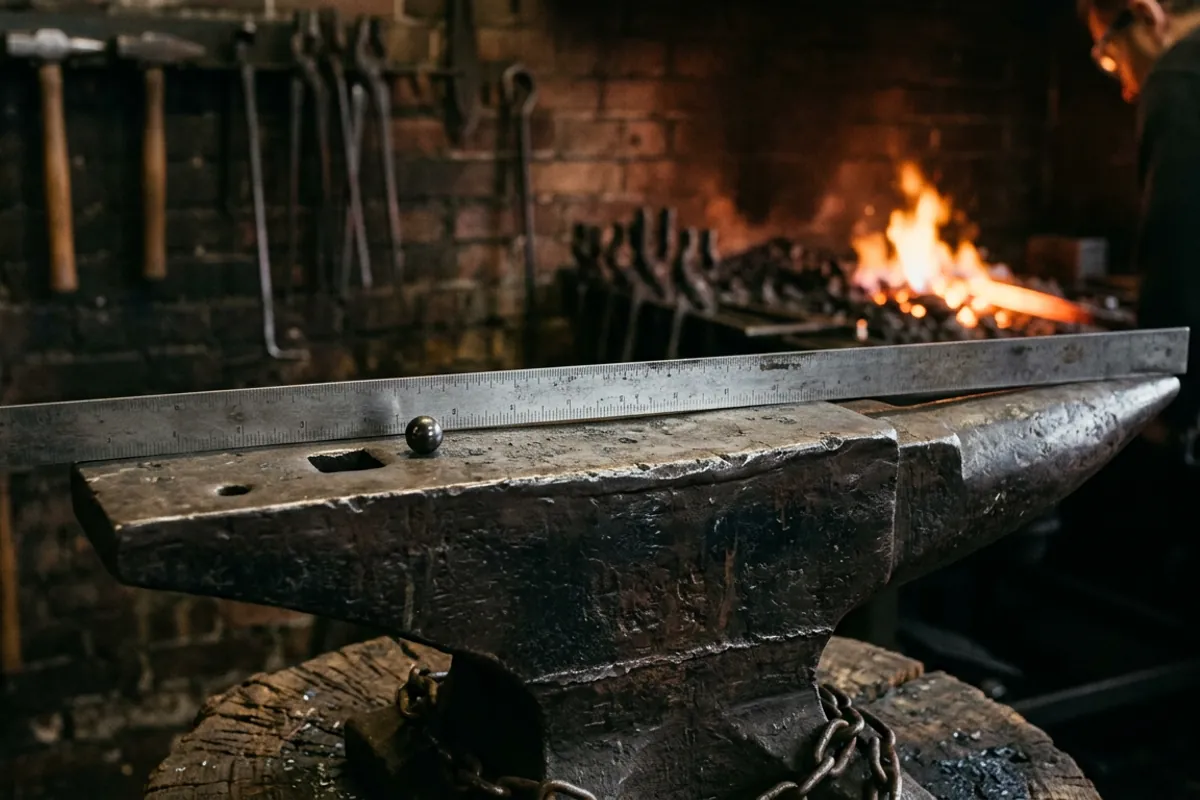
Rebound. This is the one that matters most. Drop a steel ball bearing from a fixed height onto the face and watch how high it comes back. A hard, sound face returns most of the energy; a soft or delaminated one swallows it. Owners on I Forge Iron's rebound test thread settle on a simple version: a 1 inch ball dropped from about 10 inches should bounce back 8 to 9 inches on a good anvil, which is 80 to 90 percent. Below roughly 70 percent and you are looking at a soft or tired face. Test the whole face, not one spot, because delamination shows up as a dead zone that rebounds fine everywhere else. I carry a 1 inch chrome ball for exactly this. It is a couple of dollars and it has talked me out of more bad anvils than any other tool.
Check price on Amazon (paid link)
Ring and the ping. Set the anvil on something that lets it resonate, tap the face with a small hammer, and listen. Most wrought and cast-steel anvils ring; Fishers and other cast-iron-bodied anvils thud by design, so a quiet Fisher is not a red flag. What you are hunting for is a dead, dull spot in an anvil that otherwise rings, which is the same delamination the rebound test finds. Old hands on the BladeForums ball bearing test thread will tell you the two tests back each other up; use both.
The face and the sway. Lay a straightedge across the length of the face and look for daylight in the middle. A little sway is workable and common; even good hard-faced anvils go swaybacked over decades, as the I Forge Iron crowd points out. A deep dish is not. Check the edges for big chunks missing, look hard at the plate seam for a crack or a lip that means the face is lifting, and be suspicious of a face that has been ground bright and flat, because that usually means someone removed hardened steel to hide damage. A cleaned-up weld bead across the face is a walk-away for me.
Identification is the last piece. Trenton, Peter Wright, and Hay Budden all marked their bodies, and Hay Budden serial numbers on the front foot can date the anvil, which the collectors track through references like the I Forge Iron markings threads. A name you can verify is worth paying for. An unmarked "mystery" anvil can still be great, but you are buying purely on the tests, so lean harder on rebound.
The specs at a glance
Vintage anvils do not come with a spec sheet, so weight is stamped or estimated and everything else you prove by hand. When the vintage hunt stalls, these are the new anvils I would put next to it, with published figures from the makers and retailers. I am not printing marketplace prices; tiers are budget, mid, and premium.
Scroll horizontally to see all columns.
| Anvil | Weight | Material | Face size | Hardness | Price tier |
|---|---|---|---|---|---|
| Vintage London-pattern (Trenton, Peter Wright, Hay Budden) | ~100 to 200 lb | Wrought/steel body, forge-welded tool-steel face | varies | not published (test by rebound) | mid to premium, condition-driven |
| NC Tool Knifemaker | 76 lb shipping | Cast alloy steel, hardened face | 3.25 x 11.375 in | not published | mid |
| VEVOR single-horn 66 lb | 66 lb | Cast steel | not published | not published | budget |
| VEVOR single-horn 132 lb | 132 lb | Cast steel | not published | not published | budget |
A note on that "hardness not published" for the new anvils: neither NC Tool nor VEVOR publishes an HRC number I can cite, so I will not invent one. The rebound test is how you check any of them in person, new or old. If you want the science on why face hardness holds up under repeated impact, Knife Steel Nerds is the place I send people rather than repeating shop lore.
NC Tool Knifemaker anvil: the new one I would buy instead
When someone cannot find a sound vintage anvil, or cannot test one and does not want to gamble, this is the American-made cast anvil I point them to first. NC Tool lists the Knifemaker with a face of 3.25 by 11.375 inches, a 4 by 8 inch horn, a 1 inch hardy hole and a pritchel in the heel, and a shipping weight of 76 pounds, per the NC Tool product page and Jantz. It is cast alloy steel, heat treated, precision milled.
Who it suits: a knife or small-tool smith who wants a hardened face and a long working surface without hunting the classifieds for months. The long, narrow face is genuinely nice for blade work, and it is a real anvil with real rebound rather than an ASO. The honest tradeoffs are two. It is not cheap for its weight, so you are paying for the hard face and the made-in-USA casting, not for mass. And at 76 pounds shipped, it is light for general forging; a light anvil moves and bounces under heavy blows unless you bolt or strap it to a solid stand. If your work is heavier stock, size up, and read my anvil weight guide before you commit to a number.
Check price on Amazon (paid link)
VEVOR single-horn anvils: the budget new alternative
If the choice is a mystery vintage anvil you cannot test or a new budget cast-steel anvil with a known face, the budget new anvil is often the safer first buy. VEVOR's single-horn cast-steel anvils are the ones most beginners land on, and for the price they are a lot more anvil than the gray cast-iron ASOs that plague the marketplaces. They come in a range of weights; the 66 pound and 132 pound are the common home-shop sizes.
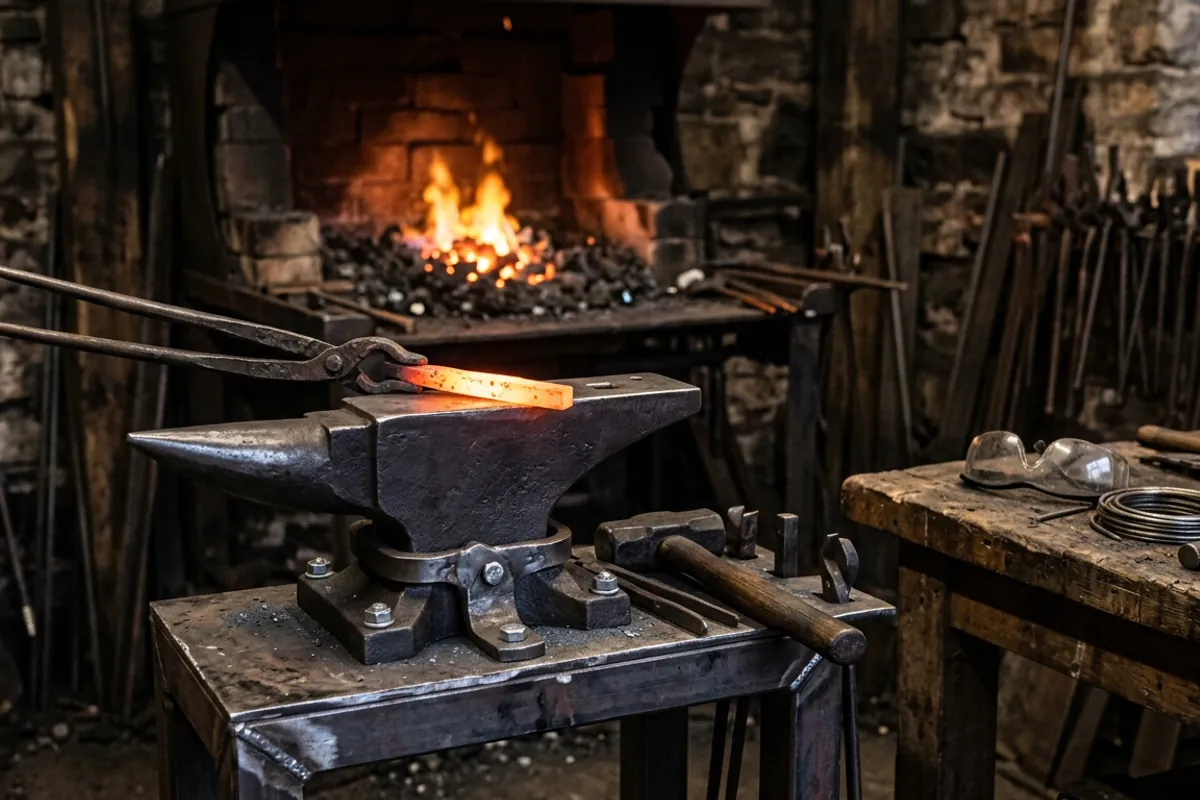

Here is the owner-to-owner truth. These are cast steel, so they take a hardened-ish face and usually rebound decently, but quality control is uneven unit to unit. The smart move is the same rebound and ring test you would run on a vintage anvil, done the day it arrives, and send it back if it thuds dead. Edges often need dressing, and the fit and finish is what you would expect at the price. For a beginner who wants to start forging now rather than wait for the right old anvil, that is a fair trade. I go deeper on which VEVOR sizes are worth it in the VEVOR anvil guide, and on budget picks generally in best anvils for beginners.
The 66 pound is the entry point; usable for light work and small blades, too light for anything serious.

What a fair vintage price looks like
The number on a vintage anvil for sale tells you less than people think, so let me anchor it. Old anvils in the used market tend to price by the pound, and that per-pound figure swings hard with region, brand, and condition. A beat, swaybacked, no-name anvil and a clean, marked Peter Wright of the same weight can be double or triple each other per pound, and both can be "fair" for what they are. A named brand with proven rebound is worth a premium; an untested mystery anvil is not, no matter how heavy.
What I will not do is print a dollar-per-pound number as if it were a law, because it moves too much by area and by year. What I will tell you is how to sanity-check the ask: weigh the value against rebound first, brand second, weight third, and cosmetics last. A ringing, hard-faced, marked anvil at the top of the local range is a better buy than a soft one at the bottom. I lay out the whole logic in the anvil price guide, and it applies double to old iron, where condition swings the value more than anything on the tag.
What owners say
For the vintage brands, owner consensus is strong and consistent. On I Forge Iron, the long-running advice is that a good vintage anvil returns 80 to 90 percent rebound and that the ball-bearing test is the single most useful thing a buyer can do; that lines up with what I get off Bessie. The same crowd is honest that rebound worship can go too far: a swaybacked face is common even on quality anvils and does not condemn them, and there is real debate on the forums about how much a perfectly hard face matters for a hobby smith who does not miss much. That honesty is worth reading.
For the ball-bearing method itself, the BladeForums thread is the clearest owner write-up I have found, and it stresses testing multiple spots to catch delamination, which is the failure mode that wrecks otherwise good vintage anvils.
On the NC Tool Knifemaker, owner signal is moderate and mostly positive: smiths like the long face and the hardened top and treat it as a real, if light, anvil, with the main gripe being value for the weight. Owner signal on the specific VEVOR units is noisier. The recurring forum theme is unit-to-unit variation, which is exactly why I tell people to run the rebound test the day it arrives and return a dud. Where the signal is thin or mixed, I would rather say so than pretend there is a clean consensus.
What I would tell a friend
Buy the vintage anvil if you can put your own ball bearing on it and it passes. A marked Trenton, Peter Wright, Hay Budden, or Fisher in the 100 to 200 pound range with 80 percent-plus rebound, a mostly flat face, and a sound plate seam is the best value in the shop, and it will outlive you. Carry a 1 inch steel ball and a small hammer to every viewing, test the whole face, and walk away from a ground-flat top, a welded-over face, or a dead thud in an anvil that otherwise rings.
If the hunt stalls or you cannot test what is offered, do not gamble on a mystery anvil at a premium. Buy a new anvil with a known face instead: the NC Tool Knifemaker if you want American cast steel and a long blade-friendly face, a VEVOR single-horn if budget rules, tested the day it lands. Either beats a soft antique.
And the safety note that outranks all of it: whatever anvil you land on, mount it dead solid before you swing. A light anvil, new or vintage, that rocks or walks under the hammer throws your blows off and throws hot scale in unpredictable directions. Bolt it, strap it, or set it in a stump seat, wear your ANSI Z87.1 eye protection at the anvil and the grinder both, and keep the cotton and wool on instead of synthetics near the forge. The anvil is a decades-long tool. Set it up like one. For the wider first-shop picture, the anvils topic hub collects the rest of what I would hand a new smith.