I have verified live listings and specs. Writing the article now.
Below is the article.
The bond between a blacksmith and anvil is the oldest one in the trade, and it is also the one beginners get wrong most often, usually by spending too little on something that only looks like an anvil. Here is the short version before the details: for most people starting out, I would put a cast steel anvil in the 130 pound class under the hammer, because that is where mass, price, and usable rebound cross for a new smith. If your budget or your bench cannot take that, a 66 pound cast steel anvil bolted down solid will still teach you more than a 200 pound anvil-shaped doorstop that eats every hammer blow you give it.
I need to be straight about what this guide is and is not. I run a 148 pound Trenton named Bessie in my own shop, and she is the anvil I measure everything against. I have not run down each of these budget import anvils on my own stump, and I am not going to pretend I have. What follows leans on published maker specs, prices and hardness figures I could actually find and check, and owner reports from the forums weighed against twenty-five years of knowing what a working anvil is supposed to do. Where the owner signal is thin, I will say so. That honesty is the whole point of the site.
How I picked these
An anvil does one job that matters: it throws your hammer energy back into the steel instead of swallowing it. That is rebound, and it is the single number that separates a real anvil from an anvil-shaped object. A hardened steel face gives you a lively bounce; soft cast iron gives you a dead thud and a sore elbow by lunchtime. So my whole filter here is simple. I only considered anvils cast or forged from steel with a hardened face, and I threw out the cast iron pieces that dominate the cheap end of the marketplace no matter how heavy or cheap they are.
The second filter is mass. An anvil wants to be roughly fifty times the weight of the hammer you swing, so a 2 pound hammer is happy on a 100 pound anvil. Under about 70 pounds you start fighting the anvil moving on you unless it is bolted down hard. I dig into that math in more detail in the anvil weight guide, and if you want the full checklist for spotting a good used anvil before you spend real money, the anvil buying guide covers the ring-and-rebound test in the flesh.
Everything below is a new import casting bought online, because that is what a beginner without access to a used anvil is actually choosing between. A used American or English anvil from the club sale is almost always the better buy per pound. But these import castings are the honest floor of the market, and some of them are genuinely usable now in a way the cast iron junk never was.
The lineup at a glance
Only published figures are in this table. Where a maker does not state a number for a specific model, it reads "not published" rather than a guess. Face size and hardness come from the maker or a non-marketplace retailer page, cited in each section below.
Scroll horizontally to see all columns.
| Anvil | Weight | Material | Face size | Hardness | Price tier |
|---|---|---|---|---|---|
| VEVOR single horn | 66 lb | Cast steel | 10.35 x 3.46 in | ~50 HRC | Budget |
| Happybuy single horn | 88 lb | Cast steel | Not published | 50 HRC | Budget |
| VEVOR single horn | 132 lb | Cast steel | Not published | Not published | Budget to mid |
| Happybuy single horn | 132 lb | Cast steel | Not published | Not published | Budget to mid |
A note on those "cast steel" labels: this is not the same steel as a forged Peddinghaus or a vintage wrought anvil with a hardened tool steel face plate. It is a cast body marketed at around 50 HRC on the face. That is soft for a top-tier anvil, hard enough to work on. For what the hardness number actually means for a working surface, Knife Steel Nerds is the place I send people who want the real metallurgy instead of marketing.
VEVOR 66 lb cast steel: the small starter

This is the little one, and it is the one I would only buy under two conditions: your bench or your back cannot take more weight, or your budget is truly at the floor. VEVOR publishes it as a London pattern single horn in cast steel, with a face of 10.35 by 3.46 inches and a face heat treated at around 800 degrees Celsius to roughly 50 HRC (VEVOR product page). Lowe's lists the same casting and confirms the 50 HRC figure (Lowe's listing).
At 66 pounds this anvil will walk across the shop if you set it on a wobbly stand and swing hard. Bolt it down or chain it to a solid stump, and it becomes a genuinely useful little anvil for small work, hooks, bottle openers, light knife stock. The honest tradeoff is mass: you will feel this thing move energy back into your hand less crisply than a heavier anvil, and heavy stock will just laugh at it. It is a real starter, not a lifetime tool. If you already know you want to forge anything bigger than a steak knife, skip it and save toward more weight.
Happybuy 88 lb cast steel: a reasonable middle
Happybuy is VEVOR's sister brand, and the castings are cut from the same cloth. This 88 pound model is listed as hard steel with a face hardness of 50 HRC, an overall length of 23.3 inches, a width of 6.7 inches, a hardy hole of 0.9 inches square, and a 1 inch round hole. The maker does not publish a separate finished face dimension, so that reads "not published" above rather than a number I made up.
Eighty-eight pounds is the weight where a beginner anvil starts to feel like an anvil instead of a paperweight. You get enough mass to hold still under a 2 pound hammer, a real horn for drawing curves, and both holes for hardy tools and punching. It is my pick for the person who wants one anvil to actually learn on and does not want to fuss with the 132 pound models on a light bench. Same caveats as the whole class apply: the face is soft compared to a forged anvil, quality control is a lottery, and you should inspect it the day it arrives.
Check price on Amazon (paid link)
VEVOR 132 lb cast steel: mass where it counts

This is the one I would steer most new smiths toward if the bench and the budget allow it. VEVOR lists it as a 60 kilogram (132 pound) London pattern single horn in cast steel. The maker does not publish a face dimension or an HRC figure I could confirm for this exact model, so both read "not published," and I will not borrow the 66 pound anvil's number and pretend it applies here.
Why the heavier one over the 88? Mass is the cheapest performance you can buy in an anvil. More weight under the hammer means more of your energy goes into moving the steel and less into moving the anvil, so you get more work per heat and less fatigue. At 132 pounds you are into the range where the anvil simply sits and does its job. One thing to check before you buy: forum owners report this casting has a very large hardy hole, around 34 mm, and at least one model in this size lacks a pritchel hole entirely, so confirm the exact listing has the holes you want. The horn also runs fat, which I will come back to in the owner section.
Happybuy 132 lb cast steel: the Amazon route to real weight
If you would rather buy your 130 pound class anvil through Amazon than through the VEVOR feed, this is the same idea in the sister brand. It is listed as a 132 pound cast steel single horn with both a round and a square hole, which is the hole layout I would want over the VEVOR that may skip the pritchel. Face size and hardness are not published for this specific model, so treat it as the same cast steel, roughly 50 HRC class as the rest of the family.
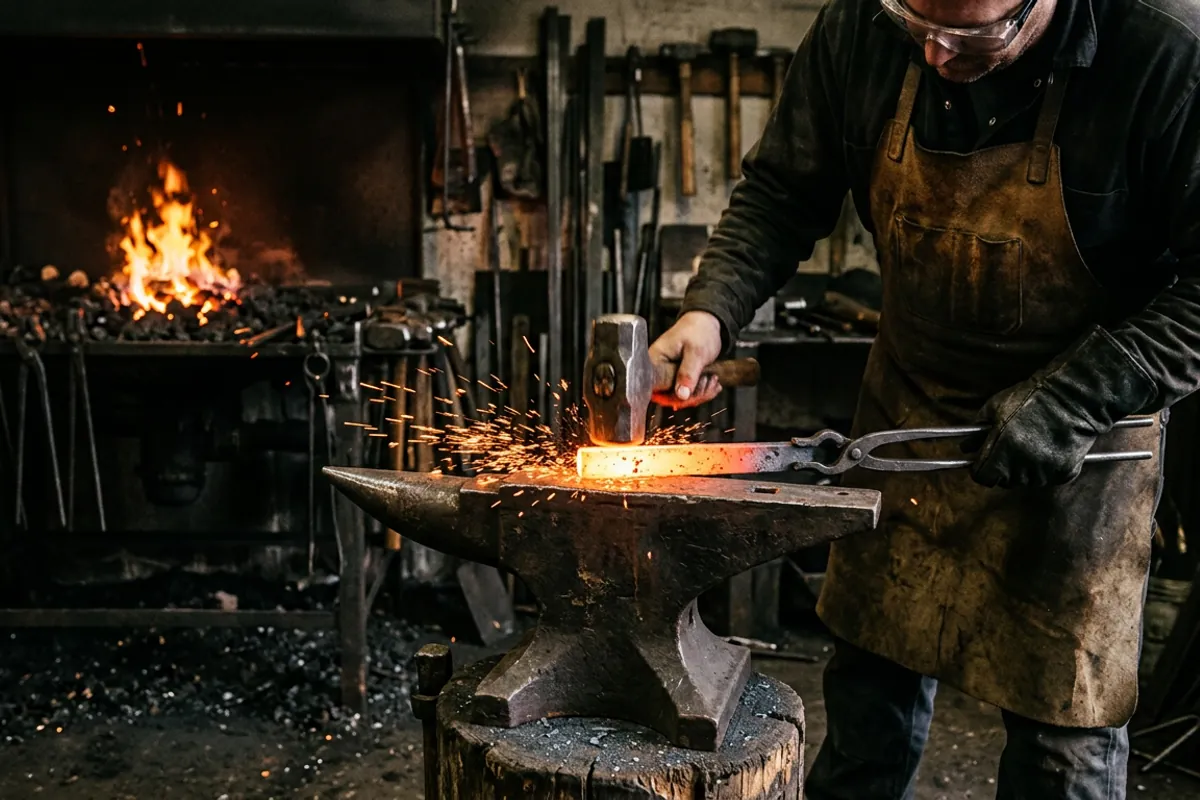
Honestly, the VEVOR 132 and this Happybuy 132 are the same class of import casting, and I would let price and stock decide between them on the day. Buy whichever is cheaper and in stock, inspect it hard when it lands, and put the savings toward a good hammer and eye protection. That is the smarter allocation than chasing a name on a casting that shares a factory.
Check price on Amazon (paid link)
What owners say
None of these are anvils I have run down myself, so here is what the people who actually own them report. On I Forge Iron, the recurring theme is that the VEVOR cast steel anvils are genuinely more usable than the old cast iron junk, and that at the price they are hard to argue with. Owners there report ball bearing rebound tests in the 70 to 90 percent range, with one member reporting roughly 90 percent rebound on the 132 pound model with no denting, and smaller units testing 70 to 80 percent. VEVOR itself claims a rebound rate of over 70 percent on the 66 pound casting, and for once the owner tests do not wildly contradict the marketing.
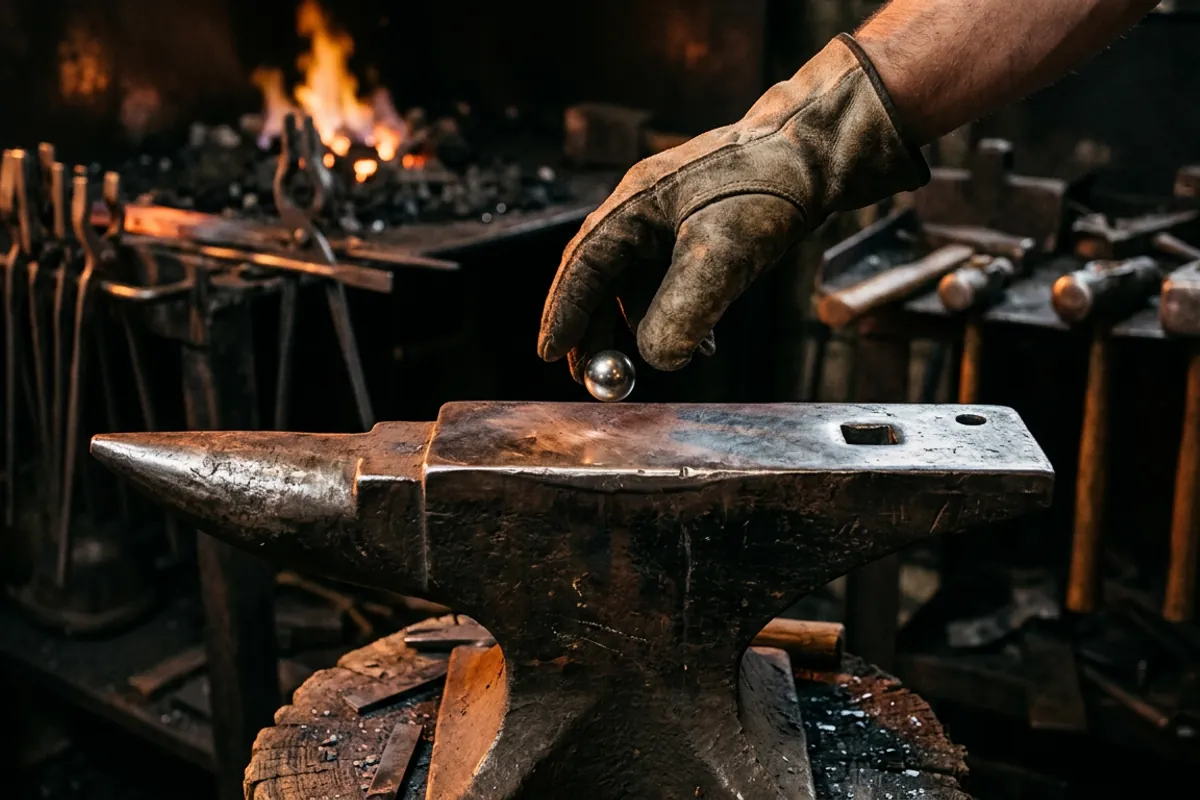
The complaints are consistent too, and they matter. Owners note the horn runs too fat for fine work, and that the hole placement is not always where a working smith would put it. Over on The Garage Journal, the split is between people happy with theirs and people worried about getting a bad casting, which is the real story with this whole tier: quality control is a lottery, and the smart move is to inspect the anvil the day it arrives and test the rebound yourself before you decide it is a keeper. Drop a 1 inch ball bearing on the face from a foot up; a good spot bounces back most of the way, a dead spot barely returns.
Owner signal on the Happybuy versions specifically is thinner than on VEVOR, which is exactly why I am not dressing it up. They share castings and specs with the VEVOR line, so the VEVOR consensus is the best read we have, but treat any single Happybuy listing as an unknown until yours is in hand and tested.
The anvils I would steer you away from
The trap for every beginner is the cheap cast iron anvil, and the marketplace is full of them at weights and prices that look like a steal. A 55 pound cast iron anvil from a big box brand, or the classic Harbor Freight piece, is a doorstop with a horn. Cast iron has no useful rebound; you will spend twice the effort per blow and wear yourself out. Owners on the forums have said the same thing for decades, and the term of art for these things, anvil-shaped object, exists precisely because so many people got burned buying one.
The tell is always the material and the hardness. If a listing says "cast iron" and quotes no face hardness, walk away no matter how heavy or cheap it is. Weight alone does not make an anvil; a 100 pound cast iron block still swallows your hammer. Spend the same money on a lighter cast steel anvil with a hardened face and you will forge better and hurt less. If you are still deciding on the whole starting kit, the best anvils for beginners piece walks through the used versus new call in more depth, and the full anvils topic hub collects everything on sizing, buying, and setup.
What I would tell a friend
If a friend called me tonight, I would tell him this. Buy the most mass in cast steel you can bolt down and afford, which for most people is a 130 pound class casting like the VEVOR 132 or its Happybuy twin, and step down to the 88 or the 66 only if your bench or budget forces it. Never buy cast iron, no matter the weight or the price. Inspect whatever you buy the day it arrives, run the ball bearing rebound test yourself, and mount it dead solid, because a loose anvil steals energy the same way a soft one does.
And do not spend your last dollar on the anvil. The forge decides half of your results too, and the coal versus propane guide will help you spend that money well. Most important, before you strike the first blow, put on ANSI Z87.1 rated eye protection and wear natural fibers, not synthetics, anywhere near heat. I quenched a blade in cold oil too close in a cotton shirt with no face shield early on, the oil flared, and it took my eyebrows; I kept my eyesight on luck alone. The safety gear guide lays out what actually matters. An anvil you can replace. Your eyes you cannot.