content/blog/200-lb-anvil-for-sale-buying-guide.md
If you have been forging on a 100 pound anvil and you keep wishing it would sit still under a heavy blow, a 200 lb anvil for sale is the size where that wishing stops. Two hundred pounds is the mass most one person shops settle on and never outgrow: heavy enough to move hot steel without dancing across the floor, still light enough that two people and a hand truck can load it. If you want my honest pick before the details, I would spend the money on a used forged or ductile iron anvil in this weight class over any of the import cast pieces, and if it has to be new and cheap, I would treat the budget cast steel 200 pounders as what they are, a lot of usable mass for the money and not much rebound. None of what follows is a bench test. I do most of my work on Bessie, a 148 lb Trenton, and these picks lean on published specs and owner reports weighed against what that anvil has taught me over the years.
What 200 pounds of anvil actually buys you
The rule of thumb that has held up across every smith I have taught is that you want an anvil that is at least fifty times the weight of your hammer, and more is better. Swing a two pound hammer and a 100 pound anvil is already past that line, but the number understates what mass does for you. A heavier anvil sends more of each blow back up into the steel instead of into the floor and the stand, so the metal moves faster and you swing less. Bessie at 148 pounds does most of what I ask, but the day I forge a hammer or draw out a thick bar I feel where she runs out of mass. A 200 pound anvil is the class where that ceiling lifts for good in a hobby shop.
Two hundred pounds is also the practical top end for a tool you have to live with. Past about 250 pounds you are into freight, forklifts, or three friends and a bad back. At 200 you can still get a hand truck under it, and a solid stand plus that mass will hold a forge weld blow without walking. If you are still deciding whether you need this much anvil at all, my anvil weight guide walks through the sizes honestly, and the broader anvil buying guide covers the checks that matter before money changes hands. This guide is about the 200 pound field specifically.
The one thing that separates these anvils: rebound
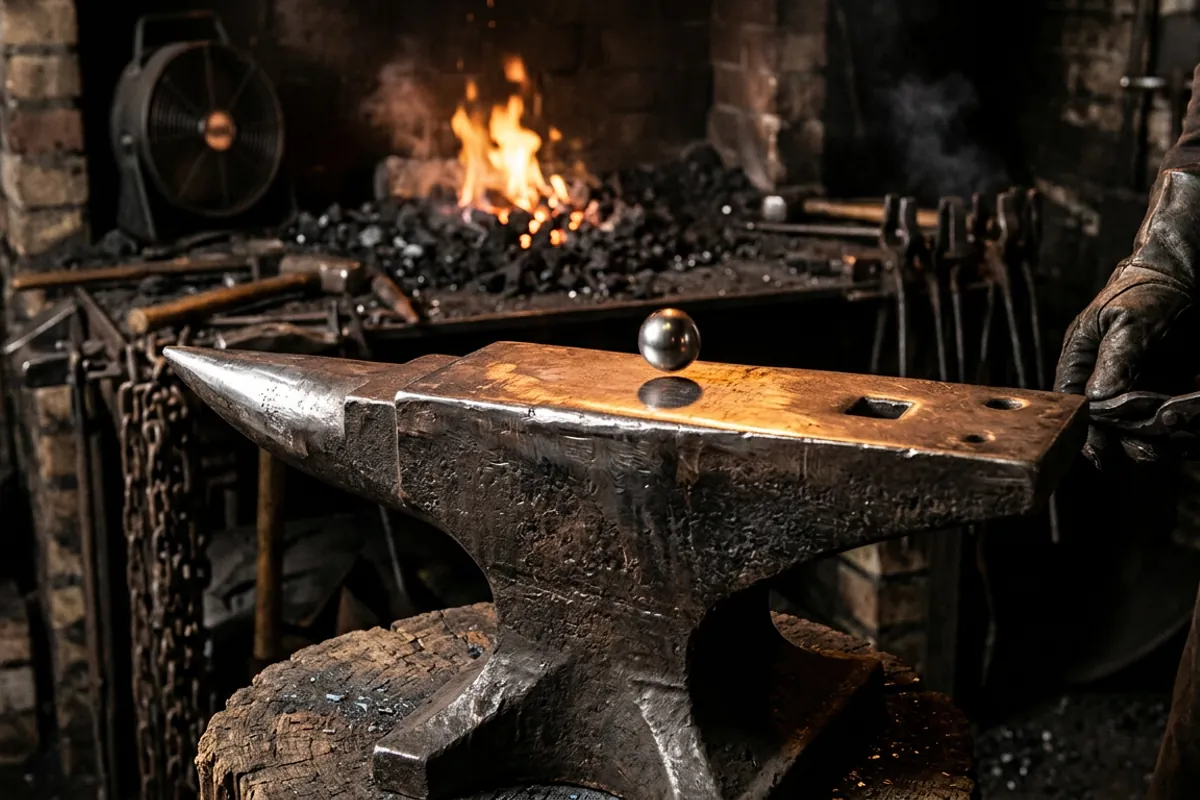
Weight gets the headline, but the number that actually predicts how an anvil forges is rebound, and it is the one thing the cheap listings never tell you honestly. Drop a steel ball bearing on the face from a fixed height and watch how high it bounces. A good hardened forged or cast steel anvil returns that ball to roughly 75 to 90 percent of the drop height. That returned energy is energy going back into your workpiece instead of dying in the anvil. It is a test you can do in a parking lot before you hand over a dime, and I would not buy any used anvil without it.
Here is the honest part the import listings bury. A cheap cast anvil that advertises 55 HRC on the face can still rebound far worse than a real forged anvil at the same hardness number, because hardness at the surface and a sound, well heat treated body are not the same thing. Smiths who have run the ball test on budget cast pieces report rebound around half of what an old forged anvil gives. That does not make them useless. It makes them slower, and it means you supply the difference with your arm. Keep that in mind as we go through the field, because the price gap between a $300 import and a $900 quality anvil is really the rebound gap.
How the 200 pound field compares
Only published figures are in this table. Where a maker does not state a spec, it says so.
Scroll horizontally to see all columns.
| Anvil | Weight | Material | Face / top size | Hardness | Price tier |
|---|---|---|---|---|---|
| GDFStudio cast steel | 200 lb | Cast steel | 13.58 x 3.94 in | 55 HRC (claimed) | Budget |
| YZFfnte cast steel | 200 lb | Cast steel | Not published | 55 HRC (claimed) | Budget |
| VEVOR single horn | 132 lb | Cast steel | Not published | Not published | Budget |
| TFS (Texas Farrier Supply) | 200 lb | Ductile iron | 4.75 x 18.25 in top | 48 HRC | Mid |
| Emerson Traditional | 200 lb | Tool steel (4140 class) | Not published | Not published | Premium |
TFS specs come from the Valley Farrier listing for the TFS 200 lb anvil and the maker's note that TFS anvils over 150 pounds are hardened to 48 Rockwell with a 1 inch hardy hole and 1/2 inch pritchel. The Emerson is listed by Centaur Forge as a 200 lb traditional anvil in 4140 class tool steel. The cast steel hardness figures are what the sellers claim, not numbers I have verified on a tester.
The budget cast steel 200 pounders
These are the anvils that show up when you search "200 lb anvils for sale" and sort by price. They are one piece cast steel, painted, with a horn, a flat face, a hardy hole and usually a pritchel. For a beginner who wants a lot of mass under the hammer today and cannot find a decent used anvil locally, they are a real option, as long as you buy them with clear eyes.
The GDFStudio 200 pound cast steel anvil publishes a 13.58 by 3.94 inch working surface and a claimed 55 HRC face, heat treated per the seller. That is a big flat area to work on, which is genuinely useful for straightening and general fabrication. It is a budget cast anvil, so expect the horn and edges to need dressing, and expect rebound in the range owners report for import cast, meaning noticeably less lively than a forged anvil. Check price on Amazon (paid link).
The YZFfnte 200 pound cast steel anvil is the same class of tool, cast steel with a round horn and a claimed 55 HRC face, marketed for bending, shaping and punching. The face dimensions are not published, so I will not guess at them. Treat it the way you would treat the GDFStudio: a lot of mass for the money, plan to touch up the edges, and do not expect it to forge like an old Trenton. Check price on Amazon (paid link).
If a full 200 pounds is more than you can lift onto a stand alone or more than the budget allows this month, the closest honest step down in the same cast family is a 132 pound single horn. It is not a 200, and I would rather you got the mass, but a 132 will still hold most beginner work.

Two things I will not soften on any of these. First, cast anvils sometimes ship with sharp, near square edges that will cold shut into your workpiece and leave marks. Dressing a gentle radius onto part of the edge with an angle grinder is normal setup work, not a defect, but you do it with a face shield and ANSI Z87.1 rated eye protection, not just safety glasses, because grinding wheels throw metal and occasionally come apart. Second, if you can find a sound used anvil in this weight, buy that instead. My VEVOR anvil guide goes deeper on where the budget cast imports make sense and where they do not, and the best anvils for beginners roundup lays out the used versus new tradeoff at every budget.
The step up: TFS ductile iron
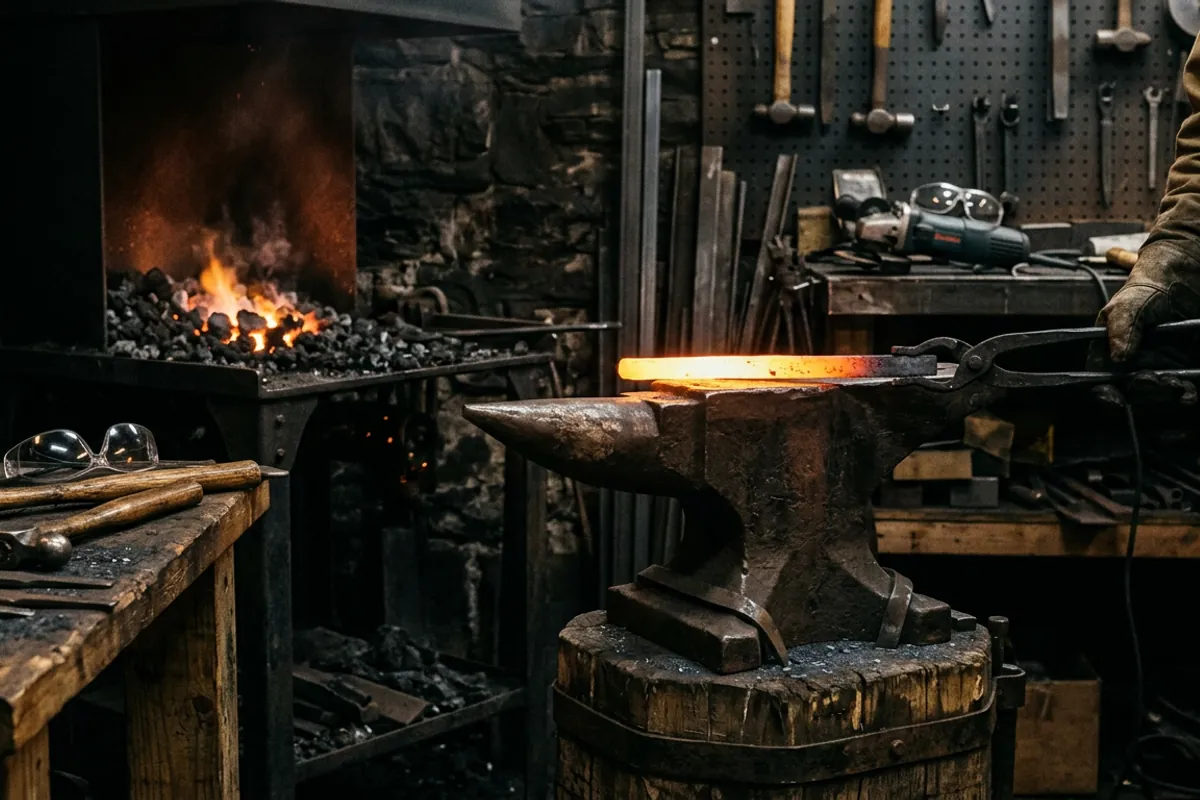
The Texas Farrier Supply 200 pound anvil is where I would put my money if I wanted a new anvil that forges like a real one. TFS anvils are ductile iron, cast in the USA, heat treated and hand finished, and the ones over 150 pounds are hardened to 48 Rockwell. Ductile iron gets a bad reaction from people who confuse it with plain cast iron, which is brittle and dead under the hammer. Ductile iron is a different animal, tough and springy, and TFS has a long track record with farriers and smiths who beat on these daily. The published top dimensions run 4.75 by 18.25 inches with a 1 inch hardy and 1/2 inch pritchel, per the Valley Farrier listing.
Forty eight Rockwell is softer than a top forged anvil, so over decades of heavy use the face can show more marking than a hardened forged tool. For a hobby shop that is a non issue. What you get in exchange is a new anvil with real rebound, a clean face, and a maker who publishes honest specs, for a price that sits well below a new forged anvil. This is the sensible middle of the 200 pound field, and it is what I steer people toward when they want new and do not want to gamble on an import.
The premium pick: tool steel
At the top of the field are the forged and cast tool steel anvils. The Emerson Traditional 200 pound anvil, sold through Centaur Forge, is a 4140 class tool steel anvil built in the London pattern, the shape most of us picture when we say anvil. Centaur lists it as heavy duty for blacksmiths and farriers, and tool steel at this level gives you the liveliest face in the group, the rebound that makes heavy forging feel efficient instead of like a fight. Centaur does not publish a face hardness figure on the page I read, so I will not invent one.
This is more anvil than most beginners need on day one, and the price shows it. But an anvil is a lifetime tool, and a 200 pound tool steel anvil is one you will hand to your kids. If you are the kind of buyer who would rather cry once, this is the tier. If you are buying your first anvil and are not sure you will stay with the craft, the TFS or a good used anvil is the wiser spend.
What owners say
I have not run any of these specific models down in my own shop, so this is synthesized owner consensus, not a hands on test. On the budget cast steel anvils, the pattern is consistent across the forums. On I Forge Iron's thread about a cast steel import anvil, the recurring message is that a cheap cast steel anvil is a lot better than no anvil and that people have turned out good work on them, while being blunt that the rebound is down and the price is what you are really buying. The BladeForums thread asking whether cast steel anvils are any good lands in the same place: usable, forgiving on the wallet, not a match for a forged anvil under the hammer.
On rebound specifically, the I Forge Iron discussion of anvil rebound and ring is the education I wish every new buyer got before spending. The takeaway smiths repeat there is to test the ball bearing bounce yourself and not trust a stamped or printed hardness number, because a high claimed HRC on a poorly cast body still forges soft. That is exactly why I keep steering people to the ball test in the parking lot.
Owner signal on the specific YZFfnte and GDFStudio listings is thin, which is honest to say. They are recent import listings without the long forum histories that JHM, TFS, or the old forged brands have. What owners report about the class they belong to is solid, and that is what I have leaned on here. TFS, by contrast, has years of positive farrier and smith reports behind it, which is a big part of why it is my new anvil pick.
What I would tell a friend
If a used forged or ductile iron anvil around 200 pounds comes up locally and passes the ball bearing rebound test, buy that and stop reading, because it will beat everything new in this guide on both price and feel. If you want new and want it to forge right, the TFS 200 pound ductile iron is the one I would order. If it has to be cheap and new today, the GDFStudio and YZFfnte cast steel 200 pounders will get you working, as long as you go in knowing you are buying mass, not rebound, and you plan to dress the edges. If money is no object and you want a lifetime tool steel anvil, the Emerson is the top of the field.
Two safety notes I will not soften, wherever your anvil comes from. Wear ANSI Z87.1 rated eye protection any time you dress the face or hardy the edge on a grinder, and a full face shield over it for grinding, because wheels throw metal and sometimes shatter. And bolt or strap that 200 pounds to a stand you cannot tip, because an anvil that walks off its stump under a heavy blow lands on a foot. For the full field beyond this weight class, the anvils topic hub collects every anvil guide on the site in one place.