I have verified two live ASINs (B075YSCQ4Q, B0819K93FG) and gathered real maker specs and forum sources. Writing the article now.
Here is the article.
If you want the short version before you spend a dime: the anvil I would put under a brand new smith is a used vintage anvil in the 100 to 150 pound range, bought locally off a stump for cash. When that hunt comes up empty, and for a lot of people in a lot of places it does, the honest budget move is one of the imported cast steel anvils below, and I would take the heavier 132 pound one over the little 66 pounder almost every time. That is the whole guide in three sentences. Everything after this is me explaining why, and telling you how to not get burned, because an anvil is the one tool in the shop you will keep for the rest of your life if you buy it right.
One thing up front, because the brand runs on it: I have not run these specific import anvils down in my own shop. Bessie, my 148 pound Trenton, is what I forge on, and I would not pretend a weekend with a borrowed anvil is a lab test. What follows leans on published maker specs, the ball bearing rebound test any of us can do, and what owners actually report on the forums, all weighed against twenty five years of standing at an anvil. Where the signal is thin, I will say it is thin.
What actually makes an anvil worth owning
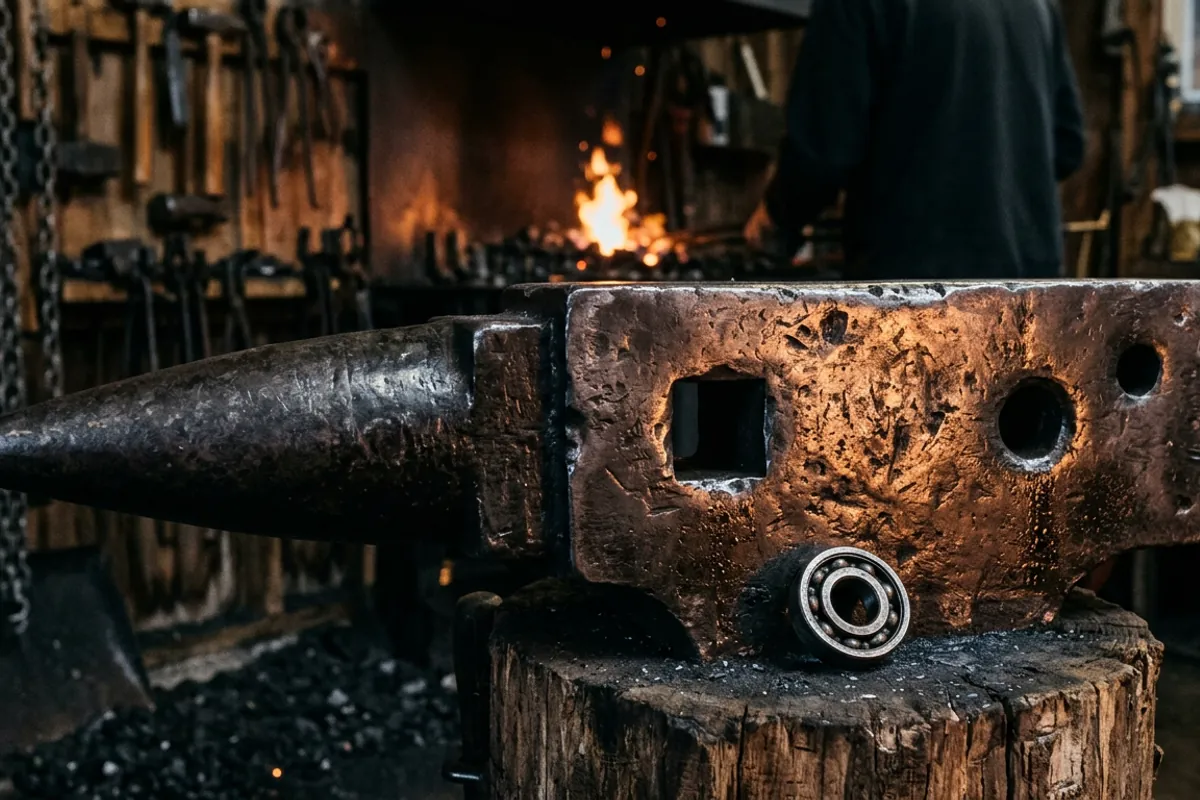
Strip away the marketing and an anvil does one job: it throws your hammer energy back into the hot steel instead of eating it. That property has a name, rebound, and it is the single most important thing about any anvil you are thinking of buying. Drop a steel ball bearing onto the face from about 10 inches and watch how high it comes back. A good hard anvil returns roughly 75 to 90 percent of that height, and it rings while it does it. A dead anvil swallows the ball with a dull thud, and it will swallow your day the same way, wearing your arm out while the steel barely moves. The anvilfire rebound test writeup lays out the method, and the I Forge Iron thread Why is rebound important? is worth reading before you buy anything.
After rebound comes mass. Heavier is steadier, and steadier moves metal. A light anvil bounces around and robs you of force unless it is bolted to something massive. That is why I keep steering beginners toward that 100 to 150 pound band. I wrote a whole piece on this, what size anvil do you actually need, so I will not repeat all of it here, but the rule of thumb is buy the most mass your budget and your back will allow.
Then the anatomy. A real anvil gives you a horn for drawing curves, a flat face for the bulk of the work, a hardy hole (the square one) that holds bottom tools, and a pritchel hole (the round one) for punching over. If a lump of metal is missing the hardy hole and the horn, it is a block, not an anvil. A block will teach you a lot and I am not against them, but know what you are buying.
How I chose these, and what these picks are not
I picked from what a beginner can actually click and receive: the imported single horn cast steel anvils that dominate the online listings. I verified each ASIN is live and matches the product before writing it in. What I did not do is bench test them, and I want to be blunt about the category, because honesty here is the whole point. "Cast steel" on an import listing is the maker's own description. The hardness numbers you will see below are published by the seller, not independently confirmed, and quality control on this class of tool is uneven. Two anvils off the same line can rebound differently. Some owners get a genuinely useful tool. Some get a soft face. This is exactly why the ball bearing test matters more on a cheap anvil than an expensive one: you check the specific one that showed up at your door.
For real eye protection while you do any of this grinding, dressing, or forging, read blacksmith safety gear: what matters and what to skip first. I quenched a blade in oil that was too cold early on, standing too close in a cotton shirt with no face shield, and the flare took my eyebrows. I kept my eyesight on luck alone. Anvil work throws scale and sends chips flying off struck tools. ANSI Z87.1 rated eye protection is not optional in my shop, and it should not be in yours.
The field at a glance
Published specs only. Where the maker does not state a figure, it says so.
Scroll horizontally to see all columns.
| Anvil | Weight | Material | Working face | Hardness (maker) | Price tier |
|---|---|---|---|---|---|
| VEVOR single horn | 66 lb | Cast steel | not published | 55 HRC | Budget |
| Happybuy / VEVOR single horn | 132 lb | Cast steel | 13.58 x 3.94 in | 50 HRC | Budget |
| NC Tool standard (reference, not an Amazon link) | 70 lb | Alloyed cast / ductile steel | 3.5 x 11 in | not published | Mid |
The NC Tool row is there for scale, not as a click target. It is a step up in reputation and price, and I will come back to it. Sources for these figures are the VEVOR maker pages linked in each section below and the Centaur Forge NC 70 lb standard anvil page.
VEVOR 66 lb single horn cast steel anvil
This is the small one, and for most people it is too small. Sixty six pounds is entry into the "better than nothing" range, and it suits a jeweler, a hobbyist doing light bending and riveting, or someone with genuinely no room and no way to move weight. The maker lists it as drop forged high grade cast steel at 55 HRC, with the usual single round horn, a hardy hole and a pritchel hole, per the VEVOR 66 lb product page. The face size is not published, and it is small.
The honest tradeoff: at this weight the anvil moves under a real forging hammer unless you chain or bolt it down hard to a heavy stand or stump. You will feel energy leaking out the bottom. For hot forging of anything but small stock, you will outgrow it fast, and reselling a 66 pounder to fund a bigger one is a common story. If your work is genuinely small and light, or portability is the whole point, it earns its keep. Otherwise, save the money toward mass.
Check price on Amazon (paid link)

Happybuy 132 lb cast steel anvil
This is the one I would actually consider out of the import field, purely on mass. One hundred thirty two pounds puts you right in the useful band where an anvil starts to behave like an anvil: it stays put, it throws energy back, and you can forge real projects on it. The maker lists cast steel at 50 HRC, a working surface of 13.58 by 3.94 inches, a 0.79 inch square hardy hole, and it ships with a small hammer, per the VEVOR 132 lb product page. Note the published hardness is 50 HRC, lower than the little one's claimed 55, which is a good reminder that these numbers are marketing figures, not test results, and should not decide your purchase on their own.
The honest tradeoff is the same category caveat, scaled up: you are trusting an import casting to be what the listing says. Test the one that arrives. Drop the ball bearing. If it rebounds well and rings, you got a good one and you have a genuinely serviceable shop anvil for short money. If it thuds, send it back. At this weight and price the value is real when the casting is good, and the risk is real when it is not. That is the deal with this whole tier, and anyone who tells you otherwise is selling.
Check price on Amazon (paid link)

The used vintage anvil I would actually hunt for
Here is the pick I keep coming back to for a beginner, and it is not a click. A used vintage anvil, a Trenton, a Hay Budden, a Peter Wright, an Arm and Hammer, or any of the old American and English names, in the 100 to 150 pound range, is the best anvil most beginners can buy. These were forged or made with a hardened tool steel face, they have decades of proof behind them, they hold their value, and a worn one can usually be repaired. Bessie is a 148 pound Trenton and she has taken more hammer hours than everything else in my shop combined. A sound vintage anvil at a fair local price will out forge any budget import, full stop.
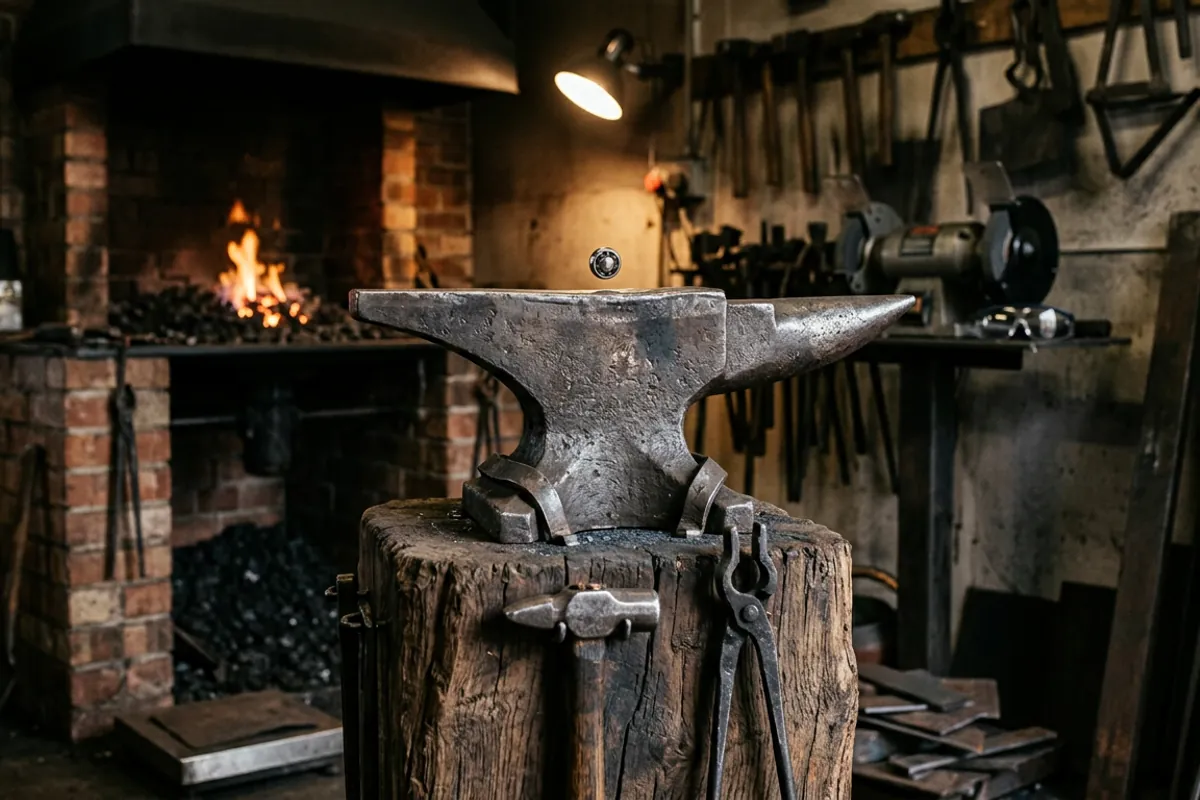
The catch is availability and knowing what you are looking at. You have to test it in person: ball bearing for rebound, eyes and a light for cracks at the waist and around the hardy hole, and a hard look at the face for swayback or big chips. Sway and edge dings are livable. A face that is delaminating or dead is not. Prices swing wildly by region, so patience pays. I walked through the trade offs across every budget, vintage included, in the best anvils for beginners, and the Anvils topic hub collects the rest.
If you want new with a known reputation and you have a bit more to spend, this is where a maker like NC Tool comes in. Their standard 70 pounder runs an alloyed cast or ductile steel body with a published 3.5 by 11 inch face, per Centaur Forge. It is lighter than I would like as a sole anvil, but it is a consistent, known quantity, which is exactly what the import tier is not.
What owners say
For the import cast steel anvils, owner signal is a mixed bag, and I would not pretend it is anything else. On I Forge Iron's anvil reviews, at least one owner of an imported cast steel anvil reported rebound around 90 percent and called it an outstanding product for the price, which tells you a good casting in this class really can perform. The counterweight is the long standing forum wariness about cheap imports being soft or inconsistent, and the recurring warning across I Forge Iron's rebound discussions that you cannot know what you have until you test the specific unit. When Harbor Freight started selling a "cast steel" anvil, the community reaction on the I Forge Iron thread about it was cautious optimism paired with wait and see, which is about the right posture for this whole tier.
On the vintage and known maker side, the consensus is much firmer. Across threads like the BladeForums anvil advice discussion, experienced smiths repeat the same lines: cast steel and forged anvils last and can be repaired, cast iron anvils are garden ornaments, and a chunk of solid mild steel on end will out perform a cast iron "anvil" every time. Forty kilograms, about 88 pounds, gets named again and again as a practical minimum for real forging, with 60 to 80 kilograms much preferred. None of that is controversial, and it lines up with everything I have seen at the anvil.
The thin spot to be honest about: there is not a deep, careful, long term body of owner testing on any one specific import ASIN the way there is on the old names. Reviews skew toward first impressions, not years of hard use. So treat the glowing ones and the angry ones the same way, as single data points, and let your own ball bearing cast the deciding vote.
What I would tell a friend
Buy the most mass you can, test rebound before you commit, and do not let a published hardness number make the decision for you. If a sound vintage anvil in the 100 to 150 pound range turns up locally at a fair price, buy it and stop reading roundups, that is the winning move and it always has been. If it does not, the 132 pound import is a defensible budget play as long as you drop the ball bearing the day it arrives and send it back if it thuds, and I would skip the 66 pounder unless your work is genuinely small or you have no other option. Whatever lands on your stand, put your Z87.1 glasses on before the first heat, mind whether you are running coal or propane for the work at hand (I sorted through that in coal or propane for a first forge), and go make something. The anvil is a lifetime tool. Spend the patience up front and you will only buy one.