Now I have verified specs and real forum threads. Writing the article.
Centaur Forge is one of the first names a new smith runs into, and a "centaur forge anvil" is the thing most people think they are shopping for when they land on that catalog. Here is the first thing worth knowing, owner to owner: Centaur Forge does not make anvils. It is a long-running farrier and blacksmith supplier out of Wisconsin, and it stocks several genuinely good anvil lines under one roof. So the real question is not "should I buy a Centaur Forge anvil" but "which of the anvils Centaur sells should I put in my shop, and how do they stack up against the cheap stuff everywhere else." If you want the short answer before the long one: for most home smiths I would buy an NC Tool or a TFS in the 70 to 100 pound range for general work, and step up to a drop-forged Kanca or a forged Emerson if you are hitting hard stock all day.
None of what follows is a bench test. I own a 148 pound Trenton named Bessie and I have hammered on other people's anvils at the club forge for twenty-five years, but I have not run every model Centaur carries down in my own shop. So this guide leans on Centaur's published specs, the makers' numbers, and what owners actually report on the forums, all weighed against what I know about how an anvil is supposed to behave under a hammer. Where a number is real and checkable, I give it. Where it is not published, I say so instead of inventing one.
What a Centaur Forge anvil actually is
Walk into the Centaur catalog and you are looking at a curated shelf, not a factory. The lines they carry include NC Tool, TFS (Texas Farrier Supply), Kanca, Emerson, JHM, Scott, and Cliff Carroll. That mix tells you who the store was built for: farriers. A lot of these anvils are shaped for shoeing horses first and general forging second, which shows up as clip horns, turning cams, and a shorter, narrower face than a London-pattern blacksmith anvil.
That is not a knock. A farrier anvil is a real, hardened, heat-treated tool, and a 70 pound NC will make knives, hooks, and hardware all day. But it means you have to read the shape, not just the weight. If you are forging longer stock or want more face to work over, you want one of the heavier or more blacksmith-oriented patterns, not the smallest farrier turning anvil on the page. I go deeper on how weight drives the choice in the anvil weight guide, and on the whole buying process in how to buy an anvil without wasting your money. The anvils topic hub collects the rest.
The other thing to know: the material matters more than the badge. Most of these are cast ductile iron (NC, TFS) or drop-forged steel (Kanca, Emerson). Both are legitimate. What you are avoiding is the gray cast-iron doorstop, and Centaur does not sell those. That alone puts their shelf ahead of a big chunk of what shows up on the marketplace.
The spec comparison, published figures only
Here is the field at a glance. Every figure below is what the maker or Centaur publishes; where a spec is not stated on the page I pulled, it reads "not published" rather than a guess.
Scroll horizontally to see all columns.
| Anvil (via Centaur Forge) | Weight | Material | Face size | Hardness | Price tier |
|---|---|---|---|---|---|
| NC Tool NC Standard | 70 lb | Cast ductile iron, USA made | 3.5 x 11 in | Not published | Mid |
| TFS single horn | 70 lb | Ductile iron, heat treated | Not published | Not published | Mid |
| Kanca single horn (50 kg) | 110 lb | Drop-forged steel | 15.33 x 4.33 in | 54 to 62 HRC | Mid to premium |
| Emerson traditional | 50 to 200 lb | Forged 4140 tool steel | Not published | 48 to 50 HRC | Premium |
| Budget cast-steel single horn | 55 to 66 lb | Cast steel | ~10.35 x 3.46 in | ~55 HRC (maker) | Budget |
Sources for those numbers: the NC Standard 70 lb page, the Kanca 110 lb drop-forged page, and the Emerson 50 lb page. Notice that hardness is the number most makers leave off. That is normal for cast farrier anvils and not a red flag by itself, but it is why rebound testing in person, or trusting owner reports, matters so much.
NC Tool anvils: the honest farrier-forward pick
NC Tool is probably the anvil most people picture when they think "Centaur." They are USA-made cast ductile iron, and the range runs roughly 70 to 110 pounds aimed squarely at the farrier market. The 70 pound NC Standard publishes a 3.5 by 11 inch face, a 1 inch hardie hole (compatible with a 7/8 inch shank), and a 1/2 inch pritchel hole in the heel, per Centaur's product page.
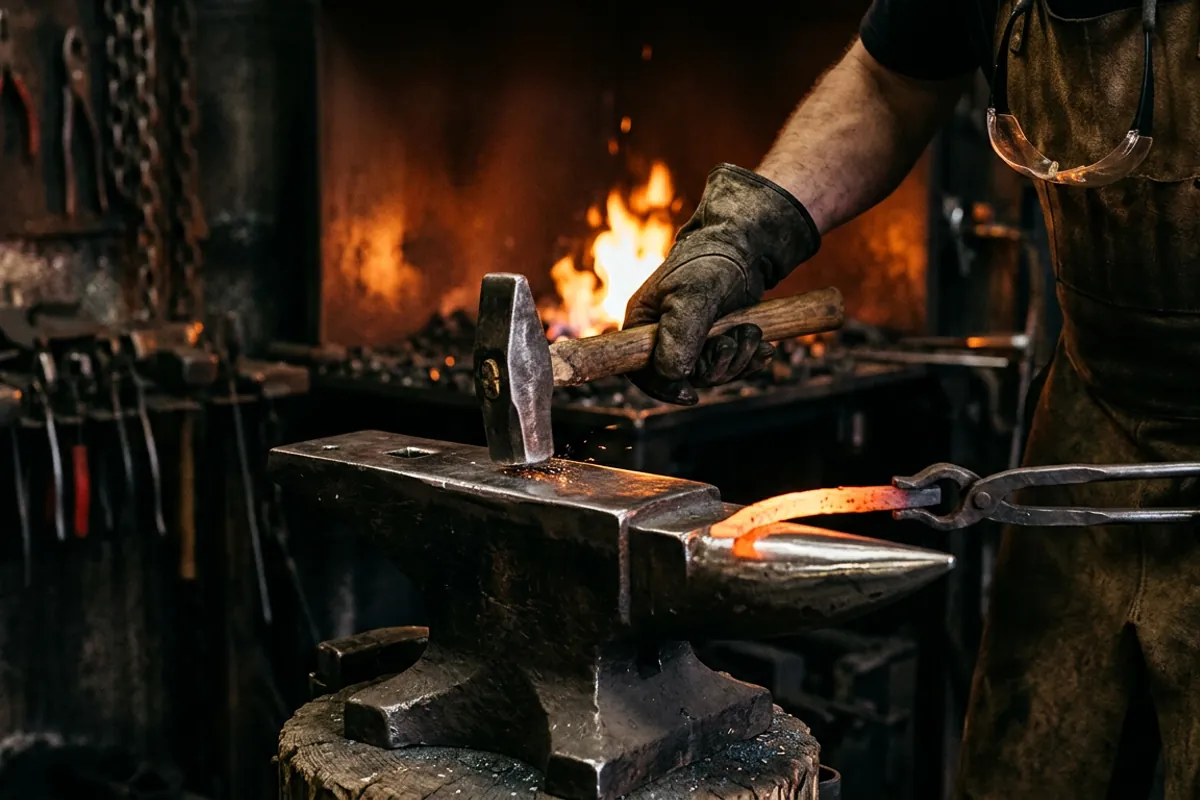
For a first anvil that has to earn its keep, that is a lot of usable tool. The face is hardened, the horn is there for drawing and bending, and the holes let you run hardy tools from day one. The honest tradeoff is the same one you accept with any farrier pattern: the face is narrow and the mass is modest. On a 70 pound anvil you feel the light mass when you move big stock, and the answer is not to buy the lightest one on the page. If your budget allows, size up. I would rather have one heavier NC than the smallest turning anvil in the line.
Who it suits: a home smith doing knives, hooks, hardware, and general forging who wants a known, hardened tool without hunting the used market. If you would rather chase a vintage bargain instead, that is a different game with different risks, and I lay it out in the antique anvils buying guide.
TFS anvils: ductile iron done right
TFS (Texas Farrier Supply) has been making anvils for farriers and blacksmiths for decades. They are ductile iron, heat treated, and hand finished, and the line runs from a 70 pound farrier anvil up through double-horn blacksmith patterns and heavy anvils in the hundreds of pounds. Centaur carries them, and they show up across the specialty farrier retailers, which tells you they are a known quantity, not a house brand nobody stands behind.
What I like about the TFS story is the range. If you want a more blacksmith-shaped anvil than the small farrier turning anvils, TFS gives you double-horn and larger single-horn patterns without jumping to forged-steel prices. Centaur does not publish a hardness figure on every TFS page I looked at, so treat the exact number as unpublished and lean on rebound and owner reports. Ductile iron done right rings and rebounds well; done cheap it does not. TFS lands on the "done right" side of that line based on how long the brand has been trusted in the trade.
Kanca anvils: the drop-forged value play
This is where the material changes. Kanca anvils are drop-forged in Turkey to a Southern German pattern, and they are the closest thing on Centaur's shelf to the old Ridgid-Peddinghaus anvils a lot of smiths still chase. Drop-forged means the steel grain is worked, not just poured, and it usually shows up as excellent rebound and a face that shrugs off hard use.
The published numbers back that up. The 110 pound (50 kg) single-horn Kanca lists a 15.33 by 4.33 inch face, a 1 inch hardie hole, a 7/8 inch pritchel, and a Rockwell hardness of 54 to 62, per Centaur's spec page. That is a hardness range you would be happy with on any working anvil, and a face size that reads like a real blacksmith tool rather than a shoeing anvil. If I were buying new off this shelf and wanted the anvil to outlive me, the Kanca is the one I would look at hardest. The tradeoff is price: drop-forged steel costs more than cast iron, and you feel it at checkout.
Emerson and the heavier forged options
At the top of the range, Centaur lists the Emerson traditional anvils as forged from 4140 tool steel and heat treated to roughly 48 to 50 HRC, in weights from 50 up to 200 pounds, per the Emerson product page. Forged 4140 is a serious anvil material, and a 150 or 200 pound Emerson is a heavy, dependable tool for someone forging hard and often.
Here is the plain talk: a beginner does not need a 200 pound forged 4140 anvil, and buying one first is a way to spend a lot of money before you know what you actually forge. But if you already know you are moving heavy stock, doing production work, or you simply want a lifetime anvil and have the budget, the heavier forged options are where I would spend. Match the anvil to the work, not to the fear of buying twice. And whatever you settle on, price is a signal, not the whole story, which is the point I make in what an anvil price really tells you.
The budget marketplace alternative, and where it fits
Centaur sells direct, not through Amazon, so if you are shopping the marketplace you are looking at a different tier of anvil entirely: mostly imported cast pieces in the 55 to 132 pound range. Some of these are genuinely usable and some are gray cast-iron doorstops that will eat your hammer's rebound and your forearm along with it. The single rule that keeps you out of trouble: buy cast steel, never plain cast iron. A cast-steel single horn will rebound and hold up; a cast-iron "anvil-shaped object" will not.
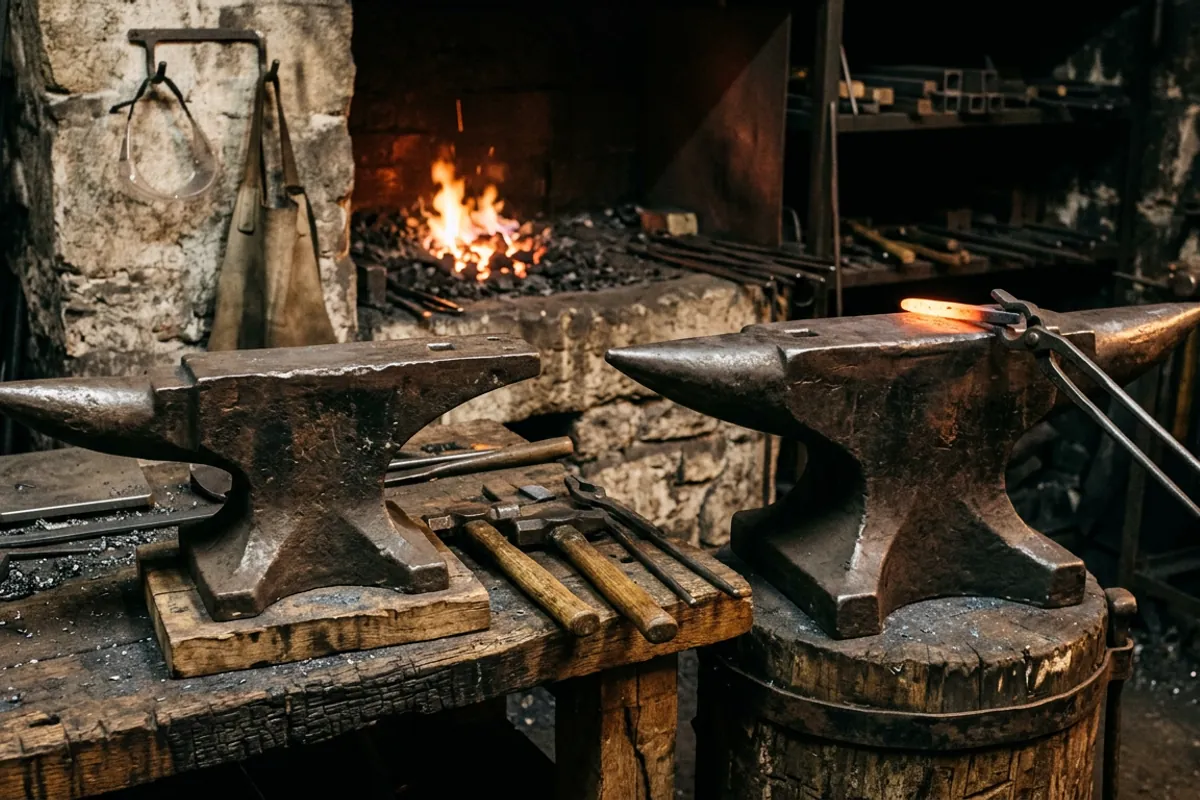
If a tight budget is the whole reason you are here, a cast-steel single horn in the 55 to 66 pound range is a reasonable first anvil to learn on while you save for a real one. Two I found listed and currently live are a 55 pound cast-steel single horn (paid link) and a 66 pound cast-steel single horn (paid link). Neither is a Kanca. They are learning tools, and I would treat them as such. VEVOR's cast-steel line sits in the same slot and shows up at more retailers, so it is often the easiest to actually get:

I walk through that whole budget tier in more detail, including which VEVOR models earn their keep, in the VEVOR anvil buying guide. One safety note that is not optional: when you dress or clean up any new anvil face on a grinder, wear eye protection rated to ANSI Z87.1 and keep synthetics away from the wheel. I lost my eyebrows once to being careless around heat, and I keep my eyes by luck as much as sense. Do not press that luck.
What owners say
For gear I have not run down in my own shop, the forums are the honest signal. Here is what they report, brand by brand, so you can weigh it yourself.
On NC Tool, one owner on the I Forge Iron NC-Tool knifemaker anvil thread measured rebound at around 95 percent over the body, dropping to 80 to 85 percent on the heel and clip and 50 to 60 percent out on the horn. That is a good face and a softer horn, which is exactly what you would expect from a cast farrier anvil, and it matches the general read on the N.C. Tool review thread: people who buy them as a first anvil tend to keep and recommend them, with the recurring caveat that the design leans farrier.
On the farrier-pattern question generally, the I Forge Iron farrier anvil thread has smiths pointing out that the small face and lighter mass make these anvils less ideal for forging longer stock or knives, which is the same tradeoff I called out above. It is not that they cannot do it; it is that you feel the limits sooner than on a heavier London-pattern anvil.
On Kanca and Emerson, the Emerson quality and Kanca thread is where owners weigh the forged options against each other. The consensus there is favorable to the drop-forged Kanca on rebound and durability, which lines up with its published 54 to 62 HRC. Owner signal on the exact Emerson models is thinner than on NC and Kanca, so treat the forged-4140 pick as backed more by the material spec than by a deep pile of long-term reviews. That thinness is worth saying out loud rather than papering over.
On the budget marketplace anvils, the recurring forum complaint is predictable: cheap cast-iron pieces give poor rebound and tire your arm, while the cast-steel ones around 90 pounds "bounce the hammer nicely," as one owner put it on a tractor forum anvil thread. Same rule, from the people who bought both: cast steel yes, cast iron no.
What I would tell a friend
If a buddy asked me what to buy off Centaur's shelf, here is the short version. For a first general-purpose anvil, buy an NC Tool or a TFS in the 70 to 100 pound range and do not agonize over it; both are real, hardened, heat-treated tools that will forge everything a home smith starts with. If you already know you hit hard and want the anvil to outlast you, spend up for a drop-forged Kanca, whose 54 to 62 HRC and worked-steel face are the best value-to-durability story on the page. Save the heavy forged Emerson for when your work genuinely demands it, not before.
The one to skip is any plain cast-iron anvil, wherever you find it. Centaur does not sell those, which is a point in their favor. On the marketplace, buy cast steel or do not buy. And remember the shape matters as much as the weight: a small farrier turning anvil and a blacksmith pattern of the same weight are not the same tool. Read the face, read the horn, check the holes, and if you can, bounce a hammer off it before money changes hands. If you are still deciding between new-from-Centaur and hunting a vintage bargain, my honest picks for a first anvil will help you land it.