I have verified, citable specs and live listings. Writing the article now.
Here is the article:
If you are shopping for a 500 lbs anvil, the first thing I want to do is talk you out of it, or at least make you say out loud why you need one. I have spent about twenty-five years at the anvil, most of them on Bessie, my 148 lb Trenton, and I have forged everything from bottle openers to leaf springs on her without once wishing she weighed a quarter ton. A 500 pound anvil is a real tool for a real reason, but it is also the single easiest way for a hobby smith to sink three or four thousand dollars into mass he will never use up. This guide is about who that reason applies to, what an honest 500 class anvil actually costs and is made of, and what most of you should buy instead.
One thing up front, the way the site does it: I have not run a 500 lb anvil down in my own shop, because I do not own one and neither do most smiths. What follows leans on published maker specs, the going owner consensus from the forums, and general shop experience about what mass does under a hammer. Where I am reporting what other owners say rather than what I have felt, I say so.
Who actually needs a 500 lb anvil
Mass under the hammer is the whole game with an anvil. Every ounce that does not move when you strike is energy going into the steel instead of into the floor. The old rule of thumb is that you want an anvil somewhere around fifty times the weight of the hammer you swing. Swing a three pound hammer and a 150 pound anvil is already flattering you. So who needs 500 pounds?
Three groups, honestly. First, smiths striking with a sledge or working under a striker, where a helper is bringing an eight or ten pound sledge down and you need an anvil that does not flinch. Second, people moving genuinely heavy stock, forging axles, big architectural work, damascus billets welded from a lot of layers, where the bar itself is heavy and cold-sinks the heat fast. Third, production shops running all day, where a bigger face and more mass mean less fatigue over a thousand heats. If you are a weekend smith forging knives and hooks and the odd tomahawk, you are not in any of those three groups, and I say that as someone who teaches weekend beginners every month. A good 150 to 250 pound anvil will outlast you.
The other honest reason people buy big is that they found a deal on a heavy old anvil and could not walk away. That is fine. Just know the difference between buying mass because your work demands it and buying it because it is heavy and impressive. If you are still sorting out sizing at all, my what size anvil do you actually need piece walks the whole ladder from 70 pounds up.
The spec sheet, and what the numbers mean
Here is the field in the 450 to 500 pound class, from makers who publish real numbers, next to the smaller anvils most people should actually buy. I am only listing figures the maker or a dealer states in print. Where nobody publishes a number, it says so.
Scroll horizontally to see all columns.
| Anvil | Weight | Material | Face hardness | Face width | Price tier |
|---|---|---|---|---|---|
| Nimba Gladiator | 450 lb | 8640 cast steel | 50 to 52 HRC | 7 in | Premium |
| Rat Hole Forge (large) | about 460 lb | H-13 cast steel | not published | not published | Premium |
| Refflinghaus (large models) | up to about 550 lb | Cast steel, forged-style top | HRC 59, 1 in deep | not published | Premium |
| Lone Star Anvils | 135 lb | M50 cast tool steel | 57 HRC | not published | Mid |
| Old World Blacksmith | 100 lb | Forged and tempered steel | 52 HRC | not published | Budget |
A few things jump out. The real 500 class anvils are all cast tool or alloy steel, heat treated, from a handful of makers, and none of them are cheap. Hardness matters less than people think once you are past about 50 HRC, because rebound and how well the mass is coupled to the face matter more than the last few points on the scale. A 50 to 52 HRC Nimba will not dent under normal work, and the softer face is arguably kinder to your hammers than a glass-hard 59. The Refflinghaus deep-hardened face is genuinely hard, per Shady Grove Blacksmith's published notes on the line (blksmth.com), and that is a legitimate premium feature, not marketing.
Nimba Gladiator, the honest 500 class pick
When someone tells me they have decided, they are striking, they have the money, and they want new, I point them at the Nimba Gladiator first. Nimba publishes exactly what it is: 450 pounds, cast from 8640 steel, heat treated to 50 to 52 Rockwell, with a 7 inch face, a 1 inch hardy hole and a 7/8 inch pritchel, all stated on the maker's own page (nimbaanvils.com). It is a double-bick Italian pattern, so you get two working horns instead of a horn and a heel, which changes how you draw and bend but gives you more usable geometry.
At 450 pounds it is not literally a 500 lbs anvil, and I would not let that stop you. The difference between 450 and 500 pounds under a hand hammer is nothing you will ever feel, and Nimba's reputation for a well-coupled face and quiet, dead ring is the reason it comes up first in every big-anvil thread. It is made in the USA, which for a tool this heavy also means you are not paying to freight a quarter ton across an ocean.
Rat Hole Forge and the H-13 crowd
The other name that comes up in the same breath as Nimba is Rat Hole Forge. Their large anvil runs around 460 pounds and is cast from H-13, which is a hot-work die steel, the same family used for forging dies and hammer tooling. Owners who compare the two on the forums generally frame it as a real choice, not a clear winner: the Nimba 8640 versus the Rat Hole H-13, both excellent, both premium priced. Rat Hole does not publish as tidy a spec sheet as Nimba, so I list its face hardness as not published rather than guess at it.
If you are cross-shopping these two, do not agonize over the steel alloy. Both are heat treated to hold up under a striker for a lifetime. Buy on price, availability, pattern preference, and how long the wait list is, because both makers are small and both have runs where you wait.
Refflinghaus, Peddinghaus, and the European forged giants
If you want old-world and you have patience, the German makers go big. Refflinghaus builds anvils up into the 500 pound and heavier range, cast steel with a hard, deeply worked face; the line is documented as hardened to HRC 59 a full inch deep, which is about as hard as anvil faces get (blksmith.com). Peddinghaus, the other famous German name, tops out lower in its common catalog, with the No. 12 around 275 pounds, so a true 500 pound Peddinghaus is usually a vintage find rather than a new order.
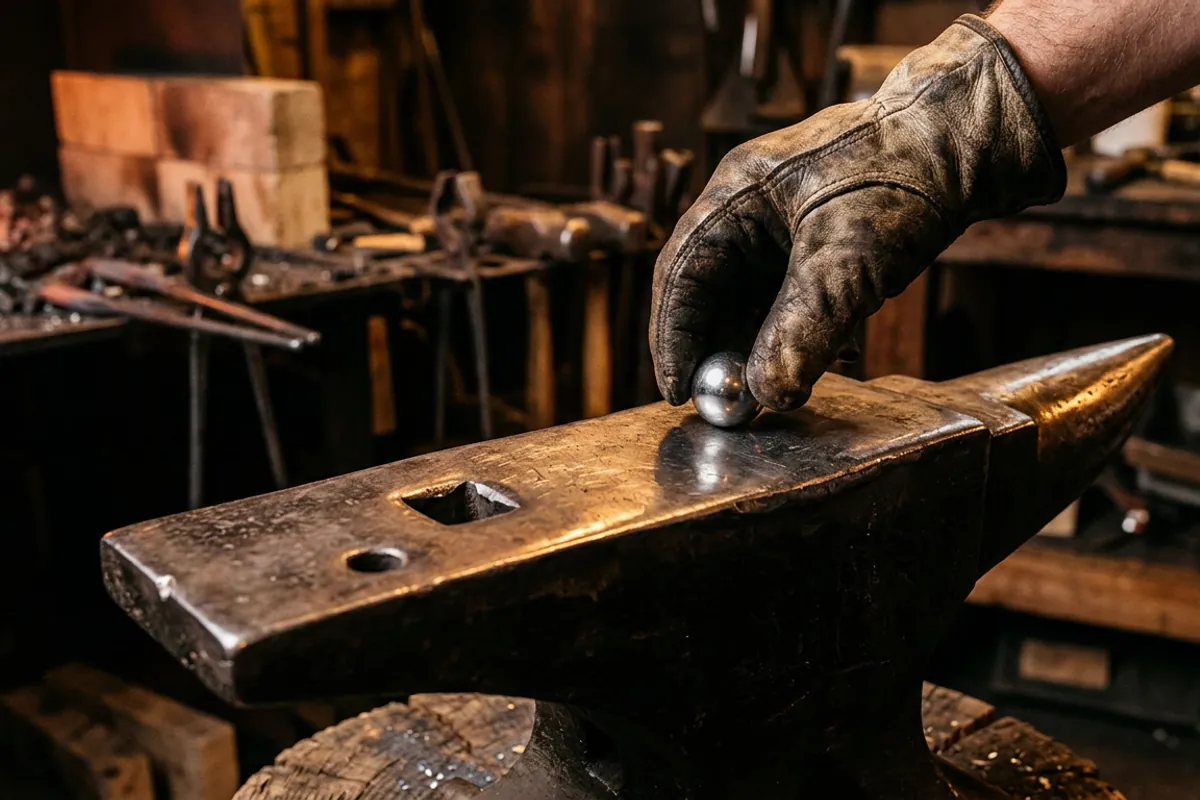
This is also the corner of the market where good antique anvils live. A 400 to 500 pound English or German anvil from a century ago, if the face is flat and the rebound is there, is a lifetime tool at a fraction of new-Nimba money. It is also where you can get badly burned buying a cracked or sway-backed monster that photographs well. If you are going vintage at this weight, read my antique anvils buying guide before you hand anyone cash, and take a ball bearing to test rebound in person.
The cheap 500 lb cast iron trap
Now the warning, because this is where the money gets set on fire. Search any marketplace for a heavy anvil and you will find cast iron anvils advertised at 200, 400, even 500 pounds for a few hundred dollars. They are heavy. They are also, for forging, close to useless. Cast iron is not tool steel. It has poor rebound, the face dents and mushrooms, and a lot of that advertised weight is soft gray iron that soaks up your hammer blow instead of returning it. The giveaway is the price: a real heat-treated 450 pound steel anvil costs thousands, so a 500 pound one for a few hundred dollars is telling you exactly what it is made of.
The tell in the listing is the word "cast iron" and the absence of any hardness figure or rebound claim. A forging anvil maker publishes an HRC number and talks about rebound because those are the numbers that matter. A doorstop importer publishes a weight and a low price. When there is no hardness spec, assume there is a reason. This is the same trap I cover in the general how to buy an anvil without wasting your money piece, and it does not get less true just because the anvil is enormous.
What most people should buy instead
Here is the part that saves most readers a lot of money. If you are not striking with a sledge, not working heavy stock, and not running a production floor, buy a real 100 to 200 pound steel anvil and put the other three thousand dollars into fuel, tongs, and a grinder. A well-coupled 130 pound anvil returns your hammer blow just as crisply as a 450 pound one for the work a hobby smith actually does; the big anvil only pulls ahead when the hammer gets heavy or the stock does.
For a genuinely usable cast steel anvil at a sane price, the Lone Star Anvils line is cast from M50 tool steel with a face hardened around 57 HRC, and their 135 pound model is a lot of anvil for the money. Check price on Amazon (paid link) for that one, or the 100 pound version if your bench and your back are smaller: Check price on Amazon (paid link). The Old World Blacksmith forged 100 pounder, tempered to around 52 HRC, is another honest starter that shows up new for less than the specialty makers. None of these are 500 pound anvils and none pretend to be, which is exactly why I trust them.
If your budget is tight and you want to start forging this month rather than saving all year, a cast VEVOR in the 130 pound range will get hot steel moving. It is not a lifetime tool and the face is softer than the Lone Star, but it is real, it works, and it is honest about what it costs.

Whatever you buy at this weight, mount it dead solid on a stump or a steel stand, because a heavy anvil that rocks is fighting you on every blow. And keep your eyes covered when you dress the face on a grinder. I lost my eyebrows to a quench flare-up years ago standing too close in the wrong shirt, and the cheapest insurance in this whole craft is a pair of ANSI Z87.1 glasses. That rule does not scale down because the tool is small or up because it is big.
What owners say
For the big steel anvils, the owner signal is remarkably consistent, and it is worth reading rather than taking my word for it. On I Forge Iron, the long-running Nimba versus Rat Hole thread has owners of both weighing rebound, ring, and pattern, and the recurring theme is that you cannot go wrong with either, so buy on availability and price (iforgeiron.com). BladeForums runs the same comparison from a bladesmith's angle, and again the split is preference, not quality (bladeforums.com).
The other consistent owner note, across the American Bladesmith community and elsewhere, is that people who bought big rarely regret the mass but frequently regret the freight bill and the wait list, and people who bought a good 150 pound anvil almost never say they wish they had gone bigger for hobby work. Read the actual threads before you spend; the honesty in them is worth more than any single guide, including this one.
What I would tell a friend
If you are a hobby smith reading this, buy a real 130 to 200 pound steel anvil, mount it solid, and go forge. You will not outgrow it. If you genuinely strike with a striker, move heavy stock, or run a shop all day, the Nimba Gladiator at 450 pounds is where I would start, with Rat Hole Forge as the equal-quality alternative and a sound vintage Refflinghaus or English anvil as the patient man's play. The one to walk away from every time is the cheap cast iron half-ton doorstop; heavy is not the same as good, and a missing hardness number is the whole story. Whatever you land on, cover your eyes, mount it dead solid, and remember that the anvil never made anyone a better smith than practice did. If you want the shorter version of the big-anvil case, my 500 lb anvil for sale buying guide and the anvils topic hub round out the rest.