What an anvil price really tells you
The short version, before you scroll: if you are buying used, the anvil price that makes sense for a working smith is roughly $3 to $5 per pound for a steel anvil in honest condition, and if you are buying new, your money goes furthest on a 100 to 150 pound cast or forged steel anvil rather than on a small one from a famous name. Below about $2 a pound you are usually looking at cast iron, and cast iron is not an anvil in any sense that matters at the forge. Above about $7 a pound you are paying a collector premium, a shipping premium, or both.
I should say up front what this guide is and is not. I have owned and worked on my own anvil, a 148 pound Trenton I call Bessie, for most of twenty-five years, and I have handled a lot of other people's anvils at club meets and in beginners' garages. I have not run every anvil in this guide down in my shop, and I am not going to pretend otherwise. What follows is published maker and retailer specs, prices from real listings I checked, and owner consensus from the forums, all weighed against what I know about how an anvil behaves under a hammer.
The specs behind the prices
Here is the field at a glance. Every figure below is a published one from the maker or a non-marketplace retailer. Where nobody publishes a number, it says so, because a made-up hardness figure is worse than no figure.
Scroll horizontally to see all columns.
| Anvil | Weight | Material | Face size | Hardness | Where the price sits |
|---|---|---|---|---|---|
| Grizzly G8147 | 55 lb | Cast iron | 3-7/8 in x 8-5/8 in | Not published | Bottom of the market |
| VEVOR single horn | 66.14 lb | Cast steel | 10.35 in x 3.46 in | 50 HRC (maker claim) | Budget |
| MegaChoice single horn | 110 lb | Cast steel | Not published by a maker page | Not published | Budget |
| Happybuy single horn | 132 lb | Cast steel | Not published by a maker page | Not published | Budget |
| Kanca single horn | 110 lb | Drop forged steel | 15.33 in x 4.33 in | 54 to 62 HRC | Mid, $585 at Centaur Forge |
| NC Tool Big Face | 70 lb | Alloyed casting, milled and heat treated | 3-3/4 in x 6 in | Not published | Upper mid, $772 listed |
Sources for those figures: the Grizzly G8147 product page, VEVOR's own listing for the 66 pound single horn anvil, Centaur Forge's page for the 110 pound Kanca, Professional Farrier Supply's listing for the NC Tool 70 pound Big Face, and NC Tool's own anvil shop page for how they describe the castings.
Notice what the table does not have: hardness numbers for most of the imports. That gap is the whole story of anvil pricing. Steel that has been properly heat treated and tested costs money to make, and the makers who do it publish the number. The ones who do not publish it are usually not hiding good news.
The dollars per pound rule, and where it lies to you
Smiths price anvils by the pound because mass is most of what you are buying. An anvil works by not moving. Every bit of energy that goes into shaking the anvil or the stand is energy that did not go into moving your steel, which is why a 75 pound anvil and a 150 pound anvil feel like different trades even with the same hammer.
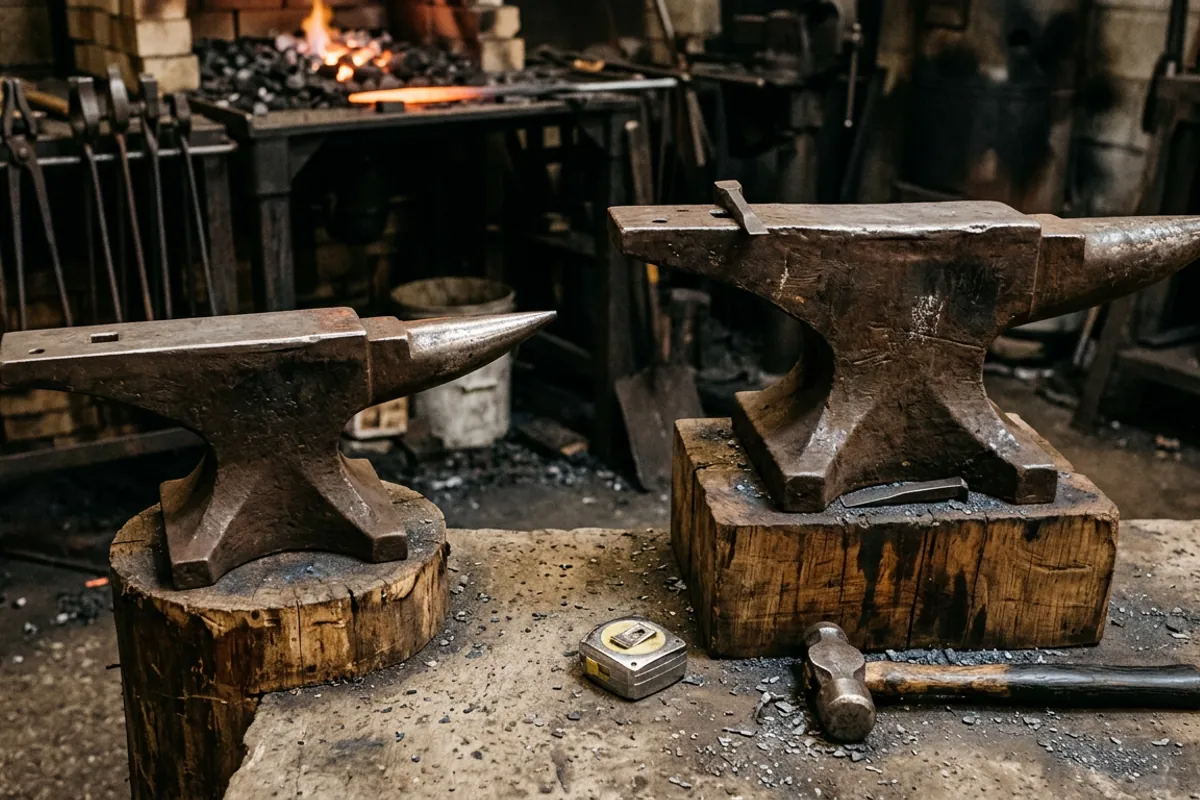
Brown County Forge, who teach beginners and sell them their first tools, put the working rule at $7 per pound or less and note the whole market spans roughly $70 up to $2575 depending on where you shop. On the used side, the numbers people actually pay run lower. In the BladeForums thread on average anvil prices, $3 to $4 a pound comes up over and over as the fair range for a used anvil in good shape, with members in hot markets reporting $5 to $6. On The Garage Journal's fair price thread, the same spread appears, with named vintage brands like Hay Budden and Peter Wright pulling $5.70 a pound and up.
Where the rule lies to you is at both ends. At the bottom, weight bought cheap is often cast iron, and cast iron under a hammer is dead. It absorbs your blow instead of returning it, it dents, and its edges chip. Chips off a struck tool are a real eye hazard, which is one more reason ANSI Z87.1 rated eye protection is not optional at the anvil, cheap anvil or good one. At the top, a 300 pound anvil at a bargain per pound is still a 300 pound problem to move, mount, and eventually sell.
The honest way to use the rule is as a sanity check, not a verdict. Price per pound tells you whether an asking price is in the neighborhood. Rebound, face condition, and whether the thing rings or thuds tell you whether to buy it. I walk through that inspection in detail in how to buy an anvil without wasting your money, and the weight question gets its own treatment in what size anvil do you actually need.
Under about $150: bench anvils and cast iron
This is the tier where most people's search for an anvil price starts, and it is the tier where most of the disappointment lives.
The Grizzly G8147 is the honest example. Grizzly publishes it plainly as a 55 pound cast iron anvil with a milled 3-7/8 in x 8-5/8 in face and a 7/8 in hardy hole. It is well finished for what it is, and for a jeweler, a sheet metal hobbyist, or somebody riveting and straightening cold stock on a bench, it does that job. What it will not do is stand up to years of hot forging with a two pound hammer. Cast iron has no meaningful rebound and it will bruise and chip where a steel face would not.
If that is genuinely the work you do, it is fine gear at a fair price. Check price on Amazon (paid link). If your plan is to heat steel and move it, spend nothing here and save toward the next tier. A hundred dollars spent on cast iron is a hundred dollars you spend twice.

The VEVOR 66 pound single horn sits just above it and is a genuinely different animal, because it is cast steel rather than cast iron. VEVOR publishes 50 HRC and claims rebound over 70 percent. Treat the rebound claim as a marketing number until you bounce a ball bearing on the one that arrives at your door, but 50 HRC on a steel casting is a usable working face for light and medium work. At 66 pounds it is still light for drawing out heavy stock, and it wants to be bolted down hard. I go through this family of anvils in more depth in the VEVOR anvil I would buy, and the ones I would skip.
The budget steel anvils from 100 to 132 pounds
This is where the price curve turns useful. The same import cast steel anvils, scaled up to a working weight, land in a tier that costs a fraction of a name-brand forged anvil and gives you enough mass to actually forge on.
The MegaChoice 110 pound single horn is one of the more visible of these, sold as cast steel with a large countertop and stable base. No maker publishes a verified hardness for it, which is the tradeoff you accept at this price. Check price on Amazon (paid link).

At 132 pounds you are into real anvil weight, close to Bessie, and for most home shop work that is as much anvil as you will ever need. The Happybuy 132 pound single horn is the same design family in the larger size. Check price on Amazon (paid link).
Read these for what they are. They are cast, the edges are usually softer than a forged anvil's, the faces sometimes arrive needing a little cleanup, and the quality control varies unit to unit. What they buy you is mass under the hammer for the least money in the new market, and mass is the thing a beginner benefits from most. If you dress the edges gently, keep the face clean, and do not treat it as an anvil-shaped hardy for cutting cold steel, one of these will carry you through several years of learning.
The $500 to $800 tier: forged steel and real makers
Step up and the numbers get specific, because these makers publish them.
Centaur Forge lists the 110 pound Kanca single horn drop forged anvil at $585, with a 15.33 in x 4.33 in face and a published surface hardness of 54 to 62 HRC. That works out to roughly $5.30 a pound, which sits right in the band the forums call fair for a quality new anvil. Kanca forges rather than casts, and the hardened face is where your money goes: better rebound, edges that hold up, a tool that will outlive you.
The NC Tool 70 pound Big Face is the farrier world's default and shows up constantly in beginner recommendations. Professional Farrier Supply lists it at $772, which is over $11 a pound, and that is the honest catch. You are paying for a farrier-specific layout, the turning cams, the clip horns, and a face proportioned for shoes rather than for drawing out bar stock. If you shoe horses, that geometry earns its keep. If you are forging hooks, tools, and blades, the same money buys twice the mass in a general purpose anvil.
That comparison is the single most useful thing to understand about anvil price: brand and design tax is real, and it is worth paying only when the design does something you actually do.
What a used anvil should cost you
Used is still where the value lives, and it is where most of us got our first anvil. Bessie came to me used and she has outlasted every other tool in the shop.
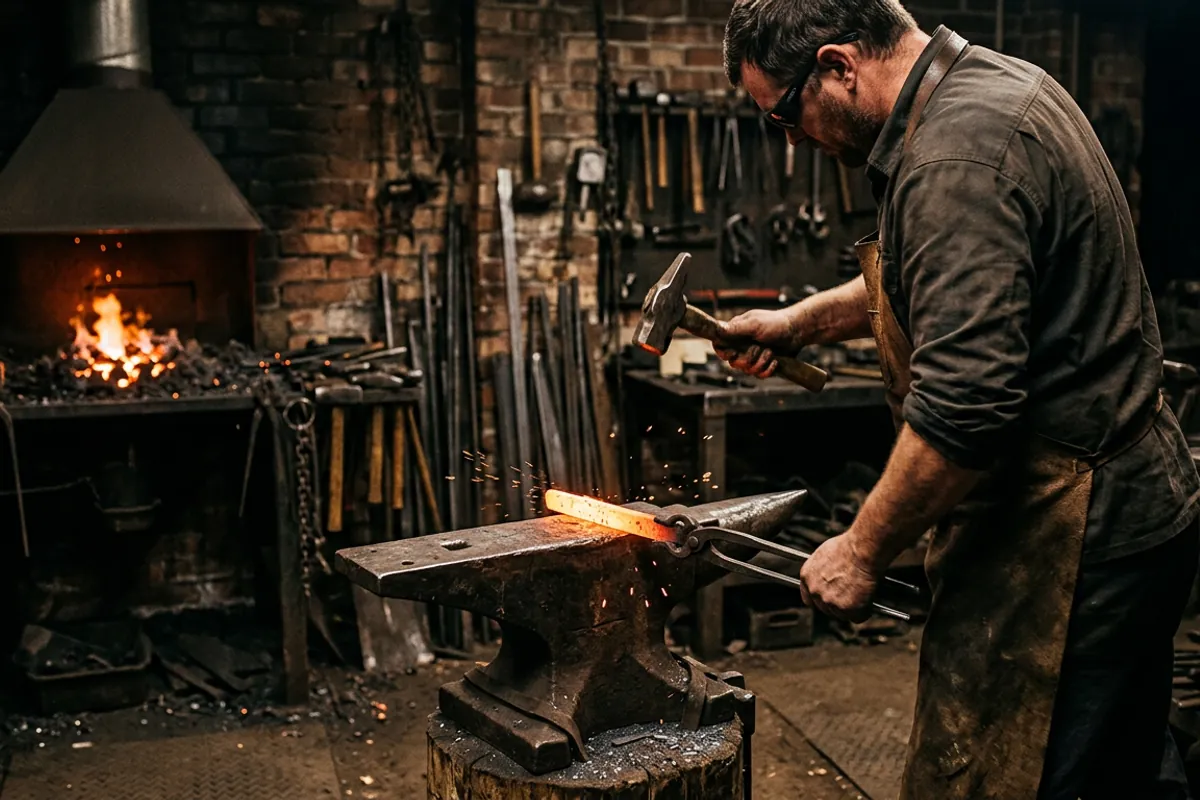
The forum consensus on price is consistent. The I Forge Iron thread on anvil price per pound trends and its companion thread on the new price standard for anvils both track the same arc: what was $2 to $4 a pound a couple of decades ago is now commonly $3 to $5, with collector and flipper interest pushing named brands higher in some regions. Location matters more than anything. The same Peter Wright is a different price in farm country than it is two hours from a city.
What moves a used anvil's value down, in the order it matters:
- A swayed or dished face. Grinding it flat costs you hardened steel you cannot put back.
- Chipped or broken edges. Forum buyers say it plainly: chipped edges and a damaged horn drop the value fast.
- Dead rebound. Bounce a ball bearing on the face. A good steel anvil returns most of the drop height. A thud means a damaged or delaminated face, or cast iron in disguise.
- Fire damage. An anvil that lived through a barn fire can be softened right through and it will not look any different.
For the older names, the ones worth chasing and the ones to leave on the trailer, see the antique anvils worth buying, and the ones to walk away from. And if you are simply reading listings, what to look for in an anvil for sale covers the inspection order.
What owners say
I have not put a hammer to the imports in this guide, so here is the owner signal, attributed.
On price expectations, both I Forge Iron threads above and the BladeForums thread converge on $3 to $5 a pound for used steel in good condition, with agreement that Forged in Fire and collector interest pushed the whole market up and that it has not come back down. That is about as close to a settled consensus as blacksmithing forums produce.
On the import cast steel anvils, the reports are mixed and honestly a little thin in structured form. The recurring complaints are inconsistent face hardness between units, edges that are softer than a forged anvil's, and occasional casting flaws. The recurring praise is that for the money, they give a beginner enough mass to learn on, and that the ones that arrive good stay good. Anyone telling you these are equal to a Peter Wright is selling something, and anyone telling you they are useless has not watched a beginner make real progress on one.
On Kanca, the reputation on the forums is solid: a large industrial forging company, published hardness, lifetime warranty against defects, and few complaints about the working face. On NC Tool, the consistent note is that they are farrier anvils first and that general smiths often find the face small for the price.
The costs the price tag never mentions
Budget for these before you decide what anvil you can afford.
Shipping. Freight on a hundred plus pounds of steel is not free even when the listing says it is, and on a private used sale it may mean a long drive. Garage Journal members flag shipping as a real component of the true price.
The stand. An anvil on the ground or on a wobbly stand is a worse anvil. A stump, a welded tripod, or a steel stand with the face set at knuckle height when you stand relaxed. Budget an afternoon and some material.
Getting it home safely. This is a safety item, not a logistics one. A 130 pound anvil is dense and awkward with no good handhold. Two people, a lift with the legs, and never over your feet. Anvils dropped on toes are one of the most common injuries in a hobby shop.
The rest of the kit. An anvil with no tongs is a spectator. If you are starting from nothing, the blacksmithing tools that actually matter and blacksmith safety gear: what matters and what to skip will keep you from spending your whole anvil budget on the anvil.
What I would tell a friend
Buy used steel at $3 to $5 a pound if you can find it, in 100 to 150 pounds, with a flat face and live rebound. That is the best anvil money in blacksmithing and it has been for a century.
If used is not showing up in your area, buy one of the 110 to 132 pound import cast steel anvils and get on with learning. Mass now beats a perfect anvil in two years. If you have $600 and want to buy once, the Kanca at published 54 to 62 HRC is a straightforward answer.
Skip cast iron for hot work at any price, and skip the small premium farrier anvils unless you shoe horses.
The safety note that matters most: whatever you buy, bolt or strap it down and wear ANSI Z87.1 rated eye protection every time you swing at it. Hot scale comes off the work at speed, and chipped edges come off cast faces without warning. I lost my eyebrows early on to an oil flare and kept my eyesight on luck alone. Do not budget on luck.
More on picking your first one in the honest picks for your first anvil, and everything else we have written about anvils is collected in the anvils topic hub.