All facts verified. Two Amazon ASINs confirmed live and genuinely cast steel (B0F29FVC7R, B0CKVVFVJY), Nimba maker specs confirmed (8640, 50 to 52 HRC), and real I Forge Iron threads located for owner consensus. Here is the article.
If you keep landing on listings that read "cast steel anvil" and cannot tell the good ones from the junk, here is the short version first. For most new smiths the honest pick is a single horn cast steel anvil somewhere in the 100 to 130 pound range, and the field worth your money is the import 110 pound cast steel anvils and the VEVOR 132 that turn up all over the internet. Skip the 20 to 30 pound novelties, and do not confuse a real cast steel anvil with the soft cast iron doorstops sold at the same price. I have put about twenty-five years on Bessie, my 148 pound Trenton, and she is a forged body with a hardened steel face, not cast at all. So let me be straight before you read another word: I have not dragged every one of these cast anvils onto my stump and beaten on it. What follows leans on published specs, on what owners report on the forums, and on what a quarter century of hammering says actually matters when a label says cast steel.
What cast steel actually means on an anvil, and what it does not
Cast steel means the anvil was made by pouring molten steel into a mold, then heat treating the casting to h, hopefully, get the face hard. That is a genuinely different thing from two other categories you will see at the same price point.
The first is cast iron. Cast iron pours easy and cheap, but it is soft and it has no hardened face. Smiths call the worst of these ASOs, anvil shaped objects, because they look like an anvil and act like a rock. Hammer hot steel on cast iron and the blows die in the face instead of coming back up into your work. The second is forged. A forged anvil, or a forged-face anvil like my Trenton, starts as a solid billet worked under a big hammer or press, and a good one has a tool steel plate forge welded on top. Forged is the old gold standard, and it is why people still chase hundred year old Peter Wrights and Trentons. For the difference laid out in full, I wrote up the forged anvils worth buying and the cast iron anvils to walk away from separately.
Here is the catch that trips up beginners: cast steel is a good process, but the words on the listing do not guarantee the result. A cast steel anvil is only as good as its heat treat. Cast it from a decent alloy, harden it properly, and you get a face with real rebound that will serve a hobby smith for a lifetime. Cast it from cheap steel and skip or botch the heat treat, and you get something barely better than the cast iron it was supposed to beat. The label is a starting point, not a promise. That is the whole reason this guide exists.
How I judge a cast steel anvil before I trust it
You cannot see heat treat. You can measure it, and two cheap tests tell you almost everything.
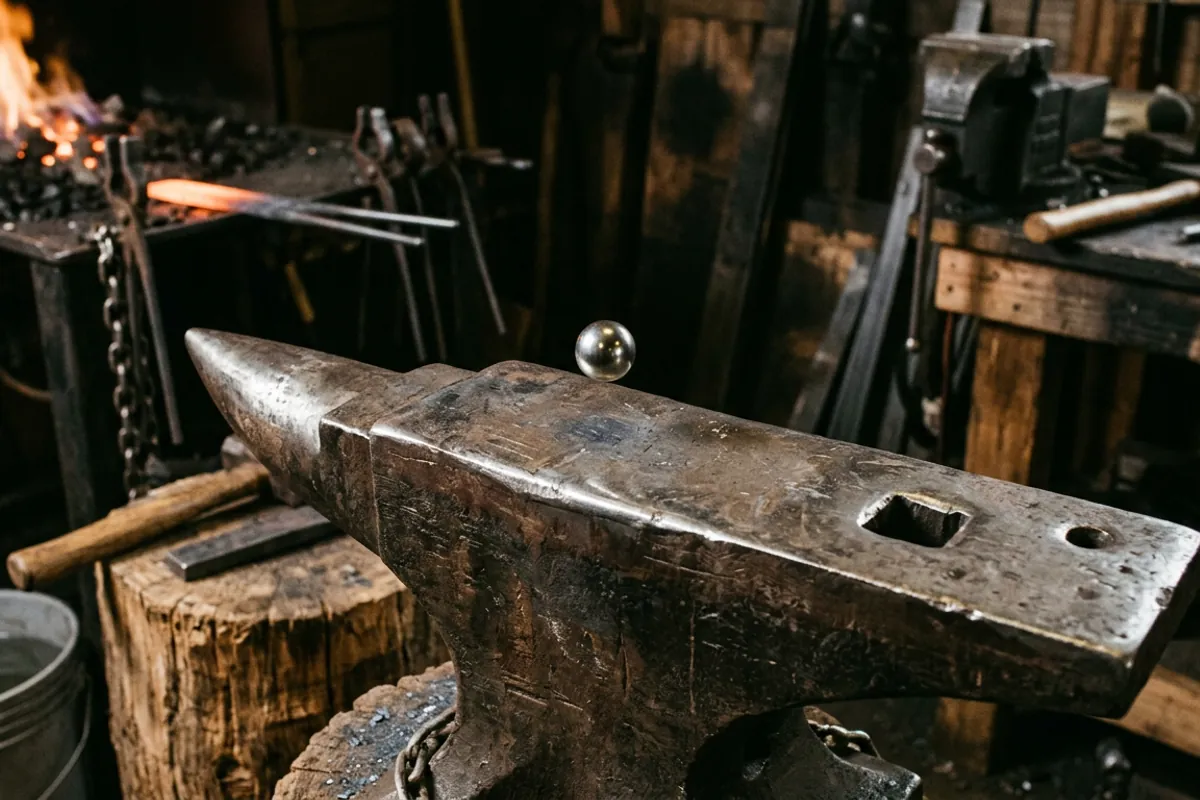
The first is rebound. Drop a 1 inch steel ball bearing onto the face from about 10 inches up and watch how high it bounces. On a properly hardened anvil face it should come back up roughly 7 to 8 inches, call it 70 to 80 percent. That returned energy is not a party trick. It is the face giving your hammer blow back to the work instead of swallowing it, which means less fatigue in your arm and more moved metal per heat. A dead face that returns half the drop will wear you out and waste your fuel. Every one of these import cast steel anvils gets sold on a rebound number, usually "over 70 percent." Treat that as a claim to verify on arrival, not a fact.
The second is the file test. Drag the edge of a good sharp file across the face with light pressure. On a hard face the file should skate and barely bite. If it digs in and cuts like the face were mild steel, the heat treat is soft and you have a problem, no matter what the box said. Do both tests the day the anvil shows up, while you can still send it back.
Then look at the obvious stuff. The face should be flat, not dished or wavy. The edges will usually be sharp and unradiused on these imports, which is fine, you dress them yourself. The horn should be reasonably shaped and the hardy and pritchel holes should be clean and roughly square and round. When you do dress those edges on a grinder, wear eye protection rated to ANSI Z87.1, because cast steel throws hard chips and a grinder throws grit, and I lost my eyebrows once to being careless near hot work. Eyes do not grow back. For sizing the anvil to your actual work rather than to a price, my anvil weight guide walks through it, and the broader how to buy an anvil piece covers the rest of the checklist.
The cast steel anvils at a glance
These are published maker or seller figures. Where a number is a seller claim I have said so, because on the imports the hardness and rebound are marketing until you test the unit in your hands. The Nimba row is a real published spec from the maker.
Scroll horizontally to see all columns.
| Anvil | Weight | Material | Face hardness | Rebound | Price tier |
|---|---|---|---|---|---|
| Single horn 55 lb cast steel | 55 lb | Cast steel | About 50 HRC (seller claim) | Seller claims over 70 percent | Budget |
| VEVOR single horn 66 lb | 66 lb | Cast steel | About 50 HRC (seller claim) | Seller claims about 70 percent | Budget |
| Yiwa 110 lb cast steel | 110 lb | Cast steel | About 50 HRC (seller claim) | Not independently published | Budget |
| VEVOR single horn 132 lb | 132 lb | Cast steel | About 50 HRC (seller claim) | Seller claims about 70 percent | Budget to mid |
| Nimba Titan | 120 lb | Cast 8640 steel | 50 to 52 HRC | Not published as a number | Premium |
The pattern is worth noticing. Every import claims the same 50 HRC and roughly the same rebound, whatever the weight. A real cast steel maker like Nimba publishes a tested hardness range and stakes its name on it. That gap in confidence is most of what you are paying for at the top end.
The 55 lb cast steel anvil for a bench or a starter
The smallest one I would even consider is a 55 pound single horn cast steel anvil. This is the "I want to try this in the garage" size. The seller lists it as cast steel, heat treated to a claimed 50 HRC with a stated rebound over 70 percent, with a cutting shelf and a thick base to keep it from walking. On paper that is a real anvil, not an ASO.
Be honest with yourself about what 55 pounds does, though. Light anvils bounce and ring loud, and they move under your hammer unless you bolt or strap them down to a heavy stand. The rule of thumb smiths repeat is you want an anvil at least fifty times your hammer weight to work efficiently, so a 55 pound anvil pairs with a lighter hammer and small stock. For jewelry, light hardware, or a kid learning at the bench it is genuinely useful. For general forging you will outgrow it fast. If the budget only reaches here, buy it, mount it dead solid, and test it on day one. Check price on Amazon (paid link)
The VEVOR 66 lb, the first cast steel anvil most people buy
The VEVOR single horn cast steel anvils are the ones you see everywhere, and the 66 pounder is the volume seller. VEVOR publishes it as cast steel at 50 HRC with a rugged round horn, a hardy hole and a pritchel hole. The reason it sells is simple: it is a real steel anvil at a price that used to buy you a rusty ASO.

I would frame the 66 as a step up from the 55, not a different animal. Same import cast steel, same claimed hardness, a bit more mass under the hammer so it settles down and moves metal a little better. It is a fine first anvil for a beginner who wants to forge hooks, bottle openers, small blades, and figure out whether the hobby sticks before spending real money. The honest caution is the same as the whole category: quality varies unit to unit, the edges come rough, and you should run the bearing and file tests the day it arrives. If it passes, you have a serviceable anvil. If it fails, send it back while you still can. I compared the VEVOR lineup in more depth in the VEVOR anvil guide.
The 110 lb cast steel anvil where I would put the money
If you are buying one cast steel anvil to actually learn the craft on, this is the size. A 110 pound cast steel single horn, like the Yiwa, is heavy enough to stay put and give back a solid hammer, small enough to move with two people and a hand truck, and cheap enough that you are not weeping if the hobby does not take. It is listed as cast steel with a round and square hole, a round horn, and the usual claimed 50 HRC face.
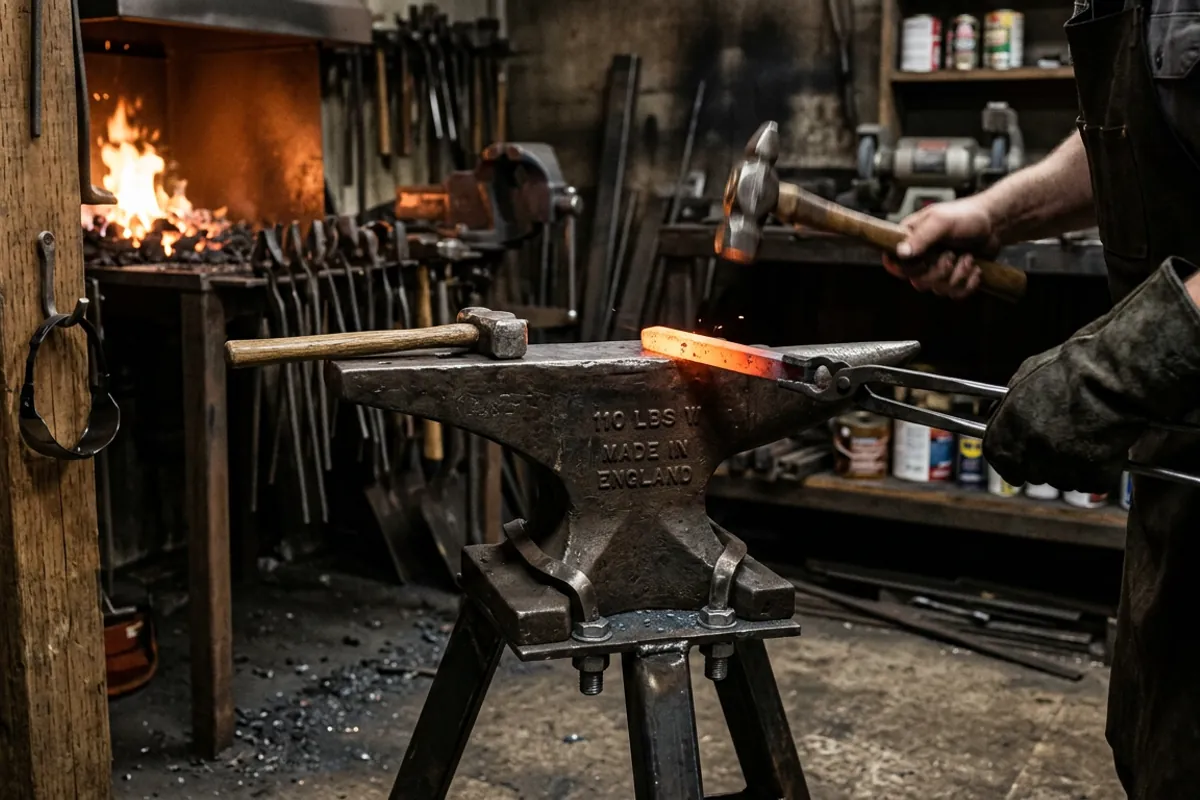
At 110 pounds you are into real work. You can forge tongs, larger blades, brackets, and hardware without the anvil skittering across the shop. This is the weight I steer most weekend beginners toward, and it is the one I would buy in this category if I did not already own Bessie. The tradeoffs have not changed, it is still an import cast anvil with variable heat treat and rough edges you will dress yourself, so test it on arrival and mount it solid on a stand or stump at knuckle height. Do that, and a 110 pound cast steel anvil will outlast your interest in complaining about it. Check price on Amazon (paid link)
The VEVOR 132 lb for heavier stock
If you already know you want to move bigger material, the 132 pound VEVOR is the top of the practical import range. Same published cast steel construction and 50 HRC claim, more mass, which is the single thing that most helps an anvil move metal. The extra weight makes forge welding and heavier drawing out far less frustrating than it is on a light face.

The reason I do not just tell everyone to buy the biggest one is money and handling. A 132 pound anvil costs more, it is genuinely awkward for one person to lift, and if you are still deciding whether you like blacksmithing, the 110 is the smarter first buy. But for a smith who knows the hobby is sticking and wants one import cast steel anvil to grow into, the 132 is the one I would size up to. Bolt it down, dress the edges, run the tests, same as all the rest.
Cast steel done right, what a Nimba shows you
I want you to see the ceiling, because it explains what your budget anvil is and is not. Nimba anvils are cast in the United States from 8640, a nickel chromium molybdenum steel, and the maker publishes a tested hardness of 50 to 52 Rockwell across the whole working surface, guaranteed. That is a proper cast steel anvil: a good alloy, a real heat treat, and a number the maker will stand behind. Their Titan runs 120 pounds, right in the same weight class as the imports above.
The catch is price. A Nimba costs many times what a 110 pound import does, and you feel it. What you are buying at that tier is not a different shape, it is confidence, the near certainty that the face is hard everywhere and will stay that way for the rest of your life and someone else's. Most hobby smiths do not need to spend there, and I would never push you to. But when a beginner asks whether cast steel can be a fantastic anvil, the answer is yes, and Nimba is the proof. The cheap ones borrow the process without buying the guarantee. If you want the fuller conversation about steel faced anvils generally, I put it in the steel anvil guide, and the whole category lives in the anvils topic hub.
What owners say
For the imports, I have not run every model, so here is what the forums actually report, weighed against shop experience.
On the VEVOR cast steel anvils, the general read on I Forge Iron and in the buyer reviews is more positive than a lot of old timers expected. In the long running VEVOR anvils thread, owners describe them as real steel anvils with a decent bounce and a ring for well under the price of a used name brand, and more than one experienced smith has said they are comfortable pointing a student at one. That is a meaningful shift, because a decade ago the cheap import anvil was a punchline.
The honest counterweight is variability. In threads like the 66 pound Chinese Acciaio unboxing and testing, owners who actually ran the ball bearing test found rebound in the usable range on their unit, while others in the same discussions report soft spots, rough or chipped edges out of the box, and the occasional lemon that has to go back. The consensus is not "these are as good as a Trenton." It is "these are usable cast steel anvils that vary from unit to unit, so test yours and be ready to return it." The forums also keep circling back to why rebound matters at all, and the standard answer in threads on the ball bearing test is the one I gave above: rebound is the face returning your work to you, and it is the fastest honest read on whether a casting was heat treated right.
Owner signal on the specific Yiwa branded 110 is thinner than on VEVOR, which sells in far higher volume. I would treat the Yiwa as one of many near identical import cast steel castings and lean on the general category consensus rather than pretend there is a rich review record that is not there. That thinness is itself information: buy it as a commodity cast anvil, verify it yourself, do not assume a reputation it has not earned.
What I would tell a friend
Buy the 110 pound cast steel anvil. It is the size that actually teaches you to forge, it stays put, it gives a real hammer back, and it costs little enough that a bad guess does not hurt. If money is tight, the VEVOR 66 is a legitimate first anvil, and if you already know you want to move heavier stock, size up to the 132. Skip the tiny novelties for anything past bench work, and never buy a cast iron ASO thinking the word anvil on the box makes it one.
Then do the two things that matter more than which listing you picked. Test the anvil the day it lands, the bearing bounce and the file skate, and send back anything soft while you still can. And mount it dead solid at knuckle height before you swing at it. A properly cast and heat treated steel anvil can be a lifetime tool, and a Nimba proves how good cast steel gets, but a cheap one is only as good as the heat treat you cannot see, so make it prove itself. If you are still torn on where to start overall, the best anvils for beginners roundup lays the whole first buy out. Wear your Z87.1 glasses when you dress those edges, and go make something.