A farrier anvil is not a shrunken blacksmith anvil. It is a different pattern built around a different job, and once you see what the turning cams, the clip horn and that long thin heel are actually for, the whole shape makes sense. If I were buying one today it would be the JHM Certifier 100 lb: the brand that owns the line publishes both the material and the hardness, the heel is tapered, and it has cams cast into the sides. The honest framing before we go further: I have run Bessie, my 148 lb Trenton, for most of twenty-five years, and I have spent plenty of time on borrowed anvils at the club forge, but I have not bench tested these specific farrier patterns. What follows is published specs from the makers and their dealers, checked against what I know about how anvils behave under a hammer, plus owner reports attributed where I use them.
What a farrier pattern actually is
The clearest short definition I found is on a Butler Professional Farrier School blog post from August 2010, written under the username Butler2318 with no credentials attached, so weigh it accordingly: a farrier's anvil is lighter, has a swelled horn, and a longer thinner heel than a blacksmith's anvil, the heel is tapered and thin to allow ease in cold shaping, most are used on a portable stand, and they often have turning cams to make cold shaping easier. It also notes the clip horn is sometimes used as an aid in making clips.
That lines up with what the current catalogues actually sell. Look through the farrier suppliers today and the pattern lives mostly in the 70 to 125 lb band, with a few heavier shop models above it, while the general blacksmith patterns start where farrier anvils leave off. A working farrier carries the anvil to the horse, so weight is a cost, not a virtue. In a home shop the calculation is the opposite, which is the whole argument in my anvil weight guide.
Can you forge general work on one? Yes, with the caveat that it is lighter than you want and the thin heel is not where you do heavy drawing; I already covered that in the piece on Oleo Acres Farrier and Blacksmith Supply, so I am not going to spend the article relitigating it. The more useful question, and the one nobody seems to answer, is what each feature on the pattern does to a piece of steel.
Most farrier anvils are cast ductile iron, not steel
This is the fact that surprised me most while pulling specs, and it is the single most buyer relevant thing on this page. The mainstream farrier patterns are castings in ductile iron, not forged or cast steel.
Anvil Brand, which owns the JHM line, says it plainly on its own JHM anvils page: they are cast from ductile iron and have a Rockwell hardness between 48 and 52. That is the brand owner speaking, which is the strongest tier of sourcing you get on this topic.
TFS is the same material story, one tier weaker on sourcing. Stockhoff's, quoting the maker on its TFS farrier anvil page, says TFS anvils are made from ductile iron, heat treated to exact specifications and then hand finished, and that the anvils weighing 150 lbs and under are hardened to 50 Rockwell. Other retailers quote slightly different numbers for TFS models, so I would treat 50 as the retailer figure it is rather than a certified value.
Emerson is the exception: Centaur Forge lists the Emerson Traditional 100 lb with turning cams as a forged steel anvil at 48 to 50 hardness. Note that the vendor copy there names the steel as 41/40, which is 4140. That is a chromium molybdenum alloy steel. It is a good anvil steel and it is not a tool steel, whatever the listing says.
NC Tool does not publish a hardness at all, and the two retailer descriptions of the material I found contradict each other, one calling it a balanced alloyed casting and another calling it cast steel. I held the same line in the steel anvil buying guide and I will hold it here: no number and no material grade on an NC anvil until NC prints one.
What I am not going to do is turn any of that into a durability verdict. You will see 75 percent rebound and similar claims quoted around ductile iron anvils. That figure is vendor marketing, not a measurement, and I could not find a single published test that puts a ductile iron face and a steel face through the same protocol. Published hardness is a real number. Everything past it, on this specific question, is opinion wearing a lab coat.
What the features actually do to the steel
Every listing lists these. Almost nobody explains them.
Turning cams
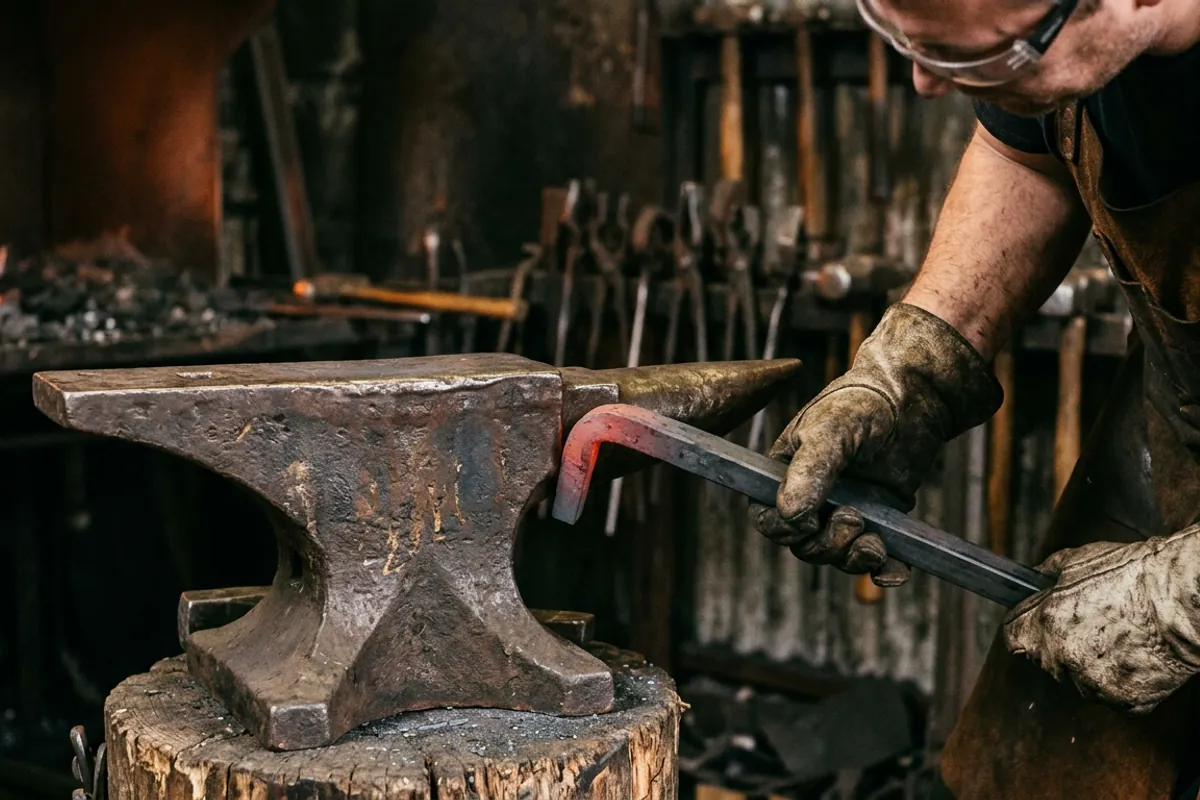
A turning cam is a notch cast or milled into the side of the anvil near the heel, usually one per side. You drop the end of a bar or the branch of a shoe into the notch and lever the far end sideways. The notch takes the reaction load so you do not need a vise, a bending fork or a second pair of hands, and because you are bending against a fixed shoulder rather than hammering, you can do it to stock that is off heat.
For a smith, that is a cold and warm bending jig that lives on the anvil permanently. It is genuinely handy for scrolling small stock, adjusting the leg of a hook, or taking the twist out of something you got slightly wrong. Nobody publishes cam dimensions, not one maker or dealer I checked, so you cannot shop them by spec. You can only confirm they are present: Centaur lists cams on the Emerson 100, Anvil Brand lists them on the JHM Certifier, and they show up on the NC Big Face and the JHM Basic 70.
Cold bending has a cost. Levering cold stock puts a high point load right at the edge of the cam and the face, and cold steel that finally lets go can move fast. Safety glasses to ANSI Z87.1 are the floor for this, not a nicety, and I would not stand with my face over the bar while I lean on it.
The clip horn
The clip horn is a squared or rounded projection sticking out from the shoulder of the anvil, below the face. You lay hot stock across it and draw metal up over the projection with the pein, raising a small tab out of the parent bar rather than welding one on.
That is a real forging move with uses well past shoeing: raising a lug, starting a small tenon shoulder on one side only, or upsetting a local bump where you want extra material. It works because the horn gives you a hard edge to trap the steel against while the hammer moves metal on only one side of the bar. An anvil with left and right hand clip horns lets you work either side of a piece without turning it end for end.
The long tapered heel
The heel on a farrier pattern is longer and thinner than the heel on a London pattern, and it tapers. Under the hammer that means it flexes and rings more, and it is not where you put heavy blows. What it gives you is reach: a thin heel slides inside a curved piece so you can hammer the inside of a bend without fighting the anvil body, and the taper means there is a section of it that matches almost any curve you are trying to open up or tighten.
The tradeoff is real. A thin, long, cast heel is the part of a farrier anvil I would be most careful with. No heavy stock over the heel, no using it as a bending post for anything you would need a cheater bar on.
The swelled horn and the low stand
The horn is fuller through its length than the slender cone on a lot of old London patterns, which makes it better for opening curves in flat stock and worse for fine pointed work. And the whole pattern is meant to be mounted low, on a portable stand, because the work happens closer to the ground than shop forging does. If you buy one for shop use, set the height for your hammer arm, not for the catalogue photo. My anvil stand guide covers how I would build it.
The field, spec by spec
Every figure below is the seller's own published number, pulled 2026-08-19, with the source named in the last column.
Scroll horizontally to see all columns.
| Anvil | Weight | Material | Face, as that seller measures it | Hardness | Specs from |
|---|---|---|---|---|---|
| Cliff Carroll 70 lb regular face | 70 lb | Not published | 11 by 3-1/4 in | Not published | Well-Shod |
| TFS Farrier 70 lb | 70 lb | Ductile iron | 3.5 by 12.25 in | 50 (retailer figure) | Stockhoff's |
| JHM Certifier 100 lb | 100 lb | Ductile iron | 4 in wide | 48 to 52 HRC (line spec) | Anvil Brand |
| TFS Farrier 100 lb | 100 lb | Ductile iron | 4 by 16.75 in | 50 (retailer figure) | Stockhoff's |
| Emerson Traditional 100 lb, cams | 100 lb | Forged steel | 12-5/8 by 4 in | 48 to 50 | Centaur Forge |
| NC Cavalry | 112 lb | Not published | 4-5/8 by 7 in | Not published | Centaur Forge |
| JHM Legend 120 lb | 120 lb nominal, 112 to 115 lb actual | Ductile iron | 3-7/8 by 13.75 in | 48 to 52 HRC | Centaur Forge |
| TFS Farrier 125 lb | 125 lb | Ductile iron | 4 by 17 in | 50 (retailer figure) | Stockhoff's |
Now the warning that column heading is doing a lot of work to carry. Sellers do not measure a face the same way, and face numbers are not comparable across brands. The clearest case is the NC Cavalry: Centaur publishes a 4-5/8 by 7 in face and lists the heel separately at 3-5/8 by 6 in, while other listings publish a single 4-5/8 by 12-1/2 in face for the identical anvil. That is a 5.5 inch disagreement about the same casting. It is almost certainly face proper versus face plus heel, but I could not confirm which seller means which, so I am not going to pretend I know. If you are comparing two anvils by face size, get both numbers from the same seller or you are comparing nothing.
The same softness shows up inside a single brand. Anvil Brand's own page for the 100 lb Certifier and various dealer listings for it differ by a quarter inch on overall length and on height. On a 26 inch anvil that is noise, but it tells you not to buy on a spec sheet decimal.
Two things do hold across the whole field, and they are the useful ones. Every farrier anvil here has a 1 in hardy hole, so a standard hardy tool set transfers between them; see my hardie tools guide for what is worth owning. Pritchel holes do not transfer, and the pritchel hole reference explains why there is no standard to appeal to: 3/8 in on the NC Cavalry, 1/2 in on TFS, JHM and Cliff Carroll, 9/16 in on the Emerson. If you punch and drift to a fixed size, check that number before you buy.
JHM Certifier 100 lb, the one I would buy
This is my pick, and the reason is provenance as much as steel. Anvil Brand owns the JHM line and publishes on its own site that the anvils are cast from ductile iron with a Rockwell hardness between 48 and 52. On the Certifier product page it adds that the anvil is made of ductile iron, machined and heat treated in the USA, with a 4 in wide face, a 10-1/4 in horn, a 1 in hardy hole, a .500 in pritchel hole, a 3 in tapered heel and turning cams for bending steel. That is a maker telling you what it sold you, which is rarer in this corner of the market than it should be.
One honest note on JHM vendor copy: the Legend listing describes the anvil as forged in a Texas foundry. Foundries cast. They do not forge. The material line the brand publishes is ductile iron, and that is the line I would trust.
The other genuinely useful JHM fact is on the Legend page at Centaur Forge, which lists the 120 lb model as weighing 112 to 115 lbs actual. A maker publishing that its nominal weight is not its real weight is doing you a favor. Assume the same slack applies elsewhere in the category and buy on the low end of what the number promises.
Check price on Amazon (paid link)
Cliff Carroll 70 lb, the light one you can get shipped
If portability is the point, the Cliff Carroll 70 lb is the classic. Well-Shod publishes the regular face model at an 11 by 3-1/4 in face, 8-1/2 in horn, 8-3/4 in height, 10-1/2 by 8-1/2 in base, 1 in hardy, 1/2 in pritchel, made in the USA, with side turning cams and a heel tapered for small stock and rounded at the edges. Centaur lists the wide face version with both turning cams and a clip horn.
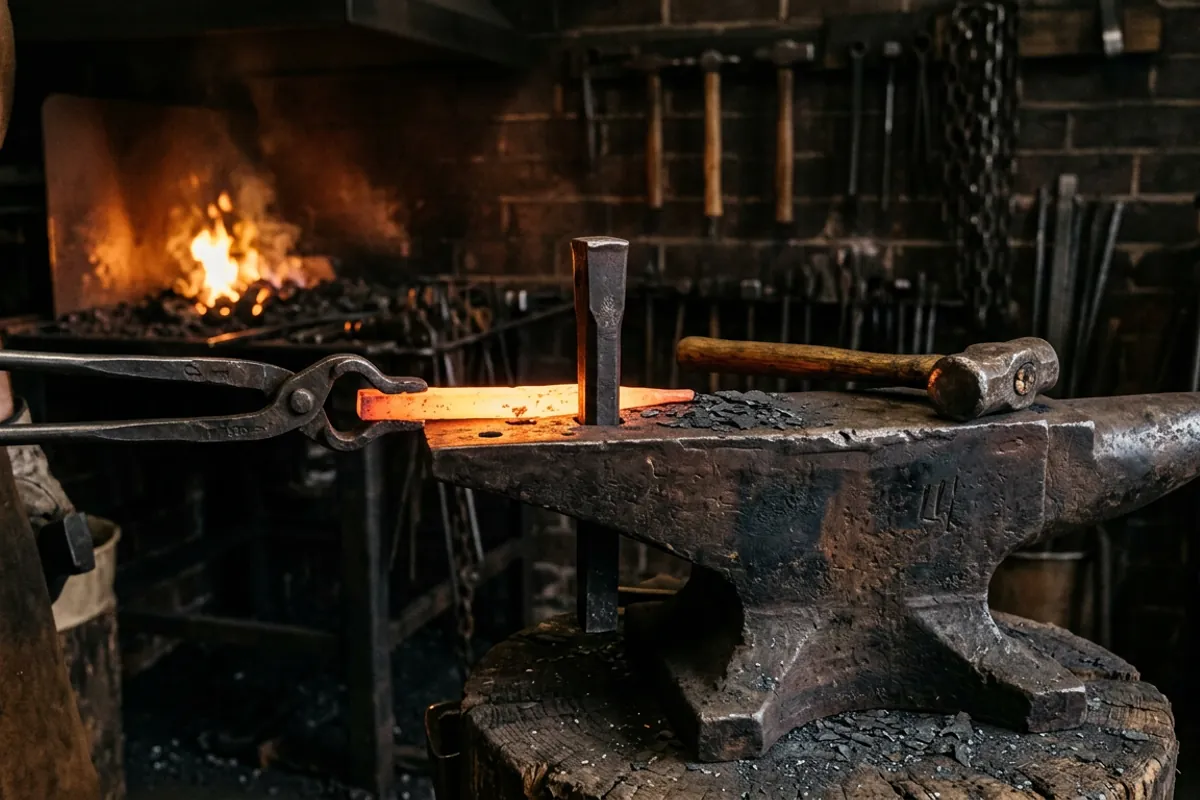
Here is the catch, and it is not small: Cliff Carroll does not publish a material or a hardness anywhere I could find, and its own product pages tell you to call for details. For a farrier buying a known quantity from a known brand that is fine. For a smith deciding between this and an anvil whose maker prints 48 to 52 HRC on the page, the missing number is the number. I would not call that a reason to avoid it. I would call it a reason to buy the one that publishes if the two land at similar money.
Between the two faces, take the wide face if this is going to double as a general forging anvil. An extra half inch of working width matters more in a shop than it does at a truck.
Check price on Amazon (paid link) for the regular face, or check price on Amazon (paid link) for the wide face.
TFS farrier anvils, 70 to 125 lb
TFS gives you the longest face per pound in this group, which is exactly what you want if the anvil is going to see general forging. Per Stockhoff's, quoting the maker: the 70 lb has a 3.5 by 12.25 in face and a 3.5 by 9 in horn, the 100 lb has a 4 by 16.75 in face and a 4 by 10.75 in horn, and the 125 lb has a 4 by 17 in face and a 4 by 11 in horn. All of them carry a 1 in hardy hole and a 1/2 in pritchel hole, and all are ductile iron, heat treated and hand finished in the USA.
I am deliberately not printing TFS prices. The retailer page renders one base figure across a multi weight selector, so every weight showed the same number, which means the number is not trustworthy per model. More generally: prices on identical farrier anvil SKUs vary enough between suppliers that I would price the same model at two or three of them before ordering.
TFS is not on the marketplace as a farrier pattern in any listing I could verify, so this one is a phone call or a farrier supply order. That is normal for the category.
NC Cavalry and the Emerson Traditional
The NC Cavalry 112 lb is the farrier pattern most smiths have actually seen, because it turns up everywhere. Centaur publishes the Cavalry at a 4-5/8 by 7 in face, a 4 by 9-1/2 in horn, 11 in height, an 11 by 9 in base, right and left hand square clip horns, a 1-1/4 in round turning hole, a 1 in hardy that takes a 7/8 in shank, and a 3/8 in pritchel, made in the USA. Two things to know: the clip horn size is published differently by different sellers, so I am giving you the horns without a number, and NC publishes no hardness or material, so neither will I. I have written about this anvil elsewhere, in the best anvils for beginners roundup and in the Centaur Forge line guide, and my read has not changed.
The Emerson Traditional 100 lb is the steel option in a category that is otherwise cast iron. Centaur publishes a 12-5/8 by 4 in face, an 8-1/2 in horn, 10 in height, a 9 by 8-3/4 in base, a 1 in hardy, a 9/16 in pritchel, 48 to 50 hardness and USA manufacture, designed by Dilton Emerson, with a version available with turning cams. That hardness figure is Centaur's, not the maker's, since I could not reach an Emerson page. If steel matters to you more than the shape does, this is where to look, and it is priced accordingly.
If light and cheap is really what you want
Some readers land on farrier anvils because they want something under 100 lb they can afford, not because they need cams and a clip horn. Be honest with yourself about which one you are. If it is the second, a plain light single horn anvil does the same beginner jobs for less money, and there is no shortage of them.

That is not a farrier pattern and I am not going to dress it up as one. It has no cams, no clip horn and no tapered farrier heel, and I have no verified hardness or material figure for it. It is a starter block with a horn. If you want the reasoning on what a first anvil actually needs to do, that is the whole subject of my anvil buying guide, and the rest of the pattern comparisons live on the anvils topic hub.
What owners say
Owner signal here is thinner than I would like, and I want to say that plainly rather than manufacture a consensus.
The ductile iron question comes up repeatedly on I Forge Iron, in threads like Ductile Iron anvils and JHM vs your a forged steel anvil. The recurring line from experienced posters is the moderate one: ductile cast iron is a perfectly suitable anvil material, and it is not as hard or as strong as a good cast or forged steel. Nobody in those threads is running a controlled test, and neither am I telling you they are.
On the JHM specifically, the JHM Competitor thread has an owner reporting that his 260 lb Competitor takes hard use well, bought secondhand from a farrier, with the edges radiused after purchase. Edge treatment coming up that often in ductile iron discussions is worth noting: on any anvil in this hardness band I would radius the edges rather than chase a sharp one, and on a cast anvil I would be firm about it.
One caution about forum sourcing. In the BladeForums thread Anvil brands and materials a poster describes his JHM as a ductile iron body with a hardened steel face. The brand's own page does not say that. It says cast ductile iron at 48 to 52 HRC, full stop. Owners are useful on how a tool lives; the maker's page is what you use for what it is made of.
There is also an NC Tool Cavalry 112lb review thread if you want owner impressions of that one specifically. Read it as impressions, since the hardness question it cannot settle is the same one NC has not answered.
What I would tell a friend
Buy the JHM Certifier 100 lb if you want a farrier pattern and you want to know what you bought. It is the only one in this group where the company that owns the line publishes the material and the hardness on its own site, it has the cams and the tapered heel that make the pattern worth having, and 100 lb is enough anvil to forge on if you mount it properly.
Buy the Cliff Carroll 70 lb if you need to carry it, and go in knowing the material is not published. Buy the TFS 100 lb if face length is what you are after and you are willing to order through a farrier supply. Buy the Emerson if you specifically want forged steel and the price does not bother you. Skip the whole category if what you actually want is a shop anvil that will take heavy work, because 70 to 125 lb of anvil under a 3 lb hammer is a compromise you will feel every time you draw stock.
The safety note that matters most here is not dramatic, it is just constant. These anvils are built to be worked cold as well as hot, on cams and over a thin heel, and cold work throws chips. ANSI Z87.1 rated eye protection every time you lean on a cam or hit anything off heat, natural fiber clothing at the forge, and no heavy blows over that tapered heel no matter how convenient the angle looks. A cracked heel on a cast anvil is not a repair job. It is a new anvil.