If you are standing in the anvil aisle at Harbor Freight with a couple hundred dollars in your pocket, the honest answer is short: the Harbor Freight anvil worth carrying to the register is the Doyle 65 lb cast steel one, and the 55 lb Central Forge cast iron anvil next to it is an anvil shaped object that I would leave on the shelf. That is the whole verdict. Everything below is why, what the specs actually say, and what the same money buys you if you are willing to drive to a farm auction instead.
Being straight with you about where this comes from: I have not run either of these down in my own shop. My anvil is Bessie, a 148 lb Trenton I have put more hours on than every other tool I own combined, and she is the yardstick I measure everything against. What follows is published manufacturer and retailer specs, owner reports I went and read, and twenty five years of shop experience applied to both. Where the owner signal is thin, I say so.
What Harbor Freight actually sells right now
Three things in the store wear the word anvil without being a vise casting: a 15 lb Central Machinery cast iron lump, the long running 55 lb Central Forge cast iron anvil, and the newer Doyle 65 lb cast steel anvil. They are not in the same category of tool, no matter how similar the silhouettes look.
Scroll horizontally to see all columns.
| Anvil | Weight | Material | Face size | Published hardness | Warranty |
|---|---|---|---|---|---|
| Central Machinery 15 lb, item 69425 | 15 lb | Cast iron | 8-1/4 x 3 in | Not published | 90 days |
| Central Forge 55 lb, item 69161 | 54.12 lb actual | Cast iron | 8-1/2 x 4 in | Not published | 90 days |
| Doyle 65 lb, item 58924 | 65 lb | Cast steel | 50 sq in | 63 HRC, comparison table only | Lifetime, for units bought on or after 5/19/25 |
| VEVOR 66 lb single horn | 66.1 lb | Cast steel | 10.35 x 3.46 in | 50 HRC | Not published |
| VEVOR 132 lb single horn | 132.3 lb | Cast steel | Not published, 25.79 in overall length | 55 HRC | Not published |
Those figures come from Harbor Freight's Doyle 65 lb page, the Central Forge 55 lb page, and VEVOR's own 66 lb listing. Where a maker does not publish a number, I left it as not published rather than guessing. Notice which column tells you the most: hardness. Harbor Freight publishes a face hardness for exactly one of its three anvils, and it is not a coincidence that it is the only one made of steel.
Prices move constantly at that store, so treat any figure you see as a snapshot. At the time of writing the 55 lb lists at $64.99, the 15 lb at $19.99, and the Doyle at $139.99. The gap between the 55 lb and the Doyle is the most useful hundred dollars in the whole aisle.
Cast iron versus cast steel, and why that one word decides everything
An anvil has one job that a chunk of metal cannot do: send the hammer energy back up into the work instead of eating it. That is rebound, and it is the difference between moving hot steel in four blows and moving it in nine.
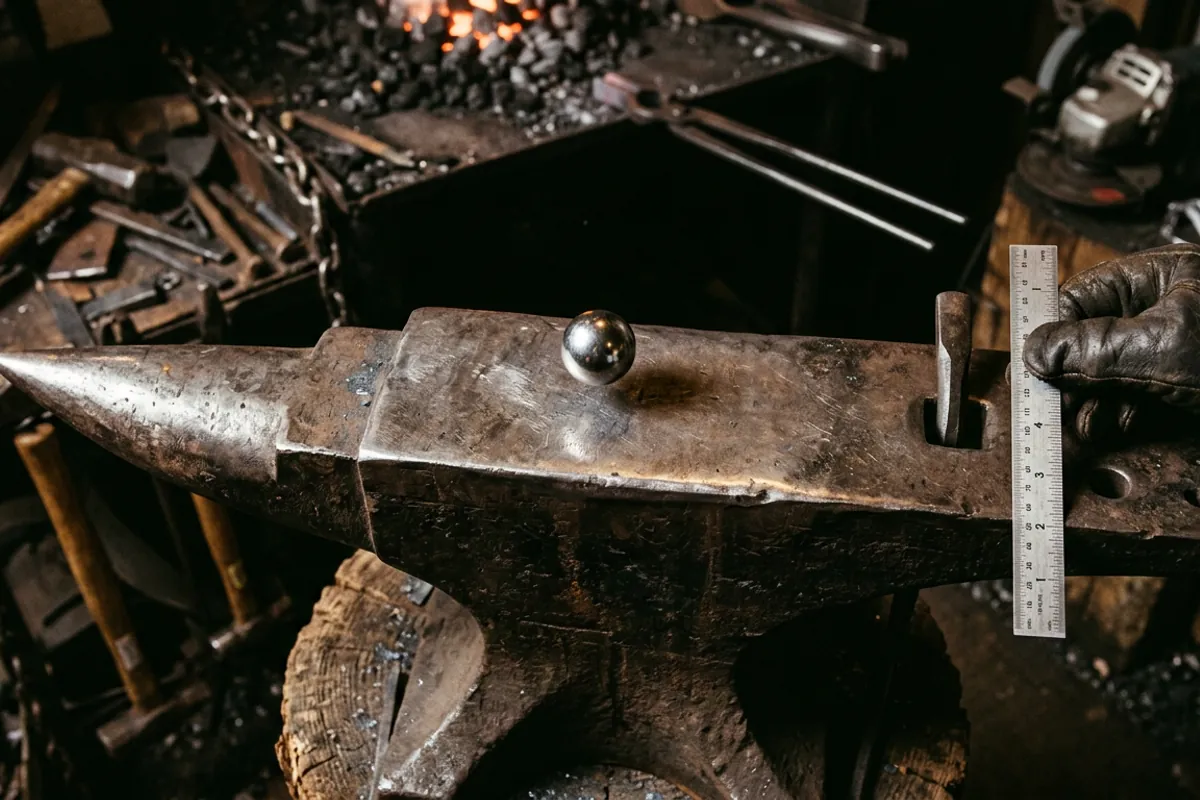
The test every smith uses costs nothing. Drop a 1 inch steel ball bearing onto the face from 10 inches and watch how high it comes back. A good anvil returns roughly 7 to 8 inches, so 70 to 80 percent. A soft or dead face returns half that or less, and you feel every wasted percent in your elbow by the end of an afternoon. Do this before money changes hands, on a used anvil or a new one sitting in a store display.
Cast iron fails that test because of what it is. Grey cast iron is soft, it has graphite flakes through it, and it damps vibration instead of returning it. That is a virtue in a machine tool base and a defect in an anvil. Worse, it is brittle. Hit a cast iron anvil hard, or hit it over the edge, and it does not dent politely, it can break a piece loose. That is a real hazard, not a theoretical one, and it is why I will not tell a beginner that a cast iron anvil is fine to learn on. Something that can throw a fragment at hammer speed is not a training tool. If you are weighing one anyway, read the honest version in my cast iron anvil guide first.
Cast steel is a different animal. It can be heat treated, it holds an edge on the face, and it returns energy. The consensus you will find in any forum thread on the subject is blunt about this, and I agree with it: a low end cast steel anvil beats the best cast iron one, every time.
The Doyle 65 lb cast steel anvil, the one I would buy there
Harbor Freight publishes a 50 sq in face, a 7.1 x 3.7 in horn, a 3/4 in hardy hole and a 3/4 in pritchel hole, overall 21-1/8 in long by 4-9/16 in wide by 6-7/8 in tall, and, in the marketing copy rather than the spec list, up to 80 percent rebound. The 63 HRC face hardness is not in that spec list either: it appears one place only, in a comparison table on the same page that puts the Doyle against a Woodward Fab competitor listed at 45 to 55 HRC. The customer rating on the listing sits at 4.7 out of 5 across 235 reviews.
Take the 63 HRC as a marketing claim until somebody puts a hardness tester on one. Anvil faces generally live in the 50s HRC, and there is a reason for that: hardness buys rebound but costs toughness. A face genuinely run at 63 HRC would ring beautifully and chip if you ever cut over the edge with a hardened chisel or let your hammer skid off the work. If you want to understand why hardness and toughness trade against each other, Knife Steel Nerds is where I send people, because they actually run the tests rather than repeating shop lore.
The real limits of this anvil are not the hardness claim, they are size and mass. Sixty five pounds is light. The rule of thumb I give the weekend beginners I teach is that you want somewhere around 50 pounds of anvil for every pound of hammer, and more is better; my 148 lb Trenton is a comfortable minimum for general work, not a luxury. At 65 pounds this thing will move under you unless it is mounted on a heavy stand and secured, and a 50 sq in face is a small target when you are learning to hit straight. The 3/4 in hardy hole also limits you to small hardy tooling, which matters when you go shopping for a hot cut. My anvil weight guide walks through the sizing math properly.
Who it suits: somebody who is not sure yet whether this hobby is going to stick, who wants a real steel face today rather than a Craigslist search that might pay off in three months, and who is going to bolt it down properly. That is a legitimate buyer, and I am not going to sneer at them. It is a training anvil for light to medium hot work, and the lifetime warranty on units bought on or after 5/19/25 is a genuinely better deal than the 90 days on the cast iron model.
The 55 lb Central Forge and the 15 lb bench lump
The 55 lb Central Forge is the anvil most people mean when they type harbor freight anvil into a search box, because it has been on that shelf for twenty years and it is cheap. Harbor Freight publishes it as cast iron with an 8-1/2 x 4 in work surface and a 90 day warranty, and it publishes no hardness figure at all.
I would not forge on it. It will deform under a hammer, it will not give you rebound, and its edges are a liability. The 90 day warranty tells you what the seller thinks of its service life under real work. Where these things are genuinely useful is as a bench block: backing for riveting, straightening a cold bracket, light sheet work, a stake for a hobbyist who is not hot forging at all. If that is your actual use case, fine, buy it and know what you have.
The 15 lb Central Machinery is that same idea shrunk down. It is a paperweight with a horn. There is no forging application for it that a length of railroad track would not do better, and I started on railroad track clamped to a stump, so I am not being a snob about humble beginnings.
What owners say
I have not run these anvils, so here is what people who have, report. On The Hobby-Machinist, posters give the Doyle a clearly better reception than the older cast iron models, describing good rebound and noting that it survived deliberate abuse in the video reviews going around. The same thread contains the most useful sentence in this whole article, from an owner of one of the smaller Harbor Freight anvils: trying to straighten a deck screw on it left screw shaped divots in the face. That is cast iron, described exactly.
On The Garage Journal, the discussion of budget cast steel anvils lands in the same place: the material matters more than the brand, the newer cast steel offerings from both Harbor Freight and VEVOR are a real step up from the old cast iron ones, and hole placement is where the cheap anvils differ from each other. One poster there recalls the Doyle rating better on the shape and placement of its accessory hole, though he says plainly he is going off video reviews rather than ownership; another rates the VEVOR London pattern's hole placement higher. That is the whole of the signal on that question, and it is thin.
For the older Harbor Freight 110 lb cast steel anvil, long discontinued, there is a detailed owner writeup at spaco.org that is worth reading for calibration. That owner found the face flat within about 12 thousandths, better than many used anvils he had ground true, but also called the face rather soft after actually working on a second one he bought for himself. Cheap cast steel varies unit to unit, and that report is a good reminder to test yours rather than trust the tag.
Be aware the owner signal on the current Doyle is thin and young. Most of it is YouTube unboxings and first impressions, not five year reports. Nobody can tell you yet how that face holds up after a thousand hours of hot work, and anyone who claims to is guessing.
The budget cast steel anvils I would put next to it
The Doyle does not exist in a vacuum. VEVOR's 66 lb single horn is the direct competitor, published at 50 HRC after an 800 C heat treatment, a 10.35 x 3.46 in work surface, a 3/4 in square hole and a 5/8 in pritchel, with a claimed rebound over 70 percent. That 3/4 in hardy hole is the real limitation: most commercial hardy tooling is made for a 1 in hole, so you will be making your own shanks. Similar weight class, similar money, London pattern.

If you can stretch, the more interesting buy is doubling the mass rather than chasing hardness claims. VEVOR's 132 lb model is published at 55 HRC, 132.3 lb, 25.79 in overall length, with a 1.38 in hardy and a 1.1 in pritchel, which opens up standard hardy tooling instead of the small stuff. Twice the anvil under your hammer does more for your forging than five points of Rockwell ever will.

There are also cast steel anvils sold only through the marketplace listings, and I want to flag the catch honestly. For anvils like the Holymus 66 lb, the specs exist only in the seller's own listing text, with no manufacturer page behind them, so a claimed 50 HRC is a claim and nothing more. If you buy one, do the ball bearing test the day it arrives and send it back if it flunks. Check price on Amazon (paid link)
The same applies to the 132 lb Happybuy single horn, which is the heavier version of the same story: cast steel, seller claimed hardness, no independent spec sheet. Buying one is buying a casting lottery ticket, so do the ball bearing test the day it lands and send it back if it flunks. Check price on Amazon (paid link)
I go deeper on that whole tier in the VEVOR anvil guide, and the field across every budget is laid out in the best anvils for beginners.
What the same money buys used
Here is the part the store cannot tell you. A hundred and forty dollars in the used market, in most of the country, buys a 100 to 150 lb London pattern anvil with a wrought body and a forge welded steel face if you are patient and willing to drive. That anvil will out rebound anything in this article, it holds its resale value, and it is the anvil you keep for thirty years.
What to check, in order: rebound with the ball bearing, ring with a light tap of a small hammer while the anvil sits on wood, face condition for deep swayback or a delaminated plate, and edges for chunks broken out. A dead thud on an old anvil usually means the face plate has separated from the body, and no amount of grinding fixes that. Sway of an eighth of an inch across the length is normal and harmless. A face missing its hardened plate is a boat anchor.
The trade is time. Used shopping means checking listings for weeks, driving to look at things that turn out to be junk, and knowing enough to walk away. If your available time is zero and your patience is thinner than your wallet, the new cast steel anvil is the rational buy. Start with my anvil buying guide and the used anvil guide, and browse the rest of the anvils topic hub before you spend anything.
Getting it to work once it is home
A light anvil sitting loose on a stand is a bad tool no matter what it is made of. Mount it. A stump, a heavy timber stand, or a steel tripod filled with sand all work, and the anvil gets strapped, chained or bolted down so it cannot walk. Set the face at knuckle height when you stand up straight with your arm hanging; too high and you fight your own shoulder all day, too low and your back pays.
A hardened cast steel face rings hard enough to damage hearing over a session. Chain wrapped around the waist, silicone caulk between anvil and stand, or magnets on the sides will kill most of the ring, and hearing protection covers the rest.
While we are on protection: eye protection rated ANSI Z87.1, always, and natural fibers near the forge. Cotton, wool, leather. Synthetics melt onto skin. A missed blow on a hard face throws hammer scale and sometimes a chip of the hammer itself, and a cast anvil edge can spall. Nothing about skipping glasses is worth the four seconds it saves. Cheap Z87.1 glasses are one of the few places where the budget option is genuinely fine. Check price on Amazon (paid link)
The rest of the kit is covered in blacksmith safety gear, including what I think is worth buying and what is theater.
What I would tell a friend
Buy the Doyle 65 lb cast steel if you want an anvil today and you accept that it is a starter anvil: light, small faced, with a hardness claim I would verify myself. Skip both cast iron models for forging, and only buy the 55 lb if what you actually want is a bench block for cold work. If you can wait and drive, a used 100 to 150 lb anvil with a good steel face beats everything here and costs about the same.
Whichever way you go, do the ball bearing test before you commit, mount the thing properly, and put the glasses on before the steel comes out of the fire. The anvil is the one tool in the shop you can buy once and be done with, which is exactly why it is worth being fussy about.