I have enough verified material. Two independent retailers confirm the RIDGID/Peddinghaus forged anvils' specs, Centaur Forge and Kanca's own page give the Kanca specs and hardness, and I have real forum threads for owner consensus. Writing the article now.
Here is the article:
If you want a forged anvil, the honest first move is usually a used one. A sound wrought-body Trenton, Hay-Budden, or Peter Wright will out-work almost anything new in its weight class, and my own anvil, Bessie, is a 148 lb Trenton I have put more hours on than every other tool in the shop combined. If you want something you can order today with a warranty behind it, the drop-forged RIDGID/Peddinghaus anvils and the Kanca line are the real deal: forged steel, not poured. What I want to do here is separate a genuine forged anvil from the flood of cast lumps that borrow the word, because the listing copy will not do it for you. None of this is a bench test of every model. I have judged plenty of anvils by hand over about twenty-five years, but the specific new models below lean on published specs and owner reports weighed against what a good anvil is supposed to feel like under a hammer.
What "forged" actually means on an anvil, and what it doesn't
Forging means the steel was shaped hot under pressure, which packs and aligns the grain and leaves you a tough, dense tool. Casting means it was melted and poured into a mold. Both can make a usable anvil, and cast steel (not cast iron) anvils are fine for a lot of hobby work, but the word "forged" gets slapped on listings that were never near a forging press.
There are really two kinds of forged anvil you will run into:
- Modern all-steel drop-forged anvils. Kanca, Peddinghaus, and the RIDGID anvils Peddinghaus makes are pressed to shape from a single high-grade steel, then the face is ground and induction hardened. These are new tools with clean geometry and a known steel.
- Traditional wrought-body anvils with a forge-welded steel face. This is what most good antique anvils are. The body is wrought iron, forged to shape and welded at the waist, with a high-carbon steel face plate forge welded on top. Trenton, Hay-Budden, Peter Wright, and Arm and Hammer are built this way, and the construction is well documented on the Practical Machinist history threads.
What is not forged: the cheap cast anvils that show up under "forged steel" search terms. Some are decent cast steel, some are cast iron doorstops, and the listing rarely tells you which. If a full-size anvil is priced like a bag of charcoal, it is cast, whatever the title says. For the longer version of the buy-or-skip logic, I go into it in my anvil buying guide and the steel anvil guide.
The forged anvils I would consider, at a glance
These are published figures from the makers or from non-marketplace retailers, cited in the sections below. Where a maker does not publish a number, it says "not published" rather than a guess.
Scroll horizontally to see all columns.
| Anvil | Weight | Construction | Face / horn | Hardness | Price tier |
|---|---|---|---|---|---|
| RIDGID/Peddinghaus Model 5 (69622) | 77 lb (35 kg) | Drop-forged steel, hand-welded face | 8 in face, 5.5 in horn | Not published, induction-hardened face | Mid |
| RIDGID/Peddinghaus Model 9 (69632) | 165 lb | Drop-forged steel | Not published | Not published | Premium |
| RIDGID/Peddinghaus Model 12 (69642) | 276 lb | Drop-forged steel | 8.5 in horn | Not published | Premium |
| Kanca DFA-20 | 44 lb (20 kg) | Drop-forged CF45 steel | Not published | 54 to 62 HRC | Budget to mid |
| Kanca DFA-35 Bladesmith | 77 lb (35 kg) | Drop-forged CF45 steel | 7.5 x 3.5 in face, 5 in horn | 54 to 62 HRC | Mid |
| Kanca DFA-50 | 110 lb (50 kg) | Drop-forged CF45 steel | Not published | 54 to 62 HRC | Mid to premium |
| Peddinghaus No. 9 (100 kg) | 220 lb (100 kg) | Drop-forged steel, induction-hardened face | 130 mm face, 230 mm horn | Not published | Premium |
| Vintage Trenton / Hay-Budden / Peter Wright | ~100 to 200 lb typical | Wrought body, forge-welded steel face | Varies | 70 to 80% rebound (owner-measured) | Used market |
How I judge a forged anvil before money changes hands
Whether it is new in a crate or crusty on a farm auction, the test is the same, and you can do it with a ball bearing and a ruler.
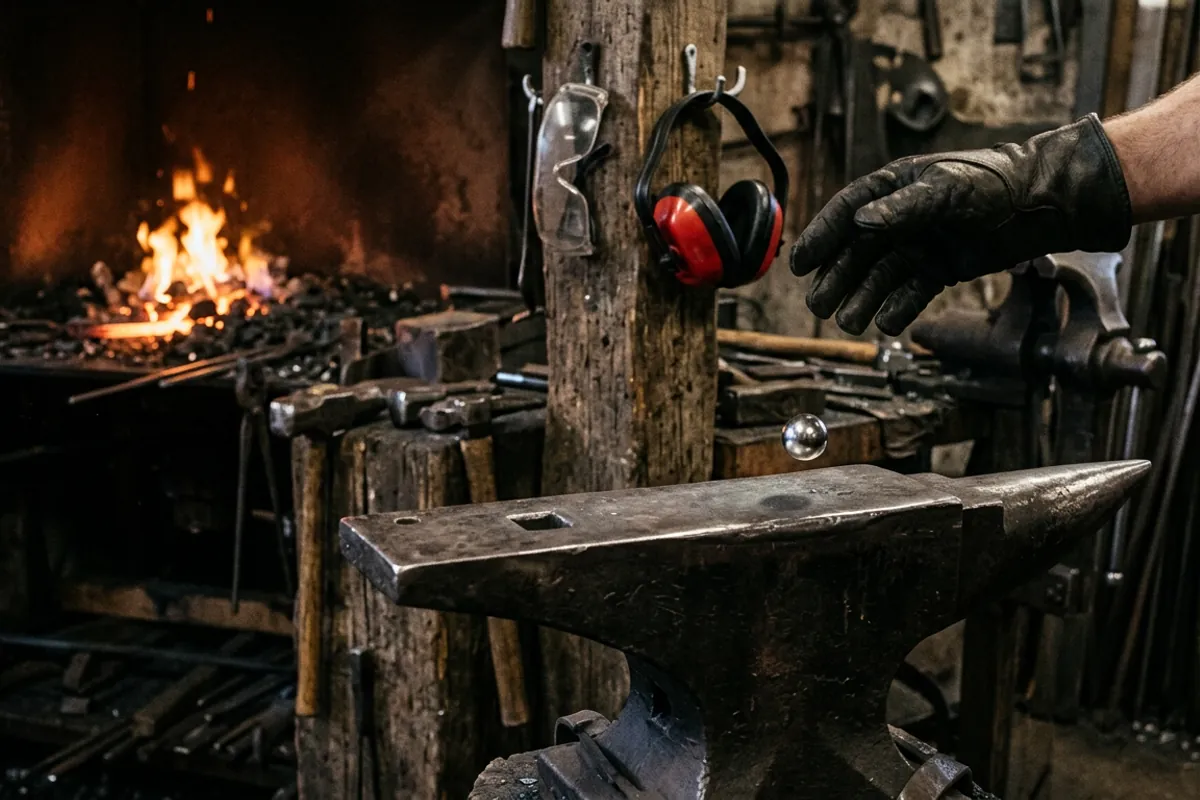
Rebound. Drop a hardened bearing or a ball from about 10 inches onto the face and watch how high it bounces. A good anvil returns most of that energy, roughly 70 to 80 percent, and that is exactly what the seasoned crowd reports for the good wrought-body anvils on the forums. Low rebound means a soft or delaminated face, and no amount of "but it is forged" fixes that.
Ring and dead spots. Tap the face in several places. A healthy anvil rings; a thud in one area on a vintage anvil can mean the face plate has separated from the body underneath. On a forged wrought-body anvil, a delaminated face is the one flaw I walk away from every time, because refacing is a real job, not a weekend fix.
Face and edges. Sight down the face for sway. A little dish is normal and usable; a deep swale is a lifetime of hard use you are inheriting. Sharp factory edges on a new drop-forged anvil are fine, but I knock the very corners off a working radius so they do not cut into my stock.
One safety word before you start banging on anvils to test them. Anvils are loud, and a clean forged face rings hard enough to hurt your ears over a session, so wear hearing protection. If you are wire-wheeling or grinding an old face to check it, that is ANSI Z87.1 eye protection, no exceptions. I lost my eyebrows early on to a quench flare because I treated protection as optional, and I do not anymore. If you are unsure how much anvil you even need before you start shopping forged versus cast, my anvil weight guide sizes it to the work.
The RIDGID and Peddinghaus drop-forged anvils
This is the genuine forged anvil most people can just order online, and it is the one I point new smiths to when they want new and forged in one box. RIDGID sells these under their own name, but they are the drop-forged Peddinghaus design out of Germany.
Model 5 (69622), 77 lb
The Model 5 is a 77 lb (35 kg) anvil with an 8 inch face and a 5.5 inch horn, and it carries both a hardy hole and a pritchel hole. The retailer spec sheet is blunt about the construction: it is "not bottom cast but fully forged and hand welded," produced entirely from high-grade steel with a ground and induction-hardened top face, per the listing at PlumbersStock. For a knifemaker or a beginner working small stock, 77 lb of real forged steel with a lively face is a legitimate anvil, not a compromise.
The honest tradeoff is price per pound. You pay a premium for new German forged steel, and 77 lb is on the small side for heavy drawing out. It is plenty for blade work and light general smithing, but if you already know you want to move big bar, look at the heavier models or a good used anvil in the same weight class for less money.
Check price on Amazon (paid link)
Model 9 (69632) and Model 12 (69642)
Same forged construction, more mass. The Model 9 runs 165 lb and the Model 12 is 276 lb with an 8.5 inch horn, both drop-forged from the same high-grade steel with the induction-hardened face. These are the ones I would look at if you want a new forged anvil you will not outgrow, and 165 lb is right in the sweet spot for a one-person general shop.
Check price on Amazon (paid link)
The Kanca drop-forged line
Kanca is the other modern forged anvil worth knowing. They are drop-forged in Turkey to a southern German pattern, and unlike a lot of makers, Kanca actually publishes a steel and a hardness: CF45 (a C45 carbon steel) with a uniform surface hardness of 54 to 62 HRC, both on Kanca's own material and on Centaur Forge, who stocks the line. That published hardness is worth something, because it is a number you can hold them to.
The line runs from the 44 lb DFA-20 up through the 77 lb DFA-35 "Bladesmith," the 110 lb DFA-50, and heavier double-horn models. The DFA-35 gives you a 7.5 by 3.5 inch working face and a 5 inch horn in that same 77 lb class as the RIDGID Model 5, so the two are natural cross-shopping. Owner talk on the forums generally rates Kanca faces as hard and lively, with the usual caveat that a C45 face is a touch softer than the best premium German anvils, which is exactly what the published 54 to 62 HRC range tells you.
The catch for online buyers is that the real Kanca forging anvils mostly sell through specialist dealers, not the big marketplace. The one Kanca product you can grab on Amazon is the little ANVILLO drop-forged anvil-and-vise combo, and I want to be straight about what that is: a small bench tool with a 3.5 inch vise jaw and a forged anvil base, not a forging anvil for hot stock. It is genuinely forged steel, and it is handy for jewelry, riveting, and light bench work, but do not buy it expecting to draw out a blade on it.
Check price on Amazon (paid link)
Peddinghaus full-size anvils
If money is not the deciding factor and you want the best new forged anvil most smiths will ever touch, this is it. A Peddinghaus is drop-forged and made entirely from high-grade steel, with the face ground and induction hardened. The standard 100 kg (220 lb) single-horn model runs a 130 mm face width, a 420 mm face length, and a 230 mm horn per the specs at Angele, a European dealer.
These are premium-priced and dealer-only in most of the world, so you will not find one on the marketplace. What you get for the money is rebound and edge retention at the top of the class and a tool your grandkids will still be using. For most home smiths this is more anvil than the budget wants, which is exactly why the used market matters so much.
Vintage wrought-body forged anvils, often the smart buy
Here is where I actually spend my own money. A sound Trenton, Hay-Budden, Peter Wright, or Arm and Hammer is a forged anvil in the truest sense: a forged wrought-iron body with a high-carbon steel face forge welded on. That construction gives you a hard working surface over a tough, resilient body that resists chipping and shattering far better than any cast iron lump, which is why these names have been the favorites for a century.
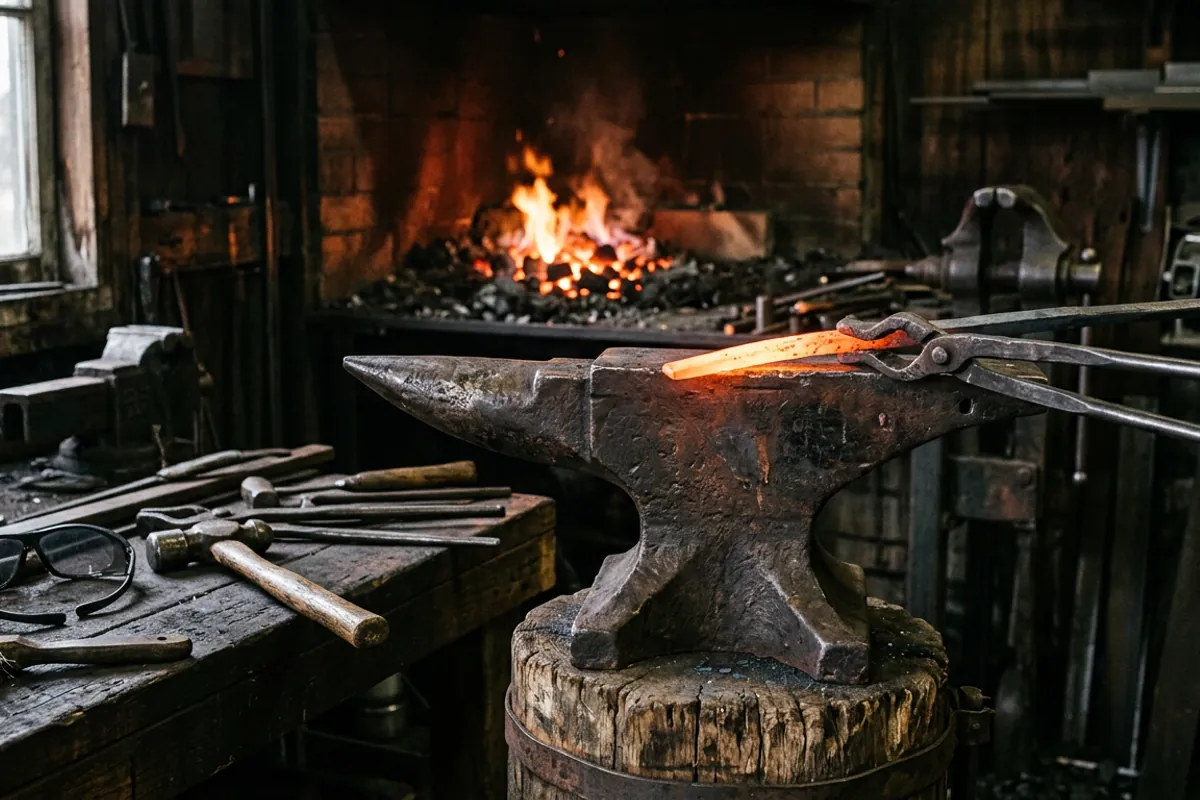
Bessie is one of them, a 148 lb Trenton, and she is the anvil I measure every other anvil against precisely because a good wrought-body anvil rings true and hits back. You can often buy one for less per pound than a new import, and the good ones have already proven they will not fail. The risk is the same one I flagged above: a face that has delaminated from the body, a deep sway, or a repair weld gone wrong. Test rebound, listen for dead spots, and if the face is separating, walk. I go deeper on hunting these down without buying a paperweight in my used anvils guide.
Where the budget cast anvils fit, and why they aren't forged
You will see a wall of budget anvils under forged search terms, and most of them are cast steel from the same few factories. A cast steel anvil in the 50 to 130 lb range is not a scam, and for a brand-new smith on a tight budget it can be a fine first beater while you save for a real forged anvil or hunt a vintage one. But call it what it is: cast, not forged. VEVOR's single-horn is the honest example of that tier, and its price and cast construction are what they are.

The face on these is softer and the rebound lower than any of the forged anvils above, so it works you harder for the same result. If you go this route, go in clear-eyed. I lay out the cast-anvil landscape in more detail in my cast iron anvil guide and the VEVOR anvil guide, and either one will keep you from paying forged-anvil money for a poured one.
What owners say
For the new forged anvils I have not personally run down in my own shop, here is what the forum consensus looks like, reported straight.
- Peddinghaus and RIDGID/Peddinghaus. The long-running I Forge Iron thread on the drop-forged Peddinghaus is broadly positive: owners describe a lively, high-rebound face and clean geometry out of the box. On the RIDGID-branded version, the signal is more mixed. Threads on BladeForums show owners asking whether an odd face is a defect, and a separate thread debating whether newer units are still German-made, so if you buy new, check the face and the ring carefully on arrival. On KnifeDogs, owners walk through cleaning and rebound-testing a used one, which is the same routine I would run.
- Kanca. Owner talk generally rates the Kanca faces as hard and usable, consistent with the published 54 to 62 HRC. The honest caveat that comes up is that a C45 face sits a step below the very best German anvils, which is a fair trade for the price.
- Vintage wrought-body anvils. On Practical Machinist and the Garage Journal, the recurring themes are that the good old names still rebound in the 70 to 80 percent range when measured, and that prices have climbed hard, so a sound one at a fair price is worth moving on quickly.
Where the signal is thin, I have said so rather than dress up a handful of posts as a verdict.
What I would tell a friend
If you want a forged anvil and you can find a sound wrought-body Trenton, Hay-Budden, or Peter Wright at a fair price, buy that first and test it by hand before you pay. It is the most anvil per dollar in real forged steel, and the good ones have already lasted a century. If you want new, forged, and hassle-free, the RIDGID/Peddinghaus Model 5 at 77 lb or the Model 9 at 165 lb is the genuine article, and Kanca is the value-forward alternative with a published hardness to hold them to. The one to skip is any full-size anvil sold as "forged" at a cast-anvil price; buy it as a cast beater if you want, but do not pay forged money for it. And whichever you bring home, wear the hearing and eye protection when you test and dress it. An anvil outlives all of us, so it is worth getting right. Start with the anvils topic hub if you want to compare across weight and construction before you commit.