I have everything I need: verified-live Amazon listings (Grizzly G8147 = B0000DD713, Kaufhof KA55 = B00CRGVELE), cited maker/retailer specs, VEVOR published specs, and real forum threads. Writing the article now.
Buying an old anvil is the oldest advice in blacksmithing, and most of the time it is still the right advice. A good used forged anvil will outlast you, and the used market is where the real steel hides. But when you type "old anvil for sale" into a search bar or walk a flea market, you are going to see a lot of heavy cast iron sold at forged-steel prices, and a lot of genuinely good anvils priced like they are made of gold. So here is my verdict up front: the best old anvil for sale is a real forged or steel-faced anvil, a Trenton, Peter Wright, Hay Budden, Fisher, or a good farm anvil, that passes a rebound and ring test and is priced fairly for its weight. If the used listings near you are all soft cast doorstops or gouged collector prices, you are better off buying a new cast steel anvil like a VEVOR, or a drop-forged steel anvil, than overpaying for a paperweight.
I have to be straight about what this guide is. My anvil is Bessie, a 148 lb Trenton I have put more hours on than any other tool I own, and I have handled and helped buy plenty of used anvils for the weekend beginners I teach. But I have not run every anvil below across my own bench, and nobody honestly has. The picks here lean on published specs, owner reports from the forums, and what twenty-five years around anvils has taught me about what separates a tool from a boat anchor. Where a number is published, I cite it. Where it is not, I say so.
What an old anvil for sale is really selling you
There are three kinds of anvil hiding behind that listing, and the price does not always tell you which one you are looking at.
The first is a wrought-iron body with a hardened steel face, forge-welded on. That is the classic American and English anvil, the Trentons, Peter Wrights, Hay Buddens, Mousehole and Vulcan and the rest. The body absorbs shock, the steel face gives you rebound, and a good one that has been cared for will still be working when your grandkids are old. The second is a solid cast steel anvil, which includes a lot of modern imports and some older shop anvils. Cast steel is a real, forgeable-hardness surface and is perfectly good to work on. The third is cast iron, and this is the trap. A cast iron anvil, old or new, is soft. Hit it with a hammer and it dents, it does not throw the energy back into your steel, and beating hot metal on it just wears out your arm. The forums have a name for these: ASOs, Anvil Shaped Objects. Plenty of "old anvil for sale" listings are exactly this, an antique-looking cast iron lump priced like it has a steel face.
The two-piece forged anvils are the prize, and the whole point of shopping used is that you can find one for less than a new steel anvil of the same weight. But you have to be able to tell the prize from the paperweight in the ten minutes you have standing in someone's driveway. For the deeper dive on which vintage brands are worth chasing, I wrote a full walkthrough in how I shop for antique anvils for sale without buying a paperweight, and there is a companion piece on the antique anvils worth buying, and the ones to walk away from. Both live under the anvils topic hub with the rest of the buying guides.
How to test an old anvil before you pay
You do not need tools you do not already have. Two tests, done in the driveway, tell you almost everything.
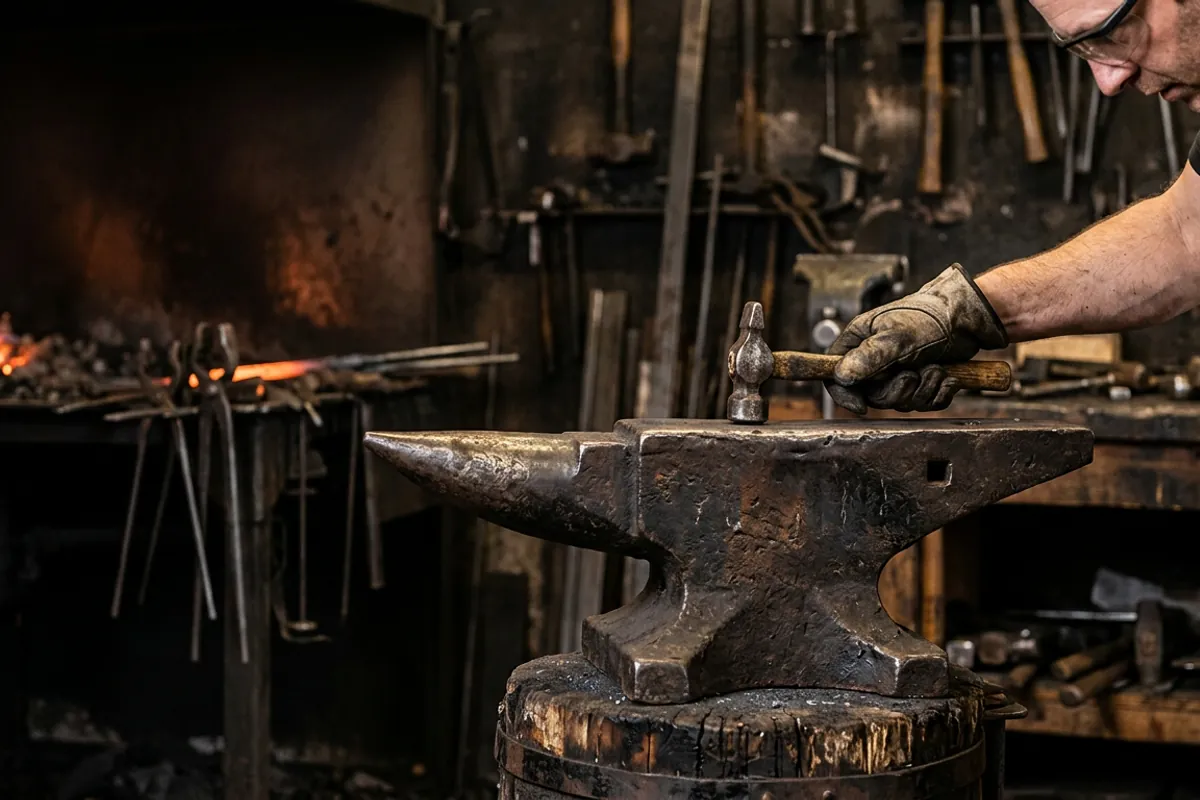
The rebound test is the important one. Take a hardened steel ball bearing, a 3/4 inch or 1 inch one, and drop it from a fixed height onto the face, say from about 10 inches up, and watch how high it bounces. A good hardened steel face throws that ball back up 70 percent or more of the drop height. A tired but usable anvil might give you 50 to 60 percent. A soft cast iron doorstop returns 30 percent or less, a dead little hop, because the face is eating your energy instead of returning it. Test the ball drop over the middle of the face and over the far end above the feet, not just one spot, because a delaminated steel plate can rebound fine in one place and go dead in another. This is standard practice around the club forge and on the anvil forums, not something I am inventing, and it is the single best cheap way to sort steel from cast iron.
The ring test is the second. Tap the face with a small hammer near the horn and listen. A sound forged anvil rings, sometimes loud enough that smiths hang a magnet or chain on the waist to deaden it. A flat dead thud can mean cast iron, or it can mean a cracked or loose steel face on an otherwise good anvil, which is a real defect. Wear eye protection and hearing protection for this, a hardened ball bearing can skip off a face and a good anvil ring is genuinely loud. And while you are looking, check the face for a swayed back, deep gouges, mushroomed edges, and chunks broken off the plate. Light wear is fine and honest. A sharp new grind over the whole face can be hiding a repair.
One more thing on price: know the going rate per pound before you go. It swings a lot by region, and a fair used forged anvil is priced very differently from a collector piece. I put the whole logic of that in what an anvil price really tells you before you buy, and if you are still deciding how heavy to go, what size anvil do you actually need is the one to read first. For most beginners a forged anvil in the 100 to 150 pound range is the sweet spot, which is right where Bessie sits.
The field at a glance
When the used market fails you, here is what I would actually fall back to, new. Only published figures are in this table, cited in the sections below. Where a maker does not publish a number, it says so.
Scroll horizontally to see all columns.
| Anvil | Weight | Material | Face / work surface | Hardness | Price tier |
|---|---|---|---|---|---|
| Grizzly G8147 | 55 lb | Cast iron | 3-7/8 x 8-5/8 in | Not published (soft) | Budget |
| Kaufhof KA55 | 55 lb | Cast iron | Not published | Not published | Budget |
| VEVOR single-horn 66 lb | 66 lb | Cast steel | Not published | ~50 HRC | Budget |
| VEVOR single-horn 132 lb | 132 lb | Cast steel | Not published | ~50 HRC | Budget to mid |
| Grizzly T33996 | 55 lb | Drop-forged steel | 10 x 3-9/16 in | HRC 56 to 59 | Mid |
The pattern to notice: cast iron is soft and unrated, cast steel gets you into the usable 50 HRC range, and drop-forged steel is the only new option here that reaches the hardness of a good old forged face.
If you are buying new cast iron: Grizzly and Kaufhof
The Grizzly G8147 is the one everybody has seen, the classic milled-and-polished bench anvil. Grizzly and retailers publish it at 55 lb of cast iron construction, with a 3-7/8 by 8-5/8 inch face, a 5-1/2 inch horn, a 7/8 inch square hardy hole, and overall dimensions of 5-5/8 wide by 14-1/2 long by 6-1/2 high, per the JB Tools listing. Here is the honest read: it is cast iron, so it is soft, and no amount of polish changes that. It is fine for light bench work, cold bending, riveting, and jewelry-scale tapping. It is not what I would forge hot steel on all day, because the rebound will not be there and the face will show it over time. Buy it knowing exactly what it is. Check price on Amazon (paid link)
The Kaufhof KA55 is the same story in a different color, a 55 lb cast iron bench anvil aimed at the light-duty and hobby crowd. Kaufhof does not publish a face hardness that I could verify, which by itself tells you where it sits. Same use case as the Grizzly, same caution: it is a doorstop-grade anvil for occasional light work, not a forging anvil, and I would only reach for one of these if a real steel anvil is genuinely out of reach. Check price on Amazon (paid link)
If either of these is your budget, read the next two sections first, because the same money in cast steel gets you a meaningfully better tool.
The VEVOR single-horn cast steel anvil, 66 lb
This is the honest budget play, and it is why I tell people not to settle for new cast iron. VEVOR's single-horn anvils are cast steel, not cast iron, and VEVOR publishes a hardness of around 50 HRC for the cast steel line, achieved through heat treatment, on its own product pages. Fifty HRC is not a top-tier forged face, but it is a real working surface that will hold up to hot forging in a way cast iron will not. At 66 lb it is on the light side, so bolt it down or set it on a heavy stump so the mass under the hammer works with you, not against you.

I have not forged on this specific anvil, so treat that as owner-consensus and published spec, not my bench test. I go deeper on the whole line, including the sizes and the quirks owners report, in the VEVOR anvil I would buy, and the ones I would skip.
The VEVOR single-horn cast steel anvil, 132 lb
If you can swing the weight and the cost, this is the one I would actually point a beginner at over any new cast iron anvil, because it lands right in the useful mass range for general forging. Same cast steel construction and roughly 50 HRC published hardness as the smaller model, but 132 lb of it, which is close to where Bessie sits and heavy enough that the anvil stops moving and starts working. The tradeoff is the tradeoff of all these imports: quality control varies unit to unit, the edges and holes may need a little cleanup, and it is not a Trenton. But for the money it is a genuine forging anvil, not a paperweight.
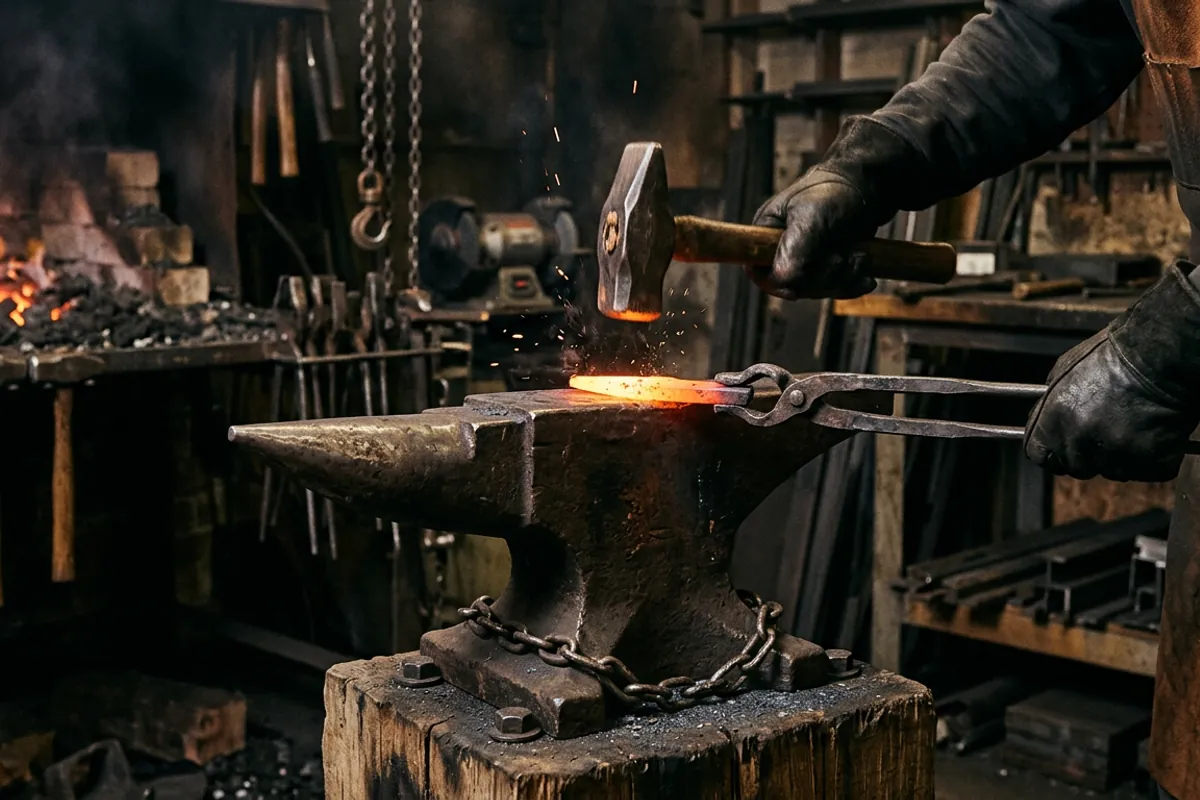

For where a heavier new anvil like this fits against the beginner field as a whole, the best anvils for beginners, honest picks across every budget lays out the tiers.
A real steel anvil, bought new: the Grizzly drop-forged
If you want new-anvil peace of mind with the hardness of a good old face, the Grizzly T33996 is the interesting one. It is 100 percent drop-forged steel, and Grizzly publishes a uniform face hardness of HRC 56 to 59, a 10 by 3-9/16 inch face, a 4-3/4 inch horn, a 3/4 inch blind hardy hole, and a 14-3/4 by 3-9/16 inch footprint at about 55 lb, on the Grizzly product page. That 56 to 59 HRC is real forged-anvil territory, higher than the cast steel imports, which is the whole reason to consider it. The catch is that it is only 55 lb, light for serious forging, and I could not find it on Amazon, so you buy it direct from Grizzly or a tool retailer rather than through the links here. If a used forged anvil in this hardness class comes up near you at a fair price, I would still take the used one for the extra weight per dollar. But as a new-in-box steel anvil, this is the honest step up from cast iron.
What owners say
For the gear I have not run down myself, here is what the forums actually report, good and bad.
On the VEVOR anvils, the signal is genuinely mixed. In the I Forge Iron VEVOR thread and The Garage Journal's "Vevor anvil; good or bad?", owners land on "buyer beware but decent value," with the recurring caution that these are imports and quality varies unit to unit. Several report the cast steel face taking hot work fine for the price, which lines up with the roughly 50 HRC VEVOR publishes. Others report soft spots, edges that needed dressing, and the usual advice to test rebound the day it arrives and return it if it disappoints.
On cheap cast steel anvils more broadly, the I Forge Iron thread on Harbor Freight's cast steel anvil is worth reading because the consensus there is the same one I would give: a cast steel anvil that actually rebounds is a real step up from the old cast iron ASOs those same stores used to sell, and smiths compare the new Doyle and VEVOR-style anvils favorably against each other, with VEVOR winning on the range of sizes. The through-line across all of it is the rebound test. Nobody on those forums trusts a listing's hardness claim over a ball bearing dropped on the face.
What I would tell a friend
Shop the used market first. A real forged old anvil for sale that rings, rebounds 70 percent or better, and is priced fairly for its weight is the best anvil dollar you will ever spend, and there is no new import that beats a sound Trenton or Peter Wright. Bring a ball bearing, drop it on the face in more than one spot, tap for the ring, and walk away from anything that thuds and dents no matter how old and charming it looks.
If the used listings near you are all soft cast iron or collector-priced, do not settle for a new cast iron anvil like the Grizzly G8147 or Kaufhof KA55, they are light-duty bench tools, not forging anvils. Put the same money into cast steel: the 132 lb VEVOR if you can carry it, the 66 lb if you cannot, or step up to the drop-forged Grizzly for real face hardness in a lighter package. And whichever way you go, wear your eye protection for the rebound and ring tests, and your ears too, because a hardened ball skipping off a hard face and a good anvil's ring are both louder and harder than they look. Read up on the rest of the blacksmith safety gear that actually matters before you start swinging.