Everything checks out. Here's the article.
Article
Type blacksmith tools vintage into any auction site or estate-sale search and you will get a thousand listings, and most of them are junk priced like treasure. But buried in that pile is the best value in this whole craft. The single tool I would tell a new smith to chase first is a good vintage post vise, followed by an old wrought-iron-bodied anvil with a hard steel face and a hand-crank blower that still spins true. Those three, bought right, will outlast anything new you can buy at the same money and hold their resale value if you ever quit. What follows is not a bench test. I have run down plenty of old iron in my own shop over about twenty-five years, and I lean on that plus published specs and what the forums report to sort the buys from the paperweights.
The honest framing up front: I cannot hand-test every anvil brand or every blower on a table, and I will not pretend to. Where I am speaking from owning and restoring old tools, I will say so. Where I am passing along what the old-iron crowd on I Forge Iron and the Practical Machinist boards reports, I will attribute it. That line matters, because a wrong call on a cracked anvil face or a soft file costs you real money.
Why vintage blacksmith tools still win
The reason old tools beat new at the low end is simple: the good ones were made when labor was cheap and steel was expensive, so a maker forged a hard tool steel face onto a wrought iron body and got a tool that rings, rebounds, and lasts a century. A new anvil at the same price is usually cast iron with a thin hard zone, or a cheap import that dents. A hundred-year-old Peter Wright, Trenton, or Hay-Budden that survived this long survived because it was worth keeping.
There is a catch, and it is the whole reason people get burned. Vintage tools were used, sometimes abused, and the damage is not always obvious in a photo. A sway in an anvil face, a chipped edge, a cracked heel, a post vise with a stripped screw box, a blower with a chewed-up bronze gear, all of these turn a bargain into scrap. Buying vintage well is a skill. It is the same skill you build for any old tool: know what good looks like, check the failure points, and walk away when it is wrong. My longer take on the category sits in the antique blacksmith tools guide, and the more from the shop hub collects the rest.
The vintage tools worth chasing, and the ones to skip
Not every old tool is worth the hunt. Here is how I rank them for a home shop.
Chase these. A post vise (also called a leg vise) is the top of the list because nothing new touches it for the money; the old ones take a beating no bench vise survives. A wrought-body anvil with a hard steel face from a name maker is the heart of the shop. A hand-crank blower for a coal forge is genuinely better than most new blowers and a joy to run. Tongs in odd jaw shapes, hardy tools, swages, fullers, and flatters show up cheap at farm auctions and are worth grabbing.
Be careful with these. Files go dull and a worn-out vintage file is worthless; buy new for cutting and save the old ones for handles. Hammers are fine used but easy to make or buy new, so do not overpay for a rusty head. Cast-iron so-called anvils, ASO shaped lumps with no steel face, are decorations. Anything cracked through the waist or with a blown-off face is scrap at any price.
What good looks like: a spec and check table
For the vintage buy, the numbers that matter are not printed on the tool; they are what you test on the spot. The rebound test is the one every old-iron smith runs: drop a one inch ball bearing on the anvil face from ten inches up, and a good hard-faced anvil returns it seven to nine inches, roughly 70 to 90 percent. That figure is repeated across the I Forge Iron anvil sound and rebound thread, and it lines up with what my Trenton, Bessie, gives on her best days.
Where published specs do matter is the new consumables you buy to bring old tools back. Those I can cite, and they belong in a table.
Scroll horizontally to see all columns.
| Tool | Job | Published spec | Price tier |
|---|---|---|---|
| 12 inch flat bastard file | Draw-filing, dressing faces | 12 in flat, single-cut edges | Budget |
| Carbon steel scratch brush | Knocking scale and rust | 13.75 in, .014 in carbon steel fill | Budget |
| Rust remover, 1 gallon | Soaking small rusted parts | 128 oz, water based, non-toxic | Budget |
| Vintage post vise | Bench work, bending, holding | Jaw width 4 to 6 in typical | Mid, used |
| Vintage hard-faced anvil | Everything | 100 to 200 lb typical home range | Mid to premium, used |
Brush and rust-remover specs are as the makers publish them at Forney Industries and Evapo-Rust. The vise and anvil rows are typical ranges from the used market, not a single published figure, because no two old ones are alike.
The post vise: the vintage buy I would make first
If you buy one vintage tool this year, make it a post vise. These were built for the smith, mounted through a bench and dropped to a leg that carries hammering force straight to the floor, which is exactly why they shrug off work that cracks a modern cast bench vise. Jaw widths on the common ones run about 4 to 6 inches, and for a home shop anything in that range is plenty.
What to check before you hand over money: work the screw through its full travel and feel for a stripped or wallowed screw box, because a bad box is the one repair that turns a cheap vise into a project. Look at the jaw faces for chips, check the mounting bracket and the spring are present or replaceable, and give the pivot a wiggle. Surface rust is nothing, a stripped box or a cracked leg is everything. I keep two on the bench and would not trade them. My full checklist lives in the post vise buying guide.
Anvils: vintage gold, or a new anvil instead
A good old anvil is the best money in the shop, and it is also where the most people get robbed. The dream find is a wrought-iron-body anvil with a forge-welded tool steel face from Peter Wright, Trenton, Hay-Budden, or Arm and Hammer, in the 100 to 200 pound range for a home smith. Smiths on I Forge Iron routinely report these giving 80 to 90 percent rebound a century on, as in the Peter Wright find thread, which is a big part of why the old names still command strong prices.
Run the rebound test, listen for a clear ring (a dead thud can mean a delaminated or cracked face), sight down the face for sway, and inspect the edges and heel for cracks. A little edge chipping is normal and even useful; a crack across the waist is a walk-away. My deeper reads sit in the antique anvils guide and the vintage anvil for sale guide.
Here is the honest counterpoint. Vintage anvil prices have climbed hard, and in a lot of regions the old ones now cost more per pound than a decent new one. If you cannot find a sound vintage anvil at a fair price, a new cast steel anvil is a legitimate buy and will not embarrass you. The budget end of new looks like this:

It is not a Trenton, and I would not claim it is. But a 132 pound single-horn cast anvil with a usable face beats waiting a year for a vintage deal that may not come, and it beats every ASO doorstop on the same shelf.
Hand-crank blowers and the coal forge
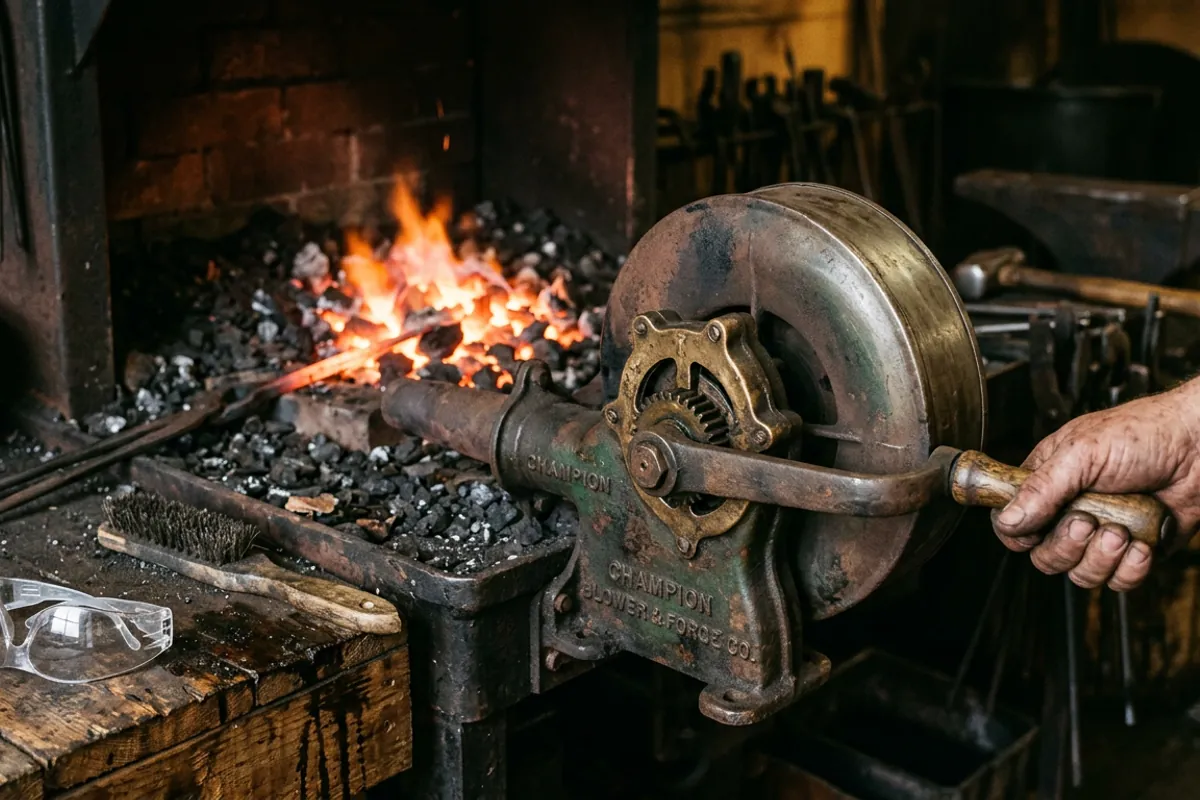
If you burn coal, a vintage hand-crank blower is one of the few old tools that is genuinely better than most of what is sold new. A Champion 400, a Buffalo, or a Canedy-Otto moves plenty of air, runs silent, needs no electricity, and gives you fine control by hand. The catch is the gearbox. These blowers live or die on the bronze worm gear inside, and a dried-out or chewed-up gear is the common failure; the I Forge Iron Champion 400 rebuild thread walks through exactly what wear looks like inside one.
Before you buy, spin the crank and listen. It should turn smoothly and keep spinning a beat after you let go, not grind, clunk, or seize. A blower that needs gear oil and a cleanout is fine; one with metal teeth already worn to ragged edges is a parts hunt. If you cannot find a good vintage crank blower, I cover the new options in the hand crank forge blower guide, and the well-loved old Bufco blower gets its own writeup.
Restoring what you drag home
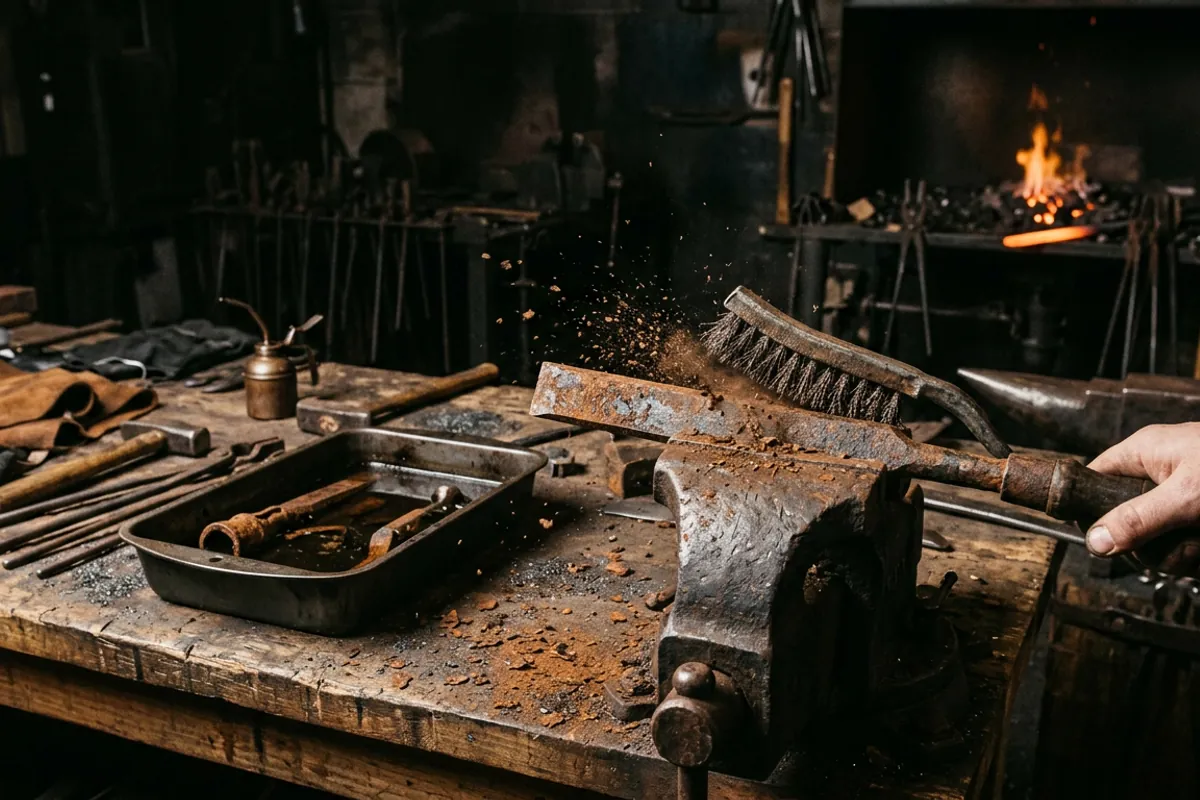
Old tools come home rusty, and how you clean them decides whether you keep the good steel or wreck it. My rule: never take a grinder to a face you care about. Aggressive grinding of an anvil face or a hammer face removes hard steel you cannot put back, and it is the most common way people ruin a good find.
Start gentle. A carbon steel scratch brush knocks off loose scale and surface rust with elbow grease and does not touch the base metal; a stout Forney carbon steel wire brush (paid link) is the one I reach for at the bench. For seized threads, hinges, and small rusted parts, a soak in a water-based rust remover pulls rust without eating good steel, and Evapo-Rust (paid link) is the non-toxic option I would keep in the shop over harsher acids. For dressing a pitted vise jaw or bringing an edge back on a chisel, a fresh 12 inch flat bastard file cuts clean where a worn vintage file just skates; a new Nicholson flat bastard (paid link) is cheap and does the job the old files no longer can.
One safety word that is not optional. Wire brushing and filing throw fine steel and scale straight at your eyes, and so does any wire wheel on a grinder. Wear ANSI Z87.1 rated eye protection every time, and a face shield over glasses for the wheel. I quenched a blade too close in a cotton shirt with no shield early on and the oil flare took my eyebrows; I kept my eyesight on luck alone. Do not run that experiment. Natural fiber clothing near heat, real eye protection at the brush and the grinder, every session.
What owners say
On vintage anvils, the old-iron crowd is consistent: the name-maker wrought-body anvils earn their reputation, with owners on I Forge Iron reporting 80 to 90 percent rebound on century-old Peter Wrights in the find thread, and the rebound-and-ring test treated as gospel in the sound and rebound thread. The recurring warning is edge and face condition: a hard face chips at the edges, so buyers are told to check edges and sway rather than obsess over surface rust.
On hand-crank blowers, the consensus is buy the mechanism, not the paint. The Champion 400 rebuild thread and its sister threads keep circling the same point: the bronze worm gear is the failure, so spin it and listen before you pay, and budget for a cleanout and fresh oil on almost any of them.
Owner signal on post vises is thinner and more scattered than on anvils, because they rarely fail dramatically, but the through-line is the same one I trust from my own bench: the screw box is the part that kills them, so work the screw before you buy. Where a forum reports something I cannot verify myself, I have flagged it as their report, not my test.
What I would tell a friend
Buy the post vise first, because nothing new matches it at the money and the old ones are still findable. Chase a name-maker wrought-body anvil in the 100 to 200 pound range if the price is fair, run the ball-bearing rebound test before you pay, and buy a new cast steel anvil without shame if vintage prices in your area have gone silly. Grab a vintage crank blower only after you have spun the crank and heard it run clean. Skip worn files, skip cast-iron ASOs at any price, and never take a grinder to a face worth keeping.
The one thing I will not soften: clean and dress these old tools with eye protection on and natural fibers near the heat, every single time. The tools are a hundred years old and will outlive you if you treat them right. Your eyes get one shot. For where to actually find this stuff without overpaying, the antique blacksmith tools guide and the more from the shop hub are where I would start.