I have enough verified data. Writing the article now.
Post vises are the one workholding tool I tell every new smith to hunt down before they buy anything fancy, and a good blacksmith post vise will outlive you. The honest verdict up front: the best buy is almost always a solid used one, a 4 inch to 6 inch jaw vintage vise with a straight screw and its spring intact, mounted rock solid to a post or heavy bench. New ones are made again, mostly the Kanca leg vises through Centaur Forge, and they are worth the money if you cannot find a clean antique. And if you strike out on both, a heavy bench vise will hold work for you as a stand-in, as long as you understand it is not built to take hammer blows the way a post vise is.
Before I go further, the usual AnvilTalk framing: I have run a post vise in my shop for years, so the general guidance here on what makes one worth owning, how the parts fail, and what to check when buying is straight shop experience. But I have not bench tested every model below. The specific picks lean on published specs and on what owners report on the forums, weighed against what I know from the floor. Where I am passing along secondhand consensus, I say so.
Why a post vise beats a bench vise at the forge
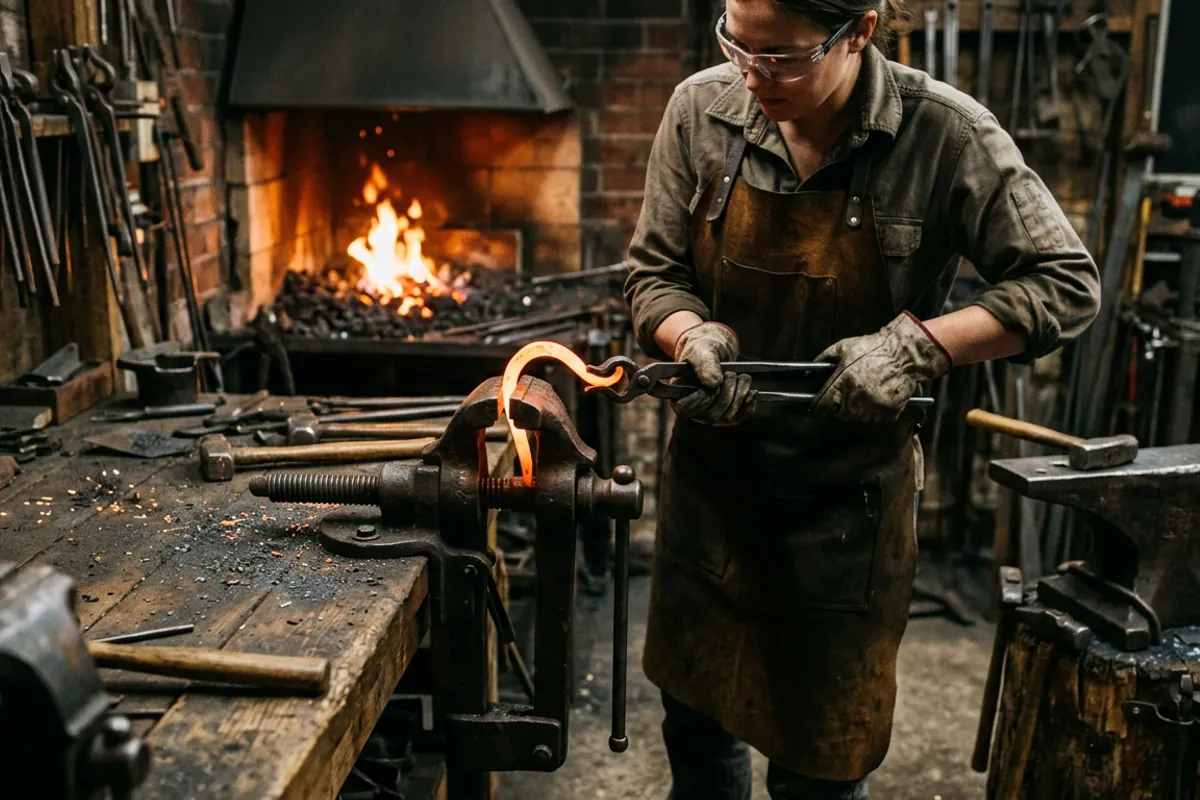
The thing that makes a post vise, also called a leg vise, right for forging is the leg. That long piece of steel running from the jaws down to the floor is not decoration. When you clamp a hot bar and start hammering or bending on it, every blow drives shock straight down that leg into the ground instead of into the vise body. A machinist bench vise has no such path. All that force lands on the cast iron body and the mounting bolts, and cast iron does not forgive repeated shock. It cracks, and when a vise body lets go under load it can throw a piece.
That is the real safety line between the two tools, and it is why I will not tell anyone to hammer hard on a cast bench vise. On the forums the same warning comes up over and over from smiths who have cracked cheap vises doing exactly that. The I Forge Iron thread on bench vise versus blacksmith leg vise is full of that hard-won opinion, and the thread on the attraction of the post vise lays out why smiths keep chasing them even though they are heavy and awkward: they take abuse a bench vise cannot.
The other half of it is the jaws. Post vise jaws are steel, and they open wide and parallel enough for real work: twisting a scroll, holding a tenon while you upset it, bending a hook against the jaw. You can beat on stock in a post vise all day. That is the whole point of the tool.
How post vises are sized and what the parts do
Post vises are sized by jaw width, the same as anvils are sized by weight. Most shop vises you will meet run 4 inches to 6 inches across the jaws. A 4 inch vise is a fine first vise and handles the great majority of hobby work. A 5 inch is the sweet spot a lot of smiths land on. A 6 inch is a heavy beast meant for serious stock, and it is the size the new Kanca top out at.
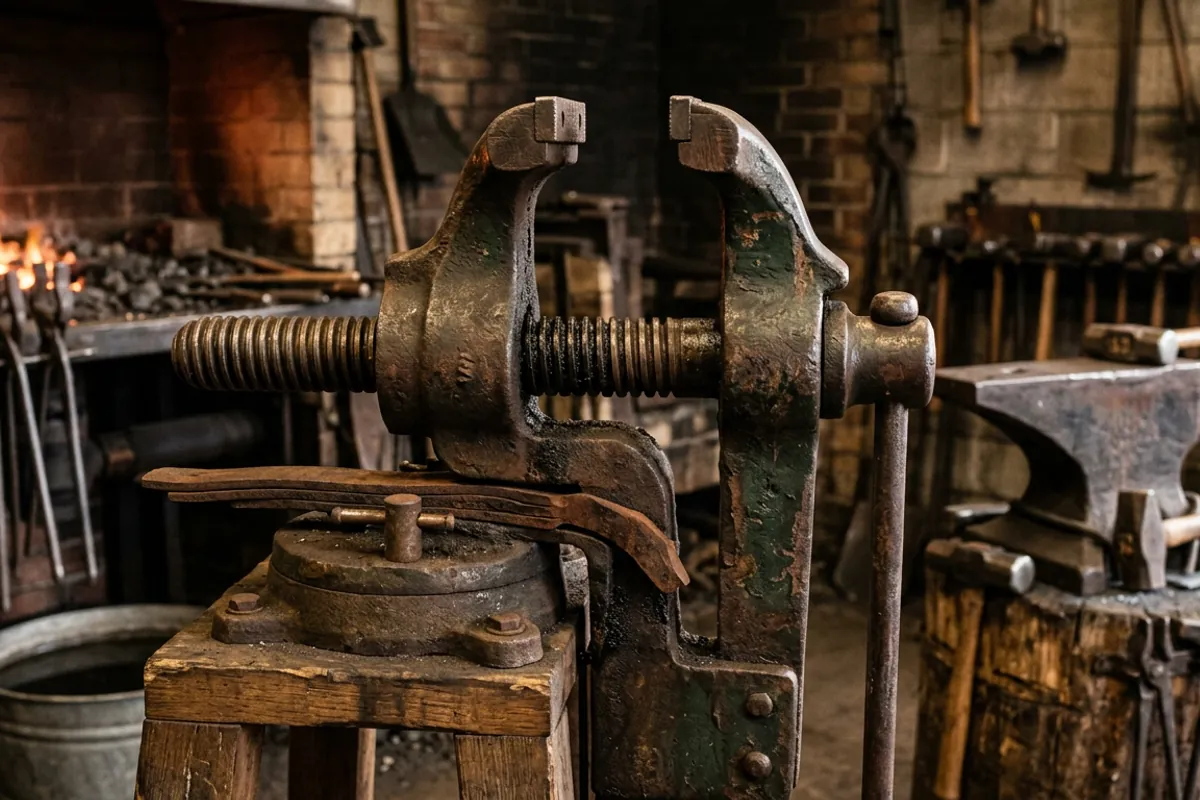
Know the parts before you shop, because the parts are where a cheap vise bites you:
- The jaws are the two clamping faces. You want them meeting square and flat when closed, with no big gap at the top or bottom.
- The screw and screwbox are the heart of it. The screw is a big square or acme thread running through a threaded box. If the screw is worn, bent, or the box is stripped, the vise will not draw tight and it is a real job to fix. Anvilfire and the machinist forums both flag the screw as the number one thing to inspect on a used vise.
- The spring is the flat leaf steel spring between the two legs that pushes the jaws open when you back off the screw. A missing or broken spring is common and easy to forge a replacement for, so it is not a dealbreaker, but factor it in.
- The mounting bracket, sometimes a U-strap and wedge, is what pins the vise to your bench or post while the leg reaches the floor. A vise missing its bracket needs one made before it works.
If you want a deeper walk through the whole family of blacksmith workholding, I put that together in the blacksmith vise buying guide, and there are close cousins worth knowing about in the blacksmith pole vise guide and the blacksmith post leg vise guide.
The post vises and stand-ins at a glance
Only published figures below. Where a maker does not state a number I say so. The two Kanca prices are the current Centaur Forge published prices, not a marketplace figure.
Scroll horizontally to see all columns.
| Vise | Type | Jaw width | Key spec | Weight | Price |
|---|---|---|---|---|---|
| Kanca LV5 leg vise | Post/leg vise | 5 in (125 mm) | Forged steel | Not published | $409 |
| Kanca LV6 leg vise | Post/leg vise | 6 in (150 mm) | Forged steel | Not published | $489 |
| Yost ADI-4 | Bench vise (stand-in) | 4 in | 130,000 PSI austempered ductile iron, 5,000 lb clamp | 23.1 lb | Mid tier |
| TEKTON 5409 | Bench vise (stand-in) | 8 in | 60,000 PSI malleable, up to 8,800 lb clamp | 40.2 lb | Mid tier |
Kanca specs and prices from the Centaur Forge leg vise page. Yost ADI-4 specs from Penn Tool Co.. TEKTON 5409 specs from the TEKTON product page.
Buying a used post vise without getting a wreck
A clean used post vise is the buy I steer people to first, because the vintage ones were forged for a lifetime of shop abuse and there are still plenty around. The catch is knowing a good one from a heavy paperweight. Here is my checklist, and it lines up with what the old hands say on the Hobby-Machinist thread on buying a new post vise, where the running advice is that used at a hammer-in or club meet beats paying new-tool money.
Run the screw all the way in and all the way out. It should turn smooth the whole travel with no hard spots, no wobble, and it should draw the jaws genuinely tight at the end. A rough or sloppy screw is the one repair that is a real headache, so a bad screw drops the price to scrap-and-parts money in my book.
Close the jaws and sight the gap. Light wear is normal on a hundred year old tool. What you do not want is jaws that only touch at one corner or a top gap you could lose a coin in, because that means the vise has been sprung or the pivot is worn out.
Check the legs and the pivot for cracks, especially up where the jaw meets the body and around the screwbox. A cracked body on a post vise is far less common than on a bench vise, but a hard life plus a bad weld repair can do it. Surface rust and old paint are nothing. Cracks and brazed-up breaks are a walk-away.
Missing spring or missing mount bracket, price it accordingly. Both are things a smith can forge, and forging a replacement spring is a good project, but you are buying a job along with the vise. Brand matters less than condition here. The old Columbus Forge and Iron vises, the ones stamped Indian Chief, come up a lot on the forums as favorites, but a no-name vise with a good screw beats a famous name with a chewed-up one every time. If you are chasing vintage iron in general, the same eyes-open approach carries over to the antique blacksmith tools buying guide.
New post vises worth the money
If the used hunt is not working, or you would rather pay once and be done, buy new. The realistic new post vises for a North American home shop are the Kanca leg vises out of Turkey, sold through Centaur Forge. Per the Centaur Forge listing, the LV5 is a 5 inch (125 mm) jaw vise at $409 and the LV6 is a 6 inch (150 mm) jaw at $489. Centaur does not publish the weights, so I will not guess them. These are forged, not cast, which is exactly what you want in a post vise, and owner reports on them are generally positive on the iron with the usual gripe that a mass-produced new vise does not have the fit and finish of a well-kept antique.
Blacksmiths Depot lists a 6 inch post leg vise as well if you want a second new source, though their site would not load its spec sheet for me while I was writing this, so I am not going to quote numbers I could not verify. Between the two, Centaur is the one whose specs and price I could confirm today.
Are the new ones worth better than double the price of a decent used vise? If your local used market is dry, or if you value not gambling on a screw you cannot inspect in person, yes. A new Kanca is a known quantity. A used vise is a known quantity only after you have put hands on it.
Amazon bench vises as a stand-in when you can't find a post vise
Sometimes you just need to hold work now and a post vise is not in reach. This is where a heavy bench vise earns a spot, and the forums treat it exactly that way in the I Forge Iron thread on the best forging vise when you can't get a leg or post vise. The rule that keeps you safe is simple: a bench vise is for holding and for light bending, not for standing there hammering hot steel like it is an anvil. Keep the heavy blows on the anvil and use the vise to grip.
If I were buying a bench vise to hold work honestly, I would buy for material quality, because that is what stands between you and a cracked casting. Two I would look at:
The Yost ADI-4 is made from austempered ductile iron rated at 130,000 PSI, with a 4 inch jaw and about 5,000 pounds of clamping force at 23.1 pounds, per Penn Tool. Ductile iron is a lot more forgiving of shock than the gray cast iron in bargain-bin vises, which is the whole reason I would point a smith at it over a no-name. Check price on Amazon (paid link).
The TEKTON 5409 is a bigger 8 inch jaw vise made from 60,000 PSI malleable steel, 40.2 pounds, with a built-in anvil face and up to 8,800 pounds of clamping per TEKTON's specs. Malleable iron again takes shock better than plain cast, and the wider jaws hold bigger stock. Check price on Amazon (paid link).
Neither of these is a post vise, and I am not going to pretend otherwise. They will not take sustained hammering. But mounted well and used within their limits they will hold your work while you file, saw, and bend, and that buys you time to find the real thing. If your bench needs are more about filing and finish work, the blacksmith filing vise guide is the better rabbit hole.
Whatever vise you clamp hot steel in, wear the same eye protection you wear at the anvil, rated ANSI Z87.1. Scale flies off hot stock when you work it in a vise just like it does under the hammer, and a vise puts the work right at eye height.
What owners say
For the picks I have not run down in my own shop, here is the forum read, attributed and honest about the thin spots.
On used post vises generally, the consensus across the I Forge Iron vises discussions is that condition and the screw beat brand every time, that missing springs are common and forgeable, and that club meets and hammer-ins are where the good ones change hands for fair money. That matches my own experience closely, so I am comfortable passing it along.
On the new Kanca leg vises, owner signal is moderate rather than deep. Buyers on the blacksmithing forums generally call the iron sound and the value fair for a new forged vise, with the recurring complaint being finish and thread smoothness out of the box compared to a broken-in antique. I would not call that consensus overwhelming, so treat it as a lean rather than a verdict.
On the Yost and TEKTON bench vises, most of the owner reviews come from machinists and general shop users rather than smiths, so read them for what they are: reports on holding and clamping, not on forging abuse. The ductile and malleable iron bodies get good marks for surviving shop life. I found no credible reports of smiths hammering hard on either and being happy about it, which fits everything I would expect. Use them inside their limits.
What I would tell a friend
Buy a used 4 inch to 6 inch post vise with a good screw, a straight body, and its spring, and mount it dead solid to a post or a heavy bench so the leg reaches the floor. That is the tool, and a clean one costs less than a new one and lasts longer than you will. If your used market is dry, the Kanca 5 inch through Centaur Forge is the new vise I would spend $409 on without much hand-wringing.
Skip hammering on any bench vise. If a heavy bench vise is all you can get right now, buy one made of ductile or malleable iron like the Yost ADI-4 or the TEKTON 5409, use it to hold and not to strike, and keep hunting for the real thing. And put the safety glasses on every time you clamp hot steel, because the vise holds the work right where it can find your face. For more workholding and shop-tool reading, the More from the shop hub and the full list of guides are the place to wander next.