Verified. I have live Amazon ASINs (confirmed in search matching the product names), cited non-marketplace specs, and real I Forge Iron threads. Writing now.
A blacksmith flatter is one of those tools nobody hands a beginner and everybody eventually wants: a flat, hardened, square-faced top tool on a handle that you set on hot steel and strike with a second hammer to planish a surface smooth and true. If you are buying one today and you want it to last, skip the generic imports and put your money on a known shop-supply flatter like the Centaur BLD or a Peddinghaus square flatter, where the steel and the geometry are published and the face is actually hardened. I have run Bessie, my 148 lb Trenton, for about twenty-five years, and I have forged and finished a lot of flat stock over her face, so I can tell you what a flatter is for and what to check. What I am not going to do is pretend I have owned and bench-tested every model below. The picks here lean on published maker specs and owner reports from the forums, weighed against shop experience. Where the signal is thin, I will say so.
What a blacksmith flatter actually does
A flatter is a finishing tool. You forge your bar close to shape and size with a hammer, which leaves a surface full of small facets and hammer marks. Then you bring the work up to a working heat, lay the flatter face down on it, and strike the flatter with a hammer (or a striker swings for you). The broad, flat, hardened face spreads the blow evenly and irons the surface down flat, taking out the dents and leaving a clean, planished finish.
That is the whole job. A flatter does not draw steel out, it does not shape, and it is not a roughing tool. It is the tool you reach for when the forging is done and you want the flat faces to actually look flat. On a tapered blade or a hardware bracket or the sides of a hammer head you are forging, that finishing pass is the difference between "handmade" and "sloppy."
The key thing new smiths miss: a flatter only works as well as the anvil face under the work. The blow goes in through the top of the flatter, through the steel, and into the anvil, and the flatness you get is a negotiation between the flatter face on top and the anvil face on the bottom. A swaybacked, chewed-up anvil face fights you the whole way. If your anvil is a soft cast paperweight, a good flatter will still leave a wavy surface because the work is riding on a wavy bed. More on that below.
Flatter versus set hammer versus fuller
People shop for these three tools like they are interchangeable. They are not, and buying the wrong one wastes money.
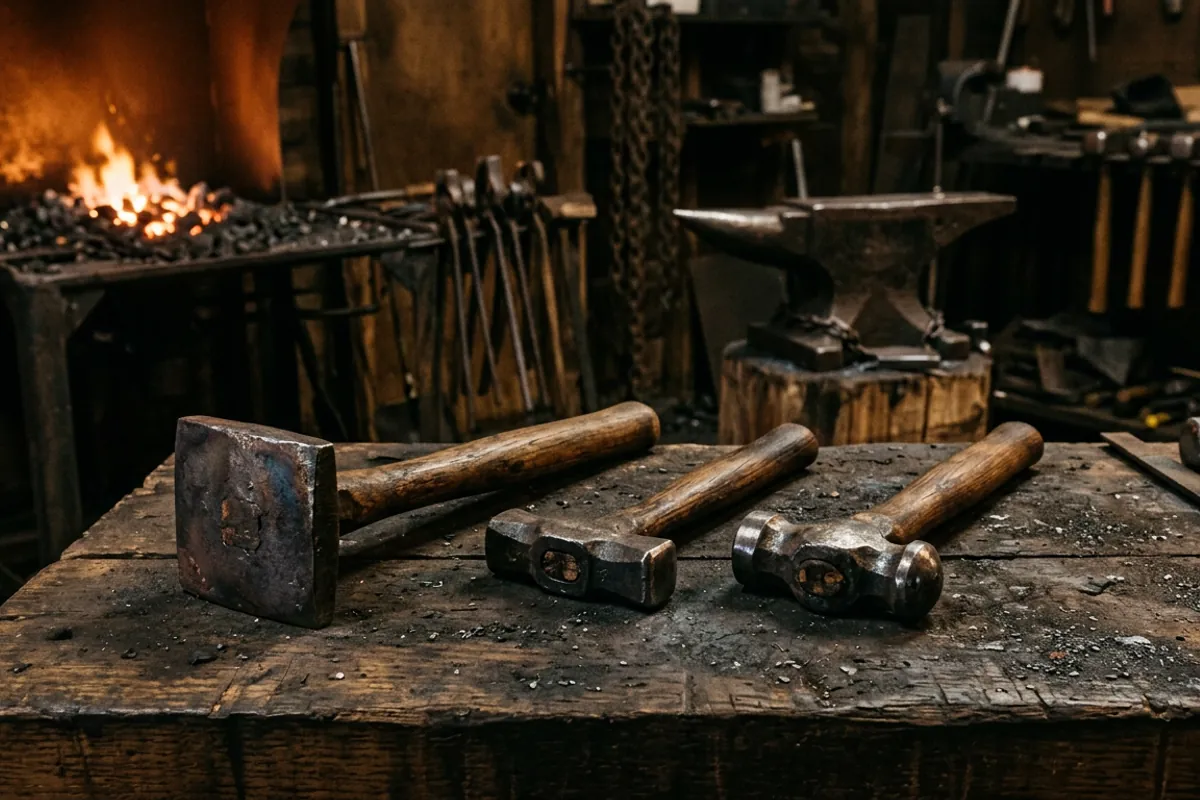
A flatter has a large flat face, usually 2 to 2-3/4 inches square, meant to cover a broad surface and smooth it in as few blows as possible. On the I Forge Iron Set Hammer thread, the consensus is plain: a flatter is a finishing tool for imparting a good finish to flat surfaces, and it is not a substitute for a set hammer.
A set hammer has a smaller flat face and is built to make precise strikes, usually up tight against a shoulder or step you do not want to mangle with a misplaced hammer blow. It sets a clean corner. It is a control tool, not a smoothing tool.
A fuller has a rounded face and does the opposite of a flatter: it concentrates the blow to spread and draw steel, or to sink an isolating groove. If you want to move metal, that is the fuller's job. I keep fullers separate in my head from flatters for exactly this reason, and if you are outfitting a shop, the blacksmith fuller tool guide walks that side of the top-tool world.
Get this straight before you buy: if you want a smooth flat finish, you want a flatter. If you want clean corners, you want a set hammer. If you want to move steel, you want a fuller.
What to look for before you buy
Three things decide whether a flatter is worth owning.
The face must be flat, hardened, and slightly eased at the edges. A dead-sharp edge on the flatter will dig a line into your work; the edges should be very lightly broken so the face lands clean. The face itself should be genuinely hardened tool steel, not mild steel that mushrooms after a season. This is the single biggest gap between a real shop-supply flatter and a mystery import.
The steel and heat treat should be known. Makers who publish their steel (1045, 4140, and similar medium-carbon tool steels) and heat treat it are telling you the tool will survive being struck for years. An import listing that says "iron" or does not name a steel at all is telling you nothing, and "iron" is not a steel you want taking a hammer blow on its top. For anything metallurgical, I send people to Knife Steel Nerds rather than trusting a marketing line, and the same skepticism applies here: no named steel, no heat-treat data, no trust.
The handle should be replaceable and set loose enough to save your hand. Top tools that get struck should have the handle set so a mis-hit does not slam straight up your arm; a slightly loose or springy handle on a struck tool is deliberate, not a defect. Hickory or white oak is what you want, and you want to be able to rehang it when it splits, because it will.
Weight is a preference more than a spec. A 3 to 4 pound flatter is the common range. Heavier covers more ground per heat but wears you out and needs a striker to use well; lighter is easier to control solo. If you mostly work alone, err toward the lighter end.
The flatters worth a look
Here is the field, published specs only. Where a maker does not state a figure, it says so.
Scroll horizontally to see all columns.
| Flatter | Weight | Face size | Material | Handle | Price tier |
|---|---|---|---|---|---|
| Generic 3 lb flatter hammer (Amazon import) | 3 lb | not published | not published | 15 to 16 in wood | Budget |
| Centaur BLD Blacksmith's Flatter | 3.5 lb | 2-11/16 x 2-13/16 in | 1045 tool steel | 16 in white oak | Mid |
| Peddinghaus square flatter | 4.4 lb | 2.5 in square | not published | not published | Premium |
| FieryFurnaceForge flatter top tool | not published | ~2 in square | 4140 | ~14 in hickory | Mid |
Sources: Centaur Forge BLD Blacksmith's Flatter, the Centaur Peddinghaus 2.5 inch square flatter, and the FieryFurnaceForge flatter top tool.
The generic import flatters on Amazon
Search "flatter hammer" on Amazon and you get a wall of near-identical listings: a roughly 3 pound head on a 15 to 16 inch wood handle, sold under a dozen storefront names, almost certainly out of the same overseas factory. Two representative ones are the Generic 3 lb flatter hammer (paid link) and a nearly identical 3 lb flatter hammer (paid link) listed under a different seller.
Here is the honest read. These land in the budget tier for a reason. None of them publish a steel type or a hardness, the face flatness is a lottery, and the listings describe the head as "iron," which is exactly what you do not want on a struck top tool. Owner signal on any single one of these listings is thin to nonexistent, because they churn through seller names faster than reviews accumulate, so I cannot point you to a body of buyers vouching for one over another. That churn is itself the warning.
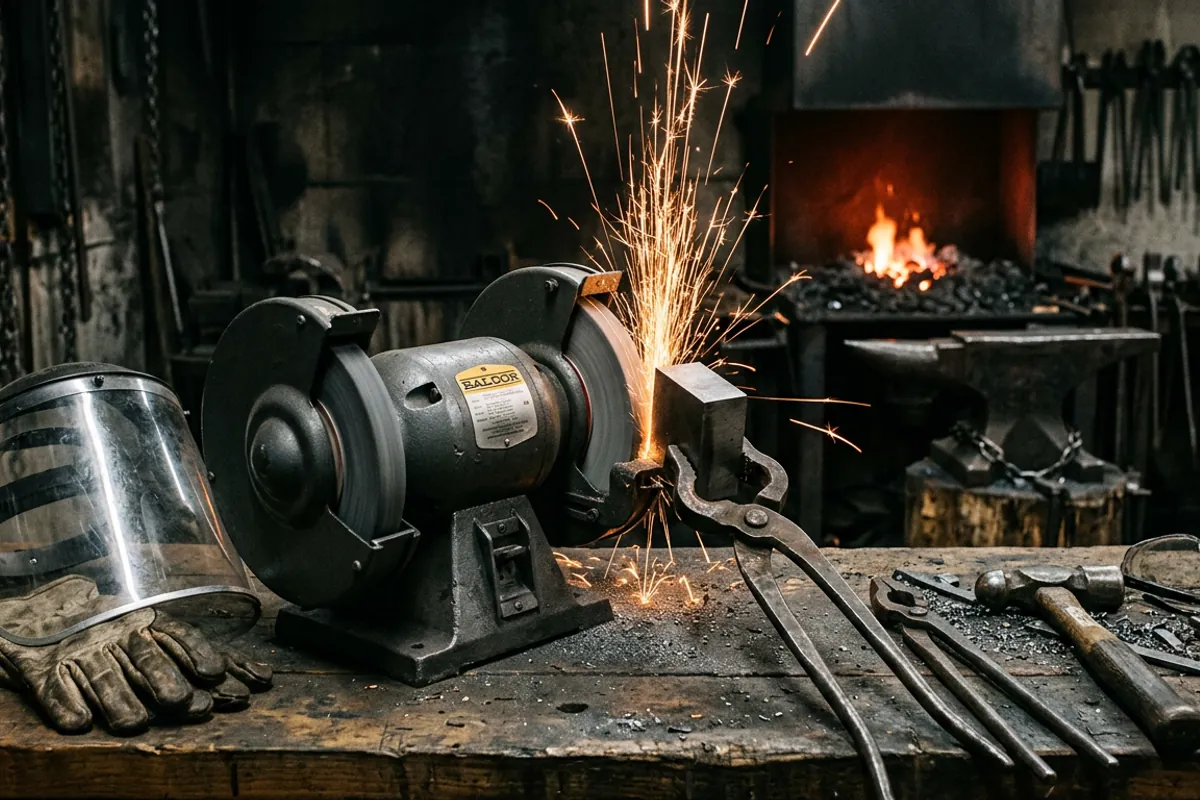
If your budget is genuinely tight and you want to learn what a flatter does before committing real money, one of these will technically flatten hot steel. Expect to dress the face flat yourself on a grinder, expect the edges to need easing, and do not be shocked if a soft face starts to deform. Treat it as a tool you are buying to understand the concept, not one you are buying for life. And wear a face shield and ANSI Z87.1 rated glasses when you dress that face on the grinder, because a cheap head can throw a chip.
Why a shop-supply flatter is the better buy
Spend a little more and the whole calculus changes. The Centaur BLD Blacksmith's Flatter publishes what matters: 3.5 pounds, a face measuring 2-11/16 by 2-13/16 inches, half an inch thick, forged from 1045 tool steel with a 16 inch white oak handle, per Centaur Forge. Now you know the steel, you know the face is broad enough to cover real work, and you know the handle is a wood you can rehang.
The Peddinghaus square flatter steps up to 4.4 pounds with a 2.5 inch square face. That extra mass covers ground fast and is a genuinely nice tool if you have a striker or a lot of flat finishing to do, but it is more tool than a solo hobby smith needs for most jobs, and it sits in the premium tier. If you work alone, the lighter Centaur is the more sensible first flatter.
The FieryFurnaceForge top tool is a small-shop maker's option: a roughly 2 inch square 4140 face on a hickory handle. Smaller face, named steel, made by a smith rather than a factory. If you like buying from a working smith and a 2 inch face suits your scale, it belongs on the list.
The pattern across all three: named steel, published geometry, a struck-tool handle done right. That is what your money buys over the import, and on a tool that lives its whole life taking hammer blows on its head, it is worth it.
The anvil under the flatter
I said it up top and it earns its own section: a flatter is only as flat as the anvil beneath the work. The blow travels through the flatter, through the hot steel, and into the anvil face, and if that face is soft or swaybacked, the flatter cannot give you a true surface. This is why I harp on anvil quality before accessory tools. If you are still shopping for the anvil itself, the anvil weight guide covers how much mass you actually need, and a hard, flat face matters here more than horn or heel.
For a beginner on a real budget who needs a serviceable face to flatten against, a cast steel starter anvil will hold up far better than the cast iron doorstops sold as anvils. VEVOR's cast steel single horn is the honest budget option in that slot:

It is not a Trenton and I would not pretend it is, but the face is hard enough to give a flatter something to work against, which a soft cast iron anvil is not. Whatever you flatten on, check the face for flatness and rebound first.
What owners say
For a tool most smiths eventually make themselves, the forum consensus on flatters is remarkably consistent, and it is worth reading before you buy anything.
On the I Forge Iron Set Hammer thread, experienced smiths draw the line I drew above: the flatter is for finishing broad flat surfaces, the set hammer is for precise strikes near shoulders, and using a flatter as a set hammer is a mistake. That distinction comes up over and over and it is the single most useful thing a new buyer can internalize.
The louder theme is that a lot of smiths simply forge their own flatters rather than buying one. The how do I make a flatter and making a flatter threads walk through doing exactly that from a chunk of medium-carbon bar or an old sledge head, which is a genuinely reasonable weekend project once you can forge a handle eye. If you own a forge, a flatter is close to the ideal make-it-yourself tool, and the forums lean that way for good reason: you control the steel, the face, and the fit.
What I did not find is a body of owners vouching for the generic Amazon import flatters specifically. That absence is the signal. When forum smiths recommend a flatter to buy, they name Peddinghaus and the known suppliers, or they tell you to forge one. Nobody is coming back to the forums praising a no-name 3 pound import, and I would weight that silence heavily.
What I would tell a friend
Buy once. A flatter is a struck top tool that lives its entire life taking hammer blows on its head, and that is the last place to gamble on unknown steel. If you want a bought tool, the Centaur BLD is the sensible first flatter for a solo hobby smith: named 1045 steel, a broad published face, a rehangable white oak handle, and a weight you can control alone. Step up to the Peddinghaus only if you have a striker or a lot of flat finishing ahead of you.
The import flatters have exactly one honest use: a cheap way to learn what a flatter does before you commit, accepting that you will dress the face yourself and it may not last. If you already run a forge, skip the store entirely and forge your own from a medium-carbon bar; the forums will show you how and you will end up with a better tool than most of what is for sale.
Two safety notes that are not optional. Dress any new flatter face with eye protection rated ANSI Z87.1 and a face shield, because struck-tool steel can throw a chip. And whatever you buy, the flatter is only half the equation: get the anvil face right first, because you cannot flatten true steel on a bad bed. If you are still building out the striking side of the shop, the blacksmith hammer buying guide covers the hammer you will be swinging into the flatter, and the rest of the top-tool world lives over in More from the shop.