I have three verified live ASINs, published specs, and real forum threads. Writing the article now.
Here is the article:
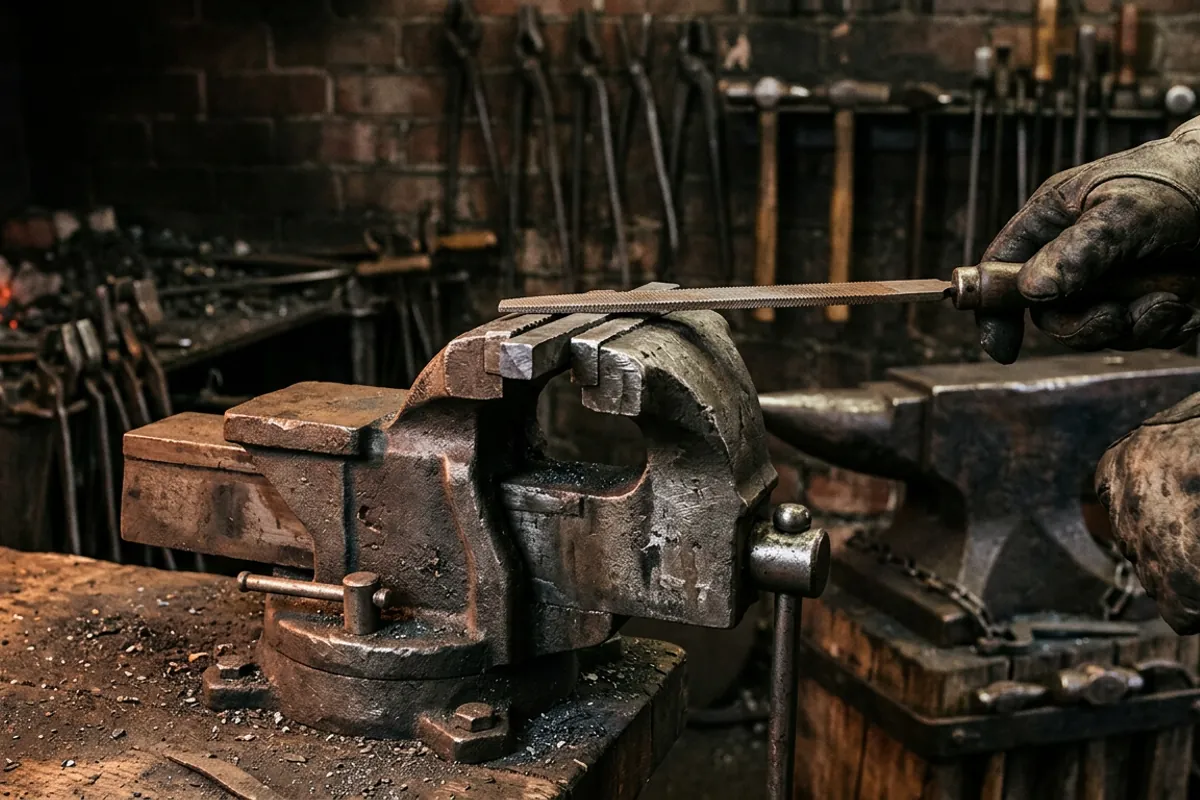
If you want one blacksmith filing vise to start with, buy a solid 4 to 4.5 inch machinist bench vise with a swivel base and bolt it down hard. For most home shops that means the Yost 445, and if you want a body that will never crack on you, the all-steel Yost 934-AS. Neither of those is exotic, and that is the point. The finish work a smith does with a file, cleaning up a tang, knocking the corners off a hardy tool, truing a bevel, squaring a shoulder, does not need a fancy vise. It needs a heavy, solid, well-mounted one that holds the work dead still while you push steel across it.
Let me be straight about what this guide is before you read another line. I have run a bench vise in my shop for twenty-five years and I know what solid workholding for filing feels like versus the wobbly junk that makes filing miserable. But I have not put every model below on a test bench and measured it. These picks lean on published specs from the makers, owner reports from the forums, and what I know about what makes a vise worth owning. Where a claim is secondhand, I say so.
What a filing vise actually is, and what it is not
There is some confusion baked into the term, so let me clear it up. A "filing vise" is not one specific tool with a stamped model name. It is whatever vise you use to hold cold work steady while you file, saw, and dress it. For most smiths that is a machinist bench vise. For small parts and jewelry-scale work it can be a little hand vise or a tilting vise you hold or clamp. The classic blacksmith leg vise, the post vise bolted to the bench with a leg running to the floor, is a different animal, built to take hammering and heavy bending. I cover that one separately in the blacksmith vise buying guide.
Here is the practical split I tell my weekend students. The leg vise is for hot, heavy, abusive work: bending bar, twisting stock, taking hammer blows. A filing vise is for cold finish work: filing, sawing, stoning, light drilling. You can own one vise and do both if you have to, but a cheap cast bench vise is not a leg vise, and hammering hot steel against it will crack the casting or wallow out the slide. Know which job you are doing, and pick the vise for it.
For filing specifically, what you want is different from what you want for bending. You want mass so the vise does not walk or ring. You want smooth, flat jaws or soft jaw covers so you do not chew up a finished surface. You want a swivel base so you can turn the work to meet the file instead of contorting your wrist. And you want it mounted low enough and solid enough that you can put your body weight behind a stroke.
The specs that matter for filing work
A vise spec sheet throws a lot of numbers at you. Only a few of them change how filing feels.
Jaw width is how wide the jaws are, which sets the biggest flat thing you can grip square. For filing knife tangs, small tools, and hardware, 4 to 4.5 inches is plenty. Bigger is not better here; a huge vise just eats bench space.
Jaw opening is how far the jaws spread. For finish work you rarely need more than 3 to 4 inches. Deep openings matter more for pipe and clamping fixtures than for filing.
Throat depth is how far down from the top of the jaws to the slide. A deeper throat lets you drop a longer piece straight down without it bottoming out, which is exactly what you want when you draw file a blade held vertically.
Body material is the one people skip and regret. A cast iron body is fine for filing and light work, and most budget vises are cast. But cast iron is brittle, and if you ever forget and smack it, it can crack. An all-steel or forged body shrugs that off. For a vise that lives in a forge shop where hammers are always within reach, I lean toward all-steel.
Swivel base lets the whole head rotate so you can present the work to your file at a comfortable angle. Look for a base with two lockdown bolts, not one. Two locks hold the head from creeping under a hard stroke; one lets it drift.
Do not confuse a bench vise with an anvil. Many combination vises have a small flat "anvil" pad cast behind the jaws. It is for tapping and light straightening, not for forging. If you want real anvil advice, start with the anvil buying guide.
The picks at a glance
Published specs only. Where a maker or non-marketplace retailer does not list a figure, it reads "not published."
Scroll horizontally to see all columns.
| Vise | Type | Jaw width | Jaw opening | Throat depth | Body / base | Price tier |
|---|---|---|---|---|---|---|
| Yost 445 | Combination bench and pipe | 4.5 in | not published | not published | 30,000 PSI cast grey iron with steel U channel, 360 degree swivel, 2 lockdowns | Budget |
| Yost 934-AS | All-steel combination | 4 in | 3.5 in | 2.5 in | All steel, 360 degree swivel | Mid |
| Small swivel and tilt vise | Hand / tabletop tilt vise | about 3 in | not published | not published | 360 degree swivel plus tilt | Budget |
Yost 445 specs from the Yost maker page. Yost 934-AS specs from the Home Depot listing.
Yost 445: the filing vise I would start with
If you are buying your first real bench vise for finish work and you do not want to overthink it, this is the one. The Yost 445 is a 4.5 inch combination vise, meaning it has the main flat jaws up top and a set of pipe jaws below. The body is 30,000 PSI cast grey iron with a steel U channel bar for the slide, and it rides on a 360 degree swivel base with two lockdowns, per the maker's page. That combination of a swivel base and two locks is exactly what you want for filing, because you can rotate the work to the file and trust it will stay put.
The honest read: this is a cast iron body, and cast iron is cast iron. Grip a piece square, file it, saw it, and it will serve you for years. Do not use it as an anvil, do not clamp a long cheater bar on the handle and lean into a heavy bend, and do not hammer hot steel against it. Treat it as a filing and holding vise and it earns its keep. For the money, it is more vise than most beginners expect, and the swivel base alone puts it ahead of the bargain-bin fixed-base vises.
The steel jaws are serrated, which bites hard but leaves marks on a finished surface. Keep a set of soft jaw covers, aluminum or copper, for anything you have already dressed. That is true of every vise here, not just this one.
Check price on Amazon (paid link)
Yost 934-AS: the all-steel step up
If you want to buy once and stop worrying about cracking a casting, step up to an all-steel body. The Yost 934-AS is a 4 inch all-steel combination vise with a 3.5 inch jaw opening and a 2.5 inch throat depth, on a 360 degree swivel base, according to the Home Depot listing. The all-steel construction is the whole reason to pick it over the 445. In a forge shop, a hammer is always in reach, and sooner or later you or a visitor will rap the vise body by accident. A steel body takes that abuse without the risk of a brittle casting letting go.
That 2.5 inch throat is genuinely useful for filing. Drop a knife blade or a longer bar straight down between the jaws for draw filing and you have room to work without the piece bottoming on the slide. The narrower 4 inch jaw is fine; you almost never need wider for finish work, and the tighter footprint frees up bench space.
The tradeoff is price and weight. All-steel costs more than cast, and it is not a featherweight to bolt down. If you know you are going to be around this hobby for a while and you have a spot on a solid bench for it, I think it is the better long-term buy. If you are still deciding whether smithing sticks, the 445 gets you filing today for less.
Check price on Amazon (paid link)
A small tilt vise for detail and small parts
Not all filing is done on a big bench vise. When I am cleaning up a small guard, a jewelry-scale part, or a fiddly bit of hardware, a heavy machinist vise is the wrong tool; the work disappears down in the jaws and you cannot get a file angle on it. That is where a small swivel and tilt vise earns a spot on the bench. These clamp or bolt to the bench, then swivel 360 degrees and tilt so you can lock the work at whatever angle meets your file. The jaws on the common ones run around 3 inches wide.
This is where I have to be honest that I am not speaking from owning any one particular model. The little tilt vises are a commodity category, sold under a dozen names off the same castings. Quality varies. Some are perfectly serviceable for light filing and stoning of small parts; some have sloppy tilt joints that will not lock hard. Treat one as a convenience tool for small detail work, not as your main vise, and do not expect it to hold up to real force. For what it is, holding a small part at a workable angle so you can file it clean, it beats fighting a full-size vise.
Check price on Amazon (paid link)
What owners say
For the gear I have not run down myself, here is what the forums actually report.
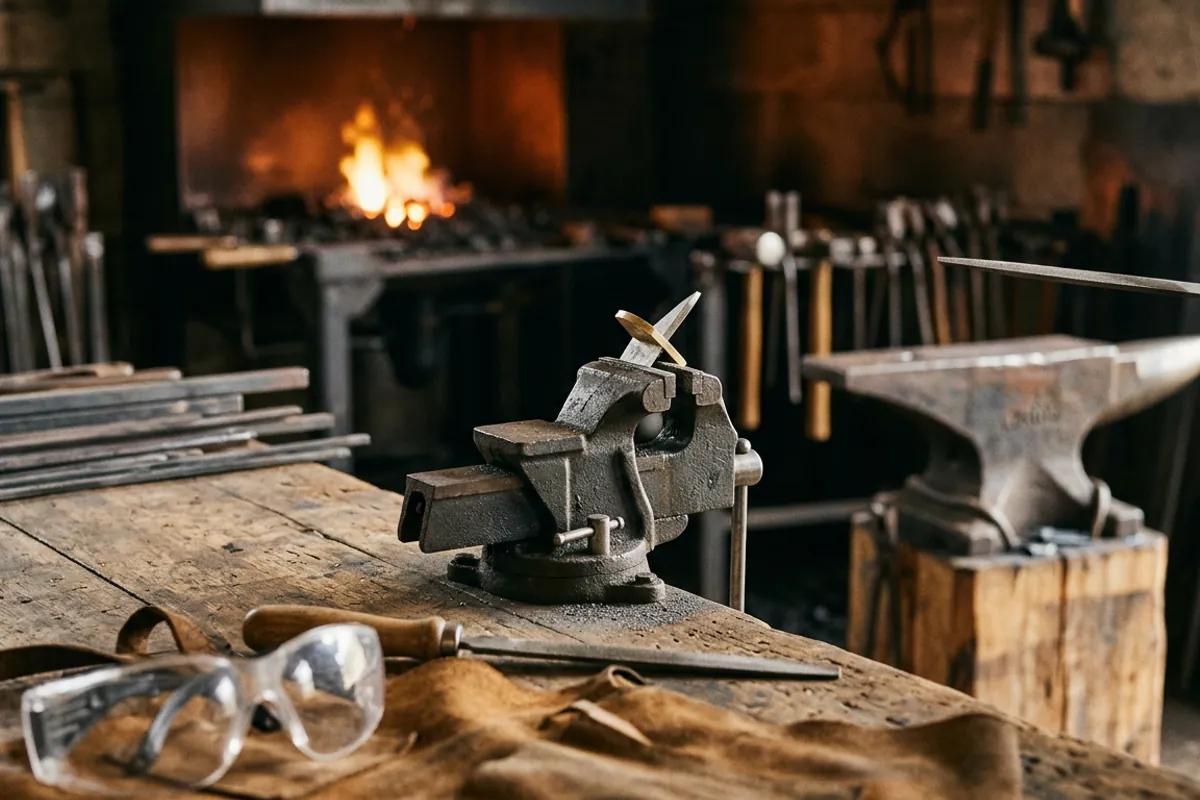
On bench vises for knife and finish work, the consistent advice from smiths is mount it solid and buy more mass than you think you need. In a Bladesmith's Forum thread on knife vises, makers show rigs where the vise is either a heavy machinist vise bolted hard to the bench or a fabricated angle-iron setup that holds the blade flat for draw filing. The recurring theme is that a light, poorly mounted vise makes filing miserable no matter how good the file is.
On body material, the common complaint on the forums is exactly the one I flagged: cheap cast vises crack when someone treats them as an anvil. In an I Forge Iron thread on standalone bench vises, the practical consensus is that a machinist vise is for cold work and clamping, and that a real leg vise belongs on the bench for anything you plan to hammer. Nobody in these threads recommends abusing a cast bench vise into service as a forging anvil.
On draw filing specifically, the technique threads matter more than the brand. A BladeForums draw filing discussion lays out the method most smiths use: a single cut file held roughly 90 degrees to the stroke, kept flat, with the work clamped low and dead still. Every part of that depends on your vise not moving. That is the whole argument for spending on mass and a solid mount rather than chasing features.
Owner signal on the little tilt vises is thin and mixed, which is what you would expect from a commodity import category. I would not buy one on forum reviews alone; buy it for the specific job of holding small parts at an angle and keep your expectations modest.
Mounting and using a filing vise safely
A vise is only as good as its mount, and filing puts real horizontal force on it. Bolt the vise through the benchtop with grade bolts and washers, not lag screws into soft wood, and back it with a plate or fender washers underneath so the nuts do not pull through. A vise that rocks will chatter your file and ruin your surface, and a vise that tears loose mid-stroke is how you put a file into your other hand.
That brings me to the one safety rule I never bend around files. Never use a file without a handle. A bare file tang is a spike. When the file catches or the work shifts, that tang drives straight back into your palm or wrist. Fit a handle on every file, hardware-store wooden handles are a couple of dollars, and replace any that split. This is not fussiness; it is the difference between a slipped stroke and a trip to get stitched up.
Wear eye protection rated to ANSI Z87.1 whenever you file, saw, or wire brush at the vise. Filing throws chips, and steel splinters in the eye are miserable and avoidable. I learned my respect for eye protection the hard way years ago when I quenched a blade in oil that was too cold, standing too close with no face shield, and the flare took my eyebrows. I got lucky and kept my eyesight. I do not treat protective gear as optional and neither should you. If you are still assembling your kit, the blacksmith safety gear guide covers what actually matters.
One more habit: keep the vise and file clean of scale and oil. A file loaded with filings and grease skates instead of cutting, which tempts you to push harder, which is exactly when it slips. A file card or brush and a quick wipe keeps both the tool and you honest. Filing is a cold-work skill that pays off across everything from cleaning up a forged tool to truing a bevel; if you are moving toward blades, it ties straight into knife blacksmithing.
What I would tell a friend
Buy a solid 4 to 4.5 inch bench vise with a swivel base and two lockdowns, and mount it like you mean it. If money is tight or you are not sure smithing sticks, the Yost 445 gets you filing today. If you want to buy once and never worry about cracking a casting in a shop full of hammers, spend up for the all-steel Yost 934-AS. Keep a small tilt vise around only if you do fine detail or small-part work; it is a convenience, not your main vise.
The one to skip is any bargain fixed-base vise with a thin body and no swivel. It will fight you on every filing stroke, and you will end up replacing it. And whatever you buy, put a handle on every file and Z87.1 glasses on your face before you make the first stroke. Solid workholding and a handled file are what make filing feel like a skill instead of a chore. For more shop reference and gear that is not strictly forge or anvil, the More from the shop hub collects the rest, and the full guide index has the anvils, forges, and hammers to go with your bench.