I have enough verified sourcing. Writing the article now.
Here is the article body followed by the metadata.
There is no single tool stamped "blacksmith wrench," which is the first thing worth saying out loud. When smiths use that phrase they almost always mean a twisting wrench: a long steel bar with a slot or an adjustable jaw that grips hot square stock so you can put an even twist down its length. If you want the short answer, the tool I would tell a new smith to buy first is a dedicated adjustable twisting wrench like the one Iron Mountain Forge sells, because it handles a range of stock sizes and gives you a real handle to pull on. The cheap hardy-hole bending forks on the marketplace are useful too, but they do a narrower job. Everything below leans on published specs and owner reports weighed against years on my own shop floor, not a bench test of every tool in the field. I have twisted plenty of stock, but I have not personally run down every model here, and I will tell you which is which.
What people actually mean by a blacksmith wrench
Ask ten smiths what a blacksmith wrench is and you will get three answers. The most common one is the twisting wrench, the tool you clamp one end of hot bar in a vise and grab the other end with, then walk it around to lay in a clean spiral. The second is a bending fork, a two-pronged tool that seats in your anvil's hardy hole or a vise and gives you a fulcrum to lever hot stock around for scrolls and curves. The third is literally a repurposed adjustable wrench or old monkey wrench that somebody keeps by the vise for grabbing hot square bar.
They are related jobs but not the same job. A twisting wrench is about putting a controlled rotation into a length of square or rectangular stock. A bending fork is about putting a bend or a scroll into a piece by leverage. A lot of decorative work, railing pickets, fireplace tools, hooks, gate scrolls, uses both in the same afternoon, which is why the terms get muddled. When you shop for a "blacksmith wrench," decide first whether you are twisting or bending, because the right tool for one is clumsy at the other.
Twisting is one of those techniques that looks like a party trick and turns out to be a genuine skill. An even twist is easy to admire and hard to make, and the tool is only half of it. The other half is heat control and a steady, deliberate pull, which I will get to.
How I sized up the field
I looked at three tiers of tool: a dedicated adjustable twisting wrench from a small maker, the budget hardy-hole bending forks that flood the marketplace, and the DIY route most old-timers actually use. The specs below are the published figures from the maker or a retailer page, cited where I have them. Where a marketplace listing does not publish a real number, I left it out rather than guess.
Scroll horizontally to see all columns.
| Tool | Type | Stock capacity | Material | Price tier |
|---|---|---|---|---|
| Iron Mountain Forge twist wrench | Adjustable twisting wrench | 3/8, 1/2, 5/8, 3/4 in square | 3/8 in plate steel, 18 in long | ~$53 (published) |
| Hardy bending fork, 3/4 in | Hardy-hole bending and twisting fork | 3/4 in hardy hole | 1018 cold rolled steel | Budget |
| Hardy bending fork, 1 in | Hardy-hole bending fork | 1 in hardy hole | 1018 cold rolled steel | Budget |
| Repurposed monkey/adjustable wrench | Improvised twisting wrench | Whatever the jaw opens to | Varies | Cheap to free |
The Iron Mountain Forge figures come straight off their product page: 3/8, 1/2, 5/8 and 3/4 inch square capacity, 3/8 inch plate steel, 18 inches long, listed at $53 as of this writing (Iron Mountain Forge). The hardy fork material and sizing come from the marketplace listings themselves.
The adjustable twisting wrench I would buy first
If you are going to twist stock more than once, buy a real twisting wrench. The Iron Mountain Forge tool is the honest baseline: a single wrench that takes four common square sizes from 3/8 up to 3/4 inch, cut from 3/8 inch plate, eighteen inches long so you have leverage without fighting it. Eighteen inches of handle matters more than people expect. A twist wants a smooth, continuous pull, and a short tool makes you regrip halfway through, which is exactly where twists go crooked.
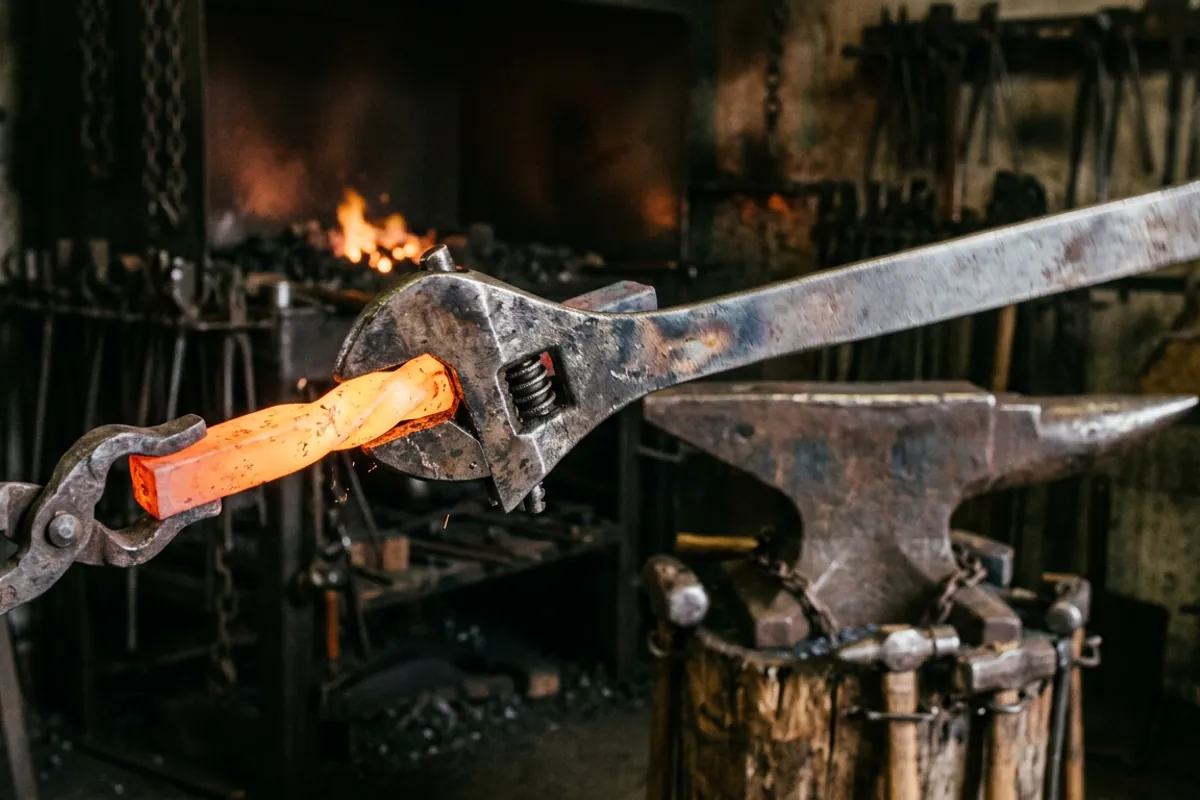
The value of a stepped, multi-size wrench is that one tool covers most of the picket and scroll stock a hobby shop touches. You clamp the cold end of the bar in a solid post vise, heat the section you want to twist to an even orange, drop the wrench over the hot end, and walk it around. The plate-steel body shrugs off the heat because it only ever touches the bar for a few seconds at a time. A dedicated wrench like this is not fancy and it is not expensive, and that is the point. Do not overthink it.
One honest limit: a fixed multi-size wrench only fits the sizes it is cut for. If most of your work is 1/2 inch square, a wrench slotted for exactly 1/2 inch grips tighter than a general one, and some smiths keep a couple of single-size wrenches for their bread-and-butter stock. For a first tool, the multi-size version wins because you do not yet know what stock you will settle on.
You will want a stout vise to anchor the cold end, and that is not the place to cheap out. I have written up what I look for in a blacksmith vise, and for twisting specifically a leg vise bolted to something immovable beats a bench vise that walks across the shop every time you pull.
The hardy bending forks, the budget end of the family
The tools that show up when you search "blacksmith wrench" on the big marketplace are mostly hardy-hole bending forks, sold in sizes to match your anvil's hardy hole. These are the cheap cousins of a proper bending fork. The 3/4 inch version seats in a 3/4 inch hardy hole and gives you a two-prong fulcrum to lever hot bar around for scrolls, hooks and S-curves. The listings state 1018 cold rolled steel, which is a mild steel that is fine for this job because the fork is a fulcrum, not a cutting edge. Check price on Amazon (paid link)
There is a one-inch version for anvils with a one-inch hardy hole. Same idea, sized up. Check price on Amazon (paid link)
Be clear about what these are and are not. A bending fork is a bending tool. You can coax a lazy twist out of one by levering, but it is not a twisting wrench and it will not give you a clean, even spiral. What it is good for is scroll work and adjusting curves, and at the price these sell for it is a reasonable first tool if bending, not twisting, is what you are chasing. The tradeoff at the budget end is finish and consistency: the prongs are sometimes a little rough, the tolerances are loose, and you may need to dress the working faces with a file so they do not mar the stock. For a tool you drop in a hardy hole and lean on, that is livable.
If you are buying hardy-hole tooling generally, it is worth understanding how hardy hole sizes and shank fit work before you order, because a fork that rocks in an oversize hole is a nuisance. I covered that in the hardie tools for anvils guide.
The repurposed monkey wrench and the DIY route
Here is the thing the marketplace will not tell you: a huge number of working smiths never bought a twisting wrench at all. They twist with an old adjustable wrench or a vintage monkey wrench off the flea-market table, and they make a dedicated one when they need a specific size. This is owner consensus, not my personal habit, but it is loud and consistent on the forums. An adjustable wrench opens to grip whatever square stock you set it to, and the long handle on an old monkey wrench gives you leverage for free.
The DIY twisting wrench is close to a beginner rite of passage. The design is dead simple: a bar of steel with a square hole or a slot punched or drilled and filed to fit your stock, with a handle. Instructables and the forums are full of builds, and it is a good early project because it teaches drifting a hole and forging a handle while producing a tool you will actually use (Instructables adjustable blacksmith twist wrench). If you want a shop project that pays you back, this is a better use of a Saturday than buying, and it fits right in with the kind of work in my beginner projects list.
The catch with the improvised route is grip. A worn adjustable wrench with rounded jaws will slip and round the corners of your stock, which shows up as a sloppy twist. A dedicated slot sized to the bar grips all four faces and pulls truer. So the honest progression is: start with the monkey wrench you already have, and when a particular stock size becomes your regular work, either buy the multi-size wrench or forge a single-size one.
What owners say
For the dedicated twisting wrenches and forks I have not personally run down, here is what the forums report, attributed so you can read it yourself.
On I Forge Iron, the recurring theme in the twisting-wrench discussions is that the tool matters less than technique, and that a snug fit to the stock is what separates a clean twist from a rounded, ugly one. Members repeatedly note that a wrench slotted to the exact size grips better than a general adjustable, and that a long handle helps you keep the pull continuous (I Forge Iron, Twisting Wrench thread). That squares with the physics and with my own experience.
The twisting technique threads are worth more than the tool threads, honestly. The consistent owner advice is to heat the section as evenly as you can, keep the pull steady, and stop before the metal cools unevenly, because a cold spot in the middle of a heat twists slower than the hot steel around it and throws the spacing off (I Forge Iron, a quick tutorial on twisting). The MIT OpenCourseWare blacksmithing materials say the same thing in plainer words: brace the stock, twist evenly but quickly, and stop when the metal has noticeably cooled (MIT OCW, modern blacksmithing).
On the cheap hardy forks, owner signal is thin and mostly about fit and finish rather than any single beloved model. The common complaint is loose fit in the hardy hole and rough prongs, which tracks with any budget import tool. Nobody on the forums treats these as heirloom tools, and neither should you.
Twisting hot steel without wrecking the piece
The tool will not save you from a bad heat, so here is the part that actually matters. Twist in an even heat. Uneven heat is the number one cause of an uneven twist, because the hotter steel twists first and faster. Get the whole section you want twisted to a uniform orange, not a bright spot with cold shoulders.
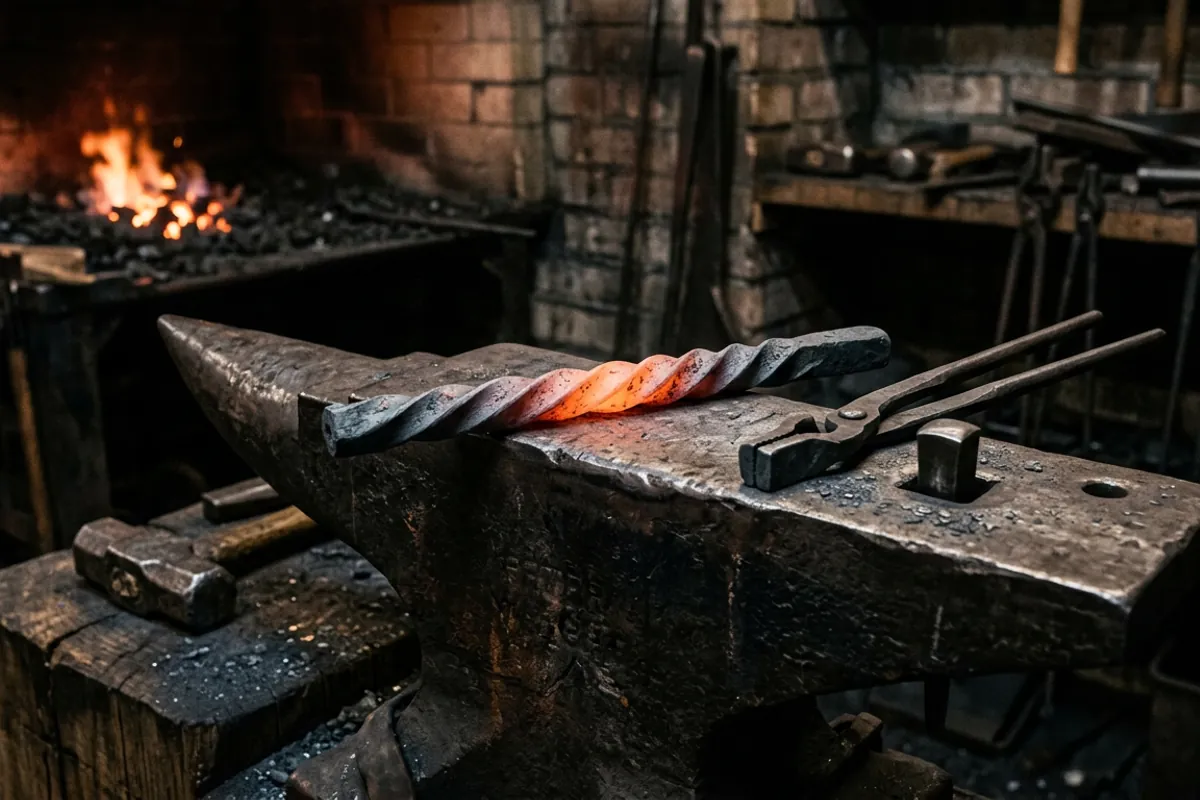
Pull steady and stop the twist before you run out of heat. If you try to force the last quarter turn as the steel drops below orange, you concentrate the remaining twist in whatever is still hottest and the spacing goes ragged. Better to take a second heat and finish it than to muscle a cold twist.
Count your turns and mark your start and stop points with soapstone or a center punch so both ends of a matched pair, say a pair of fireplace tools, get the same number of twists. Matching a second piece by eye after the fact is miserable.
Now the safety, because I do not soften this. Wear eye protection rated to ANSI Z87.1 whenever you are working hot steel, twist or not. Twisting throws scale, and it flies sideways off a spinning bar right at eye level. Wear natural fibers, cotton or wool or leather, not synthetics, near the forge and the hot bar, because a melted synthetic sleeve sticks to skin. I learned the fibers-and-face-protection lesson the hard way with an oil flare-up that took my eyebrows and nearly my eyesight, and I will never treat PPE as optional. If you want the full rundown of what is worth wearing, it is in my blacksmith safety gear writeup.
Clamp the cold end in a vise that will not move. A bar that slips in the vise mid-twist can whip, and a hot bar whipping loose is exactly the kind of thing that ends an afternoon early.
What I would tell a friend
If you are twisting stock and want one tool that just works, buy the adjustable multi-size twisting wrench and a solid vise to anchor against, and skip the guesswork. If you are bending and scrolling more than twisting, the budget hardy fork is a reasonable cheap start, just plan to dress the prongs with a file and do not expect it to twist cleanly. And if you already own an old monkey wrench or an adjustable, start there tonight, learn the heat control, and buy or forge a dedicated wrench once you know what size stock you actually reach for. The tool that makes a clean twist is mostly an even heat and a steady pull. Buy the wrench that gives you leverage and a good grip, protect your eyes, and the rest is practice. For more tools that live on the same bench, the More from the shop hub is where I keep this kind of writeup.