If you have a browser full of tabs and a starter budget, the honest short version is this: the blacksmithing supplies worth your first dollars are eye protection, one good hammer, one pair of tongs that fits your stock, and a heat source. Everything else on the "starter kit" listings is either something you will forge yourself in month two or something you will regret in week one. I have been at this about twenty-five years, started on a chunk of railroad track clamped to a stump, and I teach weekend beginners, so I have watched a lot of people spend three hundred dollars and end up with two hundred dollars of clutter.
Fair warning on how this guide is built. These are not bench tests. Beyond the general shop experience behind them, the picks below lean on published maker specs and on what owners report on the forums, weighed against what I know about how this gear behaves in a home shop. Where a maker does not publish a number, I say so rather than making one up, and where the only signal is secondhand, I say that too.
What I would buy first, and in what order
Order matters more than brand. Spend in this sequence and you will never be stuck with a tool you cannot use yet.
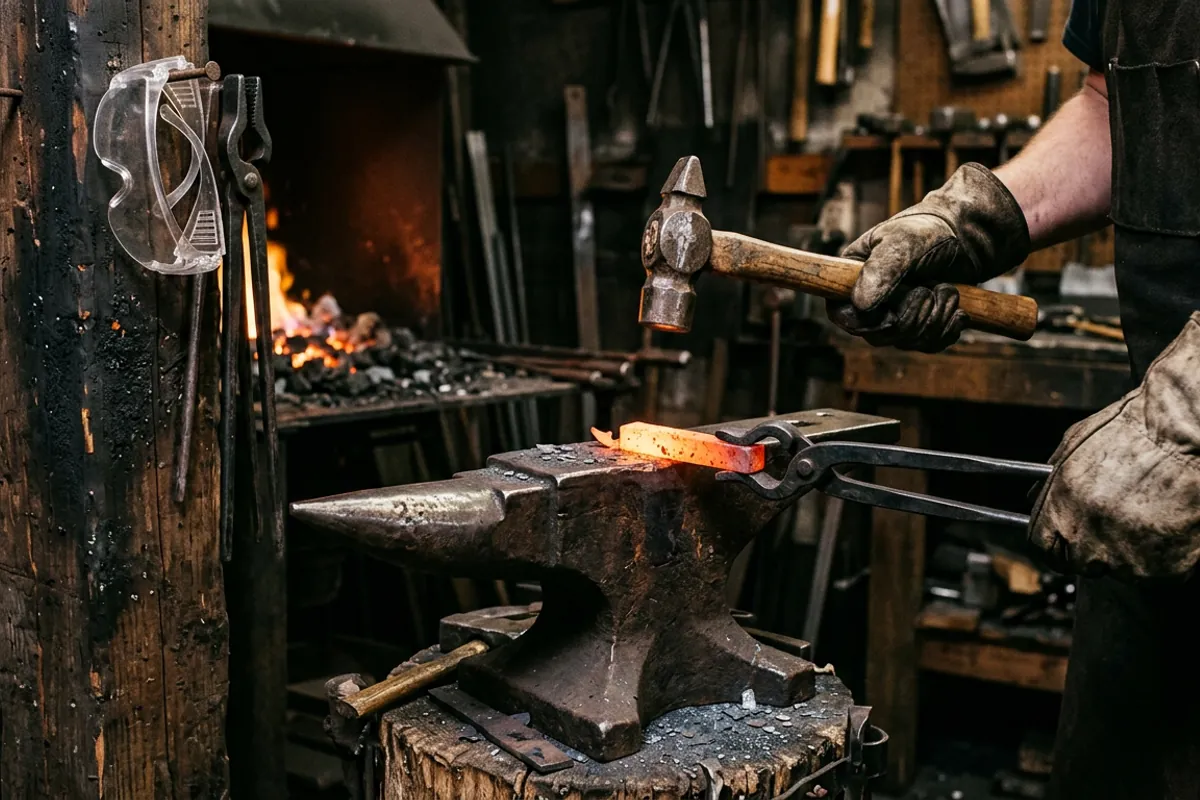
- ANSI Z87.1 rated eye protection. Not optional, not later. Scale flies, and hot scale in an eye is a hospital trip.
- Hearing protection. Hammer on anvil is loud, every day, forever. Hearing does not grow back.
- A hammer. One. Two to two and a half pounds, cross peen, wood handle.
- Tongs. One pair that actually grips the stock you plan to forge, not six pairs that grip nothing well.
- A heat source. Coal, charcoal, or propane. This is the biggest decision and it is covered properly in coal or propane.
- An anvil, or something with mass. Mass under the work beats an anvil shape every time.
- Consumables. Flux, files, abrasives, fuel, a wire brush, a slack tub.
Clothing is on that list too and it costs nothing if you already own it: natural fibers only. Cotton, wool, leather. Synthetics melt into skin, and a polyester hoodie near a forge is a burn injury waiting for a spark. That is not me being dramatic. Early on I quenched a blade in oil that was too cold, stood too close in a cotton shirt with no face shield, and the oil flared and took my eyebrows off. I kept my eyesight on luck alone. That is why PPE sits at the top of this list and not the bottom.
The supplies at a glance
Published figures only. Where a maker does not publish a spec, the cell says so.
Scroll horizontally to see all columns.
| Supply | Model | Published spec | Price tier |
|---|---|---|---|
| Safety glasses | 3M SecureFit 400 | Meets the impact rated protector requirement of ANSI/ISEA Z87.1, 19 g (3M) | Budget |
| Hearing protection | 3M Peltor X5A | NRR 31 dB, over the head, ABS cups (3M technical datasheet) | Budget |
| Hammer | Vaughan S32 blacksmith hammer | 2 lb head, 14.5 in hickory handle, drop forged high carbon steel (Marshalltown, The Hammer Source) | Budget to mid |
| Tongs | Imported 16 in wolf jaw | 16 in overall length; steel grade and hardness not published | Budget |
| File | Crescent Nicholson 08737N | 12 in rectangular, American pattern, single cut, bastard (Crescent) | Budget |
| Flux | 20 Mule Team borax | Sold as a laundry booster; no forge specs published | Budget |
| Anvil | VEVOR single horn 66 lb | See the product card below | Budget |
Two things that table cannot show you. First, the tongs row is thin on purpose: almost none of the imported tong sellers publish a steel grade or a hardness, and I am not going to invent one for them. Second, price tiers move around, so treat them as rough bands rather than a quote.
Eye and ear protection come before anything that gets hot
Buy safety glasses that are actually rated. The marking to look for is ANSI Z87.1, and on impact rated protectors you will see a Z87+ mark on the lens or frame. Fashion sunglasses are not eye protection, and a pair of shop glasses that live on a shelf because they fog or pinch are not eye protection either. The reason I point people at the 3M SecureFit 400 line is that 3M publishes the compliance plainly and the frames are light enough that people actually keep them on. 3M lists the 400 series at 19 g and states it meets the impact rated protector requirement of ANSI/ISEA Z87.1 on its own product page.
Check price on Amazon (paid link)
Glasses are the floor, not the ceiling. Grinding, wire wheeling, and anything involving a quench tank want a face shield over the top of them, and the face shield does not replace the glasses underneath. A shield can be knocked up or sideways in a heartbeat.
For ears, over the head muffs beat plugs in a smithy because you take them on and off constantly. The 3M Peltor X5A is the loud end of the passive range: 3M's own X series technical datasheet publishes it at NRR 31 dB. That is a lot of attenuation for a passive muff, and the tradeoff is real: they are bulky, they clamp firmly, and in July they get warm. I would rather sweat than lose the top of my hearing range to twenty years of hammer strikes.
Check price on Amazon (paid link)
If you want the full rundown on what protection matters at each station, that is its own guide: blacksmith safety gear, what matters and what to skip.
One hammer, and why the cheap five piece set is a trap
The single best thing a beginner can do for their forging is stop buying hammers and start using one. Two pounds is the sweet spot for most adults learning to move steel. Two and a half if you are big and patient, a pound and a half if your wrist tells you so. Cross peen, because the peen is how you spread metal in one direction, and a wooden handle, because wood damps the shock that a fiberglass or steel handle sends straight into your elbow.
The Vaughan S32 is a fair example of the class: a drop forged high carbon head at 2 lb on a 14.5 in hickory handle, per Marshalltown (Vaughan tools now sit under the Marshalltown catalog) and the spec page at The Hammer Source.
Check price on Amazon (paid link)
Whatever you buy, do two things before it touches hot steel. Dress the face: take the sharp factory edges off with a file and then abrasive, leaving a gentle radius, or every off blow will print a crescent moon into your work. And check the handle fit. Cheap hammers ship with heads that are wedged badly or wood that is dry, and a head that comes off mid swing is a projectile.
I would skip the boxed five piece hammer assortments. You do not need a rounding hammer, a straight peen, and a sledge in week one, and the boxed sets tend to spread the same low budget across five heads instead of concentrating it in one good one. The longer argument is in the blacksmith hammer buying guide.
Tongs are the supply most beginners get wrong
Tongs are not general purpose. A pair of tongs is sized to a specific stock dimension and shape, and a pair that does not fit will let hot steel pivot and drop, usually onto your boot. That is the whole reason experienced smiths end up with a rack of thirty pairs: each one fits something.
For a first purchase, a wolf jaw pattern is the compromise that fits the widest range, because the stepped grooves will hold round, square, and flat within a limited size band. A 16 in pair is a sensible length: long enough to keep your hands out of the fire, short enough to control.
Check price on Amazon (paid link)
Be clear eyed about what you are buying at the budget end. The imported tongs sold under a dozen different storefront names do not publish a steel grade or a hardness, the reins are often too heavy for their size, and the jaws frequently need reforging to actually close on your stock. That is a fixable problem, and fixing it is a legitimate beginner project: heat the jaws, close them on a piece of your stock, and squeeze. It is also why making tongs is such a common recommendation on the forums.
Whatever you buy, keep a pair of tong tongs in mind, meaning a spare set you can use to move a hot workpiece if the first set fails. And never carry hot steel across the shop in a bad grip. Set it back in the fire, get the right tongs, then move it.
The anvil, or the anvil shaped object
An anvil is where budgets go to die, and it is also where the biggest gains hide. What you are buying is mass under the hammer and a hard face that returns energy instead of swallowing it. My own anvil is a 148 lb Trenton I call Bessie, and it is the tool I measure every other anvil against.
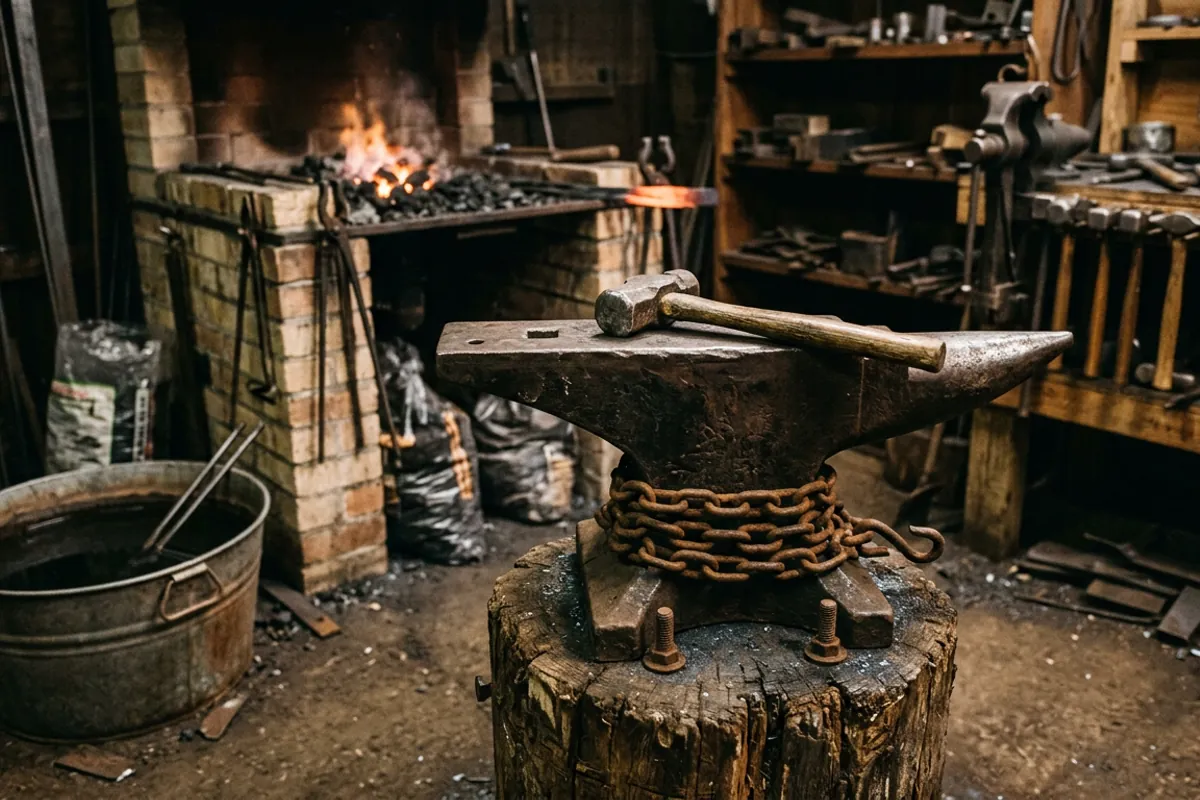
For a first anvil, 100 to 150 pounds covers almost everything a home shop does. Lighter than that and the anvil moves and rings and eats your energy; heavier than that and you need a plan for getting it off the truck. If you are not sure where you land, what size anvil do you actually need walks through it, and how to buy an anvil without wasting your money covers the used market, which is where the value still lives.
If you are buying new on a tight budget, the cast single horn anvils are the honest entry point. They are cast, not forged, the rebound is not in the same conversation as a good old wrought body with a hard steel face, and the edges will want dressing. But 66 pounds of steel bolted down beats a 12 pound novelty every day.

The other thing nobody tells beginners: the stand matters as much as the anvil. A wobbly stand kills rebound. Bolt the anvil to a stump or a steel base, get the face at about knuckle height with your arm hanging, and you have improved every hammer blow you will ever throw.
Consumables: flux, files, abrasives, and fuel
These are the supplies that quietly run your shop, and they are cheap enough that running out is just annoying rather than expensive.
Flux
If you plan to forge weld, you want borax. Plain laundry borax works, and generations of smiths have used it.
Check price on Amazon (paid link)
Two honest notes. The laundry product is the decahydrate, meaning it carries water of crystallization, so when it hits hot steel it foams and puffs and a good share of it blows off before it does anything useful. Anhydrous borax behaves better, and smiths on the forums make their own by melting the laundry grade, letting it cool, and crushing it. Second, molten flux is molten glass. It sticks, it burns, and it flies when the hammer lands. Face shield, long sleeves in natural fiber, and nobody standing across the anvil from you. Flux is also hard on forge lining, which is one more reason forge welding in a propane forge wants a coated, sacrificial floor.
Files
A 12 in mill bastard is the single most useful file in a smithing shop: draw filing hammer faces, cleaning up scale, testing hardness after a heat treat. Crescent publishes the 08737N as a 12 in rectangular American pattern single cut bastard on its product page.
Check price on Amazon (paid link)
Buy a handle for it. A bare file tang through a palm is a classic shop injury, and it is entirely preventable for a few dollars.
The rest
A wire brush for scale, a slack tub (a steel bucket works), a pair of ordinary vise grips as a stand-in tong, a decent bench vise if you can find one used, and fuel. Fuel is where your ongoing money actually goes, and the choice drives the shop: see the coal forge coal guide if you are burning solid fuel, or the propane forge guide if you want fast, repeatable heat with less mess.
One supply to skip early: a heat treat oven. Learn the fire first. If you are going to harden and temper, tempering of metal covers what actually has to happen, and for choosing steel there is the steel selector tool. For anything past that, send metallurgy questions to real testing rather than shop lore. Knife Steel Nerds publishes actual data, and I would rather you read them than trust a number I made up.
What owners say
I have not run every item above down in my own shop, so here is the secondhand signal, attributed.
On tongs, the recurring theme on I Forge Iron is that buying is a stopgap and making is the real answer. Threads like Tongs: roll your own or buy them and What tongs should I buy come back around to the same points every time: fit the tongs to the stock, expect to adjust the jaws on cheap imports, and one properly fitted pair beats a boxed assortment. Owner signal on any specific imported tong SKU is thin, because the same tongs sell under a rotating cast of brand names, so I would not put weight on star ratings there.
On flux, the forums are unusually consistent. The I Forge Iron thread The absolute last final word on anhydrous borax flux and the BladeForums thread on anhydrous borax both report the same behavior: the hydrated laundry product puffs and blows off when the water boils out, anhydrous is coarser and heavier so more of it stays where you put it, and simply drying the laundry grade in an oven does not convert it. If you are struggling to get welds to take, that is worth knowing before you blame your technique.
On hammers, Vaughan's reputation among smiths is solid but not exalted: it is a good production hammer with a face that wants dressing, which is true of nearly every production hammer. Plenty of smiths eventually move to a hand made rounding hammer. That is a month twelve problem, not a month one problem.
What I would tell a friend
Buy rated eye protection and muffs first, then one 2 lb cross peen, then one pair of tongs that fits the stock you actually plan to forge. Put the rest of the budget into the heat source and into mass under the work, and let the boxed starter kits go by. Dress the hammer face, bolt the anvil down, wear cotton or wool, and keep the quench tank away from where you stand.
The supply that will change your work fastest is not on any of these lists: it is steel to practice on and hours to practice with. If you want the wider picture of what a home shop looks like once it is running, there is more from the shop, and the short list version lives in blacksmithing tools, the short list that actually matters.