I have verified products and real sources. Writing the article now.
Here is the article:
If you are standing at the start of this and wondering what forging equipment you actually need to make hot steel move, the honest answer is smaller than the internet wants you to believe. You need a heat source, something hard to hit against, a hammer, and a way to hold the steel without cooking your hand. That is the whole starter kit. Everything else is a want, not a need, and most of the money wasted in this hobby gets wasted on the wants before the four basics are sorted. So this guide walks the four things that matter, tells you what I would put in a beginner's shop and why, and stays honest about the fact that these are not bench tests. I own an anvil, two forges, and more hammers than I will admit to, but I have not personally run down every model here. Where I lean on other smiths I say so, and the picks come from published specs and owner reports weighed against twenty-five years on the floor of my own shop.
I have taught enough weekend beginners to know the pattern: people buy the shiny thing first and the boring things last, then wonder why the work is fighting them. It is almost always backwards. Spend on the anvil and the forge. Buy the hammer and tongs sensibly. That order will save you more money than any coupon.
The short spec sheet
Here is the field at a glance. Every figure below is a published spec from the maker or a non-marketplace retailer, cited in the sections that follow. Where a maker does not publish a number, it says so.
Scroll horizontally to see all columns.
| Tool | Model | Key spec | Fuel or material | Tier |
|---|---|---|---|---|
| Gas forge | NC Tool Whisper Deluxe | Two burners, 12 x 3 x 6.5 in chamber, 45 lb | Propane (natural gas configurable) | Mid |
| Budget anvil | VEVOR single horn 132 lb | Cast, single horn, hardy and pritchel holes | Cast steel | Budget |
| Hammer | Picard 1000g Swedish cross pein | 1000 g head (about 2.2 lb) | Alloy steel head, ash handle | Mid |
| Tongs | Wolf jaw tongs, 16 inch | 16 in, three point grip | Heavy steel | Budget |
That is a real starter set. Notice what is not on it: a power hammer, a swage block, a hydraulic press, a fly press. Those are shop-maturity tools. You do not need any of them to learn, and buying them early is how a garage fills up with things you cannot yet use. If you want the full argument for what belongs in a first shop, I laid it out in the blacksmithing equipment guide.
The forge: where the heat comes from
The forge is the one piece of forging equipment I would not cheap out on, because a forge that will not hold an even heat makes every other skill harder to learn. You spend the whole session fighting cold spots and scaling instead of learning to hit.
For most home shops I point people at propane first. It lights in seconds, holds a steady even heat with no fire tending, and you can run it in a suburban garage with ventilation far more easily than a coal fire. The NC Tool Whisper Deluxe is the model I hear recommended most often for a first serious gas forge, and the specs are honest for the money. Centaur Forge lists it as a two burner atmospheric forge with a 12 inch by 3 inch by 6.5 inch interior chamber, a 45 pound working weight, fitted for propane and configurable for natural gas, delivering uniform heat up to 2350 degrees Fahrenheit (Centaur Forge product listing). That 2350 figure sits right at the low end of forge welding heat for mild steel, so the Whisper will do general forging all day and can be coaxed into welding, though atmospheric gas forges are fussier at welding heat than a coal fire. Ask ten smiths and most will tell you an atmospheric forge welds fine once you learn its hot spot and flux timing, but it is not push-button.
Check price on Amazon (paid link)
The tradeoff with any two burner forge that size is chamber volume. A 12 inch chamber is plenty for knives, hooks, bottle openers, and small tooling. It is tight for long architectural work or heavy stock, where you would rather have coal. If you already know you want to move big bar and forge weld often, that is a different decision, and I walk through the fuel choice in full in coal or propane. For the beginner who wants to make things this weekend and not wrestle a fire, propane wins.
There is no VEVOR gas forge I would put ahead of the NC Tool here. The budget gas forges on the marketplace vary wildly in burner quality and insulation, and a bad burner is a bad time. Spend the extra on a known burner.
The anvil: the thing you hit against
The anvil is the heart of the shop and the piece people get most wrong. My own anvil, Bessie, is a 148 pound Trenton, and I measure every other anvil against her. She has the two things that matter: mass under the hammer and a hard face that returns the blow. A soft, dead anvil steals energy out of every swing, and you will feel it in your elbow by the end of the day.
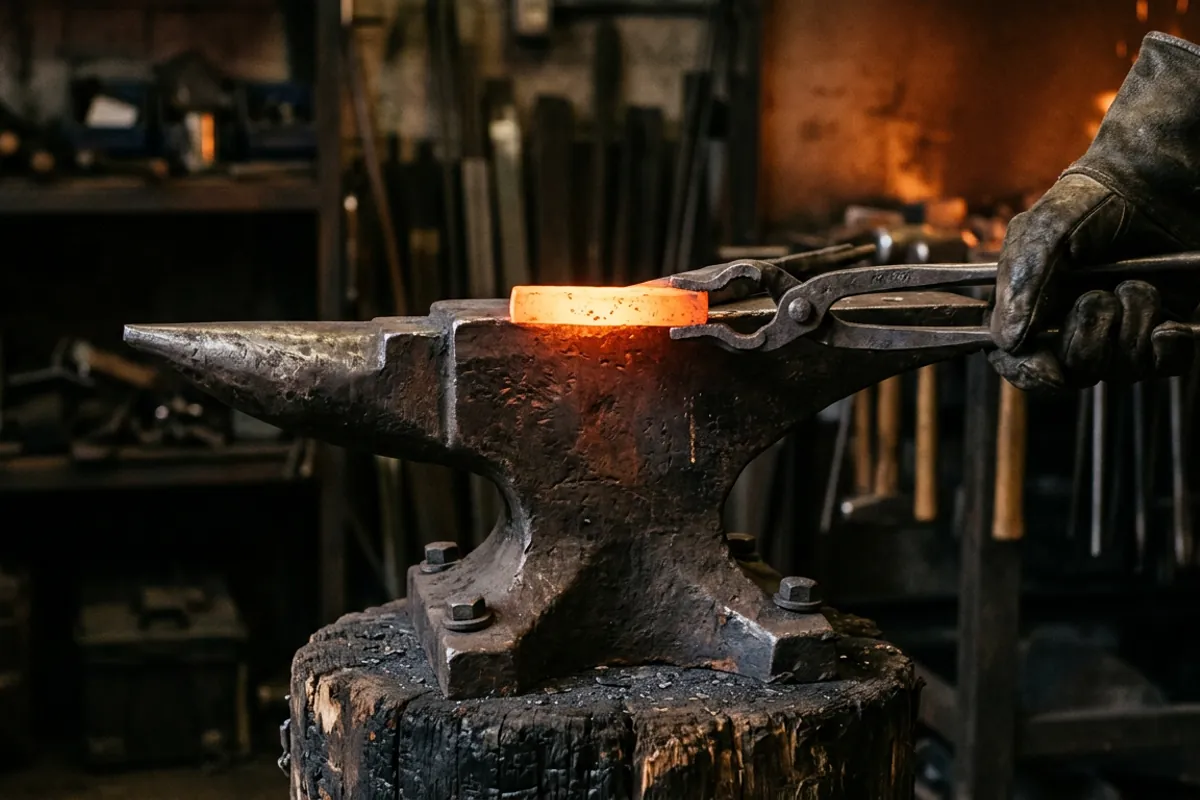
For a first anvil on a budget, a cast single horn anvil in the 100 to 150 pound range is a reasonable place to start, and the VEVOR line is the one beginners ask me about most because it is cheap and easy to get.

Here is the honest read: a budget cast anvil is a budget cast anvil. The horn, the flat face, the hardy hole, and the pritchel hole are all there, and the mass is real, which is most of what a beginner needs. What you are not guaranteed is a hard, consistent face with good rebound. Some of these arrive with decent rebound; some are softer than you want and will dent under a missed blow. That is the gamble at this price. If you can find a good used American anvil, a Trenton, a Hay Budden, a Peter Wright, in the same weight for similar money, I would take the old iron every time, and I explain how to judge one without buying a paperweight in the anvil buying guide. But if the used market near you is dry, a 132 pound cast anvil will let you learn, and mass covers a lot of sins. Buy weight before you buy brand: a heavier mediocre anvil beats a light good one for a beginner, because the mass under the hammer is what does the work.
One thing I will not soften: bolt or strap that anvil down to a solid stand or stump before you swing at it. A tipping anvil is a broken foot waiting to happen.
The hammer: the tool in your hand
You will spend more hours holding the hammer than any other piece of forging equipment, so it needs to fit your hand and your arm, not your ego. The single most common beginner mistake is buying too heavy. A 3 or 4 pound hammer looks serious and will wreck your elbow inside a month. For most adults starting out, a hammer in the 2 to 2.5 pound range is the right first weight. You want to forge for an hour and still have a joint that works tomorrow.
The Picard 1000g Swedish pattern cross pein is a hammer I am comfortable pointing beginners to. It is a forged alloy steel head at 1000 grams, which is about 2.2 pounds, on an ash handle, from a German maker that has been making hammers a very long time. The cross pein is the pattern I would learn on, because the pein lets you draw steel out in a controlled direction, which is half of what forging is.
Check price on Amazon (paid link)
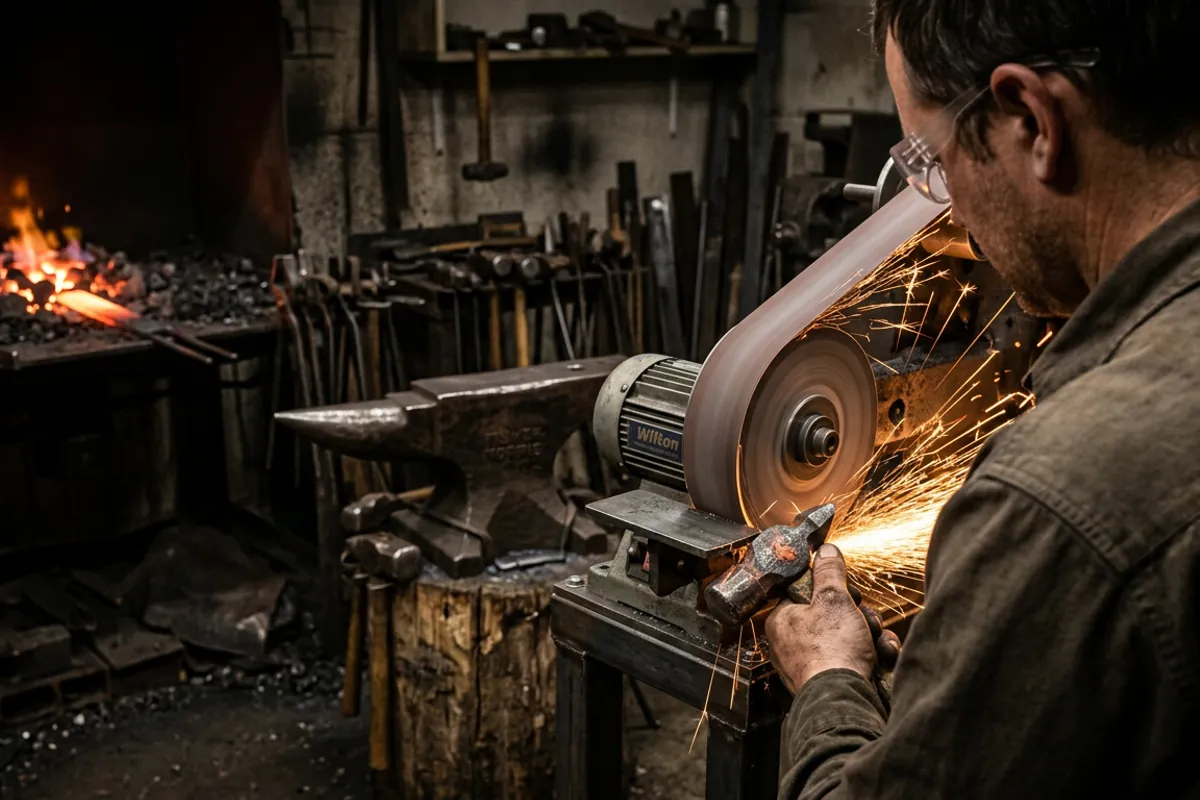
Whatever hammer you buy, dress the face. New hammers often ship with sharp edges at the face that will leave marks in your work. A few minutes on the grinder to put a gentle radius on the edges, then a polish, and the hammer leaves a clean surface instead of little half moons you have to file out later. Wear eye protection rated to ANSI Z87.1 at the grinder; a flung shard of hammer face at a wheel is exactly the kind of thing that finds an eye. If you want the full argument on hammer weight and pattern, I wrote it up in the blacksmith hammer guide.
The tongs: how you hold hot steel without getting hurt
Tongs are the piece beginners try to skip, and it is the wrong corner to cut. Bad tongs that do not grip mean the hot steel rotates or slips, and hot steel that slips is how you get burned or drop a glowing bar on your boot. Good tongs disappear; you stop thinking about them and think about the work.
For a first pair, a wolf jaw tong is the most versatile single tong you can own. The three point grip holds round, square, and flat stock, which means one pair covers most of what a beginner forges. The 16 inch wolf jaw tongs on the marketplace are cheap and functional, and for learning they are enough.
Check price on Amazon (paid link)
The honest caveat on cheap import tongs: they often need fitting. Straight out of the box the jaws may not close square on your stock, and they can be a little soft. That is normal at this price and it is fixable. You heat the reins and jaws and adjust them to grip the size of bar you actually forge, which is a good early skill to learn anyway. Do not expect a cheap tong to grip perfectly on arrival; expect to tune it. If you would rather understand the tong types before you buy, I broke them down in the tongs buying guide.
One pair is a start. You will end up with several, each fitted to a common stock size, because a tong fitted to the exact bar you are holding grips like nothing else. That is a later problem. For now, one wolf jaw covers the ground.
What owners say
For the gear here I have not personally run down every model, so this is owner consensus from the forums, checked against shop experience, not a bench test.
On beginner anvils, the recurring theme at I Forge Iron is exactly the point above: you do not need a pretty London pattern anvil to start, and mass matters more than shape early on. The community's own beginner buyers guide makes the case that a heavy chunk of steel with a usable face will teach you fine, and that people chase brand names before they have the skill to feel the difference (I Forge Iron, Anvils: a beginner buyers guide). On the cheap cast anvils specifically, the consensus is split and honest: some owners report perfectly usable rebound, others report soft faces that dent, which matches the gamble I described. The signal is real but variable, so treat any single cast anvil as a maybe until you test its rebound with a ball bearing.
On first tools generally, the advice threads keep landing in the same place: buy the anvil and forge well, and do not overspend on hammers and tongs you will replace as your hands learn what they like (I Forge Iron, advice on beginner tools and techniques). On the NC Tool gas forges, owner signal is strong and positive over many years; the common complaint is not reliability but chamber size, the same tradeoff the specs make obvious. On the import wolf jaw tongs, the consensus is what you would guess for the price: functional, often needing to be fitted before they grip well. That honesty is the point. Cheap tools that need tuning are fine for learning as long as you know that going in.
The safety gear that is not optional
I will not close a forging equipment guide without this, because it is the part that got personal for me. Early on I quenched a blade in oil that was too cold, standing too close in a cotton shirt with no face shield. The oil flared and took my eyebrows, and I kept my eyesight by luck. So this is not a formality.
Eye protection rated ANSI Z87.1 goes on before the forge lights and stays on. Natural fibers only near heat, cotton, wool, leather; a synthetic shirt will melt into you instead of brushing off a spark. Leather gloves for handling, but on the hammer hand many smiths prefer bare or a thin glove for control, since a heavy glove on the hammer costs you feel and a dropped hammer is its own hazard. Ventilate the space, always, propane and coal both. And keep the shop floor clear of anything that will trip you while you are carrying glowing steel. None of that is expensive, and none of it is optional. I go deeper on what actually matters in the safety gear guide, and I mean every word of it.
What I would tell a friend
If a friend called and asked what to buy, here is the short version. Buy a real gas forge with a known burner; the NC Tool Whisper Deluxe is the safe pick and the chamber size is its only real limit. Buy the heaviest anvil with a decent face you can afford, old American iron if you can find it, a 132 pound cast anvil like the VEVOR if the used market near you is dry, and bolt it down. Buy a 2 to 2.5 pound cross pein hammer and dress the face before you use it. Buy one wolf jaw tong and plan to fit it. Then stop buying and start forging, because the next thing you actually need will announce itself in the work, and the money you did not spend on a power hammer you cannot yet use is money in your pocket.
The one thing I would not compromise on is the safety gear. Everything else on this list you can start cheap and upgrade as your hands learn. Your eyes and your skin you only get one set of. Put the glasses on, wear the cotton, ventilate the space, and go make something. For the wider map of what a shop grows into over time, the More from the shop hub collects the rest of it.