Almost every new smith who comes through my shop wants to forge a railroad spike before they can pull a clean taper. Blacksmithing railroad spikes is close to a rite of passage: the steel is cheap or free, the bar already has a shape you can build on, and that fat stamped head looks like the start of a knife or a hook before you have touched it. I started on a cut length of railroad track myself, so I have a soft spot for anybody learning on cast-off rail steel. But there is a lot of nonsense written about what a spike is and what it can become, and some of it will get you hurt or leave you disappointed. Here is the honest version, from the forge floor.
What a railroad spike actually is
A railroad spike, the cut spike you pull out of a tie, is a forged steel fastener with a chisel point on one end and an offset head on the other. It is not a specialty steel and it was never meant to be one. Its whole job is to hold rail to tie and take a beating for decades without snapping. That job wants toughness, not hardness, and the steel reflects that.
In North America most spikes are made to AREMA specifications, and they come in two grades: a soft, low carbon grade and a high carbon grade. The difference matters more than anything else about the spike, and I will come back to it. Physically they run about 5/8 inch square in the shank and roughly 6 inches long, though you will find longer and shorter ones. The head is offset to one side, which is what lets it hook over the base of the rail.
The reason the shape is so appealing to a beginner is exactly the reason it is limited. The head gives you a built-in handle or pommel and a stopping point when you draw the shank out. But the mass is small, the section is thin, and once you have used up the shank you are done. A spike is a small project by definition, and that is fine as long as you know it going in.
Reading the head: what HC means
Look at the top of the head. A lot of spikes carry raised letters or numbers cast or stamped into them. Most of that is the manufacturer's mark and heat identification, and it tells you nothing useful about forging. The two letters you care about are HC. An HC stamp means high carbon, and that is the grade you want if you plan to harden the piece at all.
Here is the number that matters, and it is a real, published one: under the AREMA spec the high carbon grade carries a minimum of 0.30 percent carbon. The soft grade is lower still, usually well under 0.20 percent. Keep that in perspective. A plain carbon knife steel like 1084 sits up around 0.80 percent carbon. So even a stamped HC spike is a low carbon steel by knife standards, closer to a mild bar than to anything you would build a working blade from.
Not every high carbon spike is stamped, and not every stamp is legible after years in the weather. If a spike is unmarked, treat it as the soft grade until it proves otherwise. You can get a rough read by heating a scrap end to non-magnetic, quenching it, and testing the spot with a file: if the file bites easily it did not harden, if it skates you have some carbon to work with. That is a shop test, not a lab result, but it will keep you from expecting a razor out of mild steel.
Where to get spikes without stealing them
I have to be blunt here because people get this wrong and it is a genuine crime. Railroad spikes in the track are railroad property, and the track and its right of way are private land. Pulling spikes from a live line, or even walking the ballast to pick up loose ones, is theft and trespassing on railroad property, and it is treated seriously. Beyond the legal side, an active line is one of the more dangerous places you can stand. It is not worth it.
The good news is you never have to. Spikes turn up constantly through legitimate channels. Salvage yards and scrap dealers sell them by the bucket. Flea markets and farm auctions have them. Plenty of online sellers ship used and new spikes cheap, and a new bag of HC spikes costs very little. If you know somebody doing legitimate track work on their own property or a museum line, they may have a pile of pulled spikes headed for scrap. Buy them, do not lift them. The whole point of learning on spikes is that they are cheap, and cheap and legal is the same price.
What spikes are good for, and what they are not
A spike is a fantastic teaching bar. Drawing out the shank teaches you to move metal and control a taper. The head gives beginners a handle they can hold in tongs, and it forces you to think about where the steel is thickest. For the kind of small projects that actually build hammer control, it is hard to beat for the price.
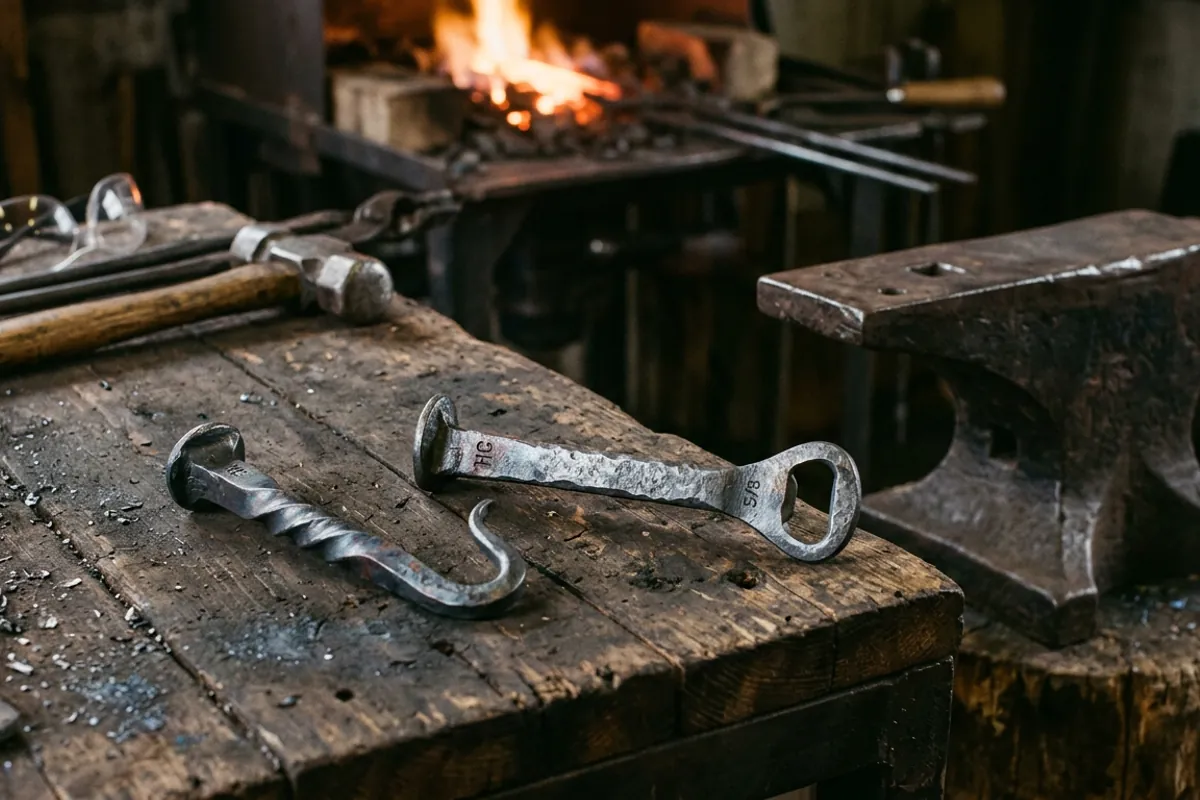
The honest list of good spike projects is short and useful: hooks of every kind, bottle openers, letter openers, small pokers, key racks, coat hooks, steak turners, and the ever popular decorative knife. Twisted spikes make handsome hooks because the head becomes the mounting foot. A spike bottle opener is one of the first things I hand a weekend beginner, because it teaches drawing, bending, and a punched or drifted hole in one small piece. If you want to walk through beginner-scale work like this, I have a whole rundown in my beginner blacksmith projects guide.
What a spike is not: it is not knife steel that will hold a working edge, and it is not tool steel. Do not forge a spike into a punch, a chisel, a drift, or anything else that has to stay hard under load. It will mushroom and fold on you. And do not sell somebody a spike knife as a using knife without telling them the truth about it. I cover that specific project, edge and all, in the railroad spike knife writeup.
The metallurgy, straight
This is where most spike advice goes off the rails, so let me keep it plain. Hardening depends on carbon. Below roughly 0.30 percent carbon there is not enough in the steel to form much hard martensite no matter how you quench it. That is exactly why the soft grade of spike will not harden in any useful way. You can heat it to non-magnetic, quench it in water, and it will come out about as soft as it went in.
An HC spike, sitting at that 0.30 percent minimum, will harden a little. The common report from smiths who have actually put quenched spikes to a Rockwell tester is that a good HC spike lands somewhere in the low 40s HRC at best. For comparison, a decent file is up over 60 HRC, and a working knife edge wants the mid 50s and up. So a hardened spike edge is real but soft: it will take an edge, it just will not keep it through much cutting.
If you want to actually chase hardness numbers and understand why carbon does what it does, the best plain-language source I know is Knife Steel Nerds, which does real, tested metallurgy rather than shop lore. I send people there constantly. For the bigger picture on what quenching and tempering are even doing to the steel, I wrote up the basics in heat treatment of metals. The short version for spikes: manage your expectations before you quench, not after.
How I forge a spike
Start by getting the spike to a good forging heat, an even bright orange to yellow, not a dull red. The soft steel moves easily under the hammer, which is part of the appeal, but it also means you can keep working it cold if you rush, and cold work near the low end of the range is how you tear a taper. Keep it hot and work the whole heat.
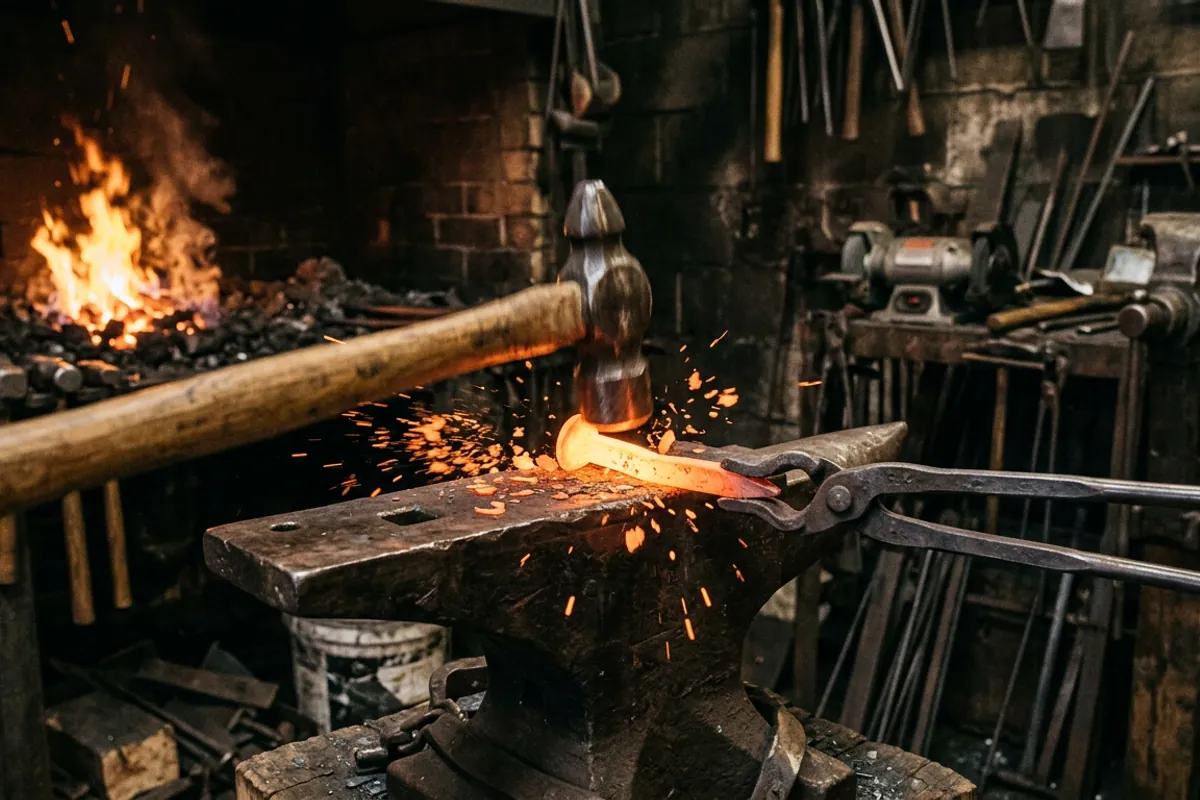
For most projects the plan is the same: keep the head as a feature and draw the shank into whatever you need. If I am making a hook I draw a taper on the point, refine it, then bend the curve and set the head back as the mounting foot. For a bottle opener I flatten a section of shank, punch or drift the opening while it is hot, and dress the edges. For the decorative knife you draw and spread the shank into a blade, keep the head as the pommel, and you accept that the edge is soft.
Hold the work in real tongs sized to the stock. A spike shank is small and it will kick out of a loose grip and across the shop, still hot. If your tongs do not fit spike stock well, that is a solvable problem, and I went through the sizing in the railroad spike tongs guide. Work on a solid anvil face. You do not need a big anvil for spike work, but you do need one that rings the blow back rather than eating it.
Heat treating a spike honestly
If you are working a soft grade spike, skip the heat treat entirely. There is no hardening to be had, so wire brush it, wax or oil it for a finish, and call it done. Trying to quench mild steel just wastes heat and risks a crack for nothing.
For an HC spike you can do a simple quench, and here is where people get hurt, so pay attention. Heat the piece evenly to non-magnetic, meaning the point where a magnet stops sticking to it, then quench. Warm oil is the forgiving choice; water and brine harden a little deeper but are far more likely to crack a thin section, and on a marginal steel like this the extra hardness is not worth the risk. Whatever you quench in, do it outdoors or well ventilated, keep your face and arms out of the plume, wear a face shield and natural fibers, and never lean over the tank. I took my eyebrows off early on by standing too close to an oil quench in a cotton shirt with no shield, and I kept my eyesight by luck, not by being careful. Do not repeat that.
After quenching, temper the piece in a kitchen oven at around 400 degrees Fahrenheit to take the brittleness off. On a spike the temper mostly buys you toughness, since you did not have much hardness to give away in the first place.
The tools and safety for spike work
You do not need much to start blacksmithing railroad spikes, which is the whole point. A forge that can bring 5/8 inch stock to an even orange, a solid anvil, a hammer you can swing all session without wearing out, and tongs that actually fit the spike shank. That is the core of it. Because the stock is small, spikes are one of the few projects you can genuinely do in a modest propane forge or a small coal fire without fighting the setup.
The safety list is not optional and does not shrink because the project is small. Eye protection rated to ANSI Z87.1, every heat, no exceptions, because scale flies and a spike shank can whip out of the tongs. Natural fiber clothing, cotton or wool or leather, never synthetics that melt to skin near heat. Hearing protection if you are running a power hammer or a loud forge. Good ventilation, especially over any quench. And a real respect for hot steel that looks cold: a spike stays hot enough to brand you long after it stops glowing.
If you are just getting going and want the wider picture of how these first projects fit together, I laid it out in blacksmithing for beginners. Spikes are a great place to start and a poor place to stay. Learn your hammer on them, then move up to steel that can actually become a tool. For more odds and ends from the shop, the More from the shop hub collects the rest.