I have everything I need: three ASINs verified live in search with matching names (WEN 6515T B07KL4BQF5, WEN 6502T B07KL4QGSQ, HayWHNKN 2x72 B097SS89LW), published specs from a non-marketplace source (wenproducts.com), and real BladeForums threads plus a maker blog for owner consensus. The only legal VEVOR refs are anvils, which have no place in a grinder guide, so I won't force one in. Writing the article now.
If you want the short version, the knife making grinder that actually earns its keep in a home shop is a 2x72 belt grinder, and everything else on this page is either a cheaper way to get onto one or a way to find out whether you like the work before you spend real money. I have run a home forge for about twenty-five years, and while I am a blacksmith first and only make knives when the mood takes me, I have spent enough hours at a grinder to know what separates a machine that helps from one that fights you. I want to be straight up front: I have not run every one of these machines down in my own shop. These picks lean on published specs and what owners report on the forums, weighed against general shop experience. When I am telling you what owners say rather than what I have felt through my own hands, I will say so.
A grinder is the one tool where knife people and blacksmiths part ways. You can forge a blade to shape and finish it with files, and plenty of good knives were made exactly that way. But if you want to make more than two or three blades before your arm gives out, a powered belt grinder is what turns bladesmithing from a test of patience into actual work. The trick is not overspending on your first one, and not underspending so badly that you throw money at a machine you outgrow in a month.
The lineup at a glance
Here is the field, from the cheapest way in to the machine you will still own in twenty years. Only the published numbers are here. Where a maker does not state a figure, I have said so rather than guess.
Scroll horizontally to see all columns.
| Grinder | Belt / disc | Motor | Speed | Best use | Tier |
|---|---|---|---|---|---|
| WEN 6515T | 1 x 30 in belt, 5 in disc | 2.3 A | belt up to 3160 FPM, disc 3450 RPM | sharpening, small blades, testing the hobby | Budget |
| WEN 6502T | 4 x 36 in belt, 6 in disc | 4.3 A, 1/2 HP | disc up to 3600 RPM (belt FPM not published) | handle work, flat sanding, light grinding | Budget |
| Import 2x72 (HayWHNKN class) | 2 x 72 in belt | ~2 HP, variable speed (maker advertised) | variable | real blade grinding on a budget | Mid |
| KMG or TW-90 class 2x72 | 2 x 72 in belt | 1.5 to 2 HP, variable speed | variable | lifetime shop grinder | Premium |
The WEN figures come straight off WEN's own product pages for the 6515T and the 6502T. The two 2x72 rows are category typical: a 2 x 72 inch belt is a fixed standard, but the import motor and speed figures are what the sellers advertise, not numbers I have verified on a meter, so treat them as claims. If you want the full walk through the standard machine, I go deeper in the dedicated 2x72 belt grinder for knife making guide.
Why a 2x72 is the real answer
Ask ten knife makers what grinder to buy and nine of them will say 2x72 before you finish the sentence. There are real reasons for that, and they are not snobbery.
The first is belts. A 2 x 72 inch belt is the standard abrasive size in the United States, which means every belt company makes them in every grit and every material you could want, from coarse ceramic for hogging off stock to fine finishing belts and leather stropping belts. Walk down to a 1 x 30 or a 4 x 36 and your choices shrink fast, and the good ceramic belts get harder to find. There is a long-running BladeForums thread, What is the deal with 2x72 grinders, where the belt selection point comes up again and again from people who started small and switched.
The second is heat. A 72 inch belt has more abrasive surface passing the work, so each spot on the belt does less work and runs cooler, which matters enormously on a blade. Overheat a thin edge on a hot grinder and you ruin the temper you worked to build, and no amount of careful heat treating survives a careless minute at the belt. If you are grinding hardened steel you want the longest, coolest running belt you can get, and you want to keep a water dip right there at the machine.
The third is the tooling ecosystem. A real 2x72 takes interchangeable tooling arms, so one machine becomes a flat platen for bevels, a small wheel for finger grooves, a contact wheel for hollow grinds, and a work rest for sharpening. That is a lot of capability out of one motor. The small combo sanders cannot do any of that.
So why does anyone start smaller? Money, mostly, and honesty about whether the hobby will stick. A good 2x72 is a real purchase, and if you make three knives and decide it is not for you, that is an expensive way to find out. That is the entire case for the cheaper machines below.
The 1x30 entry point: WEN 6515T
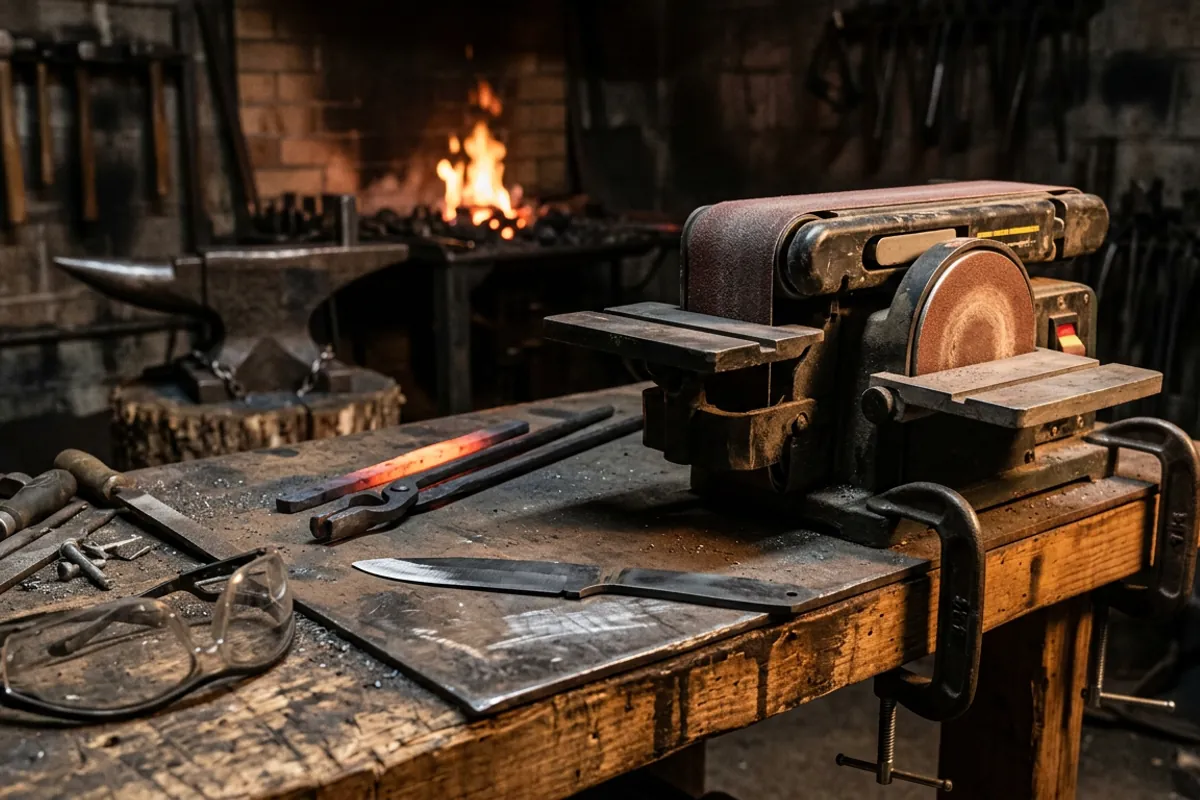
The 1 x 30 belt sander is where a lot of people meet knife making, and there is nothing wrong with that as long as you know what it is. The WEN 6515T is a benchtop belt and disc sander with a 1 x 30 inch belt and a 5 inch disc, run by a small 2.3 amp motor that pushes the belt up to 3160 feet per minute and the disc at 3450 RPM, all published on WEN's page.
For sharpening, for small blades, for putting a clean bevel on a paring knife, and for finding out whether you like standing at a grinder at all, it is honestly fine. Plenty of good little kitchen knives have come off machines exactly like this. What it is not is a stock removal machine. That short belt heats up quickly, you will burn through belts grinding steel, and there is no tooling ecosystem to grow into. The consensus on the forums is blunt about this: a 1x30 is for getting started and for finish work, not for hogging bevels into thick stock.
Buy it with clear eyes. If you already suspect you are in this for the long haul, the money is better spent saving toward a 2x72. If you genuinely do not know yet, this is a low-risk way to make a few blades and decide. Check price on Amazon (paid link).
The 4x36 combo: WEN 6502T
A step up in surface area, the WEN 6502T pairs a 4 x 36 inch belt with a 6 inch disc, driven by a 4.3 amp, half horsepower motor rated to 3600 RPM, again from WEN's own listing. WEN does not publish a belt surface speed in feet per minute or a machine weight, so I will not invent either. The belt tilts from 0 to 90 degrees and it sits on a heavy cast iron base, which is genuinely useful for keeping vibration down.
Where this machine earns its place is handle work and flat finishing. That wide belt is lovely for flattening scales, shaping a handle, and cleaning up flats, and the disc is handy for squaring plunge lines and truing small parts. For grinding a full blade bevel it is a compromise, because the 4 inch wide flat belt does not hollow grind and the machine is built as a woodworking sander, not a bladesmith's grinder. It will do light blade work, but you are working against the tool.
If your bench is mostly stock removal knives with simple flat grinds and a lot of handle work, this combo does more than the 1x30 and does it more comfortably. Just do not mistake it for the real thing. Check price on Amazon (paid link). For a wider look at these bench sanders as knife tools, I laid out the tradeoffs in the knife makers belt sander buying guide and the broader belt grinder for knives buying guide.
Stepping up to a real 2x72
Here is where the honest talk gets a little uncomfortable, because there are two very different ways onto a 2x72 and they cost very different money.
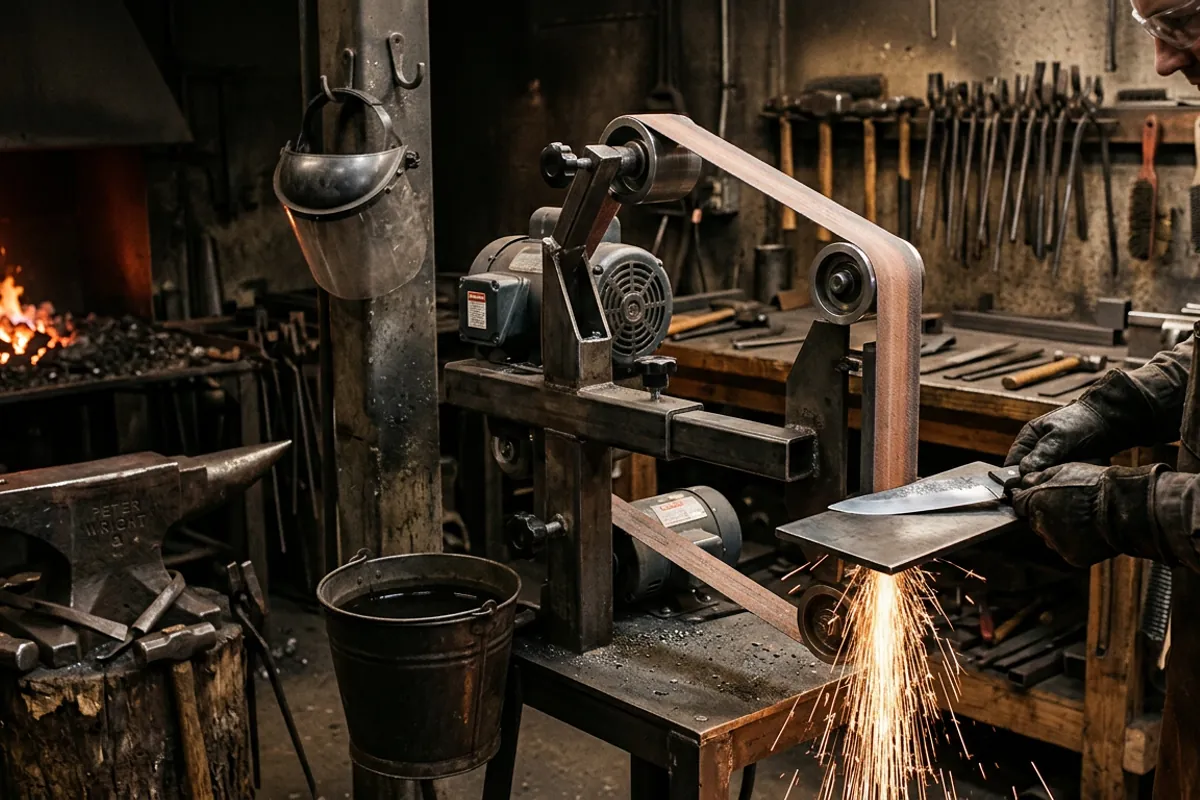
The aspirational machines are the ones you have heard of if you have watched anyone serious grind: the Beaumont KMG, the TW-90, and their peers. These are direct-sale grinders, not Amazon items, typically paired with a 1.5 to 2 horsepower motor and a variable frequency drive so you can dial speed from a crawl for sharpening up to full tilt for stock removal. They cost real money, they last a working lifetime, they track true, and their tooling arms open the whole ecosystem I described earlier. If you already know you are committed, buying one of these once is cheaper than buying a cheap grinder twice.
The budget route is an import 2x72 like the HayWHNKN, sold as a knife making belt grinder with three grinding wheels and a variable speed drive. On paper it gives you the standard belt size and variable speed for a fraction of a KMG. In practice, the forums are consistent about the tradeoffs: drive wheels that do not run perfectly true make tracking fussy, and the cheaper variable frequency drives are the weak point, sitting right next to a machine that throws conductive grinding dust straight into their vents. There is good detail on both problems in a BladeForums newbie 2x72 thread and in this maker writeup on 2x72 tracking problems.
My honest read: an import 2x72 is a real 2x72 with real belts and a real belt length, which already puts it ahead of any 1x30 for actual knife work, and if the budget only reaches this far it is a legitimate way in. Just go in knowing you may end up fiddling with tracking, and you may replace the drive before you replace anything else. Mount the drive away from the dust if you can. Check price on Amazon (paid link).
What owners say
None of these are machines I have run down in my own shop, so this section is owner consensus, attributed, not a personal bench test.
On the 1x30, the BladeForums thread 1x30 Sander for Getting Started reads exactly how you would expect: people make real knives on them, they chew through belts on steel, and the near-universal advice is to buy good belts from a knife supplier rather than the hardware store abrasives, and to treat the machine as a starter and a finisher rather than a grinder you keep forever. That matches what I would tell anyone.
On the 4x36 combo sanders, the common line is that they shine for handles and flats and disappoint anyone expecting to grind hollow or full bevels on them. Owners like the cast iron heft and the wide belt for finishing, and they move to a 2x72 the moment blade grinding becomes the main event.
On import 2x72 machines, the signal is real but mixed, and I would call it honestly thin on any single model because the sellers and names change often. The recurring complaints across the 2x72 threads are tracking and drive electronics, not the fundamental belt format, which everyone agrees is the right one. Nobody who buys an import 2x72 wishes they had bought a smaller belt. Some wish they had saved for a KMG. That is the trade in one sentence.
Safety at the grinder
I lost my eyebrows early on to a quench oil flare because I stood too close in a cotton shirt with no face shield, and that is exactly why I will not soften this part. A belt grinder is a fast machine throwing hot steel particles and abrasive grit straight at your face, and it deserves respect.
Eye protection is not optional. Wear glasses or a face shield rated to ANSI Z87.1, and for grinding I want a full face shield over Z87 glasses, not glasses alone. Sparks and grit come off a grinder in a cone aimed right at head height.
Then there is your lungs, which people forget. Grinding steel makes fine metallic dust, and grinding handle materials like stabilized wood, micarta, and G10 makes dust you very much do not want to breathe. Run dust collection if you have it, work in air you can keep moving, and wear a proper respirator, not a paper nuisance mask, when you are grinding handle stock.
One more that catches beginners: most knife makers grind with bare hands on the blade, on purpose. A glove can catch the belt or a wheel and pull your hand into the machine before you can react. If you wear a glove, know that snag risk is real and keep loose material and long sleeves away from the belt. Tie back anything that dangles.
And mind the heat. A blade heats up fast against the belt, and if you are grinding a hardened or heat treated blade, a few careless seconds can pull the temper right back out of the edge. Keep a water dip at the machine and cool the blade often, especially near the thin edge. All the care you put into your quench and temper, the kind of care I write about in the stainless heat treat guide, can be undone at the grinder if you let the steel get hot.
What I would tell a friend
If a friend asked me what knife making grinder to buy, my answer depends entirely on one question: do you already know you are staying?
If yes, skip the small machines and buy a 2x72. Stretch for a quality direct-sale grinder if you can, because buying it once beats buying a cheap one and replacing it. If the budget will not reach a KMG or TW-90, an import 2x72 is a legitimate way onto the right belt format, as long as you go in expecting to fuss with tracking and maybe the drive.
If you do not know yet, the WEN 6515T 1x30 is a low-risk way to make a few blades and find out, and the 4x36 6502T is the better call if you also do a lot of handle work. Just do not sink the price of a real 2x72 into stacking up small machines. That is the classic beginner trap, and I have watched people spend more on three compromises than one good grinder would have cost.
Whichever you buy, spend real money on belts and real money on your eyes and lungs before you spend it on anything else. For where a grinder fits in the bigger picture of building blades, start at the knife making topic hub and the knife making explained walkthrough, and if you are still deciding on steel, the steel selector tool will save you a bad first purchase.