The hardening of stainless steel is where a lot of new knife makers get humbled, and it is worth understanding before you buy a bar of 440C or AEB-L and expect it to behave like the plain carbon steel you learned on. Stainless does not forgive a sloppy quench the way 1084 does, and half the grades sold as "stainless" will not harden by heat treatment at all. I have run a forge for about twenty-five years, most of it on carbon steel, and I will tell you up front that I send my stainless out to be hardened rather than pretend a coal fire can hold the temperature it needs. This is a reference piece, owner to owner, on what actually happens when you harden stainless, which grades will do it, and why the process is fussier than the carbon steel most of us start with. For deeper metallurgy I point you to Knife Steel Nerds by name, because the numbers there come from real testing, not from a smith guessing at a forge.
What "stainless" actually means for hardening
Stainless is not one metal. The word only tells you the steel has enough chromium, usually taken as at least about 10.5 percent, to build a passive chromium oxide layer that resists rust. That chromium is exactly what makes hardening complicated. In plain carbon steel, hardening is a fairly simple story: heat past the point where the structure turns to austenite, hold long enough for the carbon to go into solution, then cool fast enough to trap it as hard martensite. Chromium changes the whole timetable. It ties up carbon in stubborn carbides, it slows the transformation so the steel can be cooled more gently, and it drives the finish of that transformation well below room temperature in the higher alloys.
So the first thing to understand is that "hardening of stainless steel" is really several different processes depending on which family of stainless you have in your hand. Treat all stainless as one thing and you will ruin good bar stock. If you want the fuller picture of the science that sits under every heat treat, the hub at Steel and metallurgy is where I gather the reference pieces.
The families of stainless, and which ones will harden
There are five broad families, and only some of them respond to a hardening heat treatment.
Austenitic stainless is the 300 series most people picture: 304 on your kitchen sink, 316 on marine hardware. It has high chromium and nickel, it is usually non-magnetic, and here is the part that trips people up: you cannot harden it by heat treatment. There is no quench that turns 304 hard. It only gains strength by cold work, by being rolled or hammered or drawn, which is a different mechanism entirely. Try to heat treat a 304 blade and you will get a bendy, useless knife.
Ferritic stainless, like 430, is also essentially a non-hardening grade. It has chromium but low carbon, and it stays soft through any normal heat treat. It is a sheet and trim steel, not a blade steel.
Martensitic stainless is the family that matters to a bladesmith. This is 410, 416, 420, the 440 series (440A, 440B, 440C), and the modern purpose-built knife steels such as AEB-L, 12C27, 14C28N, and the powder grades. These have enough carbon that, austenitized and cooled correctly, they transform to martensite and get genuinely hard. When someone talks about the hardening of stainless steel in a knife context, this is almost always the family they mean.
Precipitation hardening grades, the PH steels like 17-4 PH and 15-5 PH, harden by a different route. You solution treat them, then age them at a moderate temperature so tiny particles precipitate inside the metal and stiffen it. The common 17-4 condition called H900, for example, is aged at 900 F. These are structural and tooling steels more than blade steels.
Duplex stainless is a mixed austenitic and ferritic structure used in industry for corrosion resistance and strength, and it is not something a home shop hardens.
If you are staring at a mystery bar and it sticks hard to a magnet and sparks like it has real carbon in it, you may have a martensitic grade. But guessing the alloy is a bad way to plan a heat treat. Buy known steel with a datasheet.
What happens inside the steel when you harden it
For a martensitic stainless, hardening follows the same three-act shape as carbon steel, but chromium rewrites each act.
First you heat the steel into the austenite range. The goal is not just to reach a temperature but to dissolve the right amount of chromium and carbon into that austenite. Get enough chromium into solution and you keep the corrosion resistance and set up the hardness. This is the whole reason austenitizing stainless is picky: too cold and the carbides never dissolve, so you get soft steel with poor stainless behavior; too hot and you dissolve too much, coarsen the grain, and leave a slug of soft retained austenite behind.
Second you cool it fast enough to trap that carbon as martensite. Because chromium slows the transformation, many stainless grades will harden in still or moving air, or between metal plates, rather than needing the violent oil quench a simple carbon steel wants.
Third, the as-quenched martensite is hard but brittle and full of internal stress, so you temper it to trade a little hardness for toughness. With stainless there is an extra wrinkle in tempering that carbon steel does not have, and I will come to it. The general logic of quench-and-temper is the same one I lay out in How to temper steel by heating and cooling, explained plainly and in Tempering of metal, explained from the forge floor; stainless just runs it on a tighter margin.
Austenitizing: heat, soak, and why the forge fights you
Here is where the home shop hits its wall. Martensitic stainless austenitizes somewhere in the neighborhood of 1850 to 2050 F depending on the exact alloy, and the number that matters is the one on the steel maker's datasheet, not a range you split the difference on. Ten or twenty degrees, and the minutes you hold at that temperature, change the final hardness and the corrosion resistance. That is a soak you control with a thermocouple and a PID-controlled electric oven, not something you judge by color in a fire.
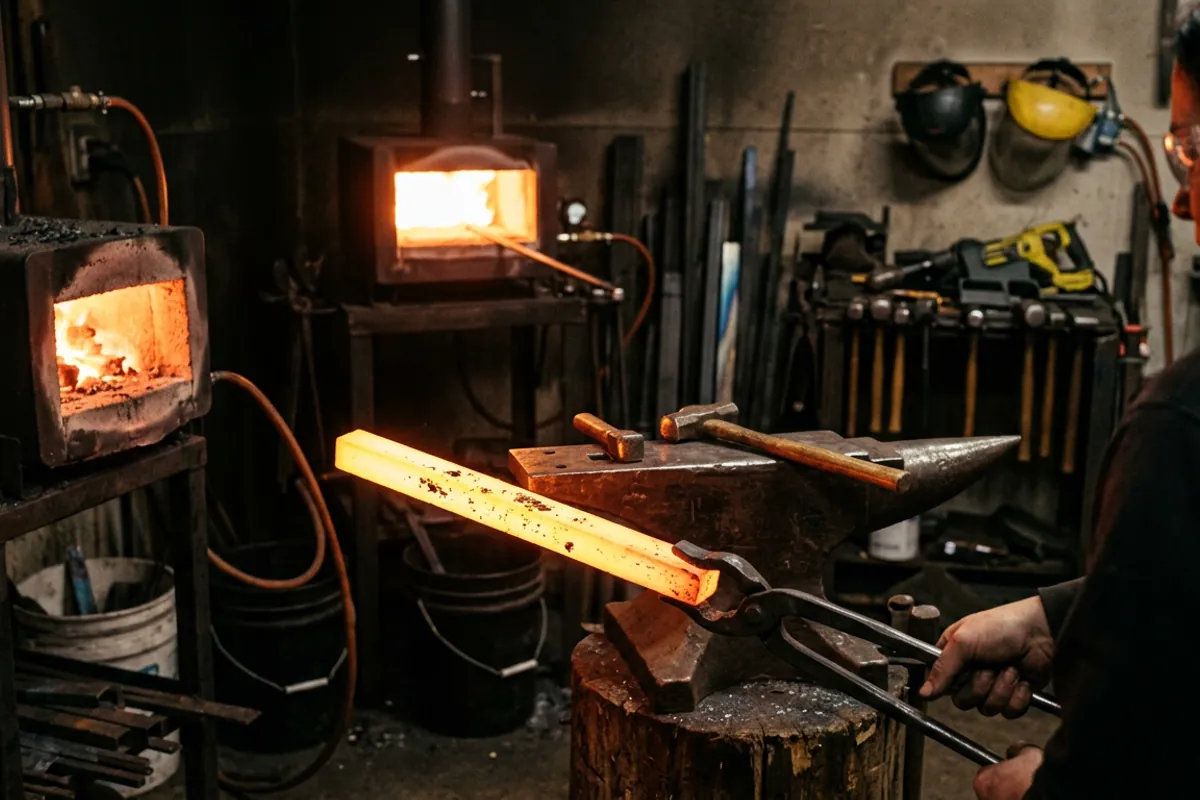
A forge fights you three ways. It cannot hold a steady, known temperature the way stainless needs. Its atmosphere scales and decarburizes the surface, stripping carbon and chromium from exactly the skin you were trying to harden. And it heats unevenly, so a thick blade never sees one clean temperature end to end. This is why serious stainless work is done in a heat treat oven with the blade sealed in stainless tool-wrap foil, which shields the surface from the oxygen that would otherwise ruin it. I run coal for heavy stock and forge welding and propane for most day-to-day work, and neither of my forges is the right tool for austenitizing stainless. Bessie, my anvil, will happily shape it hot, but shaping and hardening are different jobs.
The quench: plate, air, and oil
Because chromium buys you time, most stainless grades are not quenched the way you would slam a carbon blade into warm oil. The common home method is a plate quench: you pull the foil-wrapped blade from the oven and clamp it flat between two aluminum plates, sometimes with a fan or a wet rag on the plates to pull heat faster. The plates suck heat out evenly and, as a bonus, hold the blade flat so it does not warp. Some stainless is genuinely air hardening and only needs still or forced air. A few thinner or lower alloy grades still take an oil quench, but always the fast oil and the timing the datasheet calls for.
Two hazards live here. First, a violent quench on an air hardening steel invites cracking, because you are shocking a steel that did not need the shock. Second, keeping the foil packet closed too long past temperature drops you into a slow cool that misses full hardness. Whatever the method, follow the alloy's instructions rather than the habits you built on carbon steel. The instinct that served you quenching 1084 will steer you wrong on stainless.
Cold treatment and why retained austenite matters
This is the step people skip and then wonder why their stainless blade is a little soft or moves over time. In the higher alloy stainless steels, the temperature at which martensite formation finishes sits below room temperature. So when your quench stops at room temperature, the transformation is not done. You are left with a fraction of soft, unstable retained austenite mixed into the martensite. That retained austenite costs you hardness now, and worse, it can slowly convert later, changing the blade's dimensions and stress after it is finished.
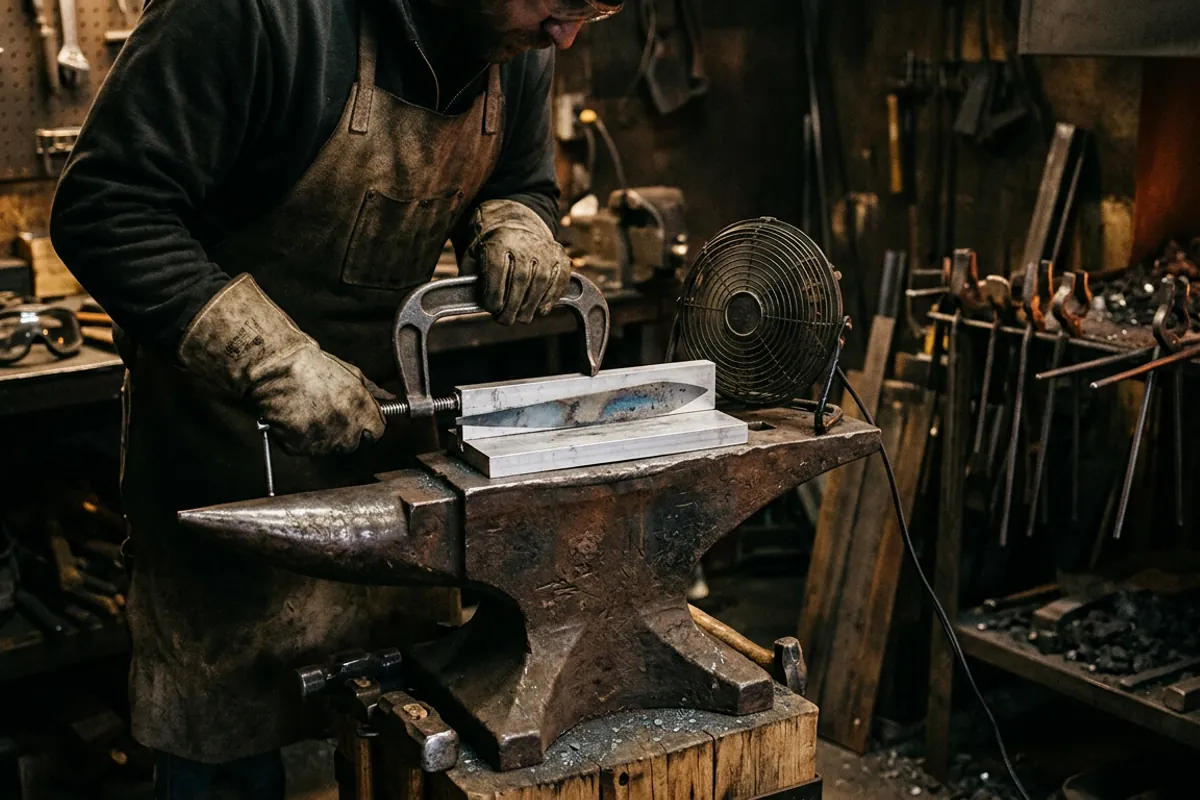
The fix is a cold treatment, done promptly after the quench and before tempering. A dry ice and solvent slurry gets you down around 100 degrees below zero Fahrenheit, and liquid nitrogen goes to roughly 320 below. Driving the steel that cold pushes the martensite transformation closer to complete and knocks back the retained austenite. Not every grade needs it, but many stainless knife steels benefit meaningfully, and the datasheet will tell you. It is one more reason stainless is a controlled-process steel rather than a forge-and-eyeball steel. I go through the practical side of this for blades in How I heat treat 4140, from the forge floor by contrast, where a plain alloy steel needs none of this cryo fuss.
Tempering, and the range you do not want to sit in
Once hardened and cold treated, stainless gets tempered like any hardened steel, to pull out brittleness. For most stainless knife blades that is a low temper, commonly in the low hundreds of degrees Fahrenheit, chosen to keep both hardness and corrosion resistance high. The datasheet gives you the temperature and hold for the hardness you want.
The trap unique to stainless is the middle tempering range. Roughly between about 800 and 1100 F, depending on the grade, many stainless steels precipitate chromium carbides along the grain boundaries. That pulls chromium out of solution right where it was protecting against rust, so you can come out of a mid-range temper with a blade that is both more brittle and less stainless than when you started. It is called sensitization, and it is why you do not just pick a tempering temperature by feel on stainless. Stay low, or follow the specific two-step high temper some tool-grade stainless calls for, but do not wander into the trough in between. The general owner-level walkthrough lives in How to heat treat stainless, honestly, from a home shop and in Heat treating stainless steel, explained from the forge floor, and both land on the same point I make here.
Why I send most stainless out of my shop
I will be plain about my own practice, because the persona of this site is honesty over bravado. I do not harden stainless in my forges. To do it right you need a temperature-controlled oven, foil wrap, a plate quench setup, a cold treatment, and a tempering schedule matched to the exact alloy. That is real equipment and real discipline, and for the handful of stainless blades I make, it is cheaper and more reliable to send them to a heat treat oven or a commercial service that runs the alloy every week. I lay out the case for that in What commercial steel heat treating actually does for a smith. None of this is a knock on stainless. It is a knock on the idea that you can treat stainless like carbon steel and get away with it.
If you are set on doing it yourself, buy known steel with a published datasheet, get an oven you can trust, and read the alloy's numbers as gospel rather than guidance. And send the deep questions, the ones about exact austenitizing curves and retained austenite fractions, to real testing sources like Knife Steel Nerds. A smith at a forge, me included, is the wrong authority for a number that a lab measured. Understand the process, respect where your equipment ends, and you will stop ruining good bar stock. The related reference on annealing steel and the broader Heat treatment of metals, explained from the forge floor round out the picture if you want the full arc from soft bar to finished, hardened edge.