Pattern welded steel is two or more steels forge welded into a single billet, drawn out, cut, restacked, and welded again until the layer count multiplies, then etched at the end so the boundary between the steels reads as a pattern. That is the whole material description in one sentence. What people actually want to know, standing in front of a knife with a price tag on it, is whether that process makes it better steel than the plain bar it started from. It is the question under every damascus listing, usually by somebody who has already decided the answer is yes.
The honest answer has two halves that point in opposite directions, and both halves come from real testing rather than from shop lore. I am going to give you both, because handing you only one half is how this topic gets misrepresented, and it gets misrepresented in both directions. If you want the broader steel material around this, the Steel and metallurgy hub collects it.
What pattern welded steel actually is
Take two steels that will weld to each other and heat treat compatibly. Stack them alternating, bring the stack to welding heat, and set the welds with a hammer or a press. Draw the billet out to twice its length, cut it in half, stack it again, weld again. Every cycle doubles the layers. Do that a handful of times and you are into the hundreds of layers. Manipulate the surface before you grind it flat, with a ladder press, a twist, drilled dimples, and the layers stop running straight and start making a picture.
The picture itself comes out of the etch, not out of the forging. A ferric chloride etch bites the iron rich carbon steel harder than it bites the nickel bearing layer, so the two steels end up sitting at different depths and reflecting light differently. I wrote that out properly in what 15N20 steel actually is, along with the carbon migration correction that goes with it, so I am not going to run it again here.
The history is likewise already covered. Pattern welding predates the ability to make big, clean, uniform steel, and it was solving problems we no longer have. That story, plus the fold count arithmetic and the sword myths worth killing, lives in what a medieval blacksmith actually did all day. Worth noting once: the word damascus in modern shop use means pattern welded, and historical Damascus steel meant wootz, a crucible steel that has nothing to do with stacking layers. Two different materials wearing one name.
The question worth asking is whether it is better steel
Almost everything written about pattern welded steel answers the question "what is it." That question is easy and it is answered in three places on this site already. The question that actually decides whether you should pay for it is "does it perform better than the steels that went into it," and that one gets answered with a confident yes by people selling it and a confident no by people reacting to the people selling it.
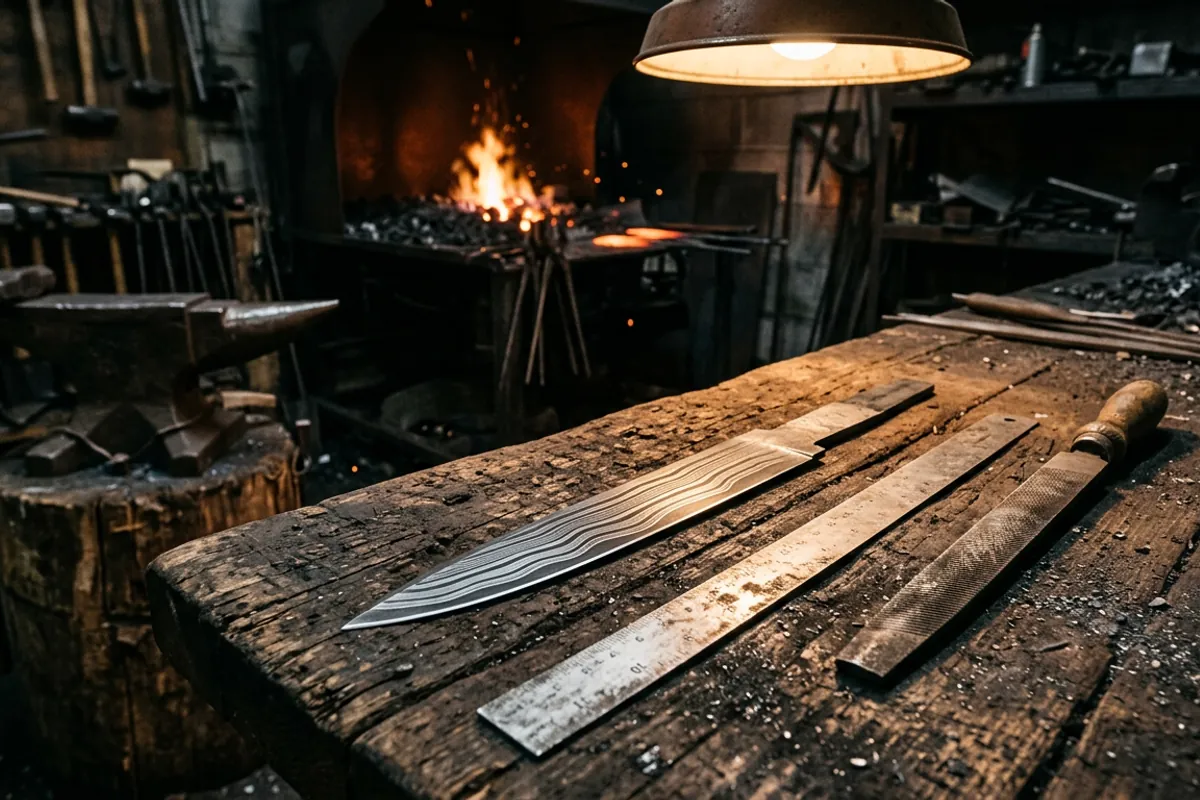
Both of those are wrong, and we know they are wrong because Knife Steel Nerds ran the testing. That work is the reason I stopped arguing this from feel. What the testing found is a tradeoff with real winners and real losers depending on which property you care about and how the billet was patterned. There is no single verdict to hand you, and anybody who hands you one either has not read the testing or is counting on you not having read it.
Two things to keep straight before the findings. First, none of this is my testing. I forge weld in my coal forge, I have made billets, and I can tell you what the process is like to run. I do not own a toughness rig or a CATRA machine and I am not going to pretend otherwise. Second, the testing measured specific steels in specific combinations, and the results are about those, not about a mystical property of layering.
What the toughness testing actually found
This is the half that deflates the marketing. In the Knife Steel Nerds toughness testing, the toughness of pattern welded steel was largely controlled by the less tough of the two steels in the mix. There was little or no improvement from including a high toughness steel. The tough steel does not carry the brittle one. The weak link governs, which is a phrase you already understand from every other part of a shop.
That is worth sitting with, because the usual sales story is exactly the opposite. The story says you get the best of both, hardness from one and toughness from the other, blended into something better than either. The measurement says the mix behaves closer to the worse performer. So do not believe that pattern welding makes steel tougher or stronger as a general property. It does not.
There is a real exception, and it is specific. High layer count damascus made with a steel that carries large carbides, 154CM in that testing, did come out with smaller carbides and improved toughness. All that forging and restacking breaks up coarse carbide structure, and in a steel that has coarse carbides to break up, that is a genuine improvement you can measure. So the rule is not "layering never helps toughness." The rule is "layering helps when it is fixing a specific structural problem in one of the constituents, and does nothing for you when it is not."
One more finding from that work, and it surprised the source itself: delamination and welding flaws in the 1084 and 15N20 test billets did not appear to affect toughness. Read that narrowly. It does not mean a bad weld is fine, and it is not permission to sell a flawed billet. A cold shut is still a crack, it is still a place a blade can come apart in use, and it is still a reason to reject a bar. What the testing says is only that in those samples, those flaws did not show up in the toughness numbers, and the source calls that somewhat surprising rather than settled.
What the edge retention testing found
Here the results run the other way, and this is the half that the "damascus is just for looks" crowd leaves out.
In CATRA slicing edge retention testing, ladder patterning, which puts layers crisscrossing the edge instead of running along it, produced better slicing edge retention than straight layers. That is a real, measured performance gain from the pattern itself, not from the steels. It also came with a cost: the same ladder patterning reduced longitudinal toughness. You buy cutting performance with toughness, in the same billet, by choosing how you manipulate the layers.
Knife Steel Nerds summarized it better than I can, so I will use their words: there is no free lunch even when it comes to the performance effects of Damascus patterning. That single line is the correct mental model for this whole topic. Every gain in the testing had a corresponding loss somewhere else.
I am not going to speculate past what was measured about why crisscrossed layers slice longer. There are mechanisms people repeat confidently on the forums, and the honest position is that the measurement is solid and the explanation is not mine to invent.
Why the constituent steels matter more than the layer count
If you want one takeaway that will save you money, it is this: the steels you put in the billet dominate the outcome, and the layer count on the label does not.
In that same testing, the mixes with higher wear resistance steels in them slid up the edge retention chart. ApexUltra in a low alloy damascus, and S90V and 20CV in stainless damascus, gave greater slicing edge retention in the CATRA test. Nothing mystical there. Put a steel with more wear resistance in the mix, get more wear resistance out. That is the same logic that makes a monosteel choice work, and it means the way to get a hard cutting pattern welded blade is to build it out of hard cutting steel, not to add layers.
It also means the heat treat has to serve both steels at once, which quietly limits which pairs make sense. You cannot run a protocol that suits one constituent and abandons the other, so the pairing is a heat treat decision as much as an aesthetic one. If you have not got the underlying process down yet, heat treating steel, explained from the forge floor is where I would start, and the steel selector will get you to a sane monosteel choice while you learn.
And this is the honest comparison nobody in a booth wants to make: a modern monosteel like the one I covered in MagnaCut steel, explained from the forge floor was designed as a whole to hit a property balance. A pattern welded billet is two steels negotiating, with the toughness set near the worse of them. If pure performance per dollar is the goal, monosteel wins that argument most days. Pattern welded steel earns its place when you want the picture and you are willing to manage the tradeoffs to get it.
Canister and powder damascus, and what is actually documented
Modern pattern welding is not limited to solid bar. Powdered steel loaded into a sealed canister, sometimes with solid pieces set in it, gets consolidated into a billet under heat and pressure. That is how a lot of the mosaic work and the powder metal mixes get made.
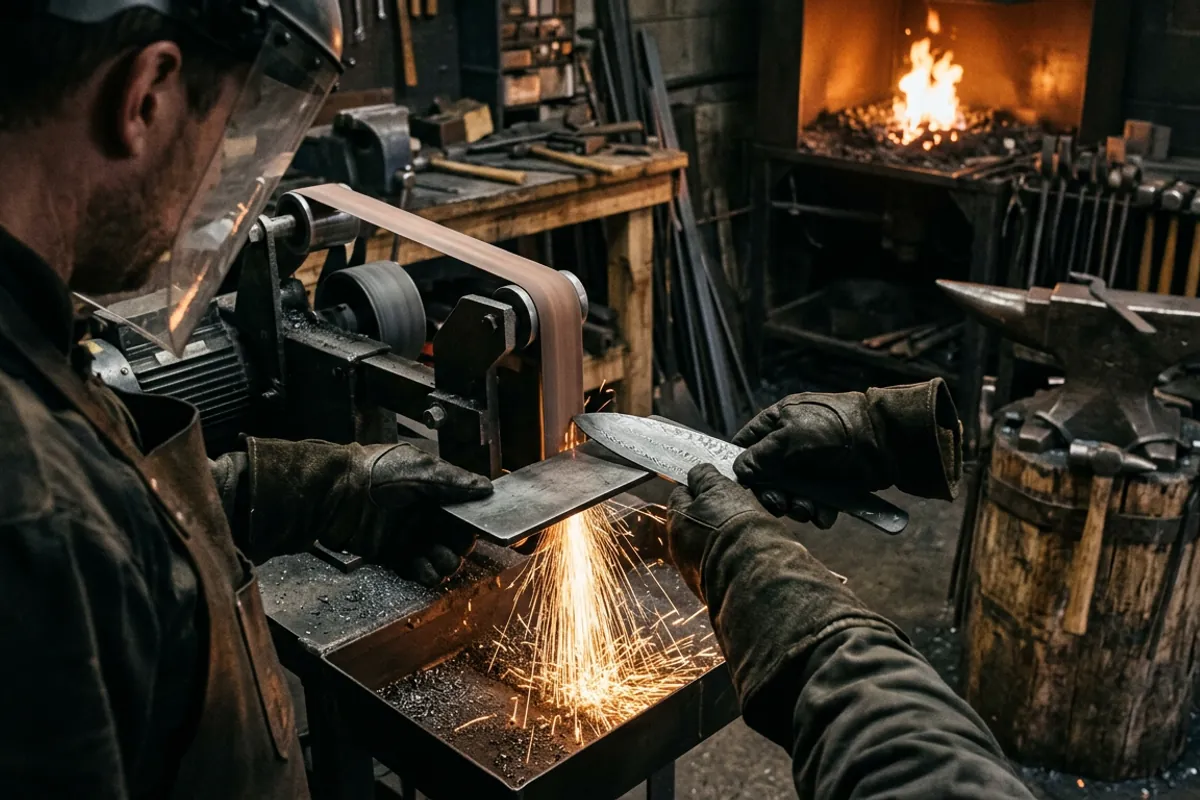
Here is where I have to be blunt about what is known. The history of powder metals in damascus that Knife Steel Nerds published is built from interviews with the people who were there. It is oral history. There are no technical records behind it and no process numbers in it. Even the claim that Knickmeyer presented this work at an ABANA event in 1994 is flagged as unconfirmed in that account itself, so I will pass it along the same way it was given to me: as something the people involved say, not as a documented fact.
That also means I will not give you a canister soak time, a welding temperature, or a press pressure for any of this. There is no authoritative published figure for them, and inventing one for a page like this is exactly the kind of thing that gets somebody hurt or wastes a stack of expensive powder. If you want those numbers, you get them from the maker of the specific powder and the specific equipment you are running, and you accept that a lot of it is shop-developed rather than published.
How I read a damascus billet or blade someone is selling me
This is the practical part, and it follows directly from everything above. Since the constituents dominate performance, the first question is always which steels, by name.
A layer count with no steels named tells you nothing. Three hundred layers of unnamed material is worse information than sixty layers of 1084 and 15N20, because with the second one I can reason about the heat treat, the toughness floor, and roughly what it will do at the edge. "High carbon and nickel damascus" is not an answer to which steels. It is a way of not answering.
So, in order, what I ask and what I look at:
Which two steels, stated plainly. If the seller cannot tell you, they also cannot tell you the heat treat, because the heat treat is a function of the pair. A maker who knows their material answers this instantly and usually enjoys being asked.
What the heat treat was. Same reason. One protocol has to serve both constituents. Vagueness here is the single biggest tell.
Whether it is meant to cut or to look good. Both are legitimate. A decorative billet for a guard, a bolster, or a hanging piece does not need to answer performance questions at all, and there is nothing wrong with buying steel for its appearance as long as everyone is honest that that is the purchase.
The pattern, with the tradeoff in mind. If it is ladder patterned and sold as a slicer, that lines up with the testing. If it is ladder patterned and sold as a chopper that will take abuse, the longitudinal toughness cost is real and the seller should know about it.
The weld lines themselves. I look along the edge and the spine for dark lines that do not follow the pattern, for gaps, and for areas where the pattern goes blurry or vanishes because it got ground past. The toughness testing did not find flaws hurting those particular samples, but I am still not paying for a billet with a cold shut in it, and neither should you.
The price, understood correctly. You are paying for labor, fuel, and skill, plus the appearance. You are not paying for a performance upgrade over the constituent steels. When a seller prices it as a performance upgrade, they have told you what they know.
The part that costs you: welding heat, flux, and fire
The consumable side of this is its own subject, and I have written it out in the forge welding flux guide; the technique itself belongs to what blacksmith working actually is. What follows is only what pattern welding adds on top.
If you are going to make it rather than buy it, know what the process demands before you commit money to steel.
Forge welding runs at the hottest heat you will ever take a piece of steel to short of burning it, and the margin between welding and ruining the bar is not generous. Getting consistent welds is a real skill that takes real repetitions to build. I run my welds in the coal forge because I can get the heat where I want it and bury the stock in the fire, and I still lose billets.
The safety side is not optional here, and I will not soften it. Molten flux is essentially molten glass, it spits, and it sticks to whatever it lands on including you. Scale comes off a welding heat hot and fast. Wear eye protection rated to ANSI Z87.1, every heat, no exceptions. Wear natural fibers, cotton or wool or leather, and keep synthetics away from the forge entirely, because synthetics melt into a burn rather than burning away from it. Keep your sleeves down, keep your face out of the line of the fire when you pull stock, and have a clear floor around the anvil before you start, because the last thing you want during a welding heat is to be looking down.
Where pattern welded steel belongs in your learning order
Late. Not never, but late.
Learn to weld solid stock first. Weld a chain link, weld a faggot weld on the end of a bar, build up a drift. Get to where your welds hold consistently on simple work before you spend on a stack of 15N20 and try to hold twenty welds at once across a billet face.
Before that, honestly, make a monosteel knife that actually performs. Get a full heat treat cycle right, get the geometry right, and use the thing. The value of pattern welded steel is that it looks like nothing else, and that value only lands on a blade that was already good. A beautiful billet ground into a knife with a bad heat treat is a beautiful billet wasted.
When you do get there, go in with the testing in mind rather than the sales copy. Pick the constituents for the properties you want, pick the pattern knowing what it costs you at the other end, and be honest with anyone you sell to about which half of the tradeoff they are buying. That is a better foundation than any layer count on a label.