Heated stainless steel does not act the way a new smith expects it to, and that is where most of the trouble starts. Someone shows up at the club forge with a bar of 304 they pulled off a scrap pile, throws it in the propane forge, and figures it will move under the hammer and harden in a quench the same as the mild steel or the 1084 they have been learning on. It does neither. Stainless is not one metal. It is a whole family of alloys that happen to share a name, and heat does something different to each branch of that family. A few of them harden. Most of them never will, no matter how you quench. And every one of them can be quietly wrecked by sitting in the wrong temperature band for too long, in a way you cannot see on the bench and will not find out about until it starts to rust months later. This is a plain reference on what heat actually does to stainless, from a hobby smith who has forged some of it and sent the deep metallurgy questions to people who test steel for a living.
Why stainless is stainless in the first place
Stainless earns the name because of chromium. The working definition most of the industry uses is at least about 10.5 percent chromium by weight. That chromium reacts with oxygen in the air and forms an extremely thin, tight, invisible layer of chromium oxide on the surface. That passive layer is the whole trick. It seals the steel underneath from further oxygen and moisture, so the metal does not keep rusting the way plain carbon steel does. Scratch it, and the layer heals itself as long as there is free chromium at the surface and oxygen to react with.
Two things follow from that, and both of them matter the moment heat gets involved. First, the corrosion resistance lives in the surface chemistry, not deep in the bar, so anything that disturbs the surface or robs it of chromium costs you rust resistance. Second, "stainless" is a promise about corrosion, not about hardness or how the steel behaves hot. People conflate the two constantly. A stainless kitchen knife and a stainless sink are both stainless, and one takes an edge you can shave with while the other will never harden at all. The difference is which family of stainless it is, which I will get to.
What actually happens when you heat stainless steel
Put stainless in the forge and the first thing you see is color, and not just the red-to-yellow glow of the hot steel. As the surface heats in air, that chromium oxide layer thickens and grows a scale, and thin oxide films throw off interference colors the same way a film of oil on water does. You get straws, then browns, then blues and purples and grays, running along the bar wherever it has been hot. This is heat tint, and it is the single most recognizable thing about heated stainless steel.
Push the temperature higher and the surface starts to build real scale. Stainless scales less dramatically than carbon steel, but the scale it does form is a hard, abrasive chromium oxide that is tough on files and belts. Higher still and the grain inside the steel begins to grow. Coarse grain is bad news in any steel because it hurts toughness, and some stainless grades will crack if you cook them too hot or too long. So heated stainless is doing several things at once: coloring at the surface, scaling, and changing its internal structure. What none of that tells you by eye is whether the steel got hard, because for most stainless the answer is no.
Heat tint colors are not temper colors
This one catches experienced carbon-steel smiths, not just beginners. On plain carbon steel you can sand a blade bright, gently heat it, and read the oxide colors as a thermometer: a light straw around the low 400s Fahrenheit, bronze and purple higher, blue up near the high 500s. Those temper colors track temperature closely enough that generations of smiths have used them to judge a temper by eye. I lean on that trick myself, and I wrote it up in the piece on how to temper steel by heating and cooling.
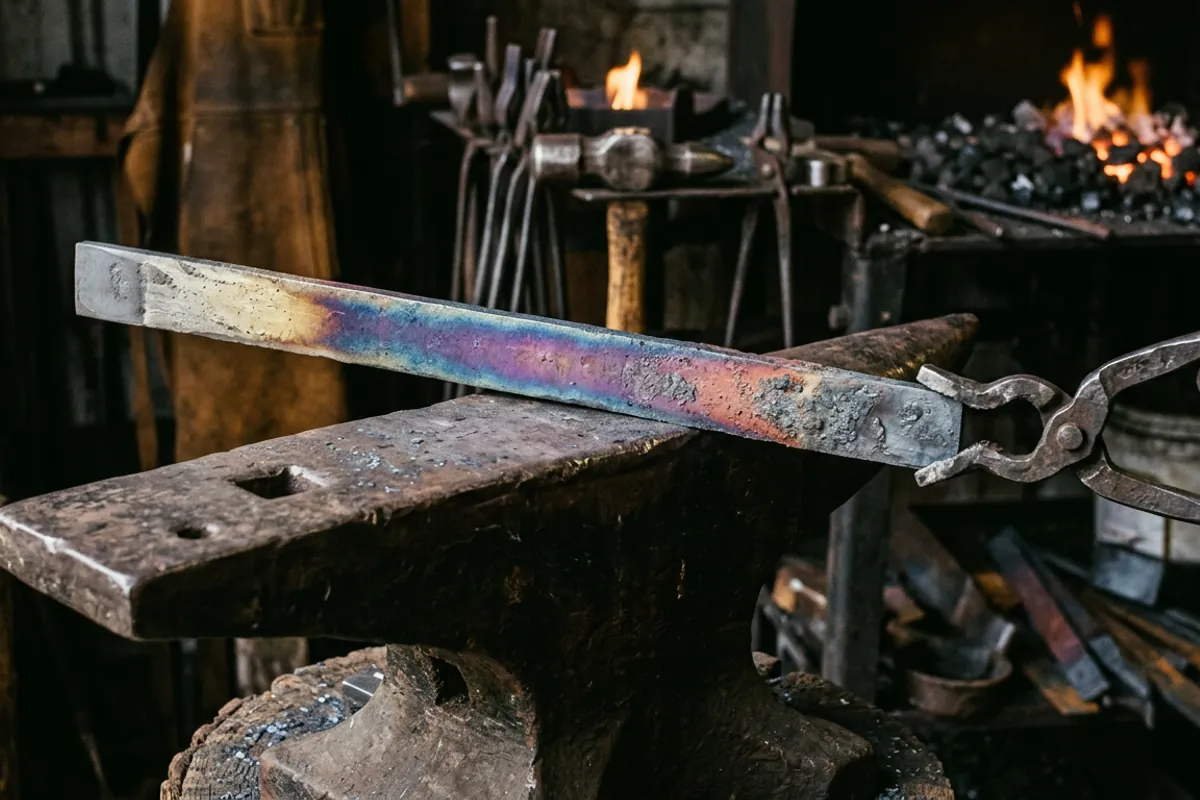
The colors that run across heated stainless steel look similar, but you cannot read them the same way. Chromium oxide grows on a different schedule than the iron oxide colors on carbon steel, so the color-to-temperature map you memorized for 1084 simply does not apply. Trust those colors on a stainless blade and you will guess the temperature wrong. This is a big part of why real stainless heat treating is done by the number on a controller, not by eye. If you want the honest version of how that goes in a home shop, I laid it out in how to heat treat stainless. The short version: color is a warning light on stainless, not a gauge.
The three families, and why heat only hardens one
To make sense of heated stainless you have to split it into families, because heat treats them completely differently.
Austenitic stainless is the 300 series, the 304 and 316 you find in cookware, sinks, hardware, and most shiny scrap. It is loaded with chromium and nickel, usually non-magnetic, and it cannot be hardened by heat treatment at all. Quench it from a glow and it just cools off. The only way it gets harder is by working it cold, which is why stainless bolts gall and stainless sheet work-hardens under a drill bit. Heat does not give this family an edge, ever.
Ferritic stainless is grades like 430 and 409, common in trim and exhaust. It is magnetic, low in carbon, and like the austenitics it does not harden by heat treatment. Another family that will never make a knife.
Martensitic stainless is the one that matters to a bladesmith. These grades, the 410, 420, and 440 series and their modern relatives, carry enough carbon that they behave more like a tool steel. Heat them high enough, hold them, quench them right, and they form martensite and get genuinely hard. This is the only stainless family that hardens, and even inside it the good cutlery grades are fussy. So when a beginner asks whether their stainless will harden, the real answer is a question back: which stainless. If they do not know, the odds are it is an austenitic or ferritic grade that never will.
Sensitization: the trap in the middle of the range
Here is the failure that heated stainless is famous for, and the one you cannot see. When austenitic stainless like 304 sits in a temperature band of roughly 800 to 1500 Fahrenheit, which is about 425 to 815 Celsius, the carbon in the steel pulls chromium out of solution and forms chromium carbides along the grain boundaries. That leaves the metal right next to those boundaries starved of chromium. Below the 10.5 percent threshold locally, the passive layer cannot do its job, and that thin depleted zone rusts. The steel looks fine. It just quietly loses its corrosion resistance along every grain edge.
This is called sensitization, and it is exactly why welds on cheap stainless rust in a band a little back from the weld: the heat-affected zone spent time in that sensitizing range. It is also why heat tint itself is a corrosion problem, not just a cosmetic one. The rainbow near a weld or a torch cut marks metal that got hot enough to grow scale and, right under it, chromium that got tied up or driven off. That is why fabricators pickle and passivate stainless after welding, stripping the tinted oxide with acid so fresh chromium can rebuild a clean passive layer. Low-carbon grades like 304L and 316L, and stabilized grades with titanium or niobium, resist sensitization because there is less free carbon to grab the chromium. But the plain lesson for a home shop is simple: heating stainless and letting it dawdle through the mid-range can turn stainless into something that rusts, and you will not know until it does.
Heating stainless at the forge
I have forged stainless, and I will be honest that it is not fun the way moving hot carbon steel is fun. It is stiff and tough under the hammer even at a good heat, the working temperature window is narrower than what you get with mild steel or a simple carbon steel, and it punishes you at both ends. Too cold and it resists and can crack. Too hot and the grain blows up or the high-carbon cutlery grades tear themselves apart from the inside. You are forging in a band and paying attention the whole time, which is a different experience from the forgiving glow-and-go of the carbon steels I usually reach for.
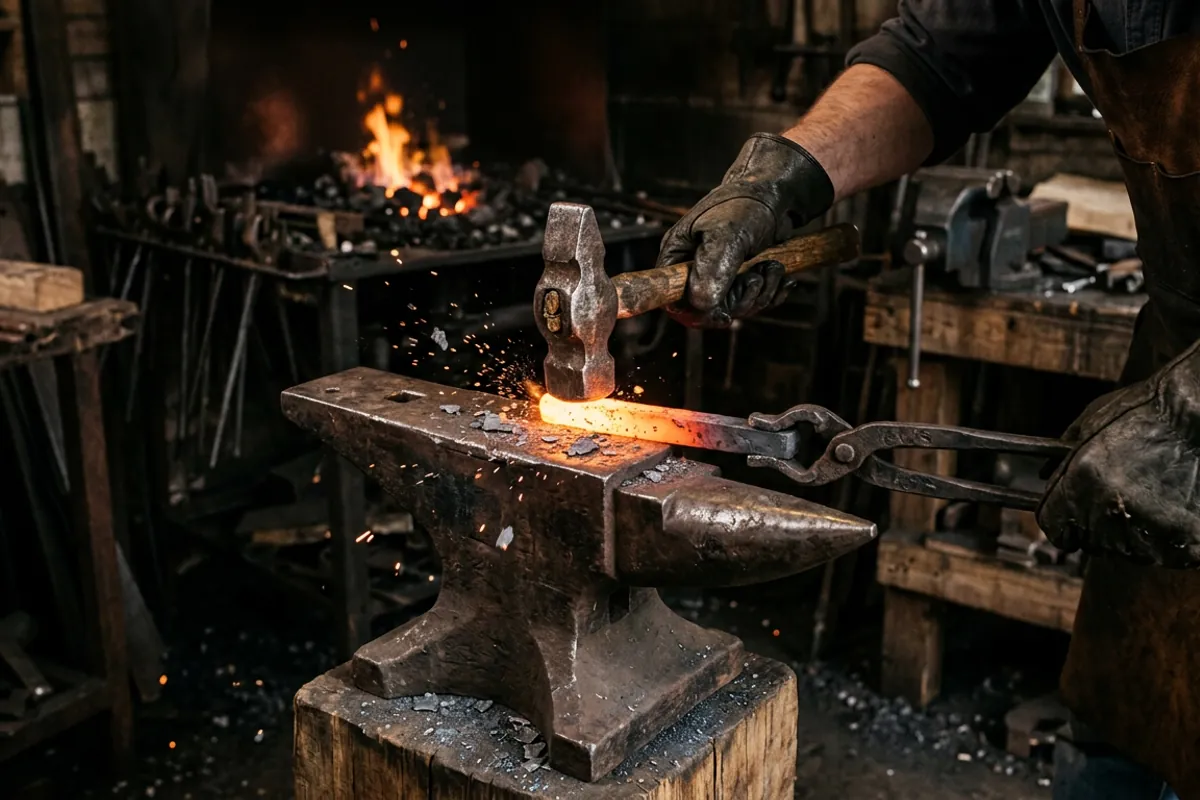
The abrasive chromium scale I mentioned earlier is a real nuisance too. It dulls files and eats grinder belts, so cleanup after forging stainless costs more than it does after carbon steel. And forging does nothing to solve the hardening problem. If you forge an austenitic grade to shape, it is still an austenitic grade at the end, soft and unhardenable. Forging stainless well is a skill worth having if the design calls for it, but nobody should reach for stainless as a first forging steel. Start on mild steel and a simple carbon steel, get your heats and your hammer control, and treat stainless as a later problem. My heated steel reference covers how to read a good working heat by color, and that skill is the foundation before you ever fight a stainless bar.
Hardening the martensitic grades at home
Say you do have a martensitic grade, a 440C blade blank or one of the modern fine-grained stainless cutlery steels. Now the honest part: getting real, repeatable hardness out of it at home is hard, and a forge alone will not do it well. These grades want to be brought up to a high austenitizing temperature, often up around 1900 Fahrenheit and beyond depending on the exact steel, held there for a real soak so the carbides dissolve into solution, and then cooled fast enough to form martensite. Many of them air-harden, which means they can start hardening as they cool and will crack on you if you are careless.
Doing that right takes a programmable heat-treat oven that holds a soak temperature to a tight tolerance, stainless foil to wrap the blade against scale and decarburization, an aluminum plate quench or a fast controlled cool, and for the best grades a cold treatment down below freezing to convert the last of the retained austenite, followed by tempering. The exact numbers, the soak time, the austenitizing temperature, the temper that gives you both hardness and the corrosion resistance you paid for, are grade-specific and worth getting from real testing rather than shop lore. This is where I send people to Knife Steel Nerds by name, because that site actually runs the hardness and toughness and edge-retention tests instead of guessing. A propane forge cannot hold a soak like an oven can, and eyeballing color does not work on stainless, so most home smiths, myself included, either buy the oven and learn to run it or send stainless blades out to a heat treater who does this all day. I go deeper on the whole process in the hardening of stainless steel.
Annealing stainless runs backward from carbon steel
One more thing about heated stainless steel throws people, because it is the exact opposite of what carbon-steel habits teach. With carbon steel, you soften it by annealing: heat it up and cool it as slowly as you can, and it comes out soft. I walk through that logic in what annealing steel actually does.
Try that on austenitic stainless and you make it worse. Softening an austenitic grade is done by solution annealing, which means heating high, up around 1900 to 2050 Fahrenheit, and then cooling it fast, quenching or rapid air, to keep the carbides dissolved in the metal. Cool it slowly and you march it right back through that 800 to 1500 range and sensitize it, tying up the chromium and setting up the rust you were trying to avoid. So for this family, fast cooling keeps it soft and corrosion-resistant, and slow cooling hurts it. That is genuinely backward from everything a beginner learns on carbon steel, and it is one of the clearest signs that stainless is a different animal that happens to share a shelf.
What I tell beginners about heated stainless steel
When a new smith holds up a bright bar and asks what stainless will do in the fire, I give them the short version. Heat colors it, and those colors are a warning about lost corrosion resistance, not a temper gauge you can read. Most stainless does not harden no matter how you quench, because only the martensitic family responds to heat treatment. The middle of the temperature range is a trap that can sensitize the steel and make it rust where it never did before. Forging it is stiff, narrow, and unforgiving, and hardening the grades that can harden really wants an oven and real test data, not a propane forge and a guess.
None of that means stainless is off limits. It means stainless is a specialist steel with rules of its own, and those rules only make sense once you understand what the chromium is doing and what heat does to it. If you are just starting out, learn the fire on plain steels first. When you are ready to understand where stainless fits in the larger picture of steel behavior, the steel and metallurgy topic hub is where I keep the rest of these references, and heat treatment of metals ties the families together. Respect what heat does to stainless and it will serve you. Treat it like carbon steel and it will embarrass you, usually months later, in rust.