Every few years the knife world finds a new steel to shout about, and most of the time the shouting is louder than the steel deserves. MagnaCut steel is the one recent case where I think the noise is mostly earned, and it is worth understanding why rather than just repeating that it is good. Before we go any further, let me be straight with you about what this article is. I do not run MagnaCut in my shop. I am a hobby smith with a coal forge, a propane forge, and a 148 lb Trenton I call Bessie, and my heat treating is the kind you do with a magnet, a soak by eye and by clock, and a bucket of warm oil. MagnaCut does not tolerate that, and I am not going to pretend otherwise. What follows is the published metallurgy, the maker's own numbers, and the consensus of the people who actually work this steel, kept clearly separate from the few things I can speak to from my own bench.
The tradeoff MagnaCut was built to break
MagnaCut, properly CPM MagnaCut, is a powder metallurgy stainless tool steel produced by Crucible Industries. It came out in 2021, and unlike most steels in the knife world it has a known author: Larrin Thomas, the metallurgist who writes Knife Steel Nerds. That matters more than it sounds. Most knife steels are industrial alloys that knifemakers adopted second hand, designed originally for injection molding dies or paper cutting or bearings. MagnaCut was designed from the start for knife blades, using thermodynamic modeling to aim at a specific target instead of adjusting a recipe by trial and error and seeing what came out.
The CPM part is the manufacturing process. Crucible Particle Metallurgy means the molten alloy is atomized into a fine powder, and that powder is then consolidated under heat and pressure into a solid billet. The practical result is that the carbides, the hard ceramic particles that do the wear resisting, come out small and evenly spread through the steel instead of forming coarse stringers the way they do in a conventional ingot. Fine, even carbides are the foundation of everything else this steel does well.
MagnaCut is also a trademarked product name, not a generic class of steel. There is one source for the real thing. Keep that in the back of your head when you get to the part about buying it.
The carbide problem it was built to solve
Here is the trap that every stainless knife steel before MagnaCut had to live with, and it is worth understanding because it explains the whole design.
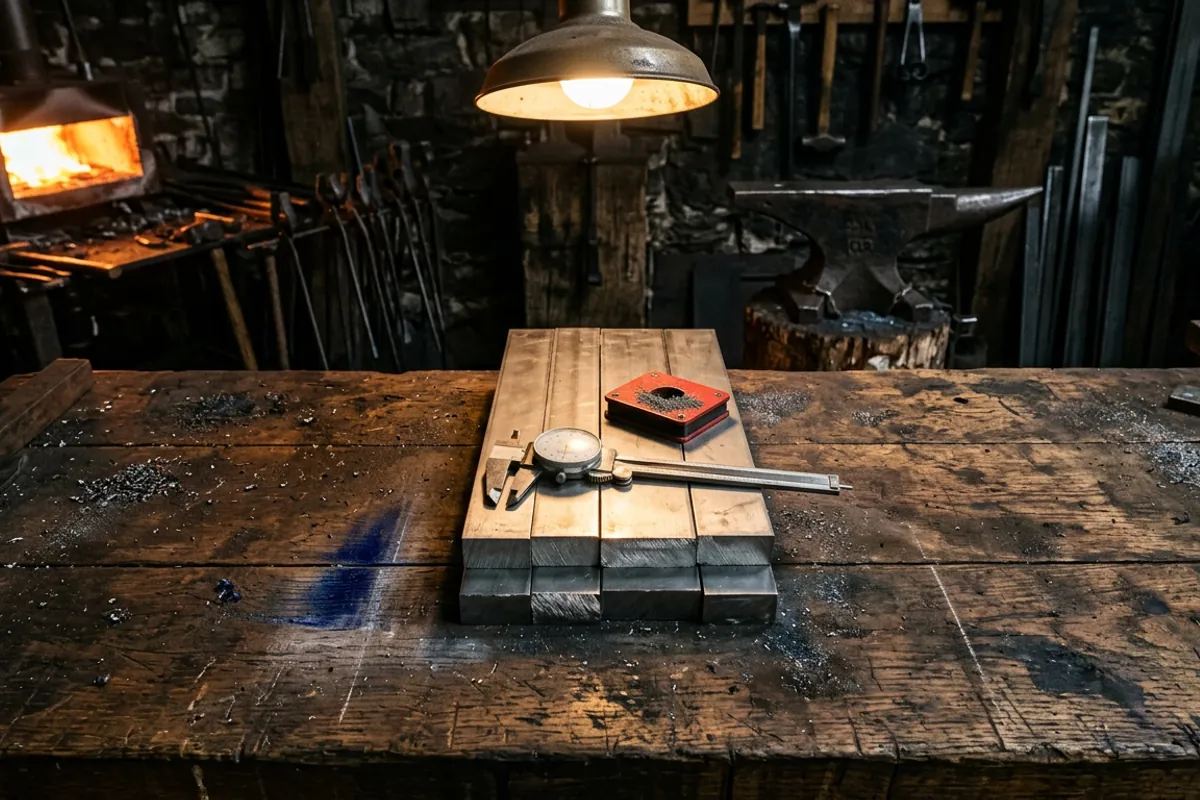
For steel to be stainless, it needs roughly eleven percent chromium dissolved in the matrix, meaning in solution in the steel itself, not locked up in a compound. Dissolved chromium is what forms the thin passive oxide layer that keeps rust off. But high carbon steel wants to grab that chromium and form chromium carbides, and chromium carbides are a bad deal twice over. They are coarse and brittle compared to other carbides, so they hurt toughness and make the edge chip. And every chromium atom sitting in a carbide is a chromium atom not doing corrosion resistance work.
So the traditional answer was to add more chromium. Push the total up high enough that even after the carbides take their share, enough is left dissolved to keep the steel stainless. That works, but it also means you have made a steel full of coarse chromium carbides, which is why so many high carbon stainless steels have a reputation for chipping if you take the edge thin.
MagnaCut ducks the problem instead of fighting it. It uses vanadium and niobium to tie up the carbon first. Vanadium carbide is harder and finer than chromium carbide, and it forms in preference to it. The composition is balanced so that at the recommended hardening temperature there are essentially no chromium carbides left, and the chromium stays dissolved where it belongs. You get the wear resistance from vanadium carbide, the corrosion resistance from dissolved chromium, and you skip the coarse brittle phase that was costing everyone toughness. That is the whole idea, and it is a genuinely clever one.
What the numbers on the datasheet mean
The published composition is roughly 1.15 percent carbon, 10.7 percent chromium, 2.0 percent molybdenum, 4.0 percent vanadium, 2.0 percent niobium, and 0.2 percent nitrogen, with iron making up the rest. Those are the published nominals. Pull Crucible's own datasheet before you plan a heat treat around them, because the sheet is the authority and the ranges move.
Taking those one at a time. The carbon does what carbon always does: it makes hardening possible and it feeds the carbides. Chromium at 10.7 percent is the corrosion resistance, and the point of the whole design is that nearly all of it stays in solution. Molybdenum helps hardenability and pitting resistance. Vanadium at 4 percent is the wear resistance, forming the hard fine carbides. Niobium at 2 percent forms its own hard, fine carbides alongside the vanadium and helps keep the grain fine. The nitrogen is the part people skip over. Nitrogen behaves a bit like carbon in solution but it improves corrosion resistance rather than hurting it, and it lets the design hit its targets without leaning harder on carbon.
Working hardness is generally in the 60 to 64 HRC range depending on how it is heat treated. Where in that range a given knife lands is a decision the maker makes, and it is a real decision with real tradeoffs, not a number to brag about. If you want the actual toughness and edge retention testing behind any of this, Knife Steel Nerds has published the Charpy and CATRA data. Read the charts yourself rather than taking anyone's summary, mine included. Worth saying plainly: that testing was published by the man who designed the steel, so it is developer data rather than independent data. It is still the best data there is, and it is still worth knowing whose it is. That is the general rule I follow for all of this: metallurgy questions go to real testing, which is the point of the whole steel and metallurgy side of this site.
How it behaves in a knife
Owner consensus on MagnaCut is unusually consistent, which is itself a signal. The things people say over and over: it takes a thin edge and keeps it, it does not chip the way other stainless steels at similar hardness do, and it does not rust. Kitchen users, saltwater fishermen, and people who leave a knife in a wet sheath all report the same thing.
What I would stress is what MagnaCut is not. It is not the highest wear resistance steel available. If your only measure is how long an edge survives cutting abrasive cardboard, there are steels with far more vanadium that will beat it, and they will also be miserable to sharpen and prone to chipping. It is also not the toughest steel available. A good non stainless tool steel at the same hardness will still out survive it under real abuse. MagnaCut's claim is the balance, not any single record, and the balance is the useful part. It sits at a place on the toughness against corrosion resistance against wear resistance triangle that nothing else reaches, and for a general use knife that is worth more than winning any one category.
The other quality worth naming is edge stability. Fine carbides and a low total carbide volume mean the edge can be taken thin without the microscopic structure crumbling. That is why the steel feels sharper than its hardness number suggests.
Heat treating it, and why a propane forge will not do it
This is the section where I get blunt, because this is where people waste real money.
MagnaCut is an air hardening high alloy steel with a published austenitizing range of 1950 to 2200 degrees F, with 2050 F the usual recommendation, held for a controlled soak, then quenched fast in still air or between aluminum plates, then taken to cryogenic temperature, then tempered low, usually around 300 to 400 degrees F, in two cycles. The published guidance calls for liquid nitrogen for the cryo step to convert retained austenite properly. Dry ice does not reach the same temperature and is a partial substitute at best.
Every one of those steps needs equipment my forge does not have. You need an electric kiln with a PID controller and a thermocouple you have actually verified, because a hundred degrees of error at that temperature changes the result badly. You need stainless foil or a controlled atmosphere, because bare high chromium steel held that hot will decarburize and scale. You need plates, not a bucket of oil, because uneven quenching warps thin stock and oil is the wrong medium anyway. This is why my honest advice for anyone with a forge and a magnet is to work the steels that reward that setup, which is the whole argument in my walkthrough of how I heat treat 4140 and the more general how to heat treat stainless honestly from a home shop.
Two safety points I will not soften. Liquid nitrogen is not a novelty. It causes severe cold burns, it displaces oxygen in an enclosed room, and it will burst a sealed container. Cryogenic gloves, a face shield, real ventilation, and a vented dewar are the minimum, and if that sentence is new information to you, do not order the nitrogen yet. Second, if you decide to send blades out to a commercial heat treater instead, that is not a failure and it is what a lot of serious makers do. I wrote about what commercial heat treating actually gives a small shop, and for this steel it is the sane path.
Forging MagnaCut, and whether you should bother
You can forge it. Crucible publishes a forging temperature range, and high alloy powder steels do move under a hammer. But the window is narrow, the penalty for working it too cool is cracking, and the anneal afterward is a controlled slow cool in a kiln, not a bucket of vermiculite, because this steel wants to harden on the way down. If you want the background on why that anneal matters and what it is doing, I covered it in what annealing steel actually does.
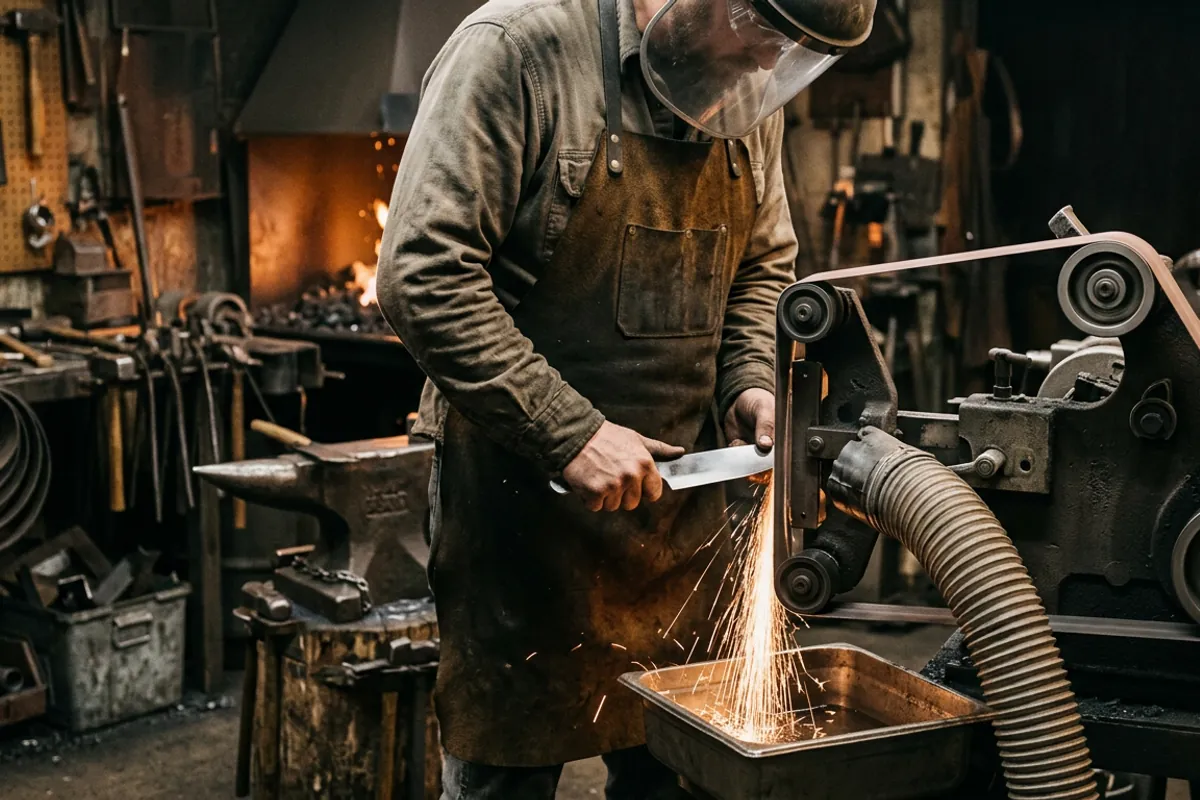
Here is my real answer though. Ask yourself what forging buys you on this particular steel. The bar arrives flat, annealed, and already at a fine even carbide distribution that the powder process gave it. Forging a flat knife out of it does not improve the steel. It adds risk, it adds a heat treat step you now have to get right twice, and it costs you material. Nearly everyone who works MagnaCut does stock removal, and they are not being lazy. If you want the hammer work, forge a simple carbon steel and enjoy it. That is what I do, and it is what I put in my walkthrough of bladesmithing from a bar of steel to an edge.
Forge welding it into pattern welded billets is another common question. The chromium content makes clean welds difficult, and mixing a stainless and a non stainless layer creates a knife that rusts in stripes. Leave that one alone.
Grinding and sharpening it without wrecking your gear or your lungs
Grinding annealed MagnaCut before heat treat is manageable. Grinding it hard is slow, and it will eat belts. Ceramic belts, fresh ones, light pressure, and patience. A dull belt does not cut, it rubs, and rubbing puts heat into the edge you just spent money hardening. Do the heavy shaping before the kiln and leave yourself only cleanup afterward. If you are still deciding on a machine, my thinking on that lives in the 2x72 belt grinder guide.
Now the part nobody wants to hear. Grinding dust from a high chromium alloy is not sawdust. Chromium bearing metal dust is a genuine respiratory hazard, and it is also a fire hazard when it piles up fine and dry. Run dust collection, grind into a water tray if your setup allows, wear a fitted respirator rather than a paper nuisance mask, and do not let the pile accumulate under the grinder. Eye protection is not negotiable either, and I mean ANSI Z87.1 rated glasses with a face shield over them, not shop glasses of unknown origin. I lost my eyebrows once to a flare up from oil that was too cold, standing too close in a cotton shirt with nothing on my face, and I kept my eyesight on luck alone. Luck is not a plan. The rest of what I think belongs on your body is in the blacksmith safety gear guide.
For sharpening, vanadium carbide is harder than the aluminum oxide in most common stones, so a heavily vanadium loaded steel resists ordinary abrasives. At 4 percent vanadium MagnaCut is nowhere near the worst offender, and people do sharpen it on standard stones. Diamond or CBN makes it easy, and if you are buying stones anyway, buy those.
Where MagnaCut is the wrong steel
It is the wrong steel for your first knife. A bar of 1084 or 80CrV2 costs a fraction as much, hardens in a forge with a magnet and a can of oil, and teaches you far more per dollar because you can afford to ruin several. Everything I would tell a beginner is in knife making explained, and none of it starts with a stainless powder steel.
It is the wrong steel for shop tools. Hammers, hardy tools, punches, drifts, and top tools want 4140, S7, or a decent medium carbon alloy. Spending stainless powder steel money on a hot cut is silly, and the properties you paid for do not help.
It is the wrong steel for a big chopper if you are optimizing purely for surviving abuse, because tougher options exist. And it is the wrong steel for anyone whose only heat treating equipment is a forge, which bears repeating because it is the single most common way people waste money on this material.
Buying it without getting burned
MagnaCut is a trademarked product with one producer, and supply has been tight at times, so real bar stock is priced accordingly. It costs many times what a simple carbon steel bar costs. If you find a listing that seems cheap, the most likely explanation is that it is not MagnaCut. Marketplace blanks and finished knives labeled with the name but sold at prices that make no sense are a known problem, and there is no home test that will settle it for you.
Buy from a knife steel supplier that can tell you where the bar came from. If you are buying a finished knife rather than stock, the steel name on the blade is the least interesting thing about it. Ask the maker what they austenitized at, whether they ran cryo and in what, how they tempered, and what hardness they are targeting. A maker running this steel properly will answer without hesitating, because they had to work all of that out to get here. A maker who cannot answer bought the name, not the performance, and a badly heat treated MagnaCut blade is worse than a well heat treated simple steel at a tenth the price.
If you want to think through where this steel sits relative to the alternatives before you spend anything, the steel selector is the quick version, and the steel and metallurgy hub collects the longer explanations.
What I would actually do
If I wanted a MagnaCut knife out of my own shop, here is the honest plan. Buy one bar. Do the shaping by stock removal, not under the hammer. Send it out for heat treat to somebody with a real kiln, verified thermocouples, and liquid nitrogen, or partner with a maker who has that setup. Finish it myself, sharpen it on diamond, and use it hard for a year before forming an opinion.
That is not the romantic answer, and it is not the one that involves my anvil. But the steel was designed around a heat treatment, and a steel separated from its heat treatment is just an expensive bar. Respect that and MagnaCut earns its reputation. Skip it and you have paid supersteel money for something that will not outperform the 1084 sitting in your rack.