The Nordic Forge 2 lb is the blacksmith rounding hammer I would put in most home shops, and the Mustad 2 lb is the one I would buy if money is tight. A rounding hammer is a two-faced forging hammer: one flat face for planishing and drawing clean, one domed face for moving metal fast. Before I go further, the honest framing this site always gives you: I have swung rounding hammers, but I have not run every model below down on Bessie's face for a season. These picks lean on published specs from the makers, on what farriers and smiths report on the forums, and on general shop experience with what makes a forging hammer worth owning. Where a claim is owner consensus and not my own bench time, I say so.
If you want the wider hammer picture first, I keep the whole set on the hammers and tongs hub, and I have a companion piece on the blacksmith cross pein hammer that pairs well with this one.
What a rounding hammer actually is
A rounding hammer has two working faces on a single head. One is flat, or very nearly flat, with the edges chamfered so it does not leave sharp dents. The other is crowned, a rounded dome that concentrates the blow onto a smaller area of hot steel and drives it fast. You forge with the domed face when you are moving a lot of metal, drawing out a bar or spreading it, and you flip to the flat face to smooth and true the surface once the shape is close.
That is the whole trick, and it is why the rounding hammer earns its keep for general forging. It is a farrier's pattern originally, made for shaping horseshoes, but it crossed over to general blacksmithing and bladesmithing because that flat-plus-dome combination covers a huge range of work with one tool. The domed face is the one people misunderstand. A fully rounded face, dome all the way to the edge, leaves a pocked, uneven surface that you then have to grind out. That is a real complaint, not a theoretical one. The good patterns keep the crown gentle and the flat face genuinely flat, so you get the speed of a dome without turning every workpiece into a cleanup job.
The flat face question, settled by the people who forge blades
There is a live debate about whether a beginner needs a rounding hammer at all, or whether a flat-faced hammer with chamfered edges does the same job. It is worth understanding before you spend money.
The bladesmiths lean toward flat. On the BladeForums rounding hammer thread, a moderator puts it plainly: most of them use a flat hammer with the sides rounded and chamfered so it does not leave big dents. Another member suggests the practical middle ground of a flat face with rounded sides for a bit more flexibility. The takeaway is not that rounding hammers are bad. It is that for clean knife work, a lot of experienced smiths want a mostly flat striking surface and use the dome sparingly.
So who is the rounding hammer for? General forging, hooks, scrolls, tapers, drawing out stock, and yes, blades once you know how to control the dome. If you already own a flat-faced hammer you like, you do not urgently need a rounding hammer. If you are buying your first serious forging hammer and want one tool that does the most, the rounding pattern is a sound choice because you get both faces. My blacksmith hammer buying guide walks through the first-hammer decision in more detail if you are still at square one.
How I would size one
Weight is where beginners hurt themselves, and I mean that literally. The instinct is to buy heavy, because heavy feels like it moves more metal. It does, for the first twenty minutes, and then your elbow and shoulder start writing checks your forties and fifties have to cash.
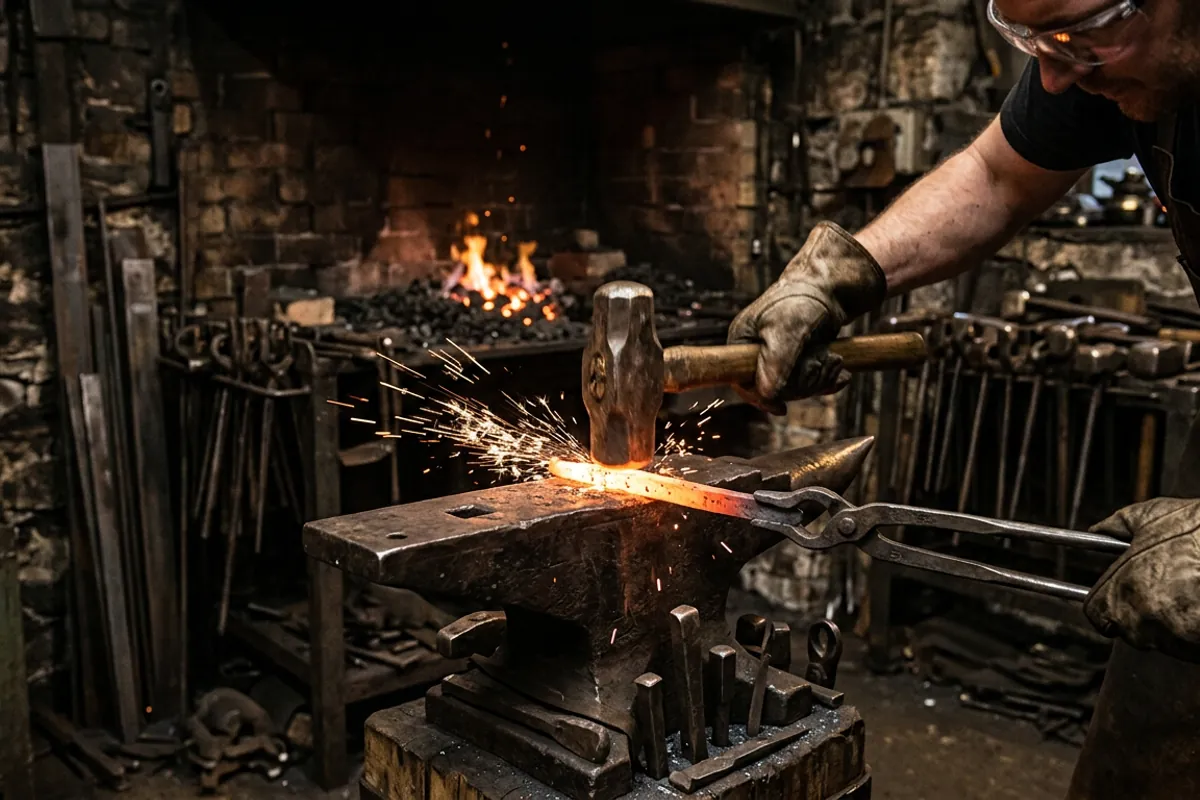
The forum consensus lines up hard with what I tell weekend students. On the BladeForums hammer weight thread, the recommendation for most knife forging is 2 to 2.5 pounds, with the point made over and over that control beats mass: a smaller hammer swung well leaves fewer deep dings and lets you swing faster and longer before you tire. On that same rounding hammer thread, one smith says flat out that he cannot swing a hammer to drive a nail any longer because of shoulder damage, and warns beginners to protect their future capability with a proper, lighter hammer instead of a heavy modified sledge.
Here is how I would size it:
- 1.5 pounds if you are small-framed, forging light stock, or doing detail and blade work. This is a very controllable weight and a lot of smiths never wish they had gone heavier.
- 2 pounds is the honest all-arounder. If I could own exactly one rounding hammer, it would be a 2 pound. Enough mass to move stock, light enough to swing all afternoon.
- 2.5 pounds only if you are already strong, already have good hammer technique, and are regularly working heavier bar.
Anything at 3 to 4 pounds is a specialty striking tool, not a starter. The bladesmith on the forum who could not think of a reasonable knife needing a 4 pound rounding hammer was not exaggerating.
The spec sheet at a glance
Published specs only. Where a maker does not state hardness, I have written "not published" rather than repeat a number off a marketplace listing, because those figures are not from the maker and I will not cite them as if they were.
Scroll horizontally to see all columns.
| Hammer | Weight | Faces | Handle | Hardness |
|---|---|---|---|---|
| Nordic Forge 1.5 lb | 1.5 lb | 1 3/8 in, one crowned one flat | 14 in hickory | Not published |
| Nordic Forge 2 lb | 2 lb | 1 1/2 in, one crowned one flat | 15 1/2 in hickory | Not published |
| Mustad 2 lb | 2 lb 1 oz | one round, one flat | ash, steel ring wedge | Not published |
| Flatland Forge 2 lb | 2 lb | one round, one flat | hickory, extra long | Hardened at striking ends only |
Sources for these figures are the maker and non-marketplace retailer pages linked in the sections below. I am not linking or citing any Amazon product page for a spec, and neither should you when you are checking my work.
Nordic Forge 1.5 lb rounding hammer
This is the one I would hand a smaller-framed beginner or anyone doing mostly light and detail work. Nordic Forge hammers are forged from tool steel, machined, then heat treated, with the chamfers rounded to help prevent chipping, per Centaur Forge. The 1.5 pound carries a 1 3/8 inch face on a 14 inch hickory handle, according to the listing at Hammersource.
The tradeoff is exactly what the weight tells you. At a pound and a half you will take a few more heats to move heavy stock, which is a non-issue for blades and light work and a mild annoyance if you are drawing out thick bar. For its intended use it is a genuinely good, well-finished hammer, and the farrier trade has beaten on this pattern for years.
Check price on Amazon (paid link)
Nordic Forge 2 lb rounding hammer
This is my overall pick. Two pounds is the weight I would choose for one do-everything rounding hammer, and Nordic's fit and finish are well regarded in the trade. The 2 pound has a 1 1/2 inch face on a 15 1/2 inch hickory handle, with one round crowned face and one flat face with beveled edges to reduce chipping, per Centaur Forge and the Hammersource listing.
What I like about the Nordic pattern for our purposes: the flat face is genuinely usable for planishing, and the crown is moderate rather than a sharp dome, which is the thing that keeps you off the grinder. If you are the one-hammer smith and you want it to be a rounding hammer, this is where I would put the money. One habit worth adopting from the forums regardless of which hammer you buy: sand and polish the flat face up to a fine grit. A clean face leaves a cleaner surface on the steel and saves you finishing work later.
Check price on Amazon (paid link)
Mustad 2 lb rounding hammer
If the Nordic is out of stock or over budget, the Mustad is the value pick, and it is not a downgrade in any way that will bother a beginner. Mustad is a serious farrier-tool maker, and their forging hammer is made in Austria with an ash handle fixed by a steel ring wedge, one flat face and one round face, in weights around 2 pounds 1 ounce and 2 pounds 5 ounces, per Mustad's own tool page.
The steel ring wedge is worth a word. It is a clean, secure way to hold the head on, and it is easy to snug back up if the wood ever shrinks in a dry shop. The honest read: it is described as an economical, well-balanced hammer, and that matches what you should expect. A budget farrier hammer is a budget farrier hammer, but Mustad's floor is high enough that this is a hammer you can grow with rather than replace. For a first rounding hammer where the dollars matter, this is the one I would not feel bad recommending.
Check price on Amazon (paid link)
Flatland Forge 2 lb rounding hammer
Flatland is the one to know about if you care about how a hammer feels through the handle. Their rounding hammer is heat treated so the body is left slightly softer and only the striking ends are hardened, which the maker says reduces vibration and shock per blow, and the handle comes deliberately long so you can cut it to the length that fits your reach. You can read that description on Anvil Brand and other farrier suppliers.
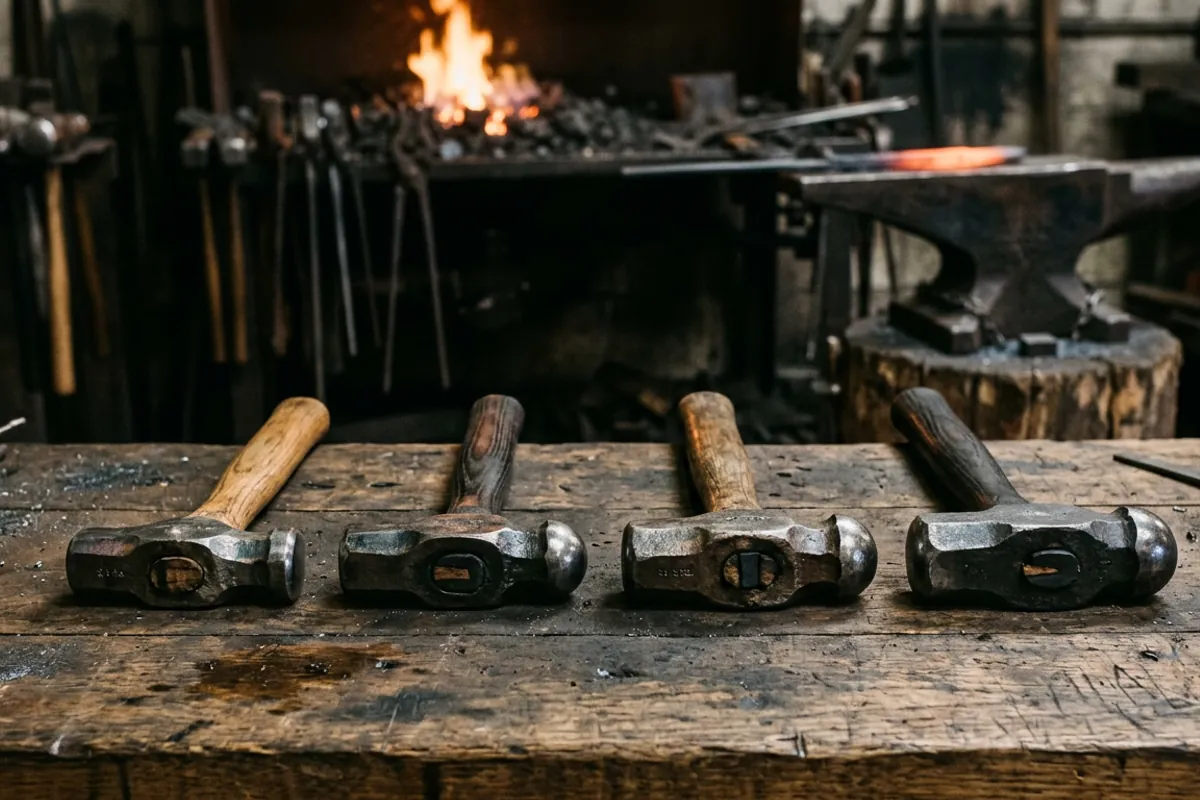
That softer-body, hard-face heat treatment is a real design choice, not marketing. A head that is dead hard all the way through transmits more shock to your elbow. The tradeoff is that Flatland hammers tend to run at the premium end of this group, and the long handle means you have a small job to do before it is truly yours: cut it down and re-shape the grip. For a smith who already knows a rounding hammer is going to see daily hours and wants to protect the arm, that is money and effort well spent. For a first hammer you are not sure you will love, the Nordic or Mustad get you forging for less.
Check price on Amazon (paid link)
What owners say
The strongest signal from the forums is not about any single brand, it is about pattern and weight, and it is consistent enough that I trust it.
On weight, the BladeForums hammer weight thread lands on 2 to 2.5 pounds for most forging, with the repeated point that a hammer you can control well beats a heavier one you cannot. Beginners in that thread report completing their first forged knives with a 2 pound hammer, which is exactly the weight I steer people to.
On the flat-versus-dome question, the BladeForums rounding hammer thread leans toward flat faces with chamfered sides for clean work, and warns that a fully rounded face leaves an uneven surface you will have to grind out. The I Forge Iron "rounding hammer or no" thread covers the same ground: whether you need one at all depends on what you make and how you work, and plenty of smiths do fine with a flat-faced hammer and a modified sledge before they ever buy a purpose-made rounding hammer.
Where owner signal is genuinely thin is on long-term durability of these specific budget-to-mid listings under hard blacksmithing rather than farrier use. Farriers beat on these hammers daily and the patterns hold up, so I am comfortable, but I will not dress up "farriers like them" as a personal season of forge welding with each one. That is the honest edge of what the forums tell you.
Safety, because a hammer is not the harmless tool it looks like
Eye protection is not optional at the anvil. Hot scale flies off the workpiece with every blow of that domed face, and it comes off fast and sharp. Wear glasses rated to ANSI Z87.1, not fashion sunglasses, not nothing. I learned the general lesson about standing too close to hot metal the hard way years ago with a quench oil flare-up that took my eyebrows, and the anvil throws its own hazards every single session. Scale in the eye is one of the most common ways smiths get hurt, and it is completely preventable.
Two more that matter for hammer work specifically. Check that the head is tight on the handle before every session, because a head that flies off mid-swing is a genuine danger to you and anyone in the shop, which is one reason I like the Mustad's ring wedge. And mind the shoulder and elbow: the whole reason I push lighter hammers and good technique is that hammer damage is cumulative and permanent, as more than one forum veteran will tell you from the far side of it. If you want the full rundown on protecting yourself in the shop, I keep it in the blacksmith safety gear guide.
What I would tell a friend
Buy the Nordic Forge 2 lb if you want one rounding hammer that does the most and you are not counting every dollar. Buy the Mustad 2 lb if you are, and do not feel like you compromised, because you did not. Step down to the 1.5 pound Nordic if you are small-framed or working light and detailed. Reach for the Flatland only once you know this hammer is going to log daily hours and you want the softer body to spare your arm.
The one to skip is anything at 3 to 4 pounds bought as a starter, and any rounding hammer with an aggressively domed face that runs to the edge, because you will spend your bench time grinding out dents. Polish whatever flat face you end up with, size the weight to control and not to ego, and put the safety glasses on before the first heat. If you want to keep building out the bench from here, the forge hammer buying guide covers the rest of the striking tools worth owning.