content/blog/500-lbs-anvil-buying-guide.md already exists in the tree but that's unrelated. Here's the article.
If you ask ten smiths for one pair of adjustable blacksmith tongs to start with, most of them will hand you a wolf jaw pair and tell you to get on with it. That is the honest short answer, and it is where I will land too: for a beginner working mixed stock, a single well made wolf jaw ("universal") tong is the closest thing to an adjustable pair that actually earns its spot on the rack. It grips round, square, and flat in one tool, and it will hold a bar well enough to forge while you save up for tongs cut to your most common stock. What it is not is a magic pair that seats perfectly on everything, and I will be blunt about that below.
Before we go further: I have run tongs on Bessie, my 148 lb Trenton, for about twenty-five years, and I have opinions about how a tong should feel in the hand and seat on the steel. But the specific models linked here are not bench tests. I am weighing published specs and what owners report on the forums against general shop experience. Where a claim is owner consensus rather than something I have personally run down, I say so. That distinction is the whole point of the site.
What "adjustable" actually means in a tong
There is no single tool stamped "adjustable blacksmith tongs." The phrase covers two different ideas, and it is worth knowing which one you are shopping for.
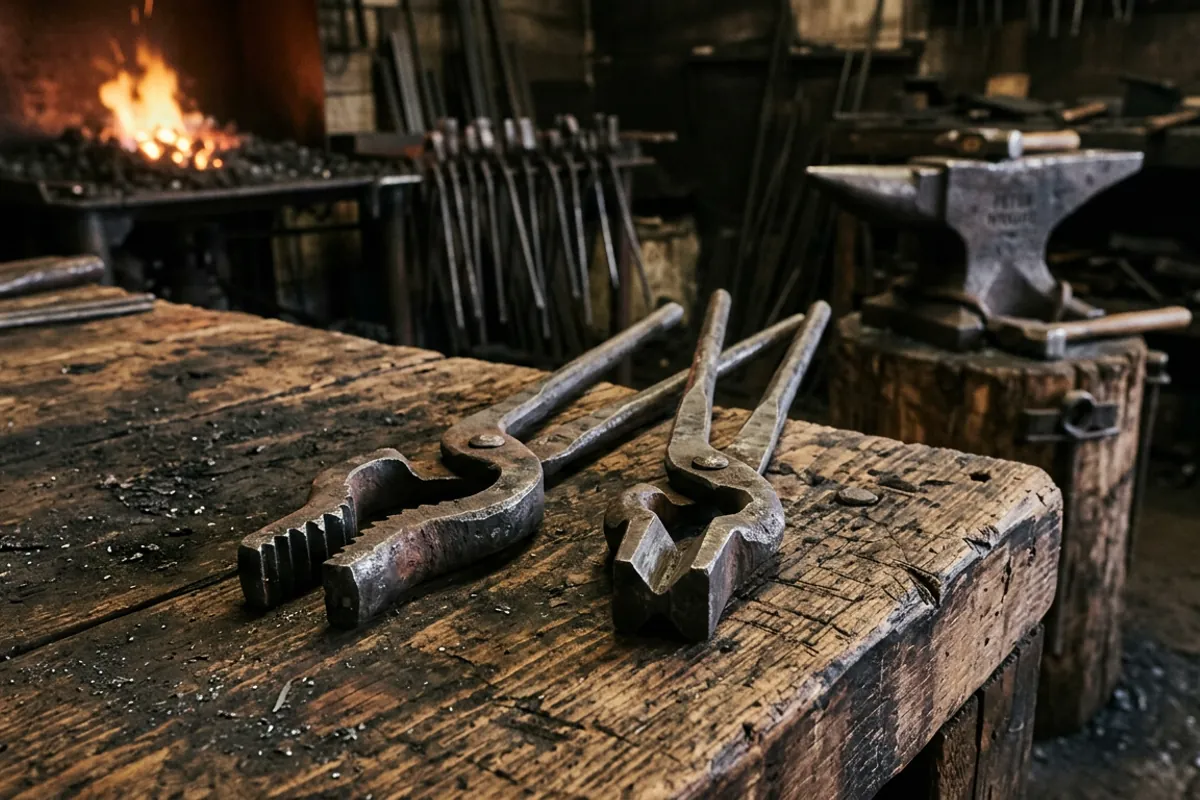
The first is a tong whose jaw geometry adapts to a range of stock, so one pair covers many sizes and shapes. That is the wolf jaw (often sold as "universal") and, to a lesser degree, the V-bit bolt tong. The jaws have serrated notches or a lengthwise V-groove that lets them bite round, square, and flat stock across a spread of sizes without you owning a drawer full of dedicated pairs. This is what most people mean when they type "adjustable" into a search bar.
The second idea is a tong you physically adjust, by heating and closing the reins so the jaws seat on a specific bar, or by a set of tongs with a bolted, movable joint. Any tong can be adjusted the first way: a proper pair is fit to the work by heating the boss and squeezing the reins to close the jaws on the actual stock, which is a normal part of owning tongs. The bolted, mechanically adjustable pair is a niche item and, in my view, not where a beginner should spend money.
So when I talk about adjustable blacksmith tongs here, I mean the versatile, multi-stock jaw styles: the wolf jaw first, the V-bit bolt second. For the full walk through the tong world, the blacksmith tongs buying guide and the forging tongs buying guide go deeper than I will here, and the Hammers and tongs topic hub collects the rest.
How the versatile styles compare
Here is the field at a glance. These are published figures where a maker or non-marketplace retailer states them, and "varies by size" where they do not publish one number because the tong is sold in several jaw sizes.
Scroll horizontally to see all columns.
| Tong style | Grips | Published stock spec | Truly one-pair adjustable? | Best for |
|---|---|---|---|---|
| Wolf jaw (universal) | Round, square, flat, hex | 5/8 in square or round on a 2.5 in jaw, medium carbon steel, 14.5 in overall (Blacksmith Source) | Across shapes, within one jaw size | A first do-most tong |
| V-bit bolt | Round, square, hollow | Varies by size; V-groove spans a range | Across sizes of round/square | Bolts, rivets, round bar |
| Box / square jaw | One square size, seated | Varies by size | No, one size per pair | Repeat work at one stock size |
| Flat jaw | Flat stock | Varies by width | No | Flat bar and blade work |
The takeaway is the one every honest tong guide reaches. A wolf jaw or V-bit gives you reach across shapes and sizes; a box or flat jaw gives you a better hold on one size. Working the Flame's tong guide puts it plainly: wolf jaw tongs "adapt to different stock shapes and sizes" but cannot cover every application, and dedicated jaws exist because a generalist tool trades away grip for range. Believe that. An adjustable pair is a compromise you are choosing on purpose.
The wolf jaw pair I would reach for first
If I were buying one adjustable tong today, it would be a wolf jaw around 16 to 17 inches overall. That length keeps your hand back from the heat without turning the tong into a fishing rod, and the serrated three-point jaw seats on round, square, and flat well enough to start real work.
The Bzsunway 17 inch wolf jaw (paid link) is the one I would point a new smith at from the budget shelf. The maker lists it at 17 inches (430 mm), heavy steel with a coated finish, serrated interlocking jaws and a V down the throat so it takes a spread of widths. That is exactly the geometry that makes a wolf jaw versatile. A 16 inch version, sold as Universal Wolf Jaw Blacksmith Tongs (paid link) in a black finish, is the same idea a hair shorter.
Now the honest part on the budget imports. These are forged blanks that usually need fitting before they hold well. Expect to check that the jaws close square, that the rivet is tight without binding, and that the reins are not sprung. If a jaw sits proud or the halves rock on the rivet, you heat the boss and dress it so the jaws meet flat on your stock. That is normal tong ownership, not a defect unique to cheap tongs, but a premium German or American pair arrives closer to right. I am not going to tell you a twenty-something-dollar tong is a Peddinghaus. It is a serviceable starting point that will teach you what you actually want next.
On price I will stay qualitative, the way the site does: good wolf jaw imports sit at the budget end and a quality domestic or German pair costs several times that. Neither figure belongs in a table with a date on it.
The V-bit bolt tong, and where it fits
The V-bit bolt tong is the other genuinely versatile style. Instead of serrated notches, it has a V-groove that clamps round and square bar down the middle of the jaw, and it will hold a surprising range of diameters because the bar just seats deeper or shallower in the V. Smiths use them for bolt and rivet work, for round stock, and for anything where a centered, dead grip matters more than gripping flat.
Working the Flame calls V-bit bolt tongs "great starter tongs" that hold round and square across a variety of jobs, including hollow pieces. I would agree with that framing. If your work leans toward round bar and hardware more than flat blade stock, a V-bit is arguably a better single adjustable pair than a wolf jaw. If you cannot decide, the wolf jaw is the more general of the two and the safer first buy.
One caution particular to round stock: a round bar wants to rotate in any jaw. The V helps, but you still commit to the grip by squeezing the reins, and for anything you are hitting hard you want the jaws fit to the diameter, not just resting in the V. A spinning bar is how hot steel ends up somewhere it should not be.
When a small set beats one adjustable pair
There is a case where I would skip the single do-most tong and buy a small set instead: when you already know you will forge several stock sizes and shapes regularly, and you would rather have a fitted jaw for each than fight one compromise tong all day.
A kit like the five piece tongs set (paid link) that includes flat, square jaw, bolt, blade, and wolf jaw covers most of what a beginner meets in the first year. The tradeoff is the same as the budget wolf jaw, multiplied by five: these are import blanks, and some of them will need fitting before they hold well. You are buying breadth and a learning set, not five finished professional tongs. For a beginner who wants to try blade stock, round bar, and square all in the first month, that breadth is worth more than one very good tong that only truly seats on one size.
If you go this route, treat the wolf jaw in the set as your everyday adjustable pair and the others as fitted tools for when the wolf jaw is fighting you. And read the smithing tongs buying guide before you spend, because a set of five mediocre tongs is not automatically a better deal than two good ones.
What owners say
For gear I have not personally run down, here is what the forums report, attributed so you can read it yourself.
On versatility, the wolf jaw's reputation is earned. On I Forge Iron's wolf jaw advice thread and the long-running which jaw type do you use most thread, the recurring line is that a wolf jaw is the tong that stays on the rack because it handles the widest range without a swap. That matches why beginners like them.
On the limitation, owners are just as consistent, and it is the one thing I want you to hear: wolf jaws hold flat stock poorly unless you squeeze hard, and a bar that is not seated will slip under a heavy blow. Multiple threads there echo it. This is not a knock on any one brand; it is the physics of a generalist jaw. The fix owners recommend is either committing a firm grip, dressing the jaws to your stock, or reaching for a fitted flat or box jaw when you are hammering hard on flat bar.
On the budget imports specifically, owner signal is genuinely mixed and worth reading with a skeptical eye. Buyers report the cheap wolf jaws often arrive needing the jaws dressed and the rivet worked before they grip cleanly, which lines up with what you would expect from a forged blank at that price. Where the reviews are glowing with almost no detail, I discount them. Where a reviewer describes fitting the tong and then using it happily for months, that is the signal that matches shop reality.
Fitting and safety: an adjustable tong is only as good as its seat
This is the part I will not soften. An adjustable tong tempts you to trust it on stock it does not truly fit, because it "kind of" grips everything. That is exactly how a hot bar slips.
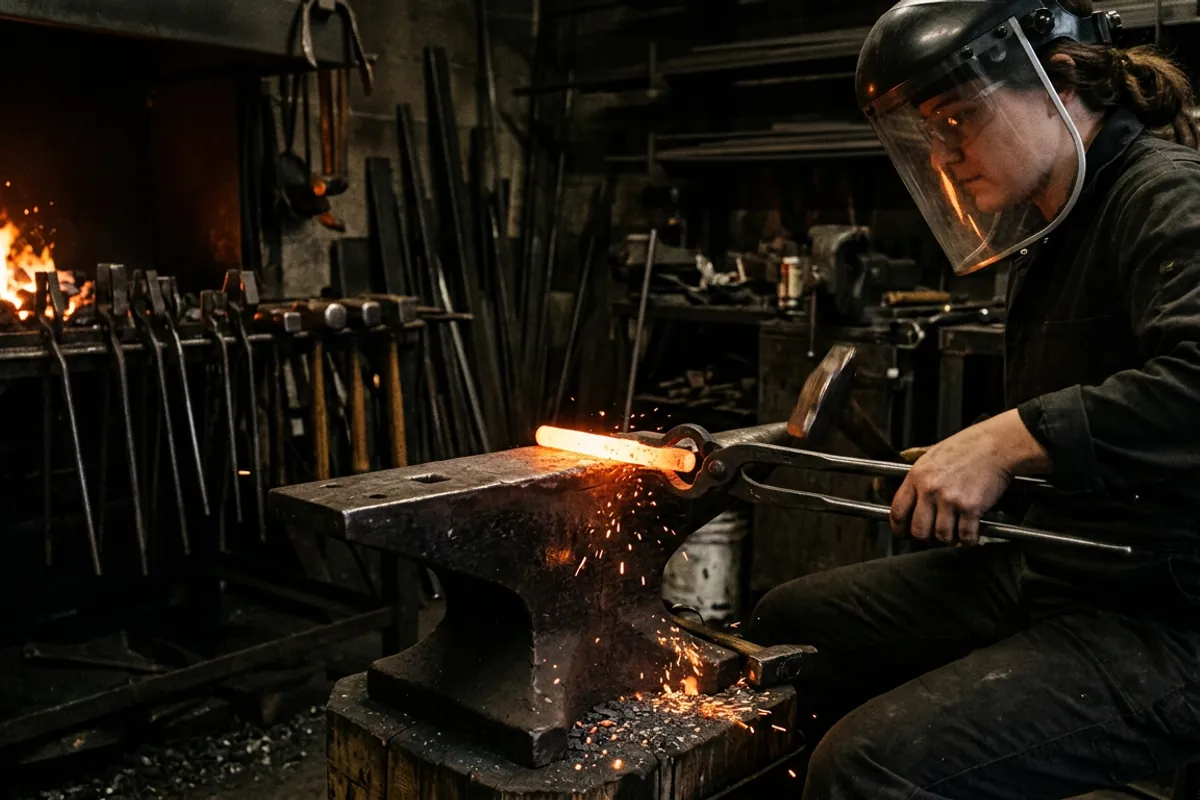
Fit the tong to the work. Heat the reins and boss, close the jaws on the actual cold stock you will forge, and dress them until the jaws meet the bar along their length, not just at the tips. A tong that grips at the tip only will pivot the bar out under a hammer blow. Once fitted, test the grip cold and hard before the steel is ever hot.
Wear the eye protection every time, rated ANSI Z87.1, not shop glasses that happen to be nearby. I quenched a blade early on in oil that was too cold, standing too close in a cotton shirt with no face shield, and the flare took my eyebrows and nearly my eyesight. Scale flying off a bar that slips out of a poorly seated tong is the same lesson waiting to happen. Natural fibers near the forge, leather over the top of your hands, and a real face shield when you are moving hot steel with a grip you are not fully sure of. If you want the full rundown, the blacksmith safety gear guide covers what matters and what to skip.
And for hot short stock like spikes, do not force an adjustable pair to do a job a fitted tong does better. A pair of railroad spike tongs holds a spike head in a way a wolf jaw never will.
What I would tell a friend
Buy one good wolf jaw around 16 to 17 inches as your first adjustable blacksmith tongs, or a V-bit bolt tong if your work leans toward round bar and hardware. Expect a budget import to need fitting; that is normal, not a scam, and doing it teaches you what a tong should feel like. Fit the jaws to your stock before you ever hammer hard, and reach for a dedicated flat or box jaw the moment you are working one size all day.
The one to skip is the mechanically bolted "adjustable" novelty pair. A properly fitted conventional tong adjusts to your work by design, and it will outlast the gimmick. The note that matters most: an adjustable tong that only sort of grips is more dangerous than a fitted one that grips completely, because it lets you start a blow you should not have started. Fit it, test it cold, wear the Z87.1, and the versatile tong earns its keep. For the wider kit around it, the blacksmithing tools starter list and all guides will fill in the rest.