Everything verified. Writing the article now.
Here is the article:
An antique blacksmith hammer can be the best hammer on your rack or a mushroomed chunk of iron that beats your wrist to death. I have swung both. When someone at the club forge shows me a flea-market find and asks whether it is worth twenty dollars, my honest answer is that a sound old cross pein with good steel and a clean face is worth rehandling and keeping for life, but a beginner who does not yet know what a bad head looks like is usually better served buying a new Swedish-pattern cross pein and learning to forge with a known-good tool first. That is the short version of this whole guide.
I should be straight with you about what this is. I own a fair number of old hammers, and I have rehandled more than I can count, so I can talk with confidence about what to look for in an old head and what a hammer is like to live with. But antiques are one-off items, not catalog products. There is no bench test I can run that tells you anything about the specific hammer sitting in front of you at a farm sale. So the buying advice here leans on shop experience for the old stuff, and on published specs plus owner reports for the new hammers I point you toward as an alternative. I will tell you which is which.
If you want the wider view of hand tools, this fits inside the Hammers and tongs topic hub, and it pairs with my longer blacksmith cross pein hammer guide and the general blacksmith hammer buying guide.
What an antique blacksmith hammer actually is
Most of what gets sold as an antique blacksmith hammer is one of a few things. You have genuine hand-forged smithing hammers, cross peins and straight peins and rounding hammers, made anywhere from the 1800s to the mid twentieth century. You have factory forging hammers from the old American and European toolmakers, which are excellent steel and worth grabbing. And you have a pile of farrier hammers, riveting hammers, body hammers, and cobblers' tools that get labeled "blacksmith" by a seller who does not know the difference. The last group is not useless, but it is not what you want for moving hot steel on the anvil.
A real forging hammer has a face broad enough to move stock, a pein for drawing out, and enough head weight to do work without you swinging it like a framing hammer. For general bench work most smiths land somewhere between 2 and 3 pounds. Lighter than that and you are pecking at the steel; heavier than that as a daily driver and your elbow files a complaint by the end of a session. The virtue of a good old head is the steel and the forging. A well-made vintage hammer was forged from a decent medium-carbon steel and often properly hardened and tempered at the face, and that is exactly why smiths bother rehandling them instead of buying new junk.
The field, side by side
Here is the honest problem with a spec table for antiques: there are no published specs. A flea-market hammer has whatever weight it weighs and whatever steel someone forged a century ago, and nobody printed a spec sheet. So I have put the antique in the table as a category, with "varies" and "not published" where that is the truth, and set it next to the new hammers I would actually buy so you can see what you are comparing against.
Scroll horizontally to see all columns.
| Hammer | Head weight | Pattern | Hardness | Notes on source |
|---|---|---|---|---|
| Antique / flea-market forging hammer | Varies (often 1.5 to 3 lb) | Cross or straight pein | Not published | One-off, inspect in person |
| Peddinghaus Swedish pattern cross pein | 2.20 lb (1000 g) | Swedish cross pein | Not published | Published by Centaur Forge |
| Swedish-pattern cross pein (2.2 lb) | 2.2 lb | Cross pein | Not published | Head weight per listing |
| Carbon-steel cross pein, two pack (2 lb) | 2 lb | Cross pein | Not published | Head weight per listing |
Two things to notice. First, none of these makers publish a face hardness number, so I am not going to invent one for you. If a listing quotes an HRC figure with no test behind it, treat it as marketing. Second, the weights cluster right where they should for a working hammer, which tells you the pattern is sound. The Peddinghaus figure comes straight off the Centaur Forge product page, a real blacksmith supplier and not a marketplace listing.
What to check before you buy an old hammer
This is where my shop experience actually earns its keep, because the whole game with an antique is condition. Buy with your hands and your eyes, not with your imagination.
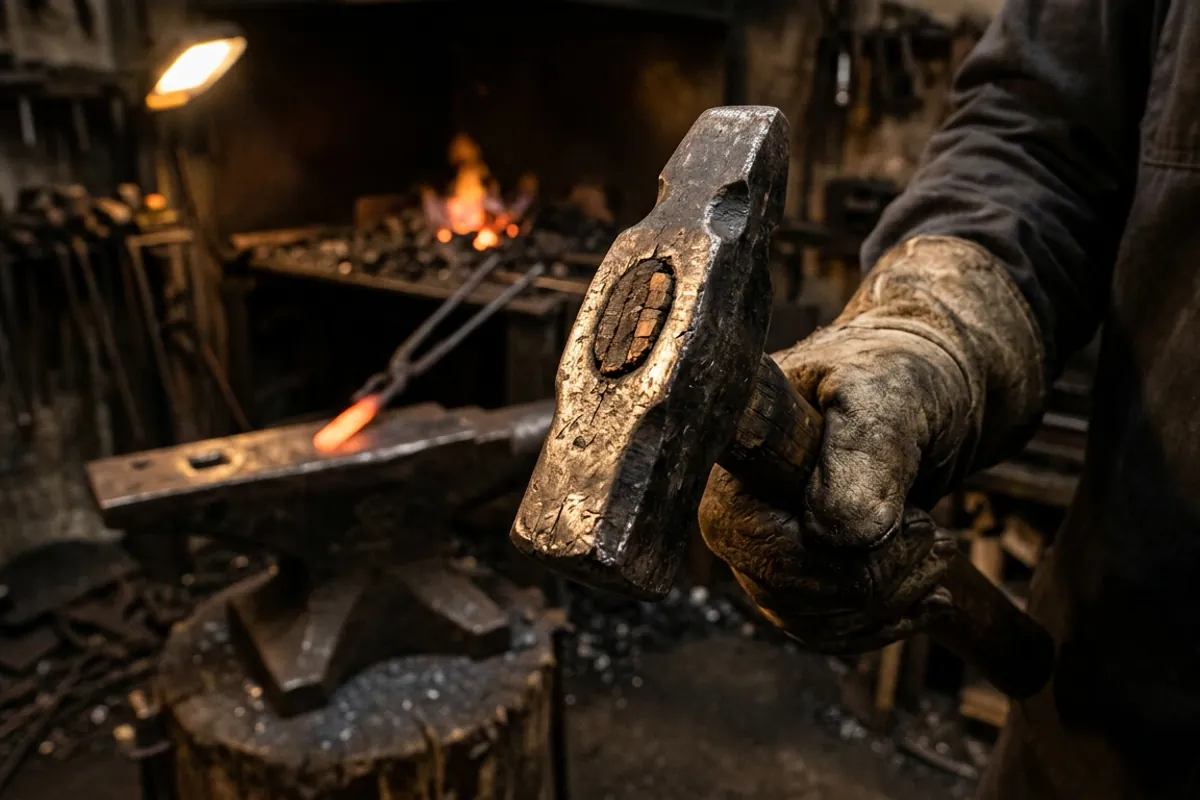
Check the face first. You want it flat to very slightly crowned, clean, and free of deep pitting. A face that is mushroomed, meaning the edges have peened out into a ragged lip, has been used cold or used hard, and those overhanging edges can shear off as sharp chips when you strike. That is a real eye hazard, not a cosmetic one. A mushroomed face can be dressed back on a grinder, but it tells you the hammer was abused, so look harder at everything else.
Look for cracks. Run your eye around the eye, the hole the handle passes through, because that is where old heads crack from generations of wedging and drift. A hairline crack at the eye is a walk-away for a hammer you intend to swing hard. Check the pein for chips and for a rolled or blunted edge. Sight down the face to the eye to see whether the head sits square; a head that was ground crooked will land crooked no matter how well you handle it.
Then think about the handle. Almost every old hammer worth buying needs a new one, and that is fine. A loose, split, or painted-over handle is not a reason to pass on a good head. Hickory handles are cheap, and rehandling is a basic skill every smith should have. What you are really buying is the head. If the head is sound, the handle is a Saturday afternoon.
One more note on steel. You cannot eyeball hardness. If you want to know whether an old head will hold up, that is a heat-treat and testing question, and I send those to real testing rather than guessing at the anvil. The metallurgy of old tool steels is exactly the sort of thing the folks at Knife Steel Nerds actually measure, and it is worth reading before you assume a hundred-year-old face is hard. For most bench work, a hammer that rings clean and shows no cracks is good enough without a lab.
The new cross pein I would hand a beginner instead
If you are a beginner and you do not yet trust your own read on a used head, buy a new Swedish-pattern cross pein and start forging. You learn nothing about smithing by standing at a farm sale second-guessing a rusty lump, and a known-good hammer takes one variable off the table while you are still learning to hit.
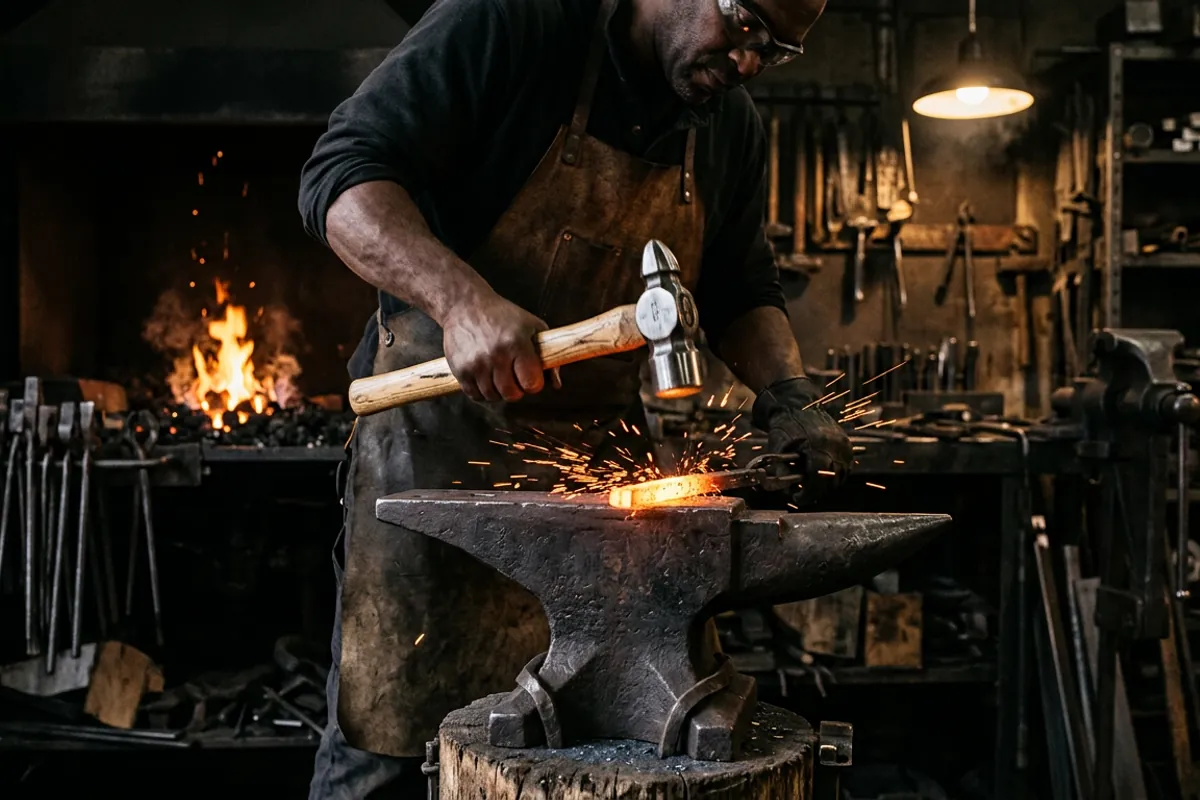
The pattern I point people to is the Swedish cross pein: a slightly crowned face on one side, a horizontal pein on the other for drawing out stock. Peddinghaus makes the reference version of this, and Centaur Forge publishes it at 2.20 lb, 1000 grams, with a slightly curved face across from a balanced pein. That is the shape and weight I would put in a new smith's hand.
On Amazon the closest widely available equivalent is a 2.2 lb Swedish-pattern cross pein sold as a blacksmith's forging hammer. It is not a Peddinghaus and I have not run this exact import down in my own shop, so I will not pretend to have tested it. What I can tell you is that the pattern and the head weight are right, and 2.2 pounds is a sane daily weight for general work. Expect to dress the face and possibly reseat the handle out of the box, the same as with most budget hammers. Check price on Amazon (paid link).
Whatever you buy, wear eye protection when you dress or grind the face. Rated safety glasses, ANSI Z87.1, not shop safety theater. I keep my eyebrows today by luck, not by being careful, and I would rather you learn that lesson from me than from your own oil flare or a flying face chip.
A budget two pack for pairs and pein work
The second option is a plainer, cheaper carbon-steel cross pein, and the one I have seen most often comes as a two pack of 2-pound hammers. Two-pound is a touch lighter than the Swedish 2.2, which suits lighter stock, longer sessions, and smiths who are still building the tendons for hammer work. The two-pack angle is genuinely useful: a spare hammer at the anvil is never wasted, and having a second head means you can grind one to a different face or pein profile without giving up your main hammer.
Same honesty as above. This is a budget import, I have not tested this specific model, and the value read leans on the pattern being correct and owners reporting it does the job once dressed. A cheap cross pein is a cheap cross pein, and you should plan to spend twenty minutes with a file and a grinder cleaning up the face and knocking any sharp cast edges off the pein before it touches hot steel. Do that and it forges fine. Check price on Amazon (paid link).
If you would rather understand the whole hand-hammer picture before you spend anything, the forge hammer buying guide walks through weights and patterns in more depth, and the antique side of tool hunting works the same way I describe for hammers in the antique anvils buying guide: inspect in person, buy on condition, walk away from cracks.
What owners say
Since most of this guide is about used heads I cannot hand-test, here is what the forums actually report, product by product and problem by problem, so you are not taking only my word for it.
On rehandling old heads, the consensus is that quality is the whole question. In a Garage Journal thread on whether old hammers with broken handles are worth fixing, members land on a clear rule: a well-forged, well-balanced head, especially an older US-made one, is worth rehandling, while a lightweight, poorly balanced import is not worth the handle you would put on it. One member put it plainly that on cheap heads there is no point replacing the handle. Several noted that affordable hickory handles from a handle supplier changed the math, making it cheaper to save a good head than most people assume. You can read the Garage Journal thread here.
On restoring and rehandling old blacksmith hammers specifically, the I Forge Iron hand hammers subforum is full of smiths buying old heads off eBay and putting fresh handles on them, and the recurring advice matches what I check at a sale: watch the face, watch the eye for cracks, and expect to dress the head before it earns a place at the anvil. When a maker's mark shows up, smiths there help each other identify it, which is worth doing because a known old brand usually means known-decent steel.
The thin spot in the owner signal is honest to admit: nobody is writing detailed reviews of the specific budget Amazon cross peins, because they are generic imports with rotating branding. What you find is general agreement that a cheap cross pein of the right weight works once dressed, and general frustration with poor factory finish and loose handles out of the box. That is exactly the pattern I would expect, and it is why I tell you to plan for a little file work rather than promise a perfect tool.
What I would tell a friend
If you can inspect it in person and you trust your read, a sound antique blacksmith hammer is a genuinely good buy: old steel, honest forging, and often better than a new budget import once you rehandle it. Buy on condition, not on romance. Flat clean face, no crack at the eye, square head, and a pein that is not chipped. Rehandle it yourself and it will outlast you.
If you are new, or you are buying sight unseen off a listing photo, skip the gamble and buy a new 2.2 lb Swedish-pattern cross pein so you are learning to hit with a known-good tool instead of fighting an unknown one. The two-pound two pack is the budget path if you want a spare or a second face to grind. Either way, dress the face, seat the handle right, and put rated Z87.1 glasses on before you grind anything. The hammer you can trust is worth more than the hammer that looked cool at the sale.