I've got verified ASINs, cited specs from non-marketplace suppliers, and real forum threads. Writing the article now.
Here is the article:
If you asked me to put one smith hammer in a new smith's hand, it would be a 2 pound cross pein with a hickory handle, and the one I would reach for is the Vaughan S32. That pattern and that weight is what most people should learn on, and it is cheap enough that you are not out much if you decide later you want something heavier or lighter. I have swung cross pein hammers of that weight next to Bessie, my 148 pound Trenton, for most of twenty-five years, so I can speak to how the pattern behaves. What I have not done is run a bench test of every hammer in this guide, so be clear on what this is: the picks lean on published specs and on what owners report on the forums, weighed against shop experience, not on me hitting steel with each specific model.
A hammer is the tool you will touch more than any other in the shop, more than the forge, more than the anvil. Get the weight and the pattern wrong and you will fight it every session, and your elbow will tell you about it. Get it right and it disappears in your hand. This guide is about picking the right one the first time, and about the small amount of work most factory hammers need before they earn their keep.
What a smith hammer actually has to do
Strip away the marketing and a smith hammer is a hardened steel head on a handle, with two working ends. One end is the face, which is the flat (or nearly flat) end you use for most of your moving of metal. The other end is the pein, and the pein is where the patterns differ.
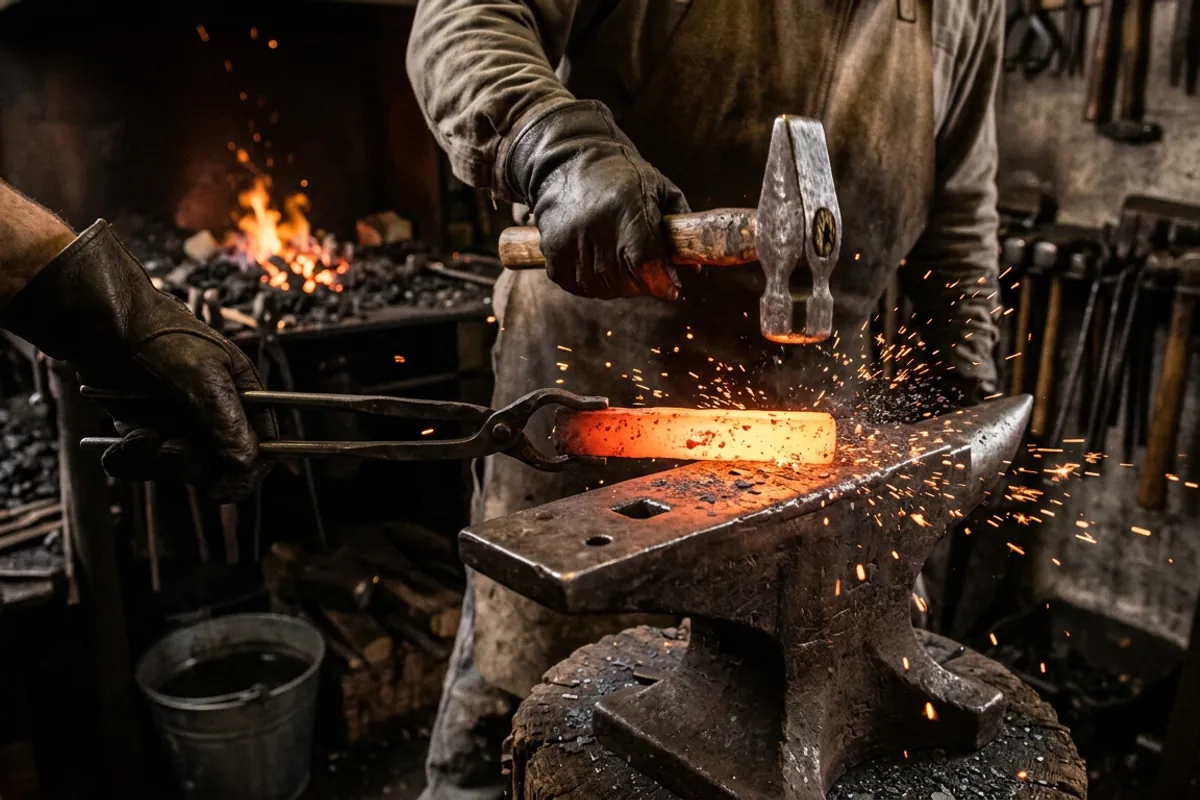
A cross pein runs perpendicular to the handle. You use it to spread and draw metal across the width of a bar, and it is the pattern I start beginners on because it teaches you to move steel deliberately. A straight pein runs in line with the handle and draws metal along the length of the bar instead. A rounding hammer trades the pein for a second, domed face: one flat side for general work and one crowned side for drawing out and for leaving a smoother finish. Farriers and a lot of knife makers swear by rounding hammers. Neither pattern is wrong, and most smiths end up owning both eventually.
Two things matter more than the pattern for a first hammer. The first is weight. The second is the shape of the face, which almost nobody talks about and which makes the difference between a hammer that leaves clean work and one that stamps half moons into everything you touch. I will come back to the face, because it is the single most common thing new smiths get wrong about a brand new hammer.
If you want the deeper background on the whole family of striking tools, the hammers and tongs topic hub collects it, and the blacksmith hammer buying guide covers the general pattern-and-weight decision in more detail than I will here.
The specs that matter, side by side
Here is the field at a glance. Every figure below is a published spec from the maker or a non-marketplace retailer, cited under each hammer's section. Where a figure is not published, I have said so rather than guessing.
Scroll horizontally to see all columns.
| Hammer | Head weight | Pattern | Handle | Made in | Price tier |
|---|---|---|---|---|---|
| Vaughan S32 | 2 lb | Cross pein | 14.5 in hickory | USA | Budget |
| Picard 0000811-1000 | 2.2 lb (1000 g) | Swedish cross pein | 14 in ash | Germany | Premium |
| Caliburn rounding | 2.5 lb | Rounding | 13.5 in wood | Not published | Budget |
| Seymour HB-3 | 3 lb | Cross pein | Wood | USA | Budget |
Weight is the number to read first. For most adults starting out, a head in the 2 to 2.5 pound range is the sweet spot. It is heavy enough to move metal and light enough that you can control it through a full session without wrecking your elbow. Handle length in the 14 to 15 inch range is standard for a one handed forging hammer and needs no thought. Handle material should be hickory or ash, both of which are shock absorbing hardwoods; if a listing does not name the wood, treat that as a small red flag on a cheap hammer.
Vaughan S32, the 2 lb cross pein I would start you on
This is my default answer for a first smith hammer. Vaughan has been making hammers in the United States since 1869, and the S32 is a plain, honest, drop forged cross pein. The published specs from The Hammer Source list a 2 pound head, a 14.5 inch flame treated hickory handle sure locked into a tapered eye, a polished striking face, and a beveled pein to reduce chipping (Hammer Source spec page).
Two pounds is right for most people, the hickory handle is the correct material, and being drop forged from heat treated high carbon steel means the head will hold up. It is a budget hammer in price but not in the ways that matter. The honest tradeoff is finish: like almost every factory cross pein, the face ships flatter and sharper edged than I would want, and you will get more out of it after ten minutes of dressing (covered below). That is not a knock on Vaughan specifically, it is true of nearly every hammer in this price class.
Check price on Amazon (paid link)
Picard Swedish pattern, the step up in fit and finish
If you want to spend once and not think about it again, the Picard 0000811-1000 is the hammer smiths point to. Picard has been forging tools in Wuppertal, Germany since the 1850s, and the fit and finish shows it. The published specs from The Hammer Source list a 1000 gram (2.2 pound) head, a dual curved ash handle, a 14 inch overall length, a square face measuring about 1.5 by 1.625 inches, and a cross pein of roughly 1.5 by 0.5 inches, with both the face and pein ground and the edges chamfered from the factory (Hammer Source Picard spec page).
That last part is the reason to pay more. Picard grinds and chamfers the face at the factory, so it arrives closer to ready than a typical budget hammer. The weight is nearly identical to the Vaughan, so this is not about buying more hammer, it is about buying a nicer one that needs less work out of the box. If your budget is tight, the Vaughan does the same job for less. If you would rather buy the last cross pein you will need for a decade, this is it. It is a premium price for a hand hammer, but it is a genuinely premium tool.
Check price on Amazon (paid link)
Caliburn rounding hammer, if a rounding face suits your hands
Some smiths, especially folks headed toward knives, just get along better with a rounding hammer than a cross pein. If that is you, the Caliburn 2.5 pound rounding hammer is a common budget entry point. Its listed head weight is 2.5 pounds with a roughly 13.5 inch wood handle; the handle wood and head steel are not published, which is the honest limitation of a budget import and the reason I would check the handle and re-hang it if needed before leaning on it.
For what a rounding pattern is supposed to be, look at a known-good reference like the Bloom 2.5 pound rounding hammer sold through Centaur Forge, which publishes a 2.5 pound head with one rounded face and one flat face on a premium hickory handle, made in the USA (Centaur Forge Bloom rounding hammer). That flat-and-domed face combination is the whole point of the pattern: the domed side draws metal fast and the flat side finishes. If you know you want a rounding hammer and you want to spend less to find out whether the pattern suits you, the Caliburn does that; if you fall in love with the pattern, a US forged rounding hammer is the upgrade. The blacksmith rounding hammer buying guide goes deeper on sizing that pattern.
Check price on Amazon (paid link)
Seymour HB-3, the heavier cross pein, and a word about weight
The Seymour HB-3 is a 3 pound cross pein on a wood handle, made in the USA, and I include it mostly to make a point about weight. Three pounds is a lot of hammer for one handed forging, and I would not hand it to a beginner. It is fine for a bigger person doing heavier stock who already has good form, and it is a legitimate second hammer once your technique is set. But reaching for a 3 pound head too early is how new smiths give themselves tendinitis and golfer's elbow, and once you have that, you are off the anvil for weeks.
Buy the weight your body can control for an hour, not the weight that looks impressive. You move more metal with good technique and a 2 pound hammer than with bad technique and a 3 pound one, every time. If your stock genuinely needs more mass than your arm can deliver, that is an argument for a striker or a power hammer, not for a heavier hand hammer.
Check price on Amazon (paid link)
What owners say
For the hammers here that I have not run down myself, here is what the forums report, so you are not taking my read alone.
On weight, the consensus on I Forge Iron lines up with what I tell weekend beginners. In the "Hammer size??" thread, the recommendations cluster in the 2 to 3 pound range, and several experienced smiths push back hard on the idea that heavier is better; more than one notes that a 2 pound head is plenty and that some prefer to drop down into the 600 to 800 gram range once they are working smaller stock (I Forge Iron, Hammer size). That matches my experience: people almost always start too heavy, not too light.
On brands, Vaughan and Picard both come up as safe, well regarded buys in cross pein discussions, with Picard singled out for arriving better dressed and Vaughan for being the honest value (I Forge Iron, a good cross peen hammer). The recurring theme across those threads is not which brand, it is that a factory face almost always wants dressing before it is at its best, which is the next section. Owner signal on the budget import rounding hammers is thinner and more mixed, mostly complaints about soft or roughly finished handles, which is why I would treat the Caliburn as a try-the-pattern hammer and re-hang it if the handle is questionable rather than a buy-it-for-life tool.
Dressing the face and hanging the handle
This is the part that turns an average hammer into a good one, and it is why I do not get too worked up about small differences between decent brands. A brand new hammer usually ships with a nearly flat face and sharp, square edges. That sharp edge is what leaves half moon marks and little dig lines in your work. The fix is to dress the face: round over the edges and put a slight crown on it, so the working surface transitions smoothly instead of biting.
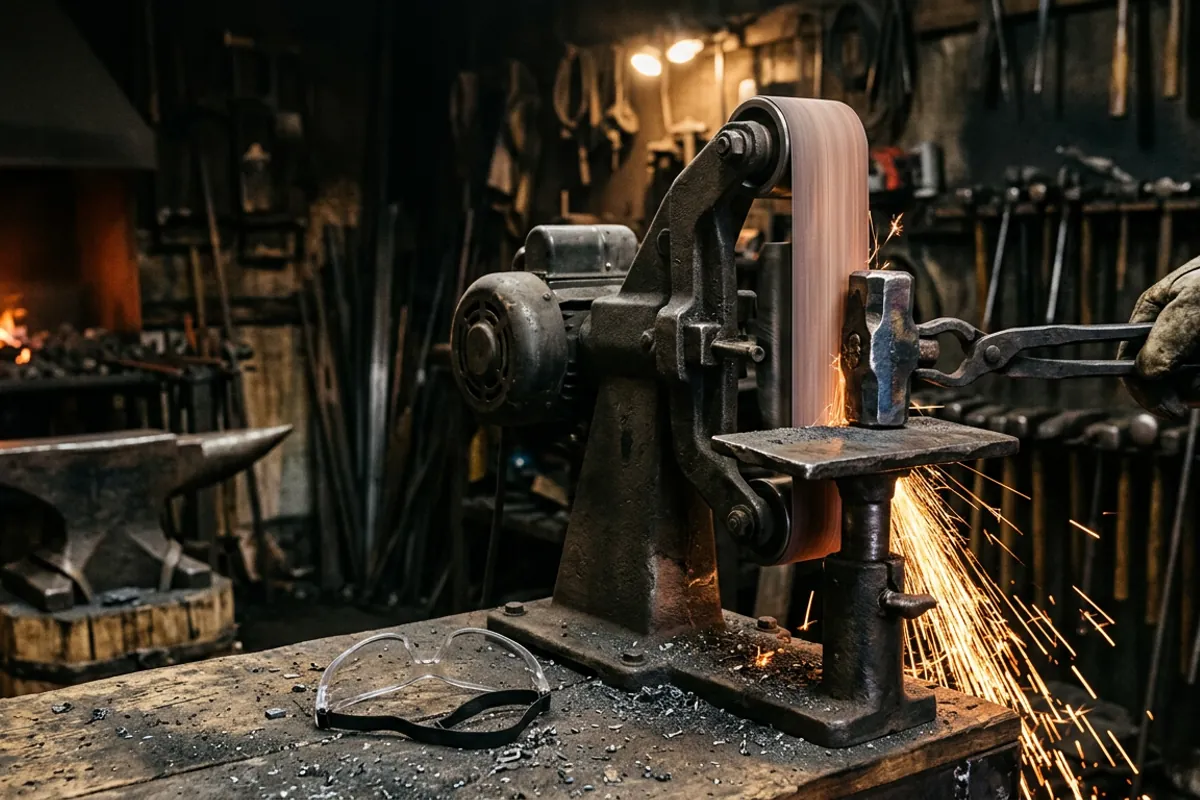
You do this on a grinder or belt sander, working the edges back to a gentle radius and the face to a subtle dome, then knocking down the grind marks with progressively finer sandpaper and a bit of polish. You are not removing much metal, you are just softening the geometry. Take your time and keep the steel cool so you do not draw the temper out of a hardened face. And wear eye protection rated ANSI Z87.1 the entire time, because grinding throws steel and abrasive at your face. I do not treat that as optional. I quenched a blade too close in a cotton shirt with no face shield once early on and the oil flared and took my eyebrows; I kept my eyesight by luck. Wear the glasses.
If you buy a used hammer, or if a handle ever splits, you will want to knock the old handle out and re-hang the head, which means driving the remains out of the eye and fitting a new handle and wedge. A hammer eye is tapered and often needs the new handle drifted to fit; the hammer eye drift buying guide covers the tool for that. A good hardwood handle, hung tight and wedged properly, is safer and more comfortable than any anti-vibration gimmick handle.
One safety rule that is not optional no matter which hammer you buy: never strike two hardened faces bare against each other. A hammer face is hardened and so is an anvil face, and cracking them together with nothing between them, or striking one hardened hammer with another, can spall a chip off at the speed of a bullet. Keep hot steel between your hammer and the anvil, keep your Z87.1 glasses on, and wear natural fibers near the forge, because synthetics melt to skin. The rest of the blacksmith safety gear rundown is worth reading before your first heat. And the hammer is only half the pair; you cannot hold hot stock without decent blacksmith tongs, so budget for both.
What I would tell a friend
Buy the Vaughan S32. It is a 2 pound US made cross pein at a budget price, it is the right weight for almost everyone starting out, and after ten minutes of dressing the face it will do everything a beginner needs for years. If you would rather spend once and get a factory finished face, the Picard 0000811-1000 is the nicer tool and worth the premium, but it is not a better forging hammer, just a better finished one. If you already know a rounding face suits you, start with an inexpensive rounding hammer to confirm it, then buy a forged one you will keep.
The one to skip on day one is the 3 pound Seymour, or any 3 pound and up head, until your technique and your elbow can take it. Heavier is not better with a hand hammer, and the fastest way to lose a season is an overuse injury from swinging too much mass too soon. Pick 2 to 2.5 pounds, dress the face, hang the handle tight, keep your eyes protected, and get to the anvil.