I have solid sources and two verified ASINs. Writing the article now.
Here is the article:
If you want to forge your own hammer, the tool that decides whether the head comes out usable is the hammer eye drift. It is a tapered bar of tough steel you drive through a punched slot to open, shape, and size the eye that the handle seats in. Get the drift right and the head takes a handle that never works loose; get it wrong and you have a nicely forged paperweight with a hole in the wrong shape. My honest verdict up front: for most home smiths the smart buy is a single, correctly shaped 4140 drift from a real blacksmith shop, not a novelty three-piece import kit, and definitely not something you found in a bin with no maker's name on it. The kits get you started cheap, and I will cover them, but they are the compromise, not the pick.
Fair warning on where this comes from. I have forged hammer eyes and I have opinions about how a drift should feel driving through hot steel, but I have not run every drift on this page down in my own shop. Where I am leaning on a maker's published spec or on what smiths report on the forums, I say so. The picks are published specs and owner reports weighed against shop experience, not a bench test.
What a hammer eye drift actually does
A drift is not a punch. People new to this run the two words together, so it is worth pulling them apart. You start the eye with a slitting chisel or a punch, driving a slot through the hot head over the hardy hole or a bolster plate. That slot is small and rough. The drift is the second tool: a smooth, tapered bar you drive down through that slot to stretch it out to final size and, more importantly, to final shape.
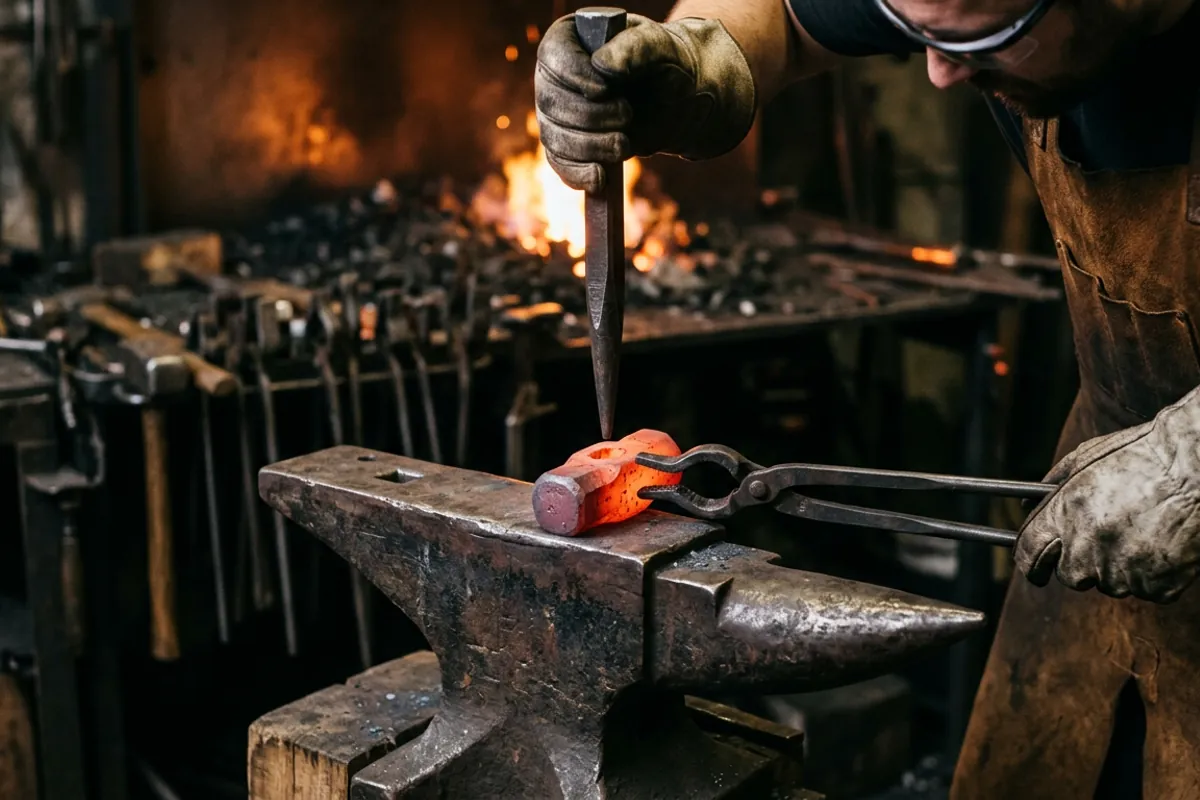
Shape is the whole game. A hammer eye is not a round hole and it is not a plain rectangle. The good ones are a teardrop or oval in plan, and slightly hourglassed through the thickness, wider at the top and bottom faces than in the middle. That hourglass is what lets a wooden handle and wedge lock in both directions so the head cannot walk up the handle and fly off. A proper hammer eye drift carries that teardrop cross section along its taper, so when you drive it through, the eye it leaves behind is already the right shape for a store-bought or hand-fit hammer handle. A round rod will open a hole, but it opens the wrong hole, and you will fight the handle forever.
The drift also does the sizing. Drive it partway and stop, and you get a smaller eye; drive it through the fat end and you get a larger one. That is why a single well-made drift can cover a range of hammer weights. It is the same reason an axe eye drift is a close cousin of this tool: same idea, different eye profile, and if you plan to make hawks or hatchets too, read that one alongside this.
How I would pick one
Three things matter, in order: the steel, the cross section, and the length. Everything else is packaging.
Steel first. A drift takes a beating while it is hot and it soaks heat out of the workpiece, so it wants a steel that stays tough warm and does not mushroom or crack. The workhorse answer on the forums and in most small shops is 4140 chromoly, sometimes bought pre-hardened. It is tough, it is forgiving, and it takes the abuse. Smiths who push harder or drift a lot of eyes reach for hot-work steels like H13 or a tough shock steel like S7, which hold up better to repeated heat but cost more and are fussier to heat treat. If you want to understand what these numbers actually buy you, I wrote up how I heat treat 4140 from the forge floor, and the same logic applies to a tool made of it. What you do not want is a mystery-metal drift with no maker and no stated steel. If nobody will tell you what it is made of, assume the worst and price it accordingly.
Cross section second. Hold the drift and look at it end on. You want a teardrop or flattened oval that matches a real hammer handle, not a fat round dowel. Some import kits sell round or nearly-round "drifts" that are really just mandrels, and a round eye is a bad hammer eye. For metallurgy questions on tool steel behavior I send people to Knife Steel Nerds rather than trusting a product listing, but for shape you can judge with your own eyes: does the end look like a hammer handle, or like a broom handle?
Length last. A drift wants enough length to grab safely with tongs and to drive clean through the head with room to spare on both ends. Around 12 to 18 inches is the range most maker drifts land in, which is enough to keep your hand well back from the hot head.
The field, side by side
Only published figures below. Where a maker does not state a number, it says so. Prices are qualitative for the marketplace items per site policy; the shop-made drifts list their published prices.
Scroll horizontally to see all columns.
| Drift | Steel | Size range | Suits | Price tier |
|---|---|---|---|---|
| Import 3-piece kit (hammer, tomahawk, mouse axe) | "heavy-duty steel", grade not stated | hammer drift 5/8 x 7/8 up to 3/4 x 1 1/8 in | Beginners, several eye shapes | Budget |
| Single tomahawk eye drift / mandrel | Not published | Not published | Hawk and axe eyes | Budget |
| Water Oak Forge 4140 drift | 4140 | ~18 in, eye max 1 x 3/4 in | One handled hammer eye | Mid ($85.00) |
| Front Step Forge 4140 drift | 4140 | ~15 in | 1 to 4 lb hammers | Mid ($55.95 as-forged to $105.95 ground) |
| Blacksmiths Depot 4140 drift | 4140, machined and heat treated | Not published | Hammer eyes | Premium ($120.00) |
Sources for those figures: Water Oak Forge, Front Step Forge, and Blacksmiths Depot. Read them yourself before you buy; makers change stock and specs.
The budget three-piece import kit
This is the one most people find first because it is cheap and it ships fast. You get three drifts in one box, usually sold as a large hammer drift, a tomahawk drift, and a smaller "mouse axe" drift, so you can open several different eye shapes without buying three separate tools. The published taper on the hammer drift runs from about 5/8 x 7/8 inch at the small end up to 3/4 x 1 1/8 inch at the large end, which is a sensible hammer-eye range for a 1 to 2 pound head. The tomahawk drift is longer and more teardrop, and the mouse axe drift is the little one for small eyes.
The honest read: the listing calls the steel "heavy-duty" and never names a grade, and that is the catch. For a beginner opening a couple of eyes a year, an unhardened or lightly hardened import drift will do the job, especially if you keep it cool and drive it through a properly heated workpiece so it is not fighting cold steel. What you should not expect is decades of hard use without the ends dressing over. Treat it as a learning tool. If you make one hammer, decide you love it, and want to make ten more, buy a real 4140 drift. As a starting point for the price, though, it is a reasonable way in, and the multiple shapes are genuinely useful while you figure out what you actually forge.
Check price on Amazon (paid link)
The single tomahawk eye drift
If you are honest that you mostly want to make hawks and axes, not hammers, a single dedicated tomahawk eye drift makes more sense than a three-piece hammer kit. This one is sold as a forged tomahawk eye drift and mandrel, one tool, teardrop profile. The listing does not publish the steel grade or exact dimensions, which is a mark against it, and I would push the seller for that before buying if you can. Where it earns its place is focus: one correctly shaped drift for the eye you actually make beats three so-so drifts you use once each.
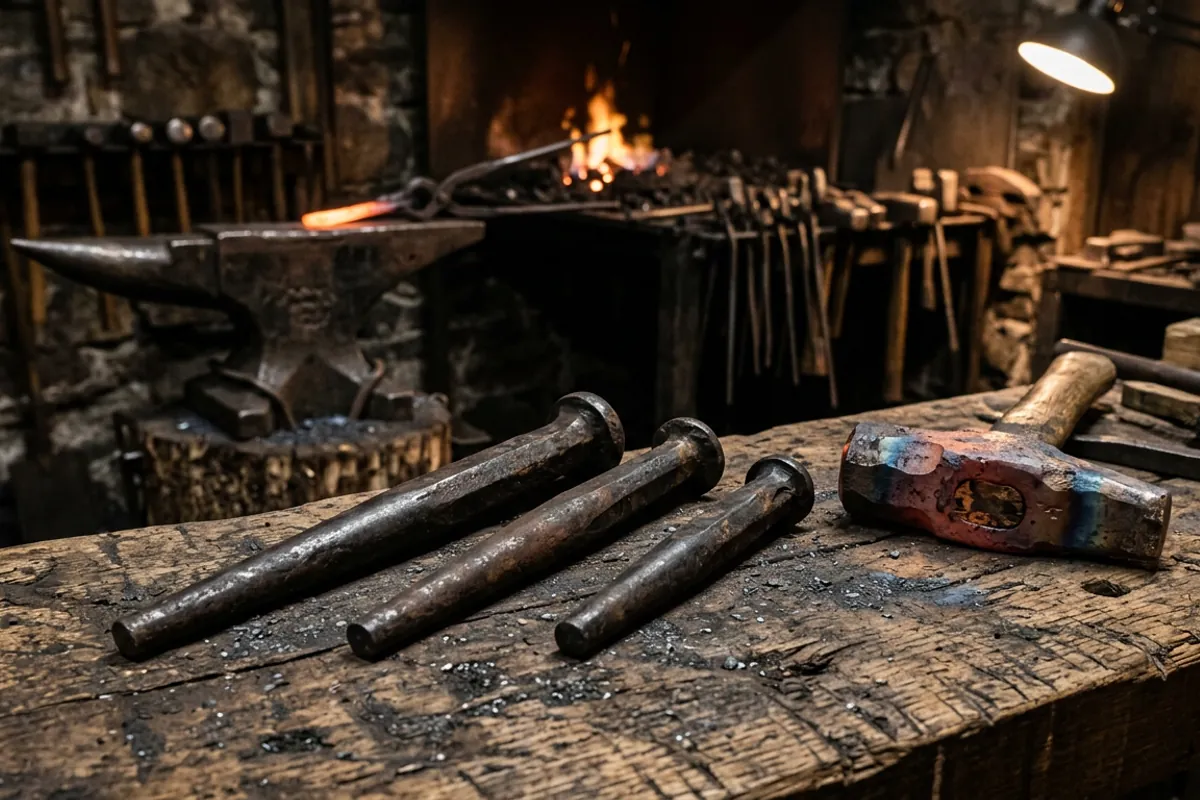
The tradeoff is the same as the kit. Unstated steel means unknown longevity, so buy it as a working starter and plan to graduate to a named-steel drift if you drift eyes often. For the occasional hawk build it is plenty, and a single tool is one less thing rattling around the rack.
Check price on Amazon (paid link)
The made-to-order 4140 drifts from real shops
This is where I would spend my money if I were buying one drift to keep. Several small blacksmith shops forge and sell hammer eye drifts from stated 4140, and a couple machine and heat treat them. Water Oak Forge lists an 18 inch drift in new 4140 with an oil blackened finish and a published eye of up to 1 by 3/4 inch, made to order. Front Step Forge sells a roughly 15 inch 4140 drift sized to cover 1 to 4 pound hammers, offered either as-forged for you to grind or finished and ground smooth. Blacksmiths Depot sells a machined, heat treated 4140 drift at the top of the range.
The reason to buy one of these is simple: you know exactly what the steel is, the shape is made by someone who forges hammers, and it will outlast a stack of import drifts. The reason to hesitate is lead time. These are hand-made to order, so plan on a couple of weeks, and the eye size is fixed per drift, so match the drift to the hammer weight you actually forge. If you want one drift for one kind of hammer, this is the honest answer. If you want to experiment across shapes first, start with a kit and buy the good drift once you know what you make.
You will also need something to drift over, whether that is the hardy hole in a solid anvil, a bolster plate, or a swage block with a slot. A cast doorstop anvil is a poor place to take drift blows; you want mass and a real hardy hole under the work.
What owners say
I have not run every one of these down myself, so here is what the forums report, attributed.
On steel, the consensus on I Forge Iron is exactly what you would expect: 4140 is the everyman answer, and smiths who want more reach for H13 or S7. The thread "Hammer Eye Drift material?" walks through the tradeoffs, and there is a companion discussion on using A2 for a drift where members weigh air-hardening tool steel against the tougher, more forgiving options. The recurring note is toughness over hardness: a drift that chips is worse than one that dresses over slowly.
On making versus buying, the long-running Brian Brazeal thread, "Making a hammer eye drift", is the reference a lot of smiths point new people to, and it is a fair reminder that a drift is itself a forgeable project once you have the steel. On the import kits specifically, owner signal is thinner and more mixed than I would like, which is itself the finding: people report they work for occasional use, and people report the ends mushroom under hard use, both of which line up with an unnamed steel grade. I would not oversell a consensus that is not there.
The other steady theme across the drift threads is technique, not tooling: keep the drift cool, drive it in stages, and quench it between passes so it does not soak up your heat and soften. That advice shows up more often than any product name, and it matters more than which drift you buy.
Drifting safely, and how the tool gets used
This is a hot operation with a heavy tool and a workpiece that wants to move, so treat it seriously. Eye protection rated to ANSI Z87.1 is not optional here; punching and drifting throw scale, and a drift driven off-center can send a chip. Wear natural fibers, cotton or wool or leather, never synthetics that melt to skin near that heat. I learned the clothing lesson the hard way years ago with a quench-oil flare that took my eyebrows, and nothing about drifting is gentler than a quench.
The sequence is punch or slit the eye first, then drift. Reheat the head to a good working orange, set it over the hardy hole or bolster so the eye can pass through, and drive the drift in stages, turning the head over and working from both faces to keep the hourglass symmetric. Quench the drift between passes to keep it hard and to stop it stealing your heat. Do not try to open a cold eye; you will beat the drift stuck and risk cracking the head. When the eye is sized, back the drift out while everything is still hot, or it will lock in as it cools.
A drift lives near the rest of your hammer-making kit, so if you are building out that corner of the shop it is worth reading the broader hammers and tongs hub and, if you are forging the head to swing later, my notes on the rounding hammer and the cross pein so the head you make matches the way you actually work.
What I would tell a friend
Buy the steel you can name. If you are only ever going to make one style of hammer, a single 4140 drift from a shop that forges hammers is the tool to own, and Front Step Forge or Water Oak Forge are sensible places to start looking. If you are still figuring out whether you even like making eyes, the import three-piece kit gets you drifting for the price of lunch, with the honest caveat that the unnamed steel is a beginner's tool, not a lifetime one. Skip anything, at any price, that will not tell you what it is made of and will not show you a teardrop cross section.
And whatever you drive, drive it hot, drive it in stages, quench it between passes, and keep your eyes protected. The drift is cheap next to the head you are trying to make and cheaper still next to your eyesight.