I have verified live listings and pulled specs from non-marketplace sources. Forums block automated fetch, but search returned real, specific thread content I can attribute honestly. Writing the article now.
Here is the article.
A good vintage blacksmith hammer is one of the best deals left in this trade, and it is also one of the easiest ways to bring home a heavy paperweight. I have bought old hammers off flea market tables, out of coffee cans at farm auctions, and once out of the back of a farrier's truck, and the honest truth is that most of the value sits in the head, most of the risk sits in the face, and almost none of it is in the handle. Here is the short version before I get into the weeds: buy an old drop-forged cross pein or Swedish pattern head with a sound face and a sound eye, plan to rehandle it, and dress the edges lightly. If you cannot find a clean one, a new Peddinghaus or Picard will serve you for the rest of your life and cost you less than a bad decision at auction.
I need to be straight with you about what this guide is. I have swung a lot of old hammers over about twenty-five years, so I can tell you what a worn face feels like on the anvil and what a wallowed eye does to a handle. But I have not owned every hammer named here, and I cannot bench test a head that came off a stranger's table decades ago. So the calls on the new hammers below lean on the makers' published specs and on what owners report on the forums, weighed against what I know from the floor of my own shop. Where the signal is thin, I will say so.
What a vintage blacksmith hammer really is
When smiths say vintage blacksmith hammer, they usually mean a drop-forged smithing hammer from the first half of the twentieth century or a little later: a cross pein, a Swedish pattern, a straight pein, or a French pattern from a real toolmaker. In the American market that means names like Atha, Heller, Vaughan, and Plumb, forge tools that were made in the millions when every town still had a working blacksmith. A Swedish pattern hammer has a square, slightly crowned face on one end and a cross pein on the other, and it is one of the most common patterns you will find on a used table, which is exactly why it is the one I steer beginners toward. The Hammer Source has a clear rundown of the French and Swedish patterns if you want to see the shapes side by side.
What a vintage hammer is not is a bargain-bin import ball pein from a big-box store, and it is not automatically better just because it is old. The reason I chase the old ones is that a well-made drop-forged head from a real maker tends to have better steel and a better forging than the cheapest new hammers, and the price is often a fraction of a new German tool. But age alone buys you nothing. I care about the head, not the birth date. If you want the wider view on old tools, I wrote up the antique blacksmith hammer worth buying and the old blacksmith hammer separately, and the same eye applies across the whole vintage blacksmith tools shelf.
What I check before I hand over money
The face is where I look first and hardest. Light surface rust and a few shallow dings are nothing; a mushroomed edge is a fixable annoyance; but a chip that runs into the face, a crack anywhere in the head, or deep pitting across the striking surface is a walk-away. A chipped face edge can be dressed back into a clean radius, and that is normal work. A crack in the eye or across the face is a hammer that will keep failing, no matter what you do to it.
I check the eye next, the hole the handle passes through. A wallowed, oversized, or cracked eye means the head has been loose and pounded on for years, and it will never hold a handle tight. Pass on it. I look at the pein too, because on a much-used hammer the cross pein can be mushroomed or spread, and mushrooming matters for a reason beyond looks: struck steel that has spread over the edge can shear off and fly, and a chip off a hardened hammer at speed will find your eye before you know it happened. That gets ground off before the hammer ever earns a swing.
Weight is a preference more than a rule, but for general forging most smiths land somewhere in the two to three pound range for their main hammer, and I would tell a new smith to start on the lighter end. Your forearm learns faster with a hammer it can control than with one it has to muscle. If you are trying to read a fair price on a used find, I put my thinking on that in the antique blacksmith hammer guide, and the same logic carries over to the whole hammers and tongs topic.
The new hammers I point people to when the vintage well runs dry
Some months you cannot find a clean old head anywhere, or the only ones on the table are abused. When that happens I stop hunting and buy new, because a good German hammer is a lifetime tool and the price of a decent used one plus a rehandle can get close to a new one anyway. Two makers earn my recommendation on published specs and long owner reputation: Peddinghaus and Picard, both drop-forged in Germany.
Scroll horizontally to see all columns.
| Hammer | Pattern | Head weight | Head | Handle | Made in | Price tier |
|---|---|---|---|---|---|---|
| Peddinghaus German cross pein | German cross pein | 28 oz | Drop-forged steel | Hickory | Germany | Mid |
| Picard blacksmith hammer, 1000 g | Swedish cross pein | 1000 g (about 35 oz) | Drop-forged alloy steel | Ash | Germany | Mid to premium |
Those figures come from Pieh Tool Co's listings for the Peddinghaus and Picard German pattern hammers and Picard's own maker information; neither maker publishes a face hardness number, so I am not going to invent one.
The Peddinghaus 28 ounce German pattern cross pein is the one I hand most people. It is a drop-forged head on a hickory handle, the pattern is versatile for general forging, and the brand has decades of owner trust behind it. Check price on Amazon (paid link).
The Picard runs a touch heavier at 1000 grams, roughly 35 ounces, in a Swedish pattern with a squarer face that a lot of smiths prefer for drawing and planishing. The version linked here comes on an ash handle rather than hickory, which is fine wood for the job. It is the pricier of the two, and worth it if the Swedish face suits your work. Check price on Amazon (paid link). If you want to compare patterns before you commit, my cross pein hammer guide lays out who each shape suits.
Neither of these is exotic and neither is a marketing gimmick. They are honest, boring, well-made hammers, which is exactly what you want in a tool you will swing ten thousand times.
Rehandling a vintage head, because the handle is the cheap part
Assume every old head needs a new handle, and price the hammer accordingly. Wood dries, cracks, and works loose over decades, and a handle is the one part you can replace for a few dollars in an evening. This is why a head with a great face and a rotten handle is a bargain, not a problem.
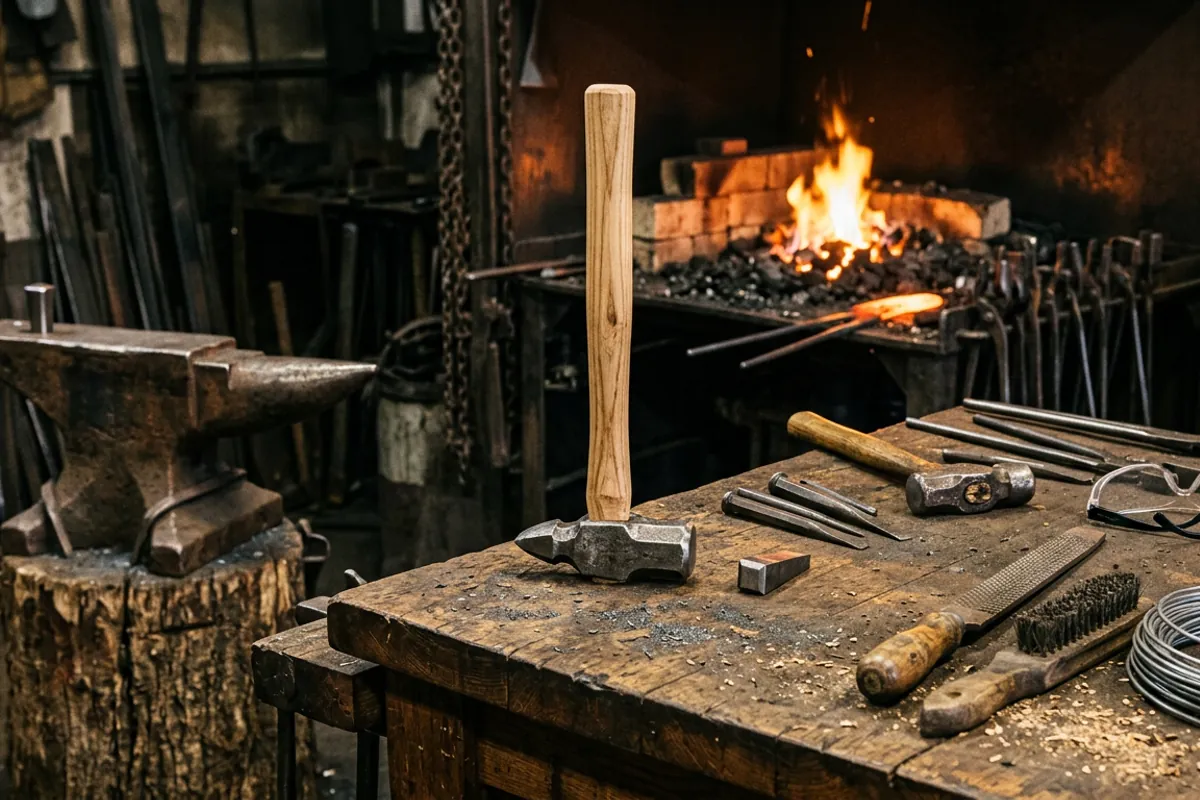
For a heavier smithing or engineer head, a hickory blank sized for the job hangs it right. The True Temper blacksmith and engineer replacement handle is a straight 16 inch hickory handle; AMES lists it as fitting blacksmith and engineer heads in the replacement handle specs, and other retailers put its fit in the 2.25 to 8 pound range. Check price on Amazon (paid link). For a lighter one to two pound cross pein you will want a slimmer handle, so match the blank to the eye rather than forcing a big handle down.
Hang it properly. Fit the head so it seats fully, cut your kerf, drive a wooden wedge to spread the wood into the eye, then set a steel wedge across it to lock the whole thing. Watch the grain, and watch runout first: straight grain running the full length of the handle is what keeps it in one piece, and grain that runs out the side a few inches from the eye is what snaps a handle over your knuckles. Ring orientation in line with the swing is a preference worth having after that, not before it. The full version is in the hammer handle replacement guide. Rasp the handle to a shape your hand actually likes; a handle you can grip loosely and still control beats a fat blocky one every time. A hammer that flies off the head is not a joke, so take the extra ten minutes and set the wedges right.
Dressing the face without ruining it
Most old faces need a light dressing, and this is where people wreck good hammers. The goal is a smooth face with a gentle crown and softly radiused edges, not a mirror and not a sharp corner. Sharp corners on the edge of the face stamp half-moon marks into your work, and a dead flat face is unforgiving. A slight dome and rounded edges let the steel move cleanly.
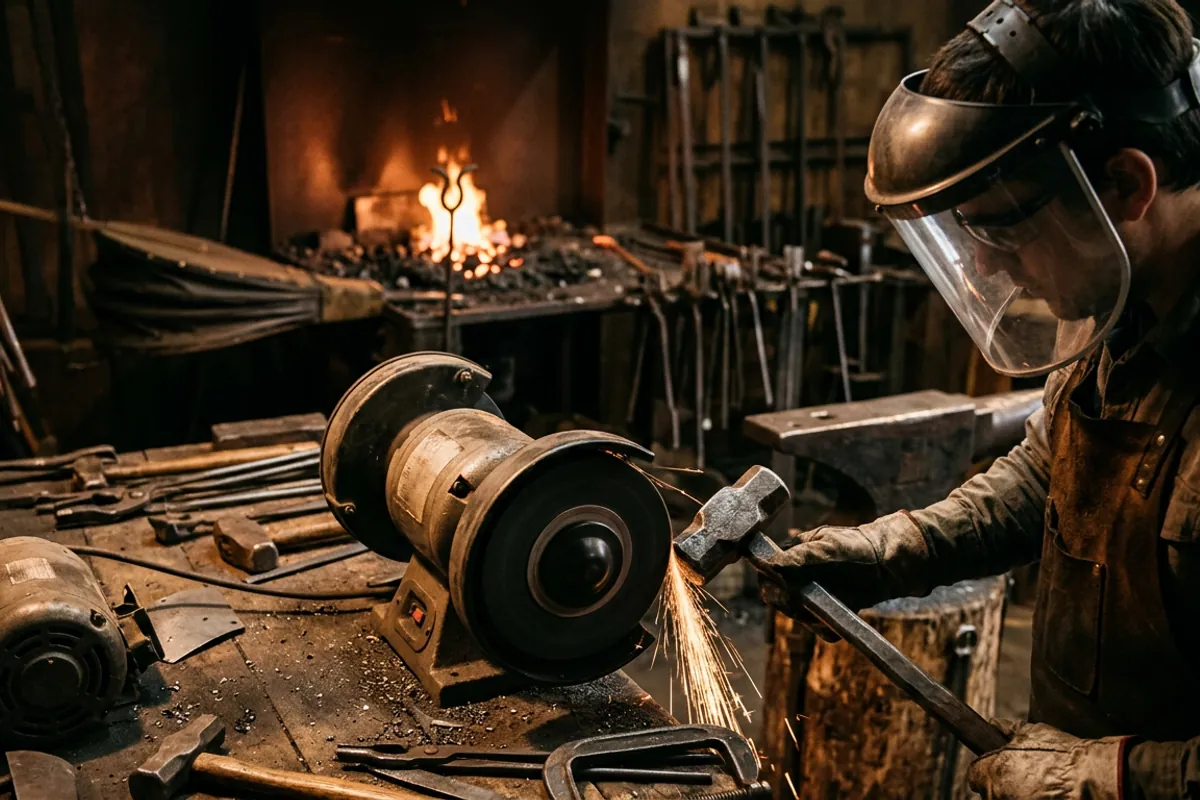
Two real hazards live at the grinder, and I do not treat either one lightly. First, heat. A hammer face is hardened and tempered steel, and if you grind it hot enough to turn straw or blue you have drawn the temper and softened the very surface you are trying to save. Work in light passes and keep the steel cool enough to hold in your bare hand, dipping in water between passes. Second, your eyes. Grinding hardened steel throws a stream of hot particles, and dressing a mushroomed edge can send a chip flying. Wear ANSI Z87.1 rated eye protection at the grinder, and a face shield over it for this kind of work. I lost my eyebrows to a quench-oil flare early on and kept my sight by luck alone, and I have never once regretted the extra second it takes to drop a shield. PPE at the grinder is not optional here, ever.
Grind the mushrooming off the pein and any spread edges before the hammer sees the anvil. Then radius the face edges, blend it smooth, and leave the hardness alone. You are dressing, not reprofiling. If the face is so far gone that dressing it means removing a lot of steel, that is a head to pass on, not a project.
What owners say
I trust the forums for the pattern that no single shop sees, so here is what the used-hammer crowd reports, attributed where I found it. On I Forge Iron, a smith wrote up bringing back an 11 pound Atha cross pein that had been badly abused, with chips out of the edge of the face, and the thread lands where I do: a beat old head with sound steel can be dressed back into service, and even a flea market find works well once you put a gentle radius on the edges. That is the whole game with vintage hammers in one thread.
On The Garage Journal, the recurring theme in threads like the old Heller hammer discussion is identification and honest assessment before restoration, which tracks with my rule that you buy the specific example, not the brand. Over on BladeForums, the general blacksmith hammer advice for people starting out leans toward a moderate weight cross pein and rounding the edges, new or old, rather than chasing a specific model.
Here is the honest thin spot. Owner signal on any one vintage brand is scattered, because this is a used market and you are buying a single hammer with its own century of history, not a model you can look up a review for. Two Atha cross peins off two different tables can be a treasure and a wreck. So the forum wisdom that actually transfers is process, how to judge a face and hang a handle, not brand rankings. Do not read a glowing thread about one old hammer as proof the next one you find is the same.
What I would tell a friend
Buy the old head with a sound face and a sound eye, walk away from anything cracked, and plan on a fresh handle from the start. Dress the edges into a gentle radius, keep the steel cool while you do it, and leave the hardness alone. If the used table keeps handing you junk, stop fighting it and buy the Peddinghaus new, or the Picard Swedish pattern if that face suits your work, because a lifetime hammer is cheap insurance against a paperweight. And before the first swing on any old find, grind the mushrooming off and put a Z87.1 shield over your eyes. The hammer will outlive you if you treat it right, but only your eyes are irreplaceable.