I have everything I need: three live-verified ASINs, published Picard specs, and two real forum/reference sources. Writing the article now.
Antique blacksmith tongs are one of the few old shop tools I will tell a beginner to actually go hunt for, because a pair forged eighty years ago will hold hot steel just as well today as the day it was made, provided the jaws and the rivet are still sound. That last part is the whole ballgame. A tired antique pair with thin, burned-back jaws and a sloppy rivet is a hot workpiece waiting to twist loose and land on your boot, and I have seen that happen at the club forge more than once. So this is a gear guide with an honest split down the middle: buy the antique if it passes the checks below, and if it does not, buy a plain new working pair and get on with forging. I do not own every pair linked here, so where I am leaning on published specs and owner reports rather than my own bench, I say so.
My anvil Bessie is a 148 lb Trenton I have run for the better part of twenty-five years, and half the tongs hanging on the rack next to her are old ones I bought used, cleaned up, and reforged to fit the stock I actually use. That is the case I want to make: an antique pair is worth buying when it is structurally honest, and it is worth walking away from when it is not. The trick is knowing which is which before the cash leaves your hand.
What "antique blacksmith tongs" really means
There is no certificate on a pair of tongs. "Antique" here just means old, hand-forged, and usually mild steel or wrought iron, joined at a forge-welded or riveted boss rather than machined. You find them at farm auctions, flea markets, estate sales, and on the online listings, often in a rusty bundle with a dozen mismatched pairs. Some are common flat-jaw and bolt tongs any farm shop kept around. Some are proper wolf jaw pairs or specialized box tongs that a working smith made for one job and never made again.
The value is not the age. It is the steel and the geometry. An old pair that fits the stock you forge, with mass left in the jaws and a tight rivet, is every bit as good as a new import and often better made. An old pair that has been reground, arc-welded at the joint, or burned so thin the tips glow before the workpiece does is scrap with a patina. Pay for the first kind. Do not pay antique-shop money for the second.
How I judge a pair before money changes hands
I learned this the slow way, by buying junk. Here is the checklist I run now, and it takes about thirty seconds a pair.
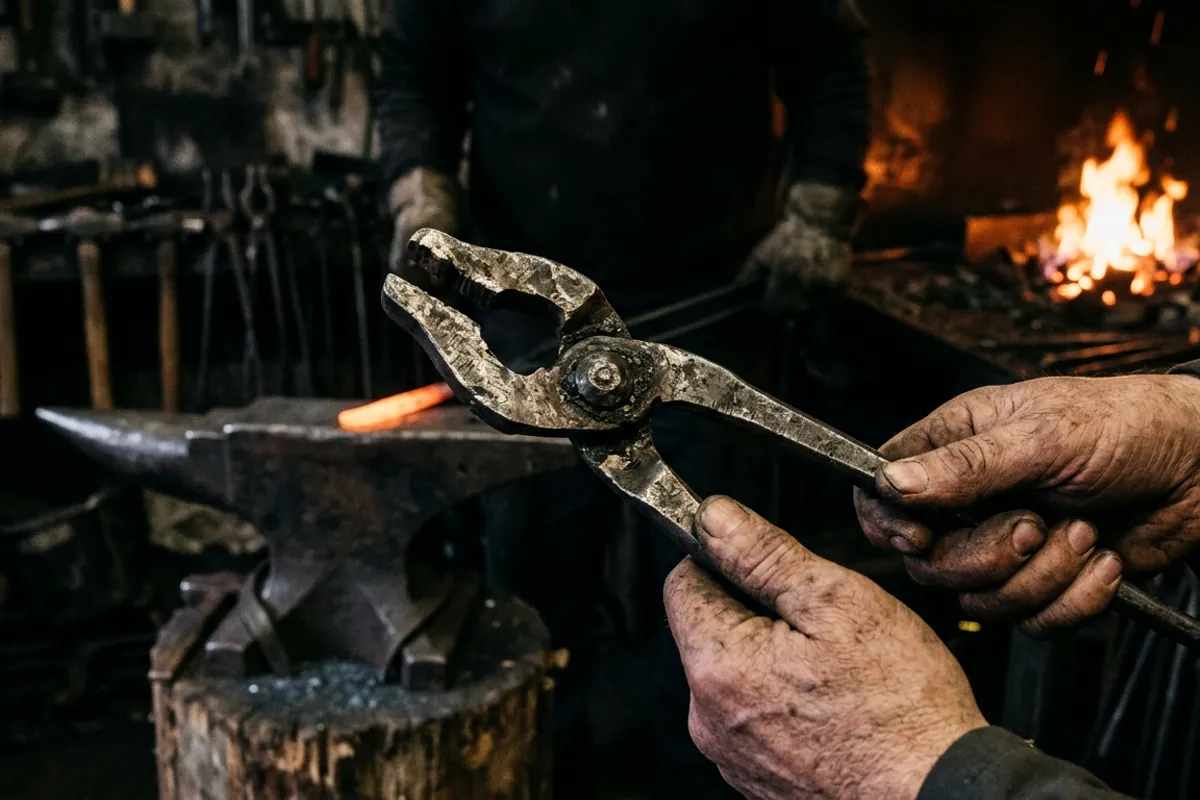
Both jaws present and matched. Obvious, but at an auction you are moving fast. If a jaw is missing or one is visibly shorter than its mate from grinding, pass. The reference smiths at Beautiful Iron put it plainly: reject a pair if one or both jaws is missing, because you cannot forge a matched replacement onto a factory joint without a lot of work. See their rundown at Beautiful Iron's tongs page.
Mass left in the jaws. This is the one people miss. The jaws need enough meat that the tips do not go red before your workpiece does. Thin, burned-back jaws lose their grip the second they heat up, and a hot bar sliding out of loose tongs is the real hazard here, not a cosmetic flaw. Hold the pair up, look at the jaw thickness, and imagine it after a few hundred more heats. If it is already spindly, it is done.
A tight, original rivet boss. Work the reins. There should be a little friction and no wobble side to side. Then look hard at the joint itself. Any sign of arc welding, gas welding, or heavy grinding on the rivet boss means the pair has been repaired, and a welded joint on old mild steel will fail in use. Beautiful Iron calls welding or grinding on that joint damaged goods, and I agree. A worn rivet you can sometimes re-peen or replace. A cracked, welded boss you cannot trust with a hot bar.
No deep cracks or heavy pitting at stress points. Surface rust is nothing. A crack at the reins or behind the jaws is everything. Wire-wheel a suspect spot in the shop later, but if you can already see a crack at the sale, walk.
Know the price of new before you haggle. Beautiful Iron notes that a smith can forge a serviceable pair from a few dollars of stock, and that new tongs run in the range of a common hand tool, not a collectible. That is your ceiling. An antique pair should cost less than a new working pair unless it is something genuinely special, because you are the one absorbing the risk on old steel.
The specs, side by side
Here is the field laid out. The antique row is deliberately vague because that is the honest truth of buying used: specs vary pair to pair, and nothing is published. The Picard figures are the maker's published numbers from a non-marketplace retailer, and the import figures are length per the listing with material left as the maker states it, which is to say not much.
Scroll horizontally to see all columns.
| Tongs | Type | Length | Weight | Material | Price tier |
|---|---|---|---|---|---|
| Antique pair (typical) | Flat, wolf jaw, bolt, box | Varies | Varies | Mild steel or wrought iron, forged | Used / flea market |
| Picard P4900 | Wolf's jaw | 12 to 24 in | 1.4 lb and up | Forged steel, made in Germany | Premium |
| Import wolf jaw | Wolf jaw | 16 to 17 in per listing | Not published | Steel, grade not published | Budget |
| Import 3 piece set | Flat, wolf jaw, bolt | Not published | Not published | Forged steel, heat treated per listing | Budget |
The Picard published lengths and weights come from The Hammer Source's Picard tongs listing. Those are the numbers to anchor on when you are trying to figure out what a "16 inch wolf jaw" should actually weigh in the hand. If an import 16 inch pair feels dramatically lighter than a Picard of the same length, that is thin stock, and thin stock is exactly what you were told to avoid on the antique.
For how these tong types fit into the wider rack, and how I think about buying tongs generally rather than just old ones, I keep two companion guides: the blacksmith tongs I would buy first and the forging tongs breakdown. If you want the adjustable-jaw angle specifically, that is its own guide.
The new wolf jaw pair I would buy instead
If the antique bin comes up empty, or every old pair in it fails the jaw-and-rivet check, do not force it. A single good wolf jaw pair covers more of a beginner's forging than any other single tong shape, because the grooved and flat sections between the jaws let one pair hold round, square, and flat stock across a useful range of sizes. That is why the smiths in the BladeForums tongs thread reach for wolf jaw pairs as their default hold-it-while-I-work tong before they grab anything specialized.
The plainly named import wolf jaw pairs are the budget entry here. The 17 inch version is Check price on Amazon (paid link) and the 16 inch is Check price on Amazon (paid link). I have not run these specific pairs down in my own shop, so I am reporting what the field says, not a bench test: they are serviceable forge tongs at a hand-tool price, the steel is soft enough that you may need to tweak the jaws to close evenly on your stock, and the reins sometimes need spreading or drawing to sit right in the hand. That is normal for cheap tongs and it is fixable with a heat and a few taps, which is a skill worth having anyway. What you are buying is a usable pair for the price of a nice hammer, not heirloom German steel.
If your budget stretches, the Picard P4900 wolf's jaw is the pair I would point a serious beginner at instead, and it is worth knowing it exists before you spend on three cheap pairs that add up to its price. It is not an antique and it is not an Amazon link here, but the published specs above tell you what real forged tong stock weighs, and that is the yardstick.
A starter set if you need more than one shape
One pair of tongs is enough to start. It is not enough to stay comfortable. The moment you forge a bolt head, or draw out a long taper, or hold flat bar for a hook, you feel the want of a shape the wolf jaw does not quite grip. The honest read from the forums is that specialized tongs each do one job better than the do-everything pair, which is exactly why smiths end up with a rack of them.
For that, a small set covers the common shapes at once. The three piece flat, wolf jaw, and bolt set is Check price on Amazon (paid link). Owner consensus, and my own experience with imports of this class, is that a boxed set is uneven pair to pair: usually one pair fits well out of the box, one needs jaw adjustment, and one is just okay. For a beginner that is still a reasonable deal, because you are getting three shapes and three chances to practice reforging jaws to fit. Do not expect any pair in a budget set to hold a precise size perfectly until you have tuned it. The bolt tong in particular wants its jaws closing cleanly around the round bar or it will roll the work.
I am not going to pretend a boxed import set is the same tool as a hand-forged pair matched to your stock. It is a starting rack, and it earns its keep while you learn which shapes you actually reach for.
Reforging a tired antique pair
This is the part that makes buying antiques worth it. A pair with sound rivet and enough jaw mass, but the wrong jaw shape for what you forge, is not a problem. It is a project. The old-timers in the BladeForums thread and elsewhere say the same thing I tell weekend students: do not be afraid to reforge a set to suit you. A few minutes at forging heat and a little tweaking turns an almost-right pair into a pair that fits your stock exactly.
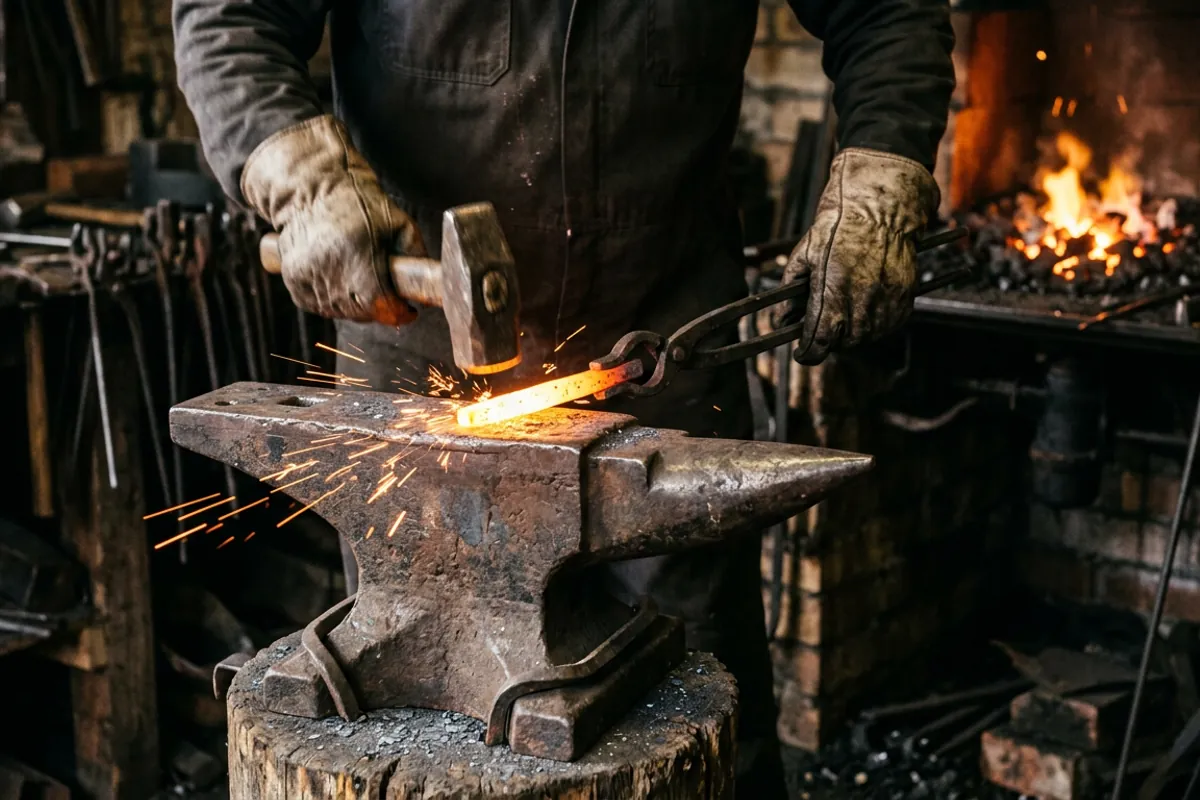
The move is simple. Bring the jaws up to a bright forging heat, one at a time, and reshape them on the anvil to close cleanly on the size you actually forge most. Adjust the reins the same way if they sit wrong in your hand. Then check the fit cold on the real stock, both jaws contacting evenly, no rock. This is beginner-level forging and it is some of the best practice there is, because a tong that grips is a tool you use every heat.
What you cannot reforge back to life is a bad rivet boss or burned-through jaws. That is why the buying checks come first. Reforging fixes shape. It does not fix missing steel or a compromised joint.
What owners say
Pulling the threads together, the field is consistent. On the Beautiful Iron reference page, the message is buy structurally sound over pretty: matched jaws, mass in the jaws, an original untouched rivet boss, and price it against cheap new tongs rather than antique-shop markup. On BladeForums, one smith spent real time on the used listings before deciding new tongs in the exact size he needed were worth the money, while others enjoy the flea-market hunt and accept that availability is luck of the draw. The same thread lands on wolf jaw as the everyday default and specialized tongs for specific jobs, and several smiths make their own, with the honest admission that the first pair usually turns out horrible and the next one is a lot better.
On the imports, owner signal is thinner and more mixed, which is worth saying plainly. The recurring notes are soft steel, jaws that need tuning to close evenly, and reins that want adjusting, against the counterweight of a genuinely low price. Nobody calls them heirloom tools. People call them usable, which for a first pair is the right bar. If you want more of that owner-versus-new framing across old shop gear, my antique anvils guide and the antique blacksmith hammer guide run the same honest split.
What I would tell a friend
Buy the antique if it passes the checks: both jaws present and matched, real mass left in the jaws, a tight original rivet with no welding or grinding on the boss, no cracks at the stress points, and a price under what a new pair costs. That pair will outlast you, and reforging the jaws to fit your stock is a skill worth learning on it. Walk away from any old pair with thin burned jaws or a repaired joint, no matter how good the patina looks, because a hot bar slipping from bad tongs is exactly the kind of avoidable injury this site exists to prevent.
If the bin comes up empty, buy a new working wolf jaw pair and stop overthinking it. The 16 inch (paid link) or 17 inch (paid link) imports are the budget entry, the three piece set is fine if you want the shapes now, and the Picard is the upgrade when you are ready. Whichever you land on, wear your eye protection rated to ANSI Z87.1 at the forge and the grinder, keep natural fibers on near hot steel, and never trust a hot workpiece to a tong that rocks in your hand. Test the grip cold, on the real stock, before it ever sees the fire. For the rest of the striking-tool rack, the hammers and tongs hub is where I keep everything, and the safety gear guide covers the PPE I will not forge without.