Based on my research, here is the article.
What an anyang power hammer gives you, before you spend money on one, is a self-contained pneumatic forging machine that will do the drawing, spreading, and fullering that is slowly wrecking your elbow with a hand hammer. I will say up front what the honest framing has to be: I do not own an Anyang. My shop runs on Bessie, my 148 lb Trenton, and two forges, and the heavy moving I do is still by arm. So everything here leans on published specs from the dealers, on what owners report on the forums, and on general shop sense about what a one-person shop actually needs. Where I am reading owner consensus rather than speaking from my own bench, I say so. If you want the honest short version: for most home and small production shops the 25 kg (55 lb) Anyang is the size I would buy, and the 15 kg (33 lb) is the one I would buy only if power or floor space forces my hand.
If you are still deciding whether a power hammer belongs in your shop at all, read the broader blacksmith power hammer buying guide first, then come back here for the Anyang specifics. This one sits in the hammers and tongs cluster because, at bottom, a power hammer is just a very large, very tireless hammer.
What an Anyang power hammer actually is
Anyang builds self-contained pneumatic power hammers, which is worth understanding before you compare them to anything else. Self-contained means the motor and the air system are built into the machine. A motor spins a crank, the crank drives a compression piston, and that piston pushes air into a work cylinder that drives the ram down onto your steel. You do not run a shop air compressor to feed it, and you do not need a ceiling full of line-shaft belting the way the old smiths did. You plug it in, you level it, you anchor it, and it hits.
That puts Anyang in the same family as the classic industrial hammers the old shops ran, the Nazel, the Beche, the Massey. Anyang frames are cast, not fabricated from plate, which is the traditional way these machines were built and part of why owners talk about how well they absorb their own blows. It is a different animal from a tire hammer or a mechanical helve hammer, where a spring or a clutch and a fixed stroke do the work. On a self-contained air hammer the treadle gives you real control over the force of each blow, from a light tap to a full-power strike, and that control is the thing owners praise most.
The company sells under a few names depending on the importer, so you will see the same machines listed as the ST series, the HS series, or just by ram weight in pounds. Do not let the naming confuse you. What matters is the ram weight, the blows per minute, and whether your shop can feed it power and hold it down.
The size that fits a one-person shop
Power hammers are sized by the weight of the falling ram, and that number is the one that decides what you can forge. A useful rule of thumb owners repeat is that the ram weight roughly sets the largest bar you can move comfortably. The published specs below come from the Blacksmith Source specification sheet for the Anyang ST hammers, which lists the full lineup.
Scroll horizontally to see all columns.
| Model | Ram weight | Blows per minute | Max square stock | Motor | Machine weight |
|---|---|---|---|---|---|
| STH-15 | 15 kg / 33 lb | 300 | 30 x 30 mm | 2.2 kW | 540 kg / 1188 lb |
| STH-25 | 25 kg / 55 lb | 250 | 40 x 40 mm | 3 kW | 1100 kg / 2420 lb |
| STH-40 | 40 kg / 88 lb | 245 | 50 x 50 mm | 4 kW | 1350 kg / 2970 lb |
| STH-55 | 55 kg / 121 lb | 230 | 60 x 60 mm | 7.5 kW | 1700 kg / 3740 lb |
| STH-75 | 75 kg / 165 lb | 210 | 65 x 65 mm | 7.5 kW | 2600 kg / 5720 lb |
| STH-110 | 110 kg / 242 lb | 180 | 110 x 110 mm | 15 kW | 3300 kg / 7206 lb |
Two things jump out of that table. First, the machine weight climbs far faster than the ram weight. A 33 lb ram sits inside a 1188 lb machine, and a 55 lb ram inside a machine that weighs well over a ton. That mass is not waste; it is what keeps the hammer from walking across your floor. Second, the motor size steps up hard at the 55 kg model, from a 4 kW draw to 7.5 kW, which is where single-phase home power usually stops being realistic. Keep both of those in mind, because they decide as much about your buying choice as the ram weight does. The Anyang USA lineup lists the same machines under pound names, the 34, 68, 106, 130, 178, and 264 pound HS hammers, per the Anyang USA site.
If you want the general logic of matching hammer size to the work you do, the forging power hammer buying guide walks through it for a one person shop without tying it to a single brand.
Anyang 15 kg (33 lb): the small-shop hammer
The STH-15 is the smallest Anyang most people consider, and it is a genuinely useful machine for a small shop working light stock. The published specs put it at a 33 lb ram, 300 blows per minute, a 2.2 kW motor, and a machine weight of 1188 lb. That fast blow rate is the small hammer's strength: it moves thin and medium stock quickly and gives you a lot of hits per heat.
Where it earns its keep is knife work, small tooling, and light general forging. Where owners say it runs out of room is anything heavy. The published square capacity is 30 by 30 mm, a bit over an inch, and pushing past that means short heats and slow going. On the I Forge Iron thread specifically about the 15 kg Anyang, the recurring caution from members is to buy the biggest hammer your shop can power and hold down, because people who buy the 33 lb tend to wish for more within a year. That is worth weighing hard. A power hammer is a once-a-decade purchase for most of us.
The one real argument for the 15 kg is practical, not aspirational. It is the model most likely to run on the power you already have and to sit on the slab you already poured, and its lighter weight makes it the easiest to move and site. If your shop is small, your panel is limited, and your work is genuinely light, this is a sane buy. If any of those is not true, size up.
Anyang 25 kg (55 lb): the one I would buy
For most one-person and small production shops, the 25 kg is the hammer I would put my own money toward. The published specs give it a 55 lb ram, 250 blows per minute, a 3 kW motor, and roughly a 2420 lb machine weight, with a square capacity of 40 by 40 mm. That is the size that stops being a knife-only tool and starts handling general blacksmithing, hardware, tooling, and the occasional heavier bar without complaint.
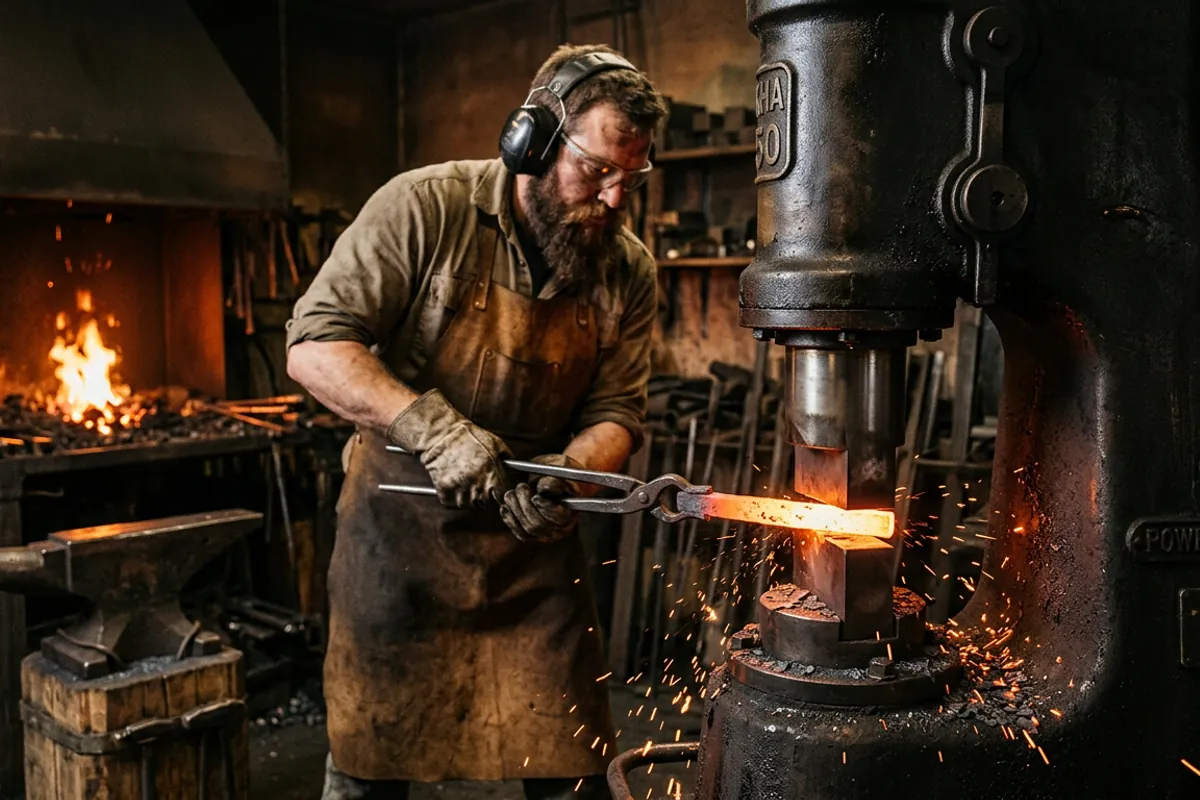
The reason I land here rather than on the 88 is power and foundation. The 3 kW motor is far more likely to be feasible on the electrical service a home shop can arrange than the 7.5 kW jump that starts at the 55 kg. The machine is heavy enough to be well planted but not so heavy that siting it becomes a crane job you dread. And the extra ram weight over the 33 lb is exactly the margin owners say they wish they had bought. When smiths on the forums describe the size they would tell a friend to get, the middle of the Anyang range is where they keep landing.
None of that is a bench test on my part. It is published spec matched against what owners report and against the plain shop logic that you buy for the work you will grow into, not just the work you do today.
Anyang 40 kg (88 lb) and up: when you need more
The STH-40 steps up to an 88 lb ram, a 4 kW motor, and a roughly 2970 lb machine, with a 50 by 50 mm square capacity. This is the hammer for someone forging heavier stock regularly, doing damascus billet work in quantity, or running enough production that heat efficiency pays for the bigger machine. Owners on the I Forge Iron thread about the Anyang 88 generally describe it as a hard-hitting, controllable machine, with the usual caveats about giving it a proper foundation and keeping the wear items maintained.
Above the 88 you are into the 55, 75, and 110 kg machines, and there the story changes. The 7.5 kW and 15 kW motors mean three-phase power in almost every case, and the machine weights past 3700 lb mean rigging, a real foundation, and space most home shops do not have. These are production and industrial hammers. If you are reading a buying guide to decide your first power hammer, they are almost certainly more than you need. Know they exist, and let them be a someday problem.
Foundation, power, and getting it running
Here is where a lot of first-time buyers underestimate the project. The hammer is only half of what you are buying. The other half is power and a place to stand it.
On foundation, the good news is that the smaller Anyangs are more forgiving than their reputation suggests. Anyang USA and the dealers report that the large majority of customers running a 106 lb or smaller hammer bolt it to their existing slab with no separate foundation, provided that slab is sound. The key words are sound and level. Weak, cracked, or thin concrete, common in older shops where moisture and past machinery have already beaten up the floor, is where trouble starts. The PowerHammers installation notes make the same point: leveling and anchoring matter more to how the hammer behaves than almost anything else, and a dedicated foundation for a larger machine runs a few hundred dollars if you decide you need one. Read the Anyang USA foundations page before you pour anything.
On power, do your homework before you buy, not after the freight truck shows up. The 2.2 to 4 kW motors on the smaller machines can often be arranged for a home shop, sometimes single-phase, sometimes with a rotary or VFD phase converter for a three-phase motor. The 7.5 kW and up machines effectively require three-phase service. Call the dealer with your exact electrical situation and get their answer in writing. A hammer you cannot power is an expensive anchor.
What owners say
For a machine I have not run myself, the forums are the honest source, so here is what the consensus actually says.
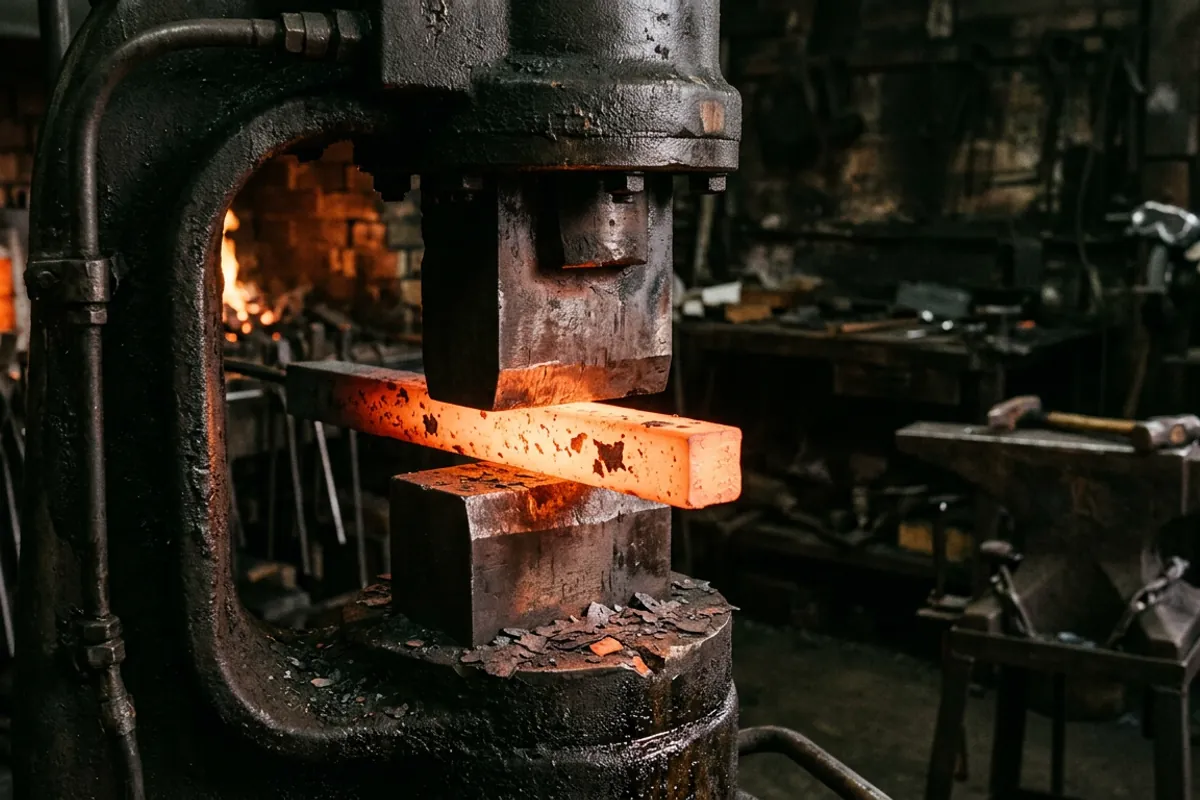
The broad picture from current owners is favorable. On BladeForums, in both the Anyang hammer owners thread and the Anyang Power Hammers thread, owners describe machines bought in recent years that are still in excellent shape, hit hard, and stay easy to control. Several make the same point unprompted: the Anyang name took a hit years ago under a former importer, and that reputation lags behind the current reality, which owners rate much higher.
The most common piece of buying advice is not a complaint about the machine at all. It is size. On the I Forge Iron thread about the small 15 kg Anyang, the repeated theme is buy bigger than you think you need, because the small hammer is the one people outgrow. On the Anyang 88 thread, owners talk up control and hitting power while stressing foundation and routine upkeep.
The honest thin spot in the owner signal is long-term, decade-plus durability data on the newest machines, simply because many current owners have only had theirs a few years. Nobody on those threads is reporting frames cracking or motors failing, but "great for five years" is a different claim than "great for thirty," and I will not dress the one up as the other.
Safety: hearing, eyes, and hands
A power hammer changes your shop's hazard profile the day it arrives, and I will not soften this. Early on I quenched a blade in oil that was too cold, standing too close in a cotton shirt with no face shield, and the flare took my eyebrows and nearly my eyesight. That was a hand operation. A machine that throws a 55 lb ram 250 times a minute demands more respect, not less.
Two hazards jump first. Noise: these hammers are loud, loud enough to do permanent hearing damage over a session, and hearing loss does not come back. Wear real muffs with a high noise reduction rating every time it runs. I would run something like the 3M Peltor X5A over-the-head earmuffs (paid link), rated NRR 31 dB, which is about as much attenuation as passive muffs give. Second, flying scale and hot debris come off fast and in every direction under a power hammer. Eye protection rated to ANSI Z87.1 is the floor, not a suggestion; a pair of 3M SecureFit ANSI Z87 safety glasses (paid link) worn under a face shield is a reasonable setup. Never feed a power hammer with your bare fingers near the dies. Use tongs that actually fit the stock, and if you are unsure your grip is right, my smithing tongs buying guide covers picking a pair that holds. For the full rundown of what matters and what is marketing, see blacksmith safety gear.
Natural fibers over synthetics near the forge and the hammer, always. Synthetic fabric melts to skin. That rule cost me eyebrows to learn and I pass it along cheap.
What I would tell a friend
Buy the biggest Anyang your electrical service and your floor can honestly support, because the one thing owners regret is buying small. For most one-person shops that means the 25 kg (55 lb), which handles general work, runs on power a home shop can usually arrange, and leaves you room to grow. Step down to the 15 kg (33 lb) only if power or space forces it, and step up to the 40 kg (88 lb) only if you genuinely forge heavy stock and can feed the machine. Leave the 55 kg and larger to production shops with three-phase power and a crane.
Settle the boring stuff before the fun stuff: confirm your power situation with the dealer in writing, check that your slab is sound and level, and budget for hearing and eye protection as part of the purchase, not an afterthought. Do that, and an Anyang is a machine most owners are still glad they bought years later. If you are also still building out the rest of the shop around it, the blacksmithing equipment buying guide is where I would start, and you can browse all the guides from there.