Straight to it: if you are buying one blacksmith cross pein hammer to start with, buy a 2 lb Vaughan S32 and spend the money you saved on tongs. It is American forged high carbon steel, it comes on a hickory handle that is wedged properly, and it is close enough to right out of the box that thirty minutes with a file and some sandpaper makes it a good hammer. If you already know you want to spend once and be done, the Picard 0000811-1000 Swedish pattern is the one most smiths point to, and its face and peen come ground and chamfered from the factory.
Before you read another word: I have not run every hammer below in my shop. I have swung cross peins for about twenty-five years, most of them old, unmarked, and bought at farm auctions, and I know exactly what makes one pleasant or miserable to use for four hours. What follows leans on published maker and retailer specs, which I have cited, and on what owners report on the forums, weighed against that experience. Where the owner signal is thin, I say so.
What a cross pein actually does that a ball pein does not
The pein is the business end for moving steel, and the direction it faces is the whole point. A cross pein sits crosswise to the handle, so when you swing it with the handle in line with your bar, the wedge drives the steel sideways. That is how you draw a bar wider, spread a leaf, start a shoulder, or fuller down into a corner without a fuller. Flip it and use the flat face and you planish everything back smooth.
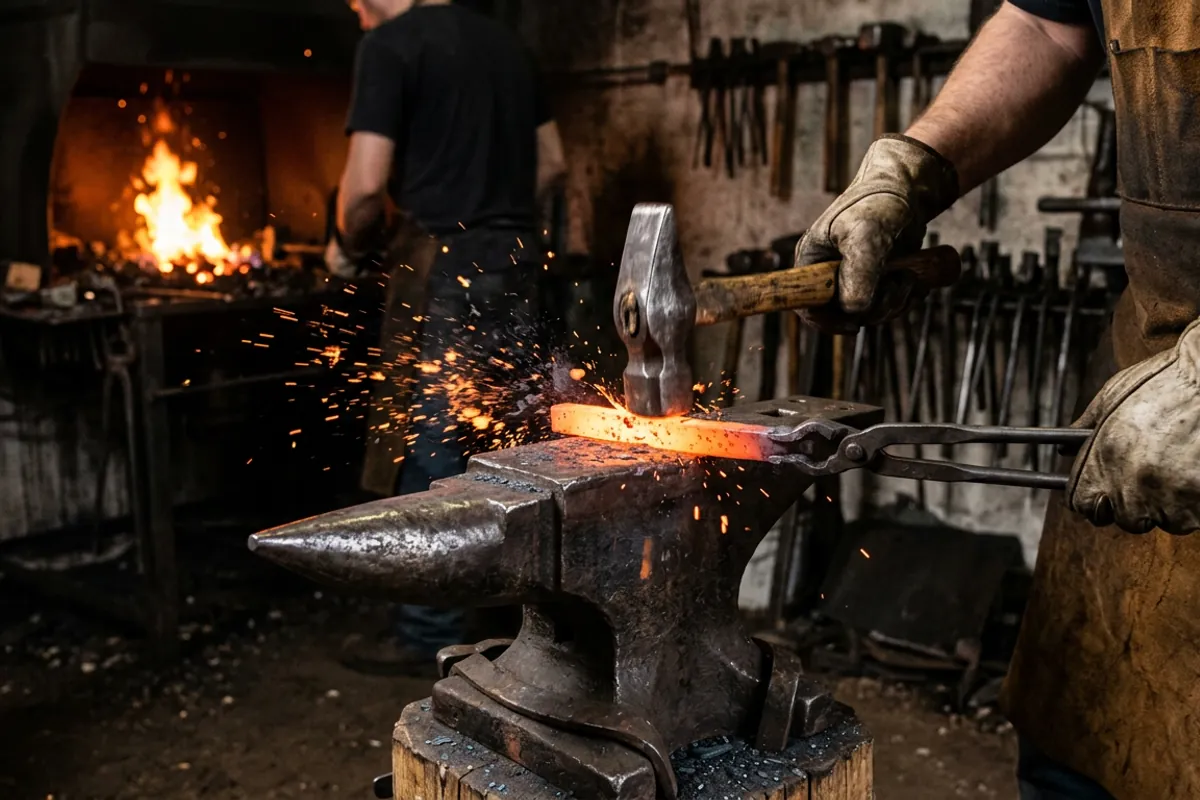
A ball pein is a machinist's tool. The round end is for peening rivet heads and dishing sheet, and it will move hot steel, but it moves it in every direction at once, which is the opposite of control. A straight pein moves the metal along the axis of the handle instead of across it, which some smiths prefer for drawing out lengthwise. Both patterns show up in the forum arguments constantly, and the honest summary is that most general work in a hobby shop gets done with a cross pein and a flat face, which is why it is the pattern I hand beginners. If you want the wider view on hammer patterns before you commit, I wrote that up in the blacksmith hammer buying guide, and everything on this topic lives under the hammers and tongs hub.
A rounding hammer, for the record, is not a cross pein. It has a flat face and a domed face, and it is excellent, but it will not fuller a shoulder the way a wedge peen does. Plenty of smiths end up owning both. Start with the cross pein.
How the four compare on published specs
Only published figures below. Where a maker does not state a number, it says not published, because guessing a hardness figure and printing it is how bad information spreads.
Scroll horizontally to see all columns.
| Hammer | Head weight | Handle | Head steel and finish | Face and peen | Price tier |
|---|---|---|---|---|---|
| Vaughan S32 blacksmith cross pein | 2 lb | 14 1/2 in flame treated hickory, Sure-Lock wedge in tapered eye | American high carbon steel, rust resistant blue finish, ground sides | Polished face, generously beveled pein ends | Budget to mid |
| Picard 0000811-1000 Swedish pattern | 1000 g, about 2.2 lb | Dual curved ash, 360 mm overall length | Alloyed Picard special steel, hardened and tempered, black powder coated | Face and cross peen ground, chamfered edges | Mid to premium |
| Seymour 3 lb cross pein (HB-3, SKU 41873) | 3 lb | 15 in hickory | Not published | Not published | Budget |
| Collins CRP-3FD-C cross pein | 3 lb | 16 in hickory | High carbon steel, heat treated | Chamfered, milled face | Budget |
Sources: Vaughan S32 specs from The Hammer Source, Picard 0000811-1000 from Haus of Tools, Seymour from the maker's own listing for the 3 lb cross pein with 15 in hickory handle, and Collins from True Value. None of these makers publish a face hardness figure for these hammers, so none is listed. Anyone quoting you an HRC number for a hardware store cross pein made it up.
Vaughan S32, the 2 lb I would hand a beginner
This is the one. Two pounds is the weight that lets a new smith work for an hour without wrecking a wrist, and it is enough hammer to move 1/2 inch round stock at a good heat. Vaughan has been forging hand tools in the United States since 1869, the head is drop forged high carbon steel, and the hickory handle is wedged into a tapered eye rather than glued into a hole, which matters the first time you catch the handle on the anvil edge and the head does not shift.
The published details that count: 2 lb head, 14 1/2 inch handle, polished face, and pein ends that the maker describes as generously beveled to minimize chipping. That last one is not marketing fluff. A square shouldered face leaves half moon marks in your work and is more likely to chip a corner off into the shop.
The honest tradeoff is that this is a general trades hammer sold to blacksmiths, not a smith made forging hammer. The face is flatter than I like, the handle is thicker than I like, and the eye is set for a straight commercial handle rather than a shaped one. All three are fixable in an evening, and I go through exactly how below. For a first cross pein at this money, that is a good deal.
Check price on Amazon (paid link)
Picard 0000811-1000, the Swedish pattern if you want to buy once
Picard has been making hammers in Wuppertal, Germany since 1857, and the 811 Swedish pattern is the one that shows up in a lot of working shops. The 1000 gram head is roughly 2.2 lb, so it sits in the same class as the Vaughan, but the geometry is different: a slimmer, more tapered head, a face and cross peen that come ground with chamfered edges from the factory, and a dual curved ash handle that is closer to what an experienced smith would shape for themselves. The head is alloyed Picard steel, hardened and tempered, and powder coated black, per the retailer spec sheet linked above.
What you are paying extra for is the geometry and the finish work you would otherwise do yourself. Out of the box it is closer to ready than anything at hardware store money. What you are not paying for is magic: it is still a 2.2 lb hammer, and it will not move steel any faster than a well dressed 2.2 lb hammer of any other brand.
Two things to know before you buy. First, the powder coating on the head is cosmetic and will burn and flake off around the eye once it lives near a forge. That is normal and not a defect. Second, the ash handle is a European shape, longer and more curved than an American hickory handle, and some people love it while others swap it immediately. Handle preference is genuinely personal, and no review can settle it for you.
Check price on Amazon (paid link)
Seymour 3 lb cross pein, when you want mass for little money
Seymour Midwest is a shovel and striking tool maker, and their 3 lb cross pein with a 15 inch hickory handle is a jobsite tool that blacksmiths buy because it is cheap and it is heavy. Seymour's own product page states the head weight and handle length and nothing else, which tells you what tier this is. No published steel spec, no published hardness.
Three pounds is more hammer than most beginners should start with. It moves stock faster when you can control it, and it teaches bad form fast when you cannot, because a tired smith starts swinging from the shoulder and pushing the hammer instead of letting it fall. If you have a year or two of hours behind you and you want a dedicated drawing hammer for heavier stock, this is a reasonable cheap way to get one. If this is your first hammer, buy the 2 lb.
Expect to do all the finishing work yourself on this one: knock the sharp shoulder off the face, round the peen edges, and thin the handle. Budget an evening.
Check price on Amazon (paid link)
Collins 3 lb cross pein, the true hardware store option
The Collins CRP-3FD-C is the hammer you find hanging on a pegboard at a small town hardware store: a 3 lb drop forged high carbon steel head, milled and chamfered face, on a 16 inch hickory handle, per the True Value listing. It is a striking tool for driving and shaping, sold to whoever walks in.
I include it because it is what a lot of people already own, and because it works. A drop forged carbon steel cross pein on a hickory handle is the same basic object smiths used for two centuries. The compromises are the same as the Seymour: nothing published about heat treat, a handle sized for gloves and grip rather than control, and a face that wants dressing. If a cheap 3 lb hammer is what stands between you and lighting the forge this weekend, buy it and get to work. You will replace it eventually, and there is no shame in that.
Check price on Amazon (paid link)
If you want the other direction, the small shop makers forge hammers to order with the face and peen already shaped the way a working smith wants them. I wrote about what that money actually buys in the piece on Hoffman Blacksmithing. It is real value, and it is also a hammer you should buy after you know what you like, not before.
Weight, handle, and dressing the face before you forge with it
Weight first. The forum consensus in threads like Hammer size?? and which hammer first? on I Forge Iron lands on 2 to 3 pounds for general work, with beginners steered toward the light end and a few veterans insisting nothing under 3 lb is a real hammer. Both camps are describing their own bodies and their own stock sizes. My honest read after twenty-five years: the hammer that lets you keep good form for the whole heat beats the heavier one you can only swing for ten minutes. Start at 2 lb.
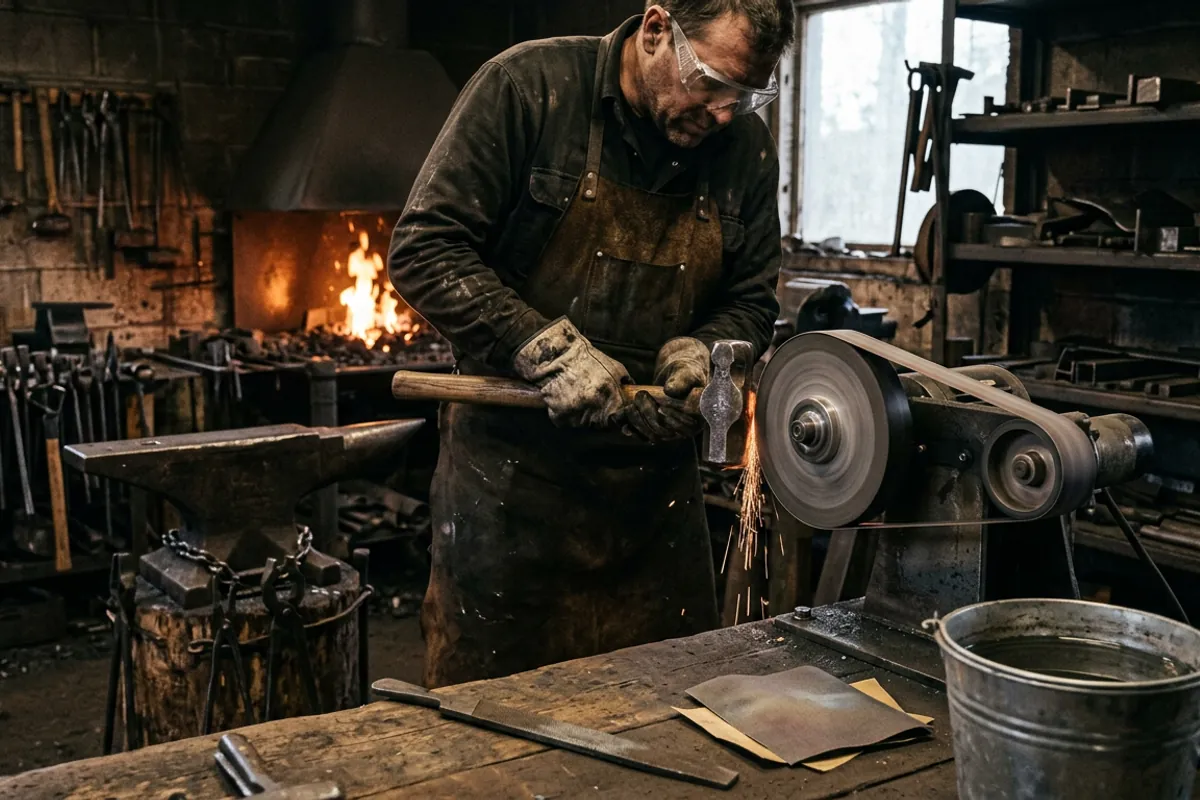
Now the part almost nobody does and everybody should. A new commercial hammer face usually has a square shoulder where the face meets the side. That corner digs into hot steel and leaves crescent shaped marks you then have to planish out, and a sharp corner on hardened steel is also the corner most likely to chip. Dressing the hammer means putting a gentle crown on the face and rolling the edges over into a smooth radius, then polishing the working surfaces so they do not print scratches into your work. Smiths have been arguing about how much crown for as long as the dressing a hammer thread has existed, and the safe starting point is a barely visible crown with generously rounded edges.
Do it with a file and abrasive paper, or with a belt grinder used carefully. Keep the head cool. If you grind it hot enough to change color, you have just annealed the working surface of your hammer and it will deform in use. If you want to understand why that matters, I laid out what heat actually does to hardened steel in what annealing steel actually does.
The handle is the other free upgrade. Commercial handles are made fat so nobody snaps one. Take the finish off, thin the handle down until you can hold it loosely with your fingertips and let it pivot, and leave it bare or oiled. A hammer you have to squeeze is a hammer that gives you tendonitis. Check the wedge and the head fit before every session, and if the head has any movement, stop and rehang it. A head that comes off mid swing goes somewhere you are not looking.
Safety, plainly. Eye protection rated to ANSI Z87.1, on your face, every time you pick up a hammer, because hot scale flies and hammer edges chip. I keep mine on from the moment the forge is lit, and I learned to be serious about this the expensive way, standing too close to an oil quench in a cotton shirt with no face shield and losing my eyebrows to the flare. Never strike a hardened hammer face against another hardened surface: not your anvil face, not another hammer, not the hardened head of a struck tool. Two hardened surfaces meeting is how chips get launched. If a struck tool has mushroomed, grind the mushroom off before you hit it again. More on the gear that actually matters is in the blacksmith safety gear guide.
One last pairing note: a hammer is only half the system. The anvil under it does the other half of the work, and a light anvil returns less of your swing to the steel. Bessie, my 148 lb Trenton, is plenty for hand hammer work at these weights. If you are still sorting that out, see what size anvil you actually need.
What owners say
Everything in this section comes from public forum threads, not from my bench.
On weight, the I Forge Iron thread a good cross peen hammer shows the usual split: smiths describing a 2 lb cross pein as the right tool for small work like nails and hooks, and others arguing that 3 lb should be the minimum for general forging. The same thread and its neighbors show mentors routinely telling students to turn up with something in the 2 to 3 pound range, which is about as close to a consensus as blacksmiths get.
On the Vaughan specifically, owner signal is decent but mundane. Smiths buy them, use them, and mostly discuss the finish rather than the function, including a thread on I Forge Iron about the blue coating on a Vaughan head. The recurring theme across hammer threads is not that any of these commercial hammers fail, it is that owners expect to dress the face and thin the handle before they consider the hammer finished. Treat that as part of the purchase, not a defect.
On Swedish and German pattern hammers, the forum discussion in threads like Swedish'ish cross peen hammer is mostly about geometry preference rather than brand failures, and there are scattered reports of heads arriving hung slightly off center on imported hammers, described as usable but ugly. Owner signal specifically on the Picard 811 in English language forums is thinner than I would like. It is a respected old maker with a long track record, and that is a different claim than a pile of long term owner reports, so I am telling you which one you are getting.
On the two 3 lb hardware store hammers, Seymour and Collins, I found no substantial blacksmith forum discussion of either model. That is not a knock, it is an absence of evidence, and I would rather say so than manufacture a consensus. Judge them on what they are: plain drop forged carbon steel striking tools with no published heat treat spec.
What I would tell a friend
Buy the 2 lb Vaughan S32. Spend an evening putting a light crown on the face, rolling the edges, and thinning the handle until it feels loose in your fingers. That hammer will carry you through your first couple of years, and by then you will know exactly what you want in your next one, which is the only reliable way to buy a good hammer.
Skip the 3 lb hammers until you have hours behind you. Skip the ball pein for hot work, it is the wrong tool with the right price. Buy the Picard if you would rather pay once and skip most of the dressing work, understanding that you are paying for geometry and finish, not for extra capability.
And spend the difference on tongs. Nothing improves a beginner's forging faster than actually being able to hold the work, which is the argument I make in the blacksmith tongs buying guide. A good hammer swinging over a bar you cannot grip is just a fast way to drop hot steel on your boot.