I have verified two live 200 lb Amazon listings, published specs from non-marketplace retailers (Centaur Forge, Pieh Tool), and real owner-consensus threads. Writing the guide now.
If you are shopping for a 200 pound anvil for sale, start with the good news: 200 pounds sits right in the sweet spot for a general home shop. A mass that size soaks up hammer blows, stays put on the stand, and handles bigger stock than most of us will ever forge. The honest news is that a lot of the cheap anvils sold at that weight are not the tool the number is promising. The one I would put in a serious home shop is a TFS 200 lb single horn from a real farrier supplier, not a mystery cast anvil off a marketplace. If the budget forces a compromise, I will show you the least-bad ones and tell you exactly what you are giving up.
Fair warning before we go further: these are not bench tests run in my shop. I own a 148 lb Trenton I call Bessie, and I have swung a hammer for about twenty-five years, but I have not personally rebound-tested every anvil below. What follows is published specs from the makers and retailers, plus owner consensus off the forums, weighed against what I know a good anvil is supposed to feel like. Where a number is a seller's claim rather than something I can verify, I say so.
What 200 pounds actually buys you
Weight matters because forging is a conversation between the hammer and the mass under the steel. The heavier the anvil, the more of your blow goes into moving hot metal instead of bouncing the anvil around. Old smiths generally land on 150 to 200 pounds as the range where a one-person shop stops fighting the tool. Bessie at 148 has never held me back, and a solid 200 pounder gives you more margin for heavier stock and striking work.
But weight alone is a trap. A 200 pound block of soft cast iron is still a 200 pound block of soft cast iron. What you are actually buying at this weight is a hard, well-supported face that returns your energy. Mass plus a hard face is a working anvil. Mass with a dead face is a boat anchor that happens to weigh 200 pounds. That distinction is the whole game, and it is why I care far more about material and hardness than about the number on the listing. If you want the deeper version of that argument, I laid it out in my anvil weight guide and the broader 200 lb anvil for sale buying guide.
The field at a glance
Here is how the common 200 pound options compare. Forged and cast-steel figures come from the makers and their retailers, cited in the sections below. The two budget cast entries carry seller-claimed hardness, which I have flagged because it is not independently published.
Scroll horizontally to see all columns.
| Anvil | Weight | Material | Face size | Hardness | Price tier |
|---|---|---|---|---|---|
| TFS single horn | 200 lb | Cast ductile iron, heat treated | 4.75 x 18.25 in | Rockwell ~48 to 52 | Mid |
| Emerson Traditional | 200 lb | Cast 4140 tool steel | 4.25 x 17.5 in | Rockwell 48 to 50 | Premium |
| GDFStudio cast steel | 200 lb | Cast steel | 3.94 x 13.58 in work area | Claimed 55 HRC (seller) | Budget |
| YZFfnte cast steel | 200 lb (90 kg) | Cast steel | Not published | Claimed 55 HRC (seller) | Budget |
One note on that table: the "claimed" hardness numbers are the marketplace seller's spec, not an independently published or third-party-tested figure. Treat them with the skepticism any unverified number deserves, and see the rebound section for how to check the truth yourself before you trust it.
The forged-quality pick: TFS 200 lb single horn
If I were spending real money on a 200 pound anvil today, this is where it would go. TFS anvils are cast ductile iron, heat treated, and they have a long, well-earned reputation as honest working anvils at a price that undercuts the European forged names. The 200 lb single horn is listed with a face of 4.75 by 18.25 inches, a 1 inch hardy hole, and a 1/2 inch pritchel hole, per Pieh Tool's product page.
Hardness is worth a word, because sources differ. Pieh Tool lists the 200 lb model at Rockwell 52, while Texas Farrier Supply's own material says anvils over 150 pounds are hardened to about 48. Call it Rockwell 48 to 52, which is a genuinely usable working face, not a marketing number. That is the range where the face holds up under a hammer for years without denting or chipping.
Who it suits: anyone who wants a lifetime anvil without paying European forged prices. It is sold through farrier and blacksmith suppliers rather than the big marketplaces, which is a feature, not a bug. You are buying from people who know what an anvil is. There is no verified marketplace ASIN for it, so I am not going to hand you a fake link. Buy it from a farrier supply house.
The premium option: Emerson Traditional
The Emerson Traditional 200 lb is a step up in both price and pedigree. Centaur Forge lists it as cast from 4140 tool steel, with a face of 4.25 by 17.5 inches, a 1 inch hardy hole, a 9/16 inch pritchel hole, and a heat-treated face at Rockwell 48 to 50, per the Centaur Forge listing. At the time I checked, it was priced at $1,833.00, which tells you this is a buy-it-for-life tool, not a starter compromise.
When does the extra money make sense? If you forge daily, if you do a lot of striking or heavy drawing, or if you simply want a American-made 4140 anvil that your grandkids will still be using. For a weekend hobbyist, it is more anvil than the work demands, and I would rather see that money split between a good anvil and the rest of the shop. But it is not overpriced for what it is. It is a serious tool at a serious price.
The budget "200 pound anvil for sale" on the marketplaces
Now the anvils most people actually find when they search. Marketplace cast anvils at 200 pounds are cheap, plentiful, and honestly a mixed bag. Two that are currently listed and match their product names:
The GDFStudio 200 lb cast steel anvil advertises a 13.58 by 3.94 inch work area and a seller-claimed 55 HRC face. Check price on Amazon (paid link).
The YZFfnte 200 lb (90 kg) cast steel anvil carries a similar 55 HRC seller claim and a round horn. Check price on Amazon (paid link).
Here is the straight talk. "Cast steel" is a real and meaningful step up from "cast iron," which you should avoid entirely for forging. But the seller-claimed 55 HRC is exactly that, a claim, and cast anvils as a class tend to have noticeably less rebound than a forged or good ductile-iron face. Owners on the forums put cast-steel rebound at roughly half that of a good forged anvil in some cases. A budget cast anvil is a budget cast anvil. It will forge, it will move metal, and it is far better than working on a rock. It is not the equal of a TFS or an Emerson, and no listing photo changes that. If the money is not there yet, one of these will get you started, and you can check the face yourself with the rebound test below the day it arrives. If it is dead, send it back.
Where VEVOR fits, and where it does not
VEVOR is the name most beginners land on, and their feed is one I can actually show you a live price for. The catch for this particular search is that VEVOR's honest, usable single-horn cast anvils top out well below 200 pounds. The heaviest one I would point a beginner at is the 132 pounder, not a 200.
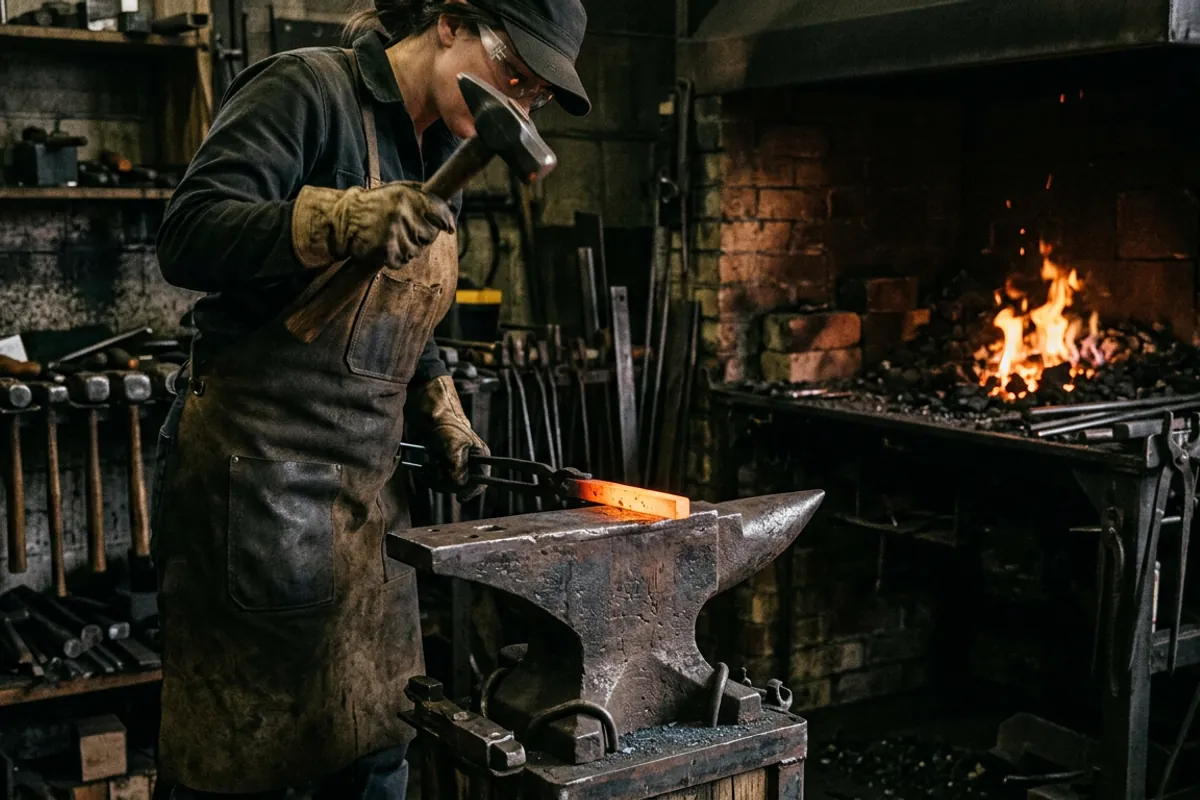

If you have your heart set on 200 pounds specifically, this is not it, and I would not pretend otherwise. But if the real goal is "a heavy-enough anvil that will not embarrass itself," a 132 lb cast anvil at a low price is a defensible starting point, and stepping down 68 pounds to save real money is a reasonable trade for a first anvil. I dug into the brand's whole lineup, the good sizes and the ones to skip, in my VEVOR anvil buying guide. Just do not let a low price talk you into a 200 pound VEVOR you cannot verify. Buy the size you can actually confirm.
What owners say
For the gear I have not run down in my own shop, here is what the forums actually report, not what the listings promise.
On cast anvils generally, the I Forge Iron cast iron anvil thread is blunt: true cast iron anvils deform and give almost nothing back, and the experienced crowd steers newcomers away from them hard. The line I keep coming back to is that a cast iron anvil is worse than a good piece of railroad track. Cast steel is a different and better animal, but the warning about cast iron is worth taking seriously when a cheap 200 pounder does not clearly say "steel."
On cast steel specifically, the BladeForums cast steel anvils thread lands where I do: an 85 kg cast steel anvil can work well for light forging with only slightly less spring than forged steel, and at a fair price it can be worthwhile, but rebound with a ball bearing runs lower than a good forged face. Owners who bought cheap cast anvils and were happy almost always tested the face on arrival and got lucky with a decent one. The ones who were unhappy skipped that step. That is the pattern.
Owner signal on the specific GDFStudio and YZFfnte listings is thin, which I will say plainly rather than dress up. These are recent marketplace listings without a deep track record on the smithing forums yet. That thinness is itself information: it means you are the quality control, so test the face the day it lands.
Rebound, ring, and the tests that pay for themselves
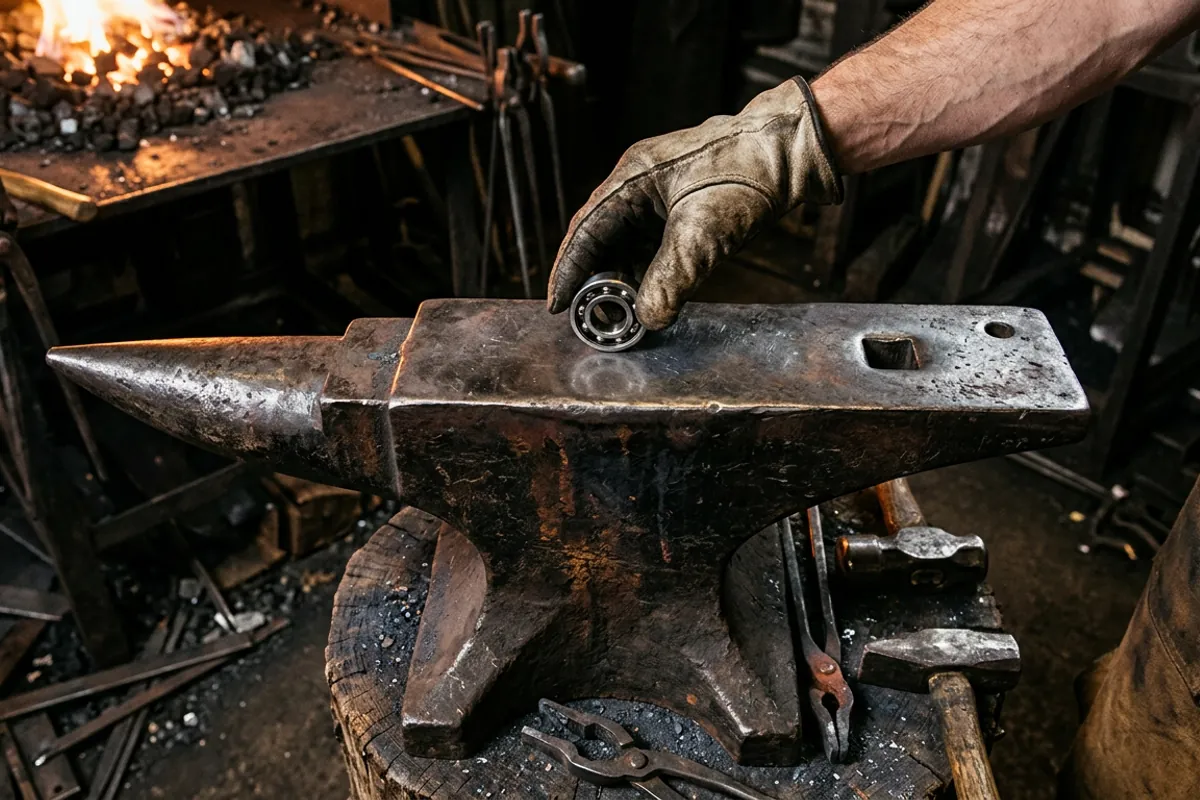
Whatever you buy at 200 pounds, verify the face before you trust it. The rebound test is simple and it does not lie. Drop a 1 inch ball bearing from about 10 inches onto the face and watch how high it bounces. A good anvil returns 70 percent or more, so from 10 inches you want a bounce of about 7 inches or better. A dead cast face might give you half that. Do this across the whole face, not just the sweet spot, because cast anvils can be hard in one spot and soft in another. The Garage Journal rebound-test thread walks through it if you want a second description.
Ring is a weaker signal but still useful. A good anvil rings; a cracked or poorly cast one thuds. Do not overweight ring, though, because plenty of good anvils are quiet by design, and mounting deadens ring on purpose. Rebound is the number that matters. If a marketplace anvil fails the rebound test, that is your evidence to return it, which is the real reason I steer beginners toward sellers with easy returns. For the full pre-purchase inspection routine on used and new anvils alike, I wrote it all up in the used anvils for sale buying guide.
One safety note that has nothing to do with rebound: a 200 pound anvil is a serious lift and a serious tip hazard. Mount it low and solid, keep it off the edge of a bench, and get help moving it. I have seen more people hurt by an anvil falling on a foot than by anything that happened while forging. Steel-toe boots are not optional in a shop with this much iron on stands.
What I would tell a friend
The short version, smith to smith. If you can spend for it, buy the TFS 200 lb single horn from a farrier supplier and be done thinking about anvils for the rest of your life. If money is no object and you want American 4140, the Emerson Traditional is the real thing. If the budget is tight and you need something now, a cast steel marketplace anvil like the GDFStudio or YZFfnte will forge, as long as you rebound-test it the day it arrives and return it if the face is dead. Skip anything that only says "cast iron," and do not buy a 200 pound VEVOR you cannot verify when the honest VEVOR sizes stop lower.
The one thing I will not soften: the number on the listing is the easiest spec to fake and the least important one to trust. Buy the face, not the weight. For everything around this decision, the anvils topic hub collects the rest of what I know.