If you have been scrolling listings all week, here is the short version: the best blacksmith anvil for sale right now, if you are buying new and want to stop worrying about the tool, is the RIDGID 69622 forged double horn at 77 pounds. If your budget will not stretch that far, the 132 pound VEVOR single horn cast steel anvil is the most usable mass per dollar on the market, and it will forge everything a beginner will throw at it for years. The ones I would walk past are the cast iron "anvils" that show up in every hardware aisle and marketplace search, no matter how anvil shaped they look.
I need to be straight about what this guide is. I have one anvil I have put real hours on, a 148 pound Trenton I call Bessie, and about twenty-five years of shop time behind the hammer. I have not bought and bench tested every anvil below. What follows is published specs from the makers and retailers, owner reports from the forums with the links so you can read them yourself, and my own experience of what actually matters in an anvil once it is bolted to a stand in your shop. Where something is secondhand, I say so.
How the picks compare
Published figures only. Where a maker does not state a number, it says not published.
Scroll horizontally to see all columns.
| Anvil | Weight | Material | Face / work surface | Hardness | Hardy hole | Price tier |
|---|---|---|---|---|---|---|
| RIDGID 69622 #5 | 77.2 lb | Drop forged steel, induction hardened face | 3 x 8 in | Not published by RIDGID | Square, size not published | Premium |
| VEVOR single horn | 132.3 lb | Cast steel | Overall 26 x 7.3 in | 50 HRC | 1.1 x 1.1 in (27 mm) | Mid |
| VEVOR single horn | 66.14 lb | Cast steel | 10.35 x 3.46 in | 50 HRC work surface | 3/4 in | Budget |
| Grizzly G8147 | 55 lb | Cast iron | 3-7/8 x 8-5/8 in | Not published | 7/8 in square | Budget |
| Olympia Tools 38-789 | 9 lb | Cast iron | Not published | Not published | None usable | Bench trinket |
Sources: Global Test Supply on the RIDGID 69622, FactoryPure on the VEVOR 132 pound anvil, VEVOR's own spec sheet for the 66 pound anvil, and JB Tools on the Grizzly G8147.
You are shopping three markets at once
When you type "anvil for sale" you get three completely different things mixed into one page, and they do not compete on the same terms.
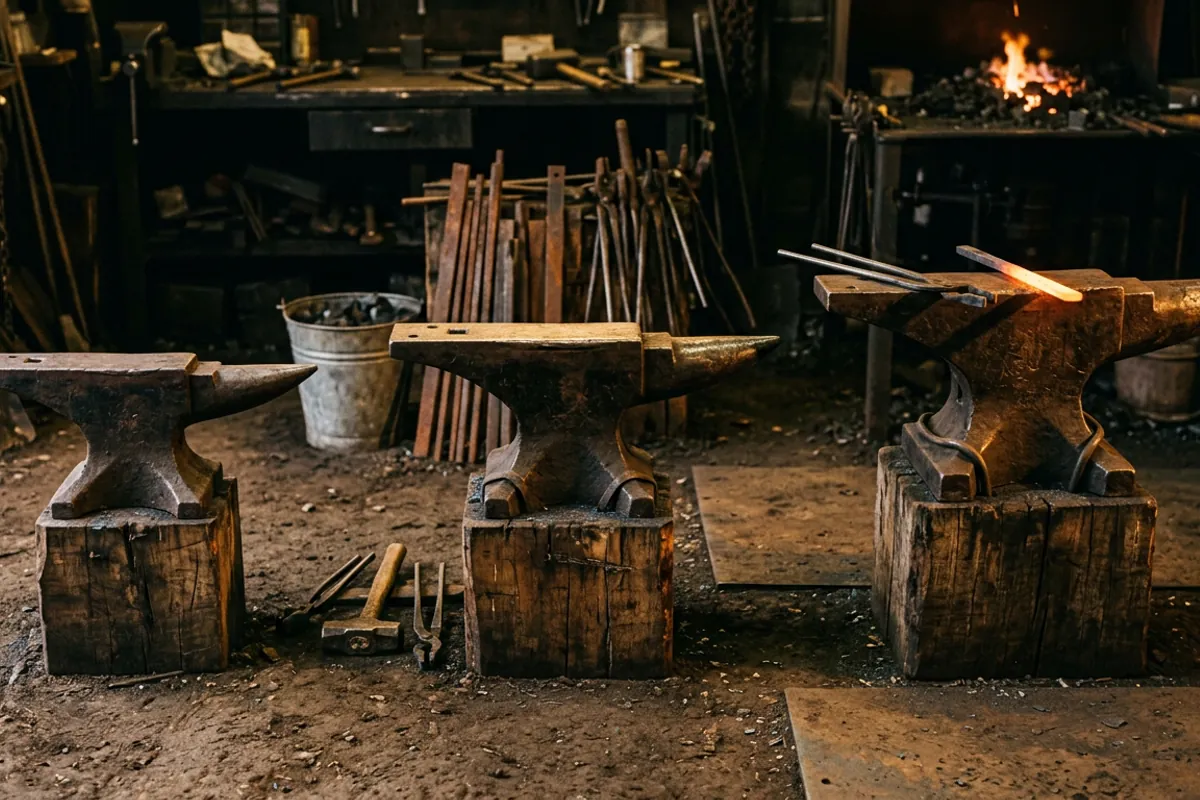
Used and antique. Trentons, Hay-Buddens, Peter Wrights, Fishers, Mousehole, plus the no-name farrier anvils. These are wrought bodies with hard steel faces, or solid cast steel in the later American ones, and a sound one out-forges anything new at the same weight. The catch is that you have to inspect it in person, you have to know what a ruined face looks like, and prices have gone silly in some regions. I went deep on that market in the antique anvils guide, and on what a fair number looks like in the anvil price guide.
New imported cast steel. VEVOR and the various rebadged equivalents. Cast steel, heat treated, published hardness around 50 HRC, sold at a price that would not buy a rusty 100 pound Peter Wright in most of the country. Ten years ago this category was garbage. It is not garbage now, and that is the single biggest change in the anvil market for beginners.
New forged steel. RIDGID's Peddinghaus made anvils, Kanca, TFS, Holland, Refflinghaus, and the rest. Real forged tools with real warranties. You pay for it, and you get an anvil your grandkid will argue about in a will.
If you have not settled on a weight yet, do that before you shop anything, because weight drives price more than brand does. My reasoning on that is in the anvil weight guide, and the short form is that 100 to 150 pounds covers almost everything a home shop does.
RIDGID 69622 forged anvil, 77 pounds
This is the one I would buy new if I were replacing Bessie tomorrow and had no time to hunt the used market. It is a German pattern double horn, drop forged from high grade steel with a ground, induction hardened top face, 77.2 pounds, an 8 inch by 3 inch face, 18-3/4 inches long overall, with both a square hardy hole and a pritchel hole, per the published specs. RIDGID does not publish a face hardness figure, so I am not going to make one up for them. Forged steel with a hardened face is the construction that matters, and that they do state.
What you get for the money is the thing beginners underrate: a face that stays flat. A forged and hardened face does not dish under a 2 pound hammer, does not mushroom at the edges, and returns energy instead of eating it. The double horn pattern gives you a round horn for drawing and bending and a squared off horn that is genuinely useful for setting shoulders, and the unhardened step protects the hard face when you are cutting.
The tradeoffs are honest ones. Seventy-seven pounds is light for heavy stock. It needs to be bolted or chained down to a solid stand or it will walk and ring like a church bell. And it costs several times what an import cast anvil costs at the same weight. If you are going to forge for the next twenty years, that math works. If you are not sure you will still be doing this next spring, it does not.
Check price on Amazon (paid link)
VEVOR 132 pound single horn anvil
This is the beginner buy I actually recommend most often, and I say that as someone who spent years telling people to buy old iron only. The published specs from FactoryPure list 132.3 pounds, cast steel at 50 HRC, overall dimensions of 26 by 7.3 by 8.5 inches, a hardy hole of 1.1 by 1.1 inches, and a 1.1 inch pritchel. Note that the "working surface" figure in those listings is the overall length with the horn included, not the flat face, so do not picture 26 inches of hammering surface.
Mass is what an anvil does. At 132 pounds you have enough under the hammer to forge 3/4 inch stock without the anvil moving the energy sideways into the floor, and it puts you in the sweet spot I argue for in the beginners guide. Fifty HRC is softer than a good vintage face, and you will eventually see light marking under a missed blow, but it is hard enough to work steel and hard enough to keep its edges if you dress them properly and stop hammering on bare face.
Two real cautions. First, that hardy hole is metric, 27 mm, so American 1 inch hardy tools sit sloppy in it and 7/8 inch tools sit sloppier. Plan on shimming or making your own tooling, which you should be doing anyway. Second, VEVOR's listings for the same anvil contradict each other on material. I have seen the identical 132 pound anvil sold as cast steel on one page and cast iron on another. Read the spec block, not the title, and if it says cast iron, walk.

Check price on Amazon (paid link)
VEVOR 66 pound single horn anvil
The little brother, and the one to buy only if space, money, or your back rules out the 132. VEVOR publishes 66.14 pounds, cast steel, a work surface hardness of 50 HRC, a face of 10.35 by 3.46 inches, overall 17.44 by 7.99 by 8.11 inches, a 3/4 inch hardy hole and a 5/8 inch pritchel on their spec page. VEVOR's marketing also claims a rebound rate over 70 percent. That is their number, not a measurement I have taken, and I would treat any maker's rebound claim as a starting point rather than a fact.
Sixty-six pounds forges small work fine. Hooks, bottle openers, small tongs, knife blades under about 10 inches, most of what a first year of hobby smithing consists of. What it will not do is let you move heavy stock quickly, because you will be putting energy into bouncing the anvil rather than moving the steel. Bolt it down hard, on a stump or a welded stand, and it behaves much better than its weight suggests.
The 3/4 inch hardy hole is the limiting spec here. Most commercially sold hardy tools are cut for 1 inch, so your tooling options shrink to homemade. Worth knowing before you buy, not after.

Check price on Amazon (paid link)
The cast iron ones I would skip
The Grizzly G8147 comes up in every anvil search, and it is a well made object: 55 pounds, a 3-7/8 by 8-5/8 inch face, a 5-1/2 inch curved horn, a 7/8 inch square hardy hole, milled and polished, per JB Tools' spec listing. It is also cast iron, which Grizzly states plainly, and cast iron is the wrong material for forging. It absorbs the blow instead of returning it, it dents under hot steel, and struck hard on an edge it can chip or crack rather than deform. It is a fine bench block for straightening, riveting, and light sheet work. It is not a forging anvil, and no price makes it one.
The same goes for the small hobby anvils like the 9 pound Olympia Tools 38-789. Nine pounds of cast iron is a paperweight with a horn. There is no useful hardy tooling, no mass, and no hardened face.
A related safety point that has nothing to do with brand: whatever anvil you buy, hardened faces and hardened hammer faces throw chips. Do not strike the bare face with a hammer, do not hammer on the edges, and never strike two hardened surfaces together. Eye protection rated ANSI Z87.1 is not optional at the anvil, and I say that as someone who lost his eyebrows to a bad oil quench and kept his eyesight by luck. More of that reasoning is in the safety gear guide.
How to check an anvil before you hand over money
This section is mostly for the used market, because that is where the money is won and lost. It is also the part of buying that no spec sheet helps with, so it comes from the floor rather than from a catalog.
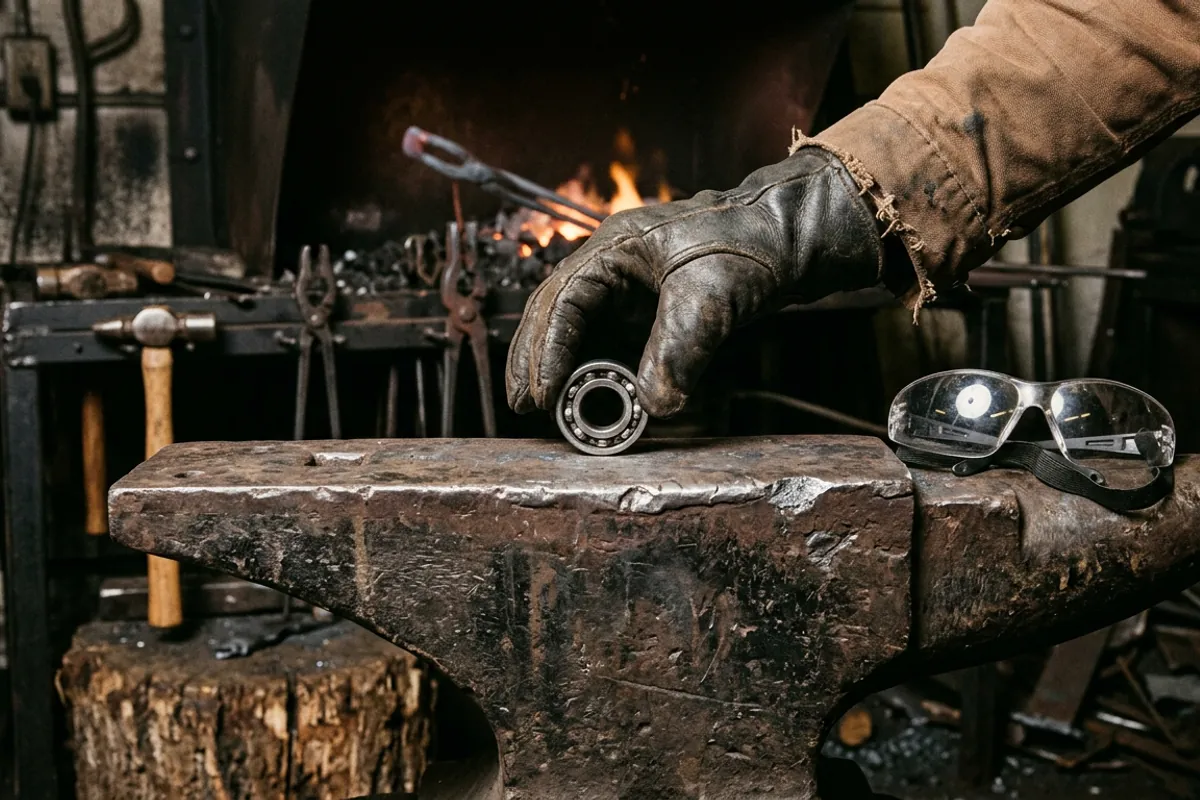
Rebound. Drop a steel ball bearing on the face from a known height and see how high it comes back. Smiths generally want to see 70 percent or better on a good anvil, and a face returning under about half is telling you it is soft, delaminated, or cast iron. Read the long running rebound discussions on I Forge Iron and the Garage Journal thread on the same test before you lean on a single number, because drop height, ball size, and where on the face you drop it all move the result, and there is no agreed standard.
Test the whole face, not the sweet spot. Walk the ball from the horn end to the heel. A face that rebounds well over the waist and dies over the heel usually means a separated or badly worn plate on a wrought anvil.
Look for the plate line. On old wrought anvils there is a forge weld seam between the body and the tool steel face. If you can see daylight, hear a dead thud along part of it, or see the plate lifting at a corner, that anvil is a project, and price it as one.
Sway and edges. A shallow dish in the face is workable. A deep sway means the face plate is thin from a previous owner's grinder, and grinding it flat removes the hard steel you are paying for. Chipped edges are normal and can be dressed. Chunks missing out of the body are not.
Ring is not the whole story. A dead sounding anvil can be a Fisher, which is quiet by design, or a cracked one. Ring tells you less than rebound does.
Weigh the logistics. A 150 pound anvil is a two person lift or a one person disaster. Bring a helper, bring straps, and do not test your back on a stranger's driveway.
If you want that inspection routine in more depth, with the failure modes photographed out in words, I wrote it up in what to look for in an anvil for sale. The wider hub of anvil material lives on the anvils topic page.
What owners say
I have not run the import anvils down in my own shop, so here is what actual owners report, with the threads attached.
On the VEVOR anvils, the tone in the Garage Journal thread asking whether they are good or bad is cautiously positive. Owners there treat the cast steel construction as the important distinction, contrast it against cast iron units that dented under soft metal, and describe it as a reasonable entry tool rather than an heirloom. The same thread flags that VEVOR's own product descriptions contain material errors, which matches what I found while writing this: identical anvils listed as cast steel on one page and cast iron on another. That is a listing problem, and it is on the buyer to check the spec block.
On the RIDGID and Peddinghaus forged anvils, owner signal is strong and has been for decades, but the published hardness figure is the thin spot. Smiths on I Forge Iron have discussed measured face hardness on these anvils and report numbers in the mid 50s HRC, and Kanca publishes 54 to 62 HRC for its forged double horns. RIDGID itself does not publish a figure, so I list it as not published rather than pass along a forum measurement as spec. If you want to understand why hardness numbers matter and how they are actually measured, Knife Steel Nerds is the place that does real testing instead of guessing, and it is the same reasoning behind what annealing actually does.
On cast iron hobby anvils, the consensus across every forum I read is unanimous and unkind, and my own view matches it. Nobody who forges regularly recommends one.
What I would tell a friend
Buy the RIDGID 69622 if you are certain you are staying in this hobby and want a forged face you will never think about again. Buy the 132 pound VEVOR if you want the most working mass for the least money and you are willing to make your own hardy tooling for a metric hole. Buy the 66 pound only if the bigger one will not fit your space or your budget. Skip cast iron entirely, including the well made cast iron, because the material is wrong for the job.
And keep watching the used listings while you shop new. A sound 120 pound Trenton or Hay-Budden at a fair price beats everything above, and the only way to find one is to be looking when it appears. Take a ball bearing with you, test the whole face, and bring a friend to lift it.