All specs and both ASINs are verified. Writing the article now.
Let me put the verdict up front, because most guides on a 500 pound anvil bury it under a wall of pattern history: almost nobody reading this needs one. My own anvil, Bessie, is a 148 lb Trenton, and in about twenty-five years of hobby smithing she has handled nearly everything I have ever asked of her. A 500 pound anvil is a production tool, a striking tool, a heavy-stock tool. If you are forging leaf keys and bottle openers on weekends, half a ton of anvil is a very expensive way to feel serious. But if you genuinely move big bar, strike under a sledge with a partner, or run a shop where the anvil never gets to cool off, the mass earns its keep, and there are only a couple of ways to actually buy that much anvil new. Everything below leans on published maker specs and what owners report on the forums, weighed against years on the floor of a home shop. These are not bench tests. I have not hauled a 500 pound anvil onto a stand and beaten on it, and I will tell you plainly where a claim is mine and where it is owner consensus.
Who actually needs a 500 pound anvil
Mass under the workpiece is what returns energy to the steel. Hit hot iron on a light anvil and the anvil moves, rings, and soaks up your blow. Hit it on a heavy one and the steel moves instead, because the anvil is not going anywhere. That is the whole argument for weight, and it is a real one, but it has a ceiling that most hobby smiths hit long before 500 pounds.
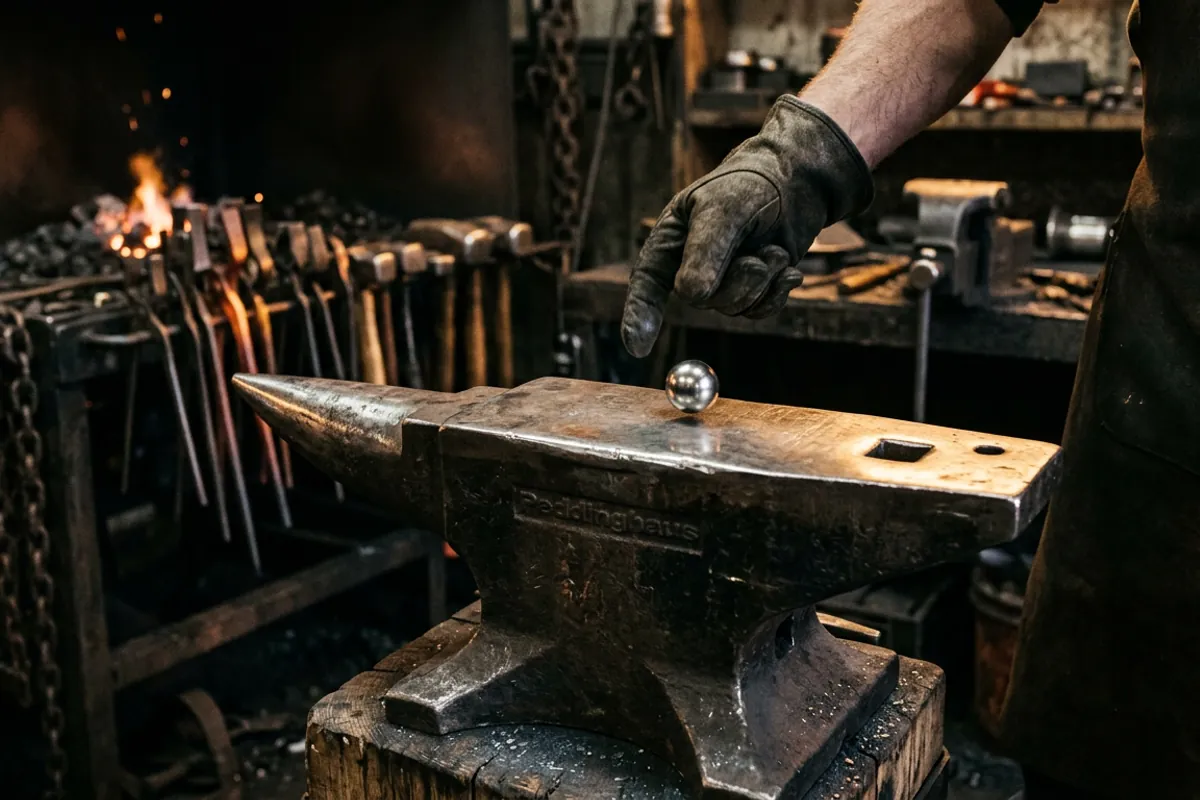
The common rule of thumb is that your anvil should weigh at least fifteen times your hammer, and fifty times is luxurious. Swing a 3 lb hand hammer and fifty times over is 150 pounds, which is Bessie almost exactly. That is why a 150 to 250 pound anvil covers the overwhelming majority of one-person work. I dig into the sizing math in the anvil weight guide, and the short version is that for solo hand forging you are chasing diminishing returns above about 200 pounds.
So who is the 500 crowd? Smiths who strike, meaning one person holds and turns while a second swings an 8 to 12 lb sledge, where the anvil has to swallow blows far heavier than any hand hammer. Production shops forging all day, where a bigger face and more mass mean less fatigue and fewer resets. People forging large stock, axe heads, hammers, big architectural work. And a few folks who simply found a giant old anvil cheap and had the means to move it. If you are not in one of those groups, read the rest of this as background, not a shopping list, and go buy the 200 pound anvil for sale I would actually buy instead.
The field at a glance
Here is the honest shape of the new-anvil market at this weight. Only published maker figures are in the table, cited in the sections below. Where a maker does not publish a number, it says so.
Scroll horizontally to see all columns.
| Anvil | Weight | Material | Face hardness | Hardy hole | Price tier |
|---|---|---|---|---|---|
| TFS single horn | 500 lb | Cast ductile iron, heat treated | HRC 52 | 1 in | Premium |
| Nimba Gladiator | 450 lb | 8640 cast steel | HRC 50 to 52 | 1 in | Premium |
| Refflinghaus No. 58 | 460 lb | Proprietary cast steel | Face HRC 59 plus | 1 3/4 in | Premium |
| Cast steel shop anvil | 66 lb | Cast steel | ~55 HRC (maker claim) | not published | Budget |
Notice there is no true 500 pound anvil on Amazon. The marketplace tops out with small cast anvils, which I cover at the end because they are what most people asking this question should actually buy first. A real 500-pounder is a special-order or used-market purchase.
TFS 500 lb: the one new 500-pounder you can just order
If you want to buy a brand-new anvil that actually weighs 500 pounds and have it show up on a pallet, Texas Farrier Supply is basically the answer. The TFS single horn in the 500 lb size is cast ductile iron, heat treated, with a published Rockwell hardness of 52, a 1 inch hardy hole, and a 1/2 inch pritchel, per Pieh Tool's TFS listing. Face length is not published, which is worth knowing before you build a stand for it.
Ductile iron gets sneered at by people who grew up on wrought-and-tool-steel antiques, and I understand the reflex, but do not confuse it with the cast iron doorstops sold as anvils. Ductile iron castings, properly heat treated, make a serviceable working face. HRC 52 is softer than a top-tier forged or high-alloy cast face, so it will show marking sooner and it will not have the glassy rebound of a Refflinghaus, but it is a real anvil you can forge on hard for years. The tradeoff you are buying is availability and price: a new 500 pound TFS runs in five figures, which for most people makes the used market a serious conversation. There is no Amazon link here because this is not an Amazon product, and I would not send you to a marketplace listing for a tool this size anyway. Buy it through a farrier or blacksmith supplier who will help you get half a ton off a truck.
Nimba Gladiator: 450 pounds, and arguably all the anvil you would ever need
The Nimba Gladiator is not quite a 500 pound anvil, and I am including it on purpose, because for the heavy-work buyer it is the one I would look hardest at. Per Nimba's own spec page, the Gladiator weighs 450 pounds, is cast from 8640 alloy steel, and is heat treated to 50 to 52 Rockwell, with a 7 inch face and a 1 inch hardy hole. It is a modern double-horn Italian pattern, made in the USA, individually dressed.
That 8640 steel is the point. It is a nickel-chrome-moly alloy with real toughness, and cast-then-heat-treated steel gives you a consistent face without the delamination worries that haunt some cheap fabricated anvils. If your reason for wanting mass is striking and heavy stock, a 450 pound alloy-steel Gladiator will out-forge a 500 pound ductile iron casting on rebound, even though it weighs fifty pounds less, because rebound is about the face material and heat treat as much as raw weight. For heat-treat and steel-hardness questions like this I send people to Knife Steel Nerds, which actually tests rather than repeats shop lore. Pricewise the Gladiator sits well below a new TFS 500 while giving you more usable performance, which is why it comes up constantly when serious smiths talk about a lifetime anvil.
Refflinghaus: German cast, a very hard face, and a waiting list
If money is genuinely not the constraint and you want the hardest, liveliest face at this weight, the German-made Ernst Refflinghaus anvils are the reference. The No. 58 pattern is listed at 460 pounds with a 5 inch face, a 1 3/4 inch hardy hole, and a 5/8 inch pritchel, per Shady Grove Blacksmith's Refflinghaus page, which also notes the face and horns are guaranteed to at least HRC 59, hard enough that a file skates. The same source lists a No. 9 pattern that jumps from 380 pounds straight to 550, so a true 500-plus Refflinghaus does exist if you want to cross the line.
The catch is real and I will not soften it: Refflinghaus makes only a few per year, and the wait can run with no promised date. That HRC 59 face is a genuine step up in rebound and edge retention over a low-50s ductile iron or 8640 face, and owners talk about it the way people talk about a great violin. But you are buying scarcity as much as steel, and for most heavy-work smiths a Gladiator you can actually receive beats a Refflinghaus you are still waiting on two years later.
The used market is where most real 500-pounders live
Here is the thing new-anvil tables never tell you: the majority of 500 pound anvils in working shops are old ones. Big industrial Trentons, Peter Wrights, Hay-Buddens, and Fishers were made in these weights for railroads, shipyards, and factory forge shops, and they turn up. A sound antique monster at this weight, bought right, will forge with any of the new castings and often cost less, because the seller usually has no idea what they have or just wants it out of the barn.
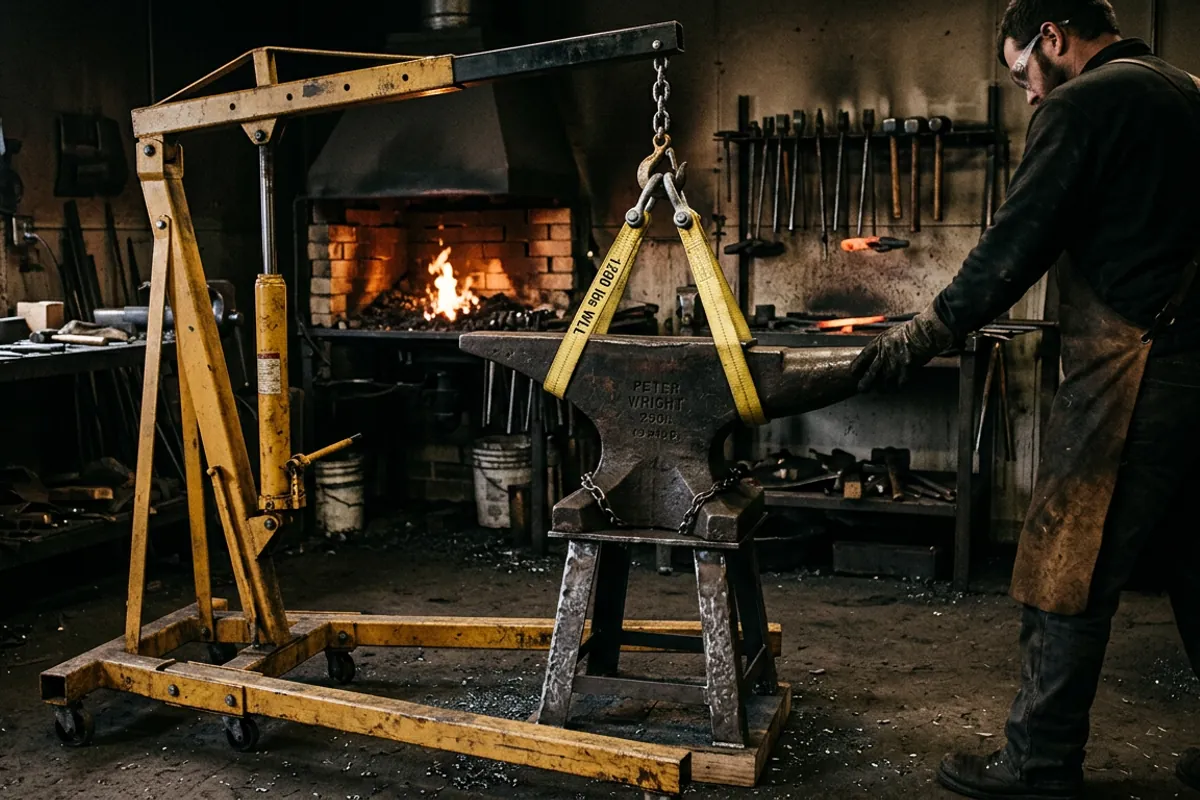
But buying a used 500-pounder blind is how you end up with an expensive doorstop with a swaybacked face, delaminated plate, or a horn snapped off and ground smooth to hide it. The checks are the same ones I run on any old anvil, scaled up: ball-bearing rebound test across the whole face, listen for the dead thud of a bad weld or a cracked body, and look hard at the plate-to-body seam on wrought anvils. I walk through all of it in the used anvils buying guide and the 500 lb anvil for sale buying guide. Two safety notes I will not skip. First, half a ton does not care about your back or your toes; rig it with rated straps and an engine hoist or a couple of strong friends and a plan, not enthusiasm, and keep your feet clear of the drop zone. Second, wear real eye protection rated to ANSI Z87.1 any time you are grinding or testing a face, because scale and grit come off these old surfaces fast.
What to buy instead if you are not there yet
Most people who search for a 500 pound anvil are new smiths who equate weight with quality. If that is you, spend the money on a real anvil in a sane weight and put the rest toward a forge and tongs. A small cast steel shop anvil will teach your hands everything a giant one would, and you can lift it.
The Cast Steel Anvil, 66 lbs single horn (paid link) is a typical example: a 10.8 by 3.1 inch work surface with the maker claiming roughly 55 HRC. Treat that hardness number as marketing, not a tested spec, because these budget castings are not third-party verified, but as a first anvil it will do honest work. The Multi-Angle Anvil 65 lb (paid link) is a similar cast steel piece with a longer 14.76 by 3.07 inch face, which some beginners prefer for straightening. Neither is a lifetime tool, and I would not pretend otherwise, but both beat learning on a chunk of rail, and both cost a rounding error next to a real 500-pounder.
If you want a bit more mass to grow into without spending anvil-money, a mid-weight cast steel piece around 130 pounds is a reasonable middle ground for a home shop:

For a fuller walk through the budget cast field, including which VEVOR castings are worth it and which to skip, I keep the VEVOR anvil guide and the general anvil buying guide current. The topic hub at Anvils links the rest.
What owners say
I have not personally forged on a TFS 500, a Gladiator, or a Refflinghaus, so this section is owner consensus, attributed, not a bench test.
On Nimba, the tone across forums is consistently positive and unusually free of the "wish I bought something else" grumbling you see with cheaper anvils. The long-running Nimba thread on I Forge Iron and the Nimba discussion on BladeForums both come back to the same points: excellent rebound, the double-horn pattern grows on people, and the alloy-steel face holds up under heavy work. The recurring complaint is simply price and the double horn taking up bench room, not performance.
On TFS, owner signal is thinner and more mixed, which is worth saying plainly. Farriers and smiths report the ductile iron anvils as solid workhorses for the money at the smaller sizes, with the honest caveat that the face is softer than forged or alloy-cast competitors and shows marking sooner. At the 500 pound size specifically the sample of owners is small, because few people buy a five-figure ductile iron anvil when a Gladiator is in reach, so take the 500-pound picture as extrapolated from the smaller TFS anvils.
On Refflinghaus, the consensus is near-reverence on the tool and near-universal frustration on the wait, exactly what the maker's own low output would predict. Nobody reports the face being anything but excellent.
What I would tell a friend
If you truly do heavy, striking, or production work and want a new anvil at this weight, the Nimba Gladiator is the one I would chase first: 450 pounds of 8640 steel out-forges heavier ductile iron on rebound and you can actually order it. If you specifically need to cross 500 pounds new and now, the TFS single horn is the practical answer, ductile iron and all. If you want the best face made and can wait, Refflinghaus. And if you are honest with yourself and you are a hobby smith, skip all three, buy a sound 150 to 250 pound anvil, and put the difference toward a good forge. Whatever you buy, rig the move with rated gear and wear Z87.1 eye protection when you test or dress the face. Weight is a tool, not a trophy.