I have enough verified material. Both Lone Star ASINs are live listings matching their product names, and I have solid non-marketplace sources (Nimba, a farrier-supply retailer for TFS, and a real I Forge Iron thread). Writing now.
Most people who type "500 pound anvil for sale" into a search bar do not need a 500 pound anvil, and the honest first thing I will tell you is that the real ones are rare, heavy enough to hurt you, and priced like a used car. If you are a full time production shop, a farrier competition team, or you are swinging a power hammer's worth of blows by hand into big stock all day, a half ton block under the hammer earns its keep. For the other ninety percent of us, the smart buy is a good 150 to 300 pound anvil and the money left over. This guide is for the smith who genuinely wants the big block anyway, plus a clear-eyed look at what you can actually order today. None of what follows is a bench test on my part. I run a 148 pound Trenton named Bessie, and I have never owned a 500. These picks lean on published maker specs, retailer listings, and what owners report on the forums, weighed against a couple decades on the floor.
Who actually needs a 500 pound anvil
Anvil mass matters because a heavier anvil returns more of your hammer energy back into the work instead of into the floor and your elbow. That is real. But the returns flatten out fast. Going from a 70 pound anvil to a 150 changes your day completely. Going from 250 to 500 is a much smaller felt difference for hand work, and you pay for it in dollars, in a floor that has to carry it, and in the genuine danger of moving the thing.
The people who actually benefit from 500 pounds are a short list: shops forging heavy bar and industrial stock, farriers and smiths striking with a sledge or under a striker, and folks running long sessions where they never want the anvil to so much as think about moving. If that is not you, read my take on what size anvil you actually need before you spend the money, and the companion piece on the 500 lb anvil worth buying and who actually needs one. Both will probably talk you down a weight class, and that is the point.
There is a safety reality here too, and I will not soften it. A 500 pound anvil is a crush and pinch hazard the second it leaves the pallet. You do not muscle it. You use an engine hoist or a loader, you keep your feet and fingers out from under it, and you never do it alone. People have lost toes and worse to a slipping anvil. Plan the move before the anvil shows up, not when the truck is idling in your driveway.
What a real 500 looks like, and the near misses
Here is the field laid out so you can scan it. These are published figures from the makers and retailers, or marked as not published where the maker does not state a number. Nothing here is a measurement I took myself.
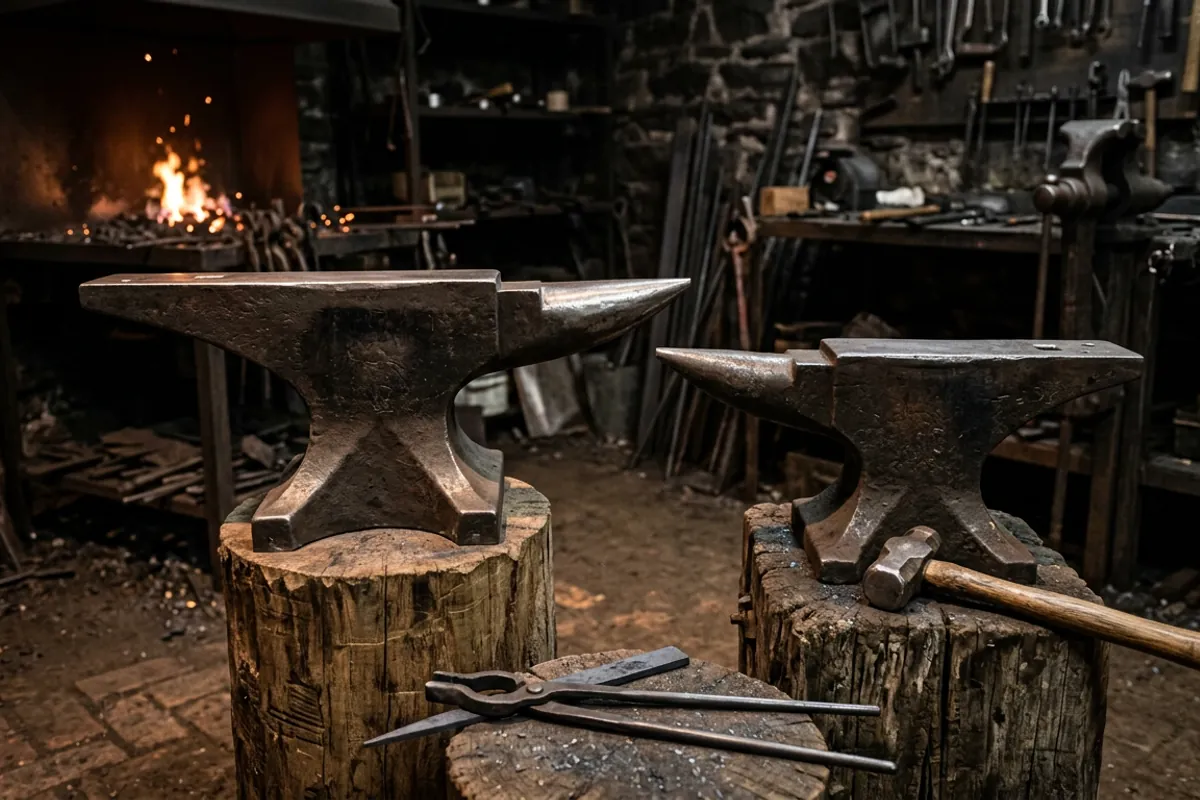
Scroll horizontally to see all columns.
| Anvil | Weight | Material | Face hardness | Price tier |
|---|---|---|---|---|
| TFS 500 lb blacksmith anvil | 500 lb | Cast steel | Not published | Premium (around $10,000 new) |
| Nimba Gladiator | 450 lb | 8640 steel, fully heat treated | Not published | Premium (about $2,575) |
| Used Fisher or Trenton 500 | ~500 lb | Wrought body, steel face (Trenton) or cast iron with steel face (Fisher) | Not published | Varies widely used |
| Lone Star Anvils 135 lb | 135 lb | Cast M50 tool steel | 57 HRC, 75%+ rebound (maker figures) | Mid |
| VEVOR single horn 132 lb | 132 lb | Cast steel | Not published | Budget |
Two things jump out. First, a genuinely new 500 pound anvil from a farrier-supply maker like TFS runs around ten thousand dollars, per retailer listings such as Stockhoff's TFS anvil pages. Second, the most sensible "big anvil" most serious smiths actually buy is not a 500 at all. It is the 450 pound Nimba Gladiator, which is why it is on this list even though it misses the number by 50 pounds.
The Nimba Gladiator, the 450 that most big-anvil buyers should look at first
If you have decided you want a modern block in the 400 pound class, this is the one I would point a friend at before anything else. Nimba makes the Gladiator in Seattle, casts it from 8640 nickel-chrome-moly steel, heat treats it fully, and backs it with a lifetime guarantee. Per Nimba's own Gladiator page, it weighs 450 pounds and lists at $2,575, which works out to a little over five and a half dollars a pound. That is a lot of anvil for the money when you set it next to a ten thousand dollar farrier 500.
The Gladiator is a double horn Italian pattern, so you get a round horn on one end and a squared bick on the other, which some smiths love for tighter radius work. The tradeoff is the shape. If you learned on a London pattern anvil and you want a big flat step and a classic heel, a double horn takes some adjustment. Owners on the bladesmith boards are consistent that the rebound and the heat treat are excellent, and that Nimba's customer service is real. This is not gear I have run myself, so take that as owner consensus, not a bench test.
The TFS 500, the one you can still buy new by the pound
Texas Farrier Supply makes an honest 500 pound cast steel blacksmith anvil, and if you truly want a new, warranty-backed, half ton block, this is the mainstream way to get one. The catch is price. Retailer listings put the TFS 500 around ten thousand dollars, which is roughly twenty dollars a pound, several times what the Nimba costs per pound. You are paying for the sheer mass and the fact that almost nobody casts anvils this big anymore.
I would only steer someone to a new TFS 500 if they have a specific production reason for the weight and the budget to match. For most buyers this is the anvil that proves the point of the whole guide: the number you searched for is expensive precisely because it is overkill for the way most of us work. If the money is burning a hole, a 250 to 300 pound anvil plus a good swage block and a stout post vise will serve a home shop far better than one giant face you use at a fraction of its capacity.
Used Fisher and Trenton 500s, the ones that actually change hands
Most 500 pound anvils that trade hands are old American ones, and they are worth understanding before you drive four hours with cash. The two names you will see most in this weight are Fisher and Trenton. A Trenton is a two piece wrought iron body with a forge welded tool steel face, and a good one rings and rebounds hard. A Fisher is cast iron with a steel face plate, and it is famously quiet, which farriers and anyone with close neighbors love. On the I Forge Iron thread titled plainly 500 Lb Anvil, you can watch experienced smiths work through exactly this, what a big old anvil is worth, how to check it, and whether the weight is worth chasing.
Buying a used 500 is a buying-skill problem more than a money problem. You want a face with strong rebound across the whole surface, minimal sway, tight edges that have not been ground to nothing, and no dead spots where the face has delaminated from the body. Drop a ball bearing and watch it bounce, listen for a clean ring or, for a Fisher, accept the quiet and lean harder on the bounce test. I walk through the whole inspection in how I shop for used anvils without getting a paperweight. A cracked or delaminated 500 is not a bargain, it is a very heavy problem you now have to move twice.
Prices on used 500s are all over the map depending on maker, condition, and how badly the seller wants it gone. That variability is the whole reason the honest answer to "how much" is "check the face first, then talk price."
What you can actually order online right now
Here is the part that matters for most readers, because the truth is you probably cannot get a 500 delivered to your door with a single click, and you probably should not try. What you can order online and have carried into the shop by two people is a 130 to 135 pound cast steel anvil, and for a home smith that is a genuinely useful tool rather than a compromise.
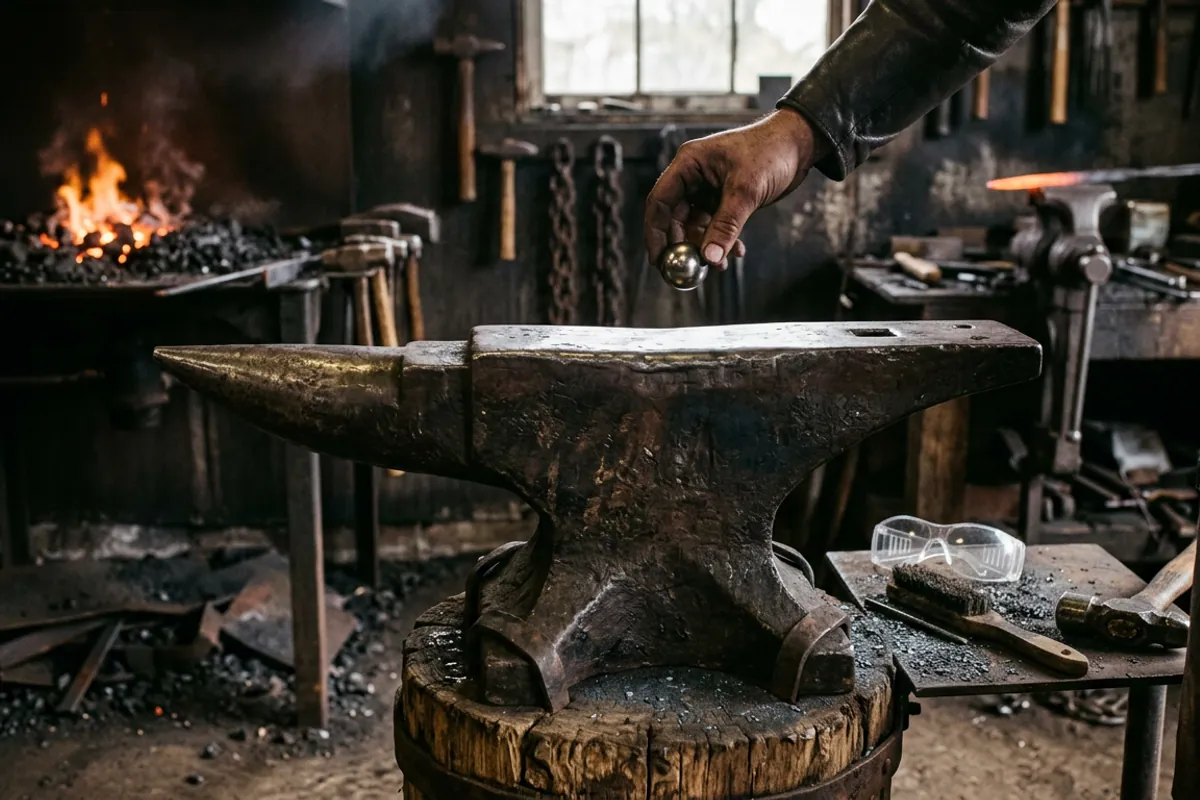
The Lone Star Anvils line, cast by Texas Forge and Tools, is the one I would look at here. The maker's published figures put their cast anvils at 57 HRC on the face with 75 percent or better rebound, cast from M50 tool steel, with a hardie hole and a pritchel hole. That is a real working spec, not a doorstop. The 135 pound is the largest size in that family that stays easy to handle and ship.
Check price on Amazon (paid link) for the Lone Star 135 pound, and if you want to keep the anvil budget smaller and put the difference toward a forge and tongs, the Lone Star 100 pound (paid link) is the same construction in a lighter block. I have not run either of these in my own shop, so treat the specs as the maker's published numbers and the buying advice as general shop experience, not a hands-on test.
If you want the cheapest way into a horned anvil to learn on, the budget cast option most home smiths compare against is the VEVOR single horn. It is a budget cast anvil and it behaves like one, softer face, less rebound, but for light work and learning your hammer control it gets you started. Here is the current feed listing:

I go deeper on where these budget castings make sense and where they do not in the VEVOR anvil guide. The short version is that a budget cast anvil is a fine first anvil and a poor forever anvil, and that is fine as long as you know which one you are buying.
What owners say
For gear I have not personally run down, I lean on what the forums report, and I try to pass along the complaints as honestly as the praise.
On the Nimba Gladiator and the Nimba line generally, the consensus across the bladesmith and knife boards is strongly positive on rebound, heat treat, and the lifetime guarantee, with the double horn pattern being the main thing people either love or take time to get used to. The recurring caution is not about quality but about shape and price, so buy the pattern you actually want to work on.
On big used anvils, the running theme on I Forge Iron's 500 Lb Anvil discussion and the broader anvil-weight threads is that veteran smiths talk people down as often as up. The repeated point is that mass past a certain point is diminishing returns for hand work, and that a clean 200 to 300 pound anvil beats a beat up 500 every time. That matches my own experience moving from lighter anvils to Bessie: the jump that changed my forging was getting to real mass, not maxing it out.
On the budget cast anvils, owner signal is exactly what you would expect and I will not dress it up. People report soft faces that mark, edges that chip if you work them hard, and rebound well below a forged or tool-steel-faced anvil. They also report, honestly, that for a beginner learning to move metal, none of that stops you from making things. Thin praise plus real complaints is the accurate picture, and the honesty is the point.
What I would tell a friend
If you have the budget and a real reason for the weight, the new anvil I would buy in this class is the Nimba Gladiator at 450 pounds, because it is fully heat treated 8640 with a lifetime guarantee at a fraction of the per-pound cost of a new 500. If you specifically need the full 500 pounds and want it new, the TFS is the mainstream option, but go in knowing it is roughly ten thousand dollars and mostly bought for production reasons. If you are buying used, chase condition over the number, and read the face before you read the price tag.
And for most people reading this, the friend answer is the plain one: you do not need a 500 pound anvil for sale, you need a good anvil you will actually use. Order a solid 130 to 135 pound cast steel anvil now, or hold out for a clean used 200 to 300, and put the rest toward fuel, tongs, and hood time. Whatever you buy, respect the weight when it arrives. Move it with a hoist, keep your feet clear, wear your ANSI Z87.1 eye protection at the grinder, and let the anvil outlive you instead of the other way around. Start from the anvils topic hub if you want to compare weight classes before you commit.