I have verified ASINs matching live listings, maker specs from simondstore.com, and real I Forge Iron threads. Writing now.
Most home coal forges live or die on their air, and a forge blower is the part that pushes it. If you are setting up a solid fuel forge and you want the least fuss for the money, I would start with a hand crank blower like the SIMOND STORE 8 inch cast aluminum unit: it gives you fine, instant control over your fire, needs no outlet, and there is nothing electrical to burn out sitting next to a coal fire. If you would rather set it and forget it, a small variable speed electric blower does the job for less money, as long as you add a way to choke the air down. I want to be straight about how I know what I know here. I run a coal forge and a propane forge in my own shop, so I can speak to what air does to a fire and what I want out of a blower. I have not personally owned every blower below, so the picks lean on published specs and what owners report on the forums, weighed against that shop experience. I will tell you which is which.
The blowers at a glance
Every figure below is a published spec from the maker's own listing, not a number I measured. Where a maker does not publish a spec, I have said so rather than guess. Airflow in cubic feet per minute is the number you would most want to compare, and almost nobody in this price range publishes it, so treat casing size and gear ratio as the rough proxy they are.
Scroll horizontally to see all columns.
| Blower | Type | Casing | Air outlet | Gear ratio | Material | Price tier |
|---|---|---|---|---|---|---|
| SIMOND STORE 8 inch hand crank | Hand crank | 8 in | 2 in | 1:28 | Cast aluminum, steel shaft | Budget to mid |
| SIMOND STORE 11 inch hand crank | Hand crank | 11 in | 1-1/4 in BSP | 1:28 | Cast aluminum, steel shaft | Mid |
| Variable speed electric blower (40W) | Electric | Not published | Not published | N/A | Plastic and metal | Budget |
Specs for the SIMOND STORE blowers come from the maker's own product pages (Simond Store, 8 inch casing and Simond Store, 11 inch casing). The electric unit is a generic import and the seller does not publish much beyond the 40W rating, which is honest to note up front.
What a forge blower actually does, and why coal needs one
A solid fuel fire will not get to forging heat on its own. Coal, coke, and charcoal all need forced air pushed up through the fuel bed to raise the fire from a warm orange glow to the bright yellow you need to move steel, and hotter still if you want to forge weld. That forced air is the whole job of a forge blower. It sits below or beside the firepot, connected through the tuyere (the air pipe into the fire), and it feeds the burn.
The thing new smiths get wrong is thinking more air is always better. It is not. Too much air blasts unburned fuel out of the pot, burns coal faster than you can rake it in, and can actually cool a fire by shoving cold air through it faster than it can heat. Too little and the steel never gets hot enough to work. The skill is in matching the air to the fire, and that means the single most important quality in a blower is not raw power. It is control. A blower you can dial from a whisper to a roar is worth more in a coal forge than one that only knows one loud setting. Keep that in mind, because it is the thread running through every pick below.
If you are still deciding whether coal is even your fuel, read my coal vs propane forge writeup first, because a gas forge does not use a blower like this at all. A propane forge either runs on a naturally aspirated venturi burner or a small forced air burner, and the air setup there is a different animal. This guide is about air for solid fuel. For the broader picture of building a solid fuel forge around one of these, my coal forge buying guide and the Forges topic hub cover the firepot, tuyere, and ash dump that the blower feeds.
Hand crank versus electric: the real tradeoff
This is the decision that matters, so I want to spend real time on it.
A hand crank blower gives you the most direct, organic control there is. Your hand is the throttle. When the fire needs a little more, you crank a little faster. When you pull the steel to inspect it, you stop cranking and the air stops, so you are not wasting fuel while you look. Smiths on I Forge Iron come back to this point again and again: the crank flow is far easier to fine tune than an electric blower, it uses no power, and it is dead quiet, which matters more than you would think when you are trying to hear and see what the fire is doing (see the Thoughts on hand crank blowers thread on I Forge Iron). The downside is obvious. One of your hands is busy cranking, which is a real limitation when you are trying to manage stock, tongs, and a rake at the same time. Many crank smiths solve this by cranking to build the heat, then letting the fire coast while they work at the anvil.
An electric blower frees both hands and never gets tired. You flip it on and the air is steady. The catch, and it is a real one, is control. A cheap electric blower with no speed control is a fire hose stuck on full, and that is the wrong tool for a coal fire. You must have a way to throttle it. That means either a variable speed model or a fix as simple as a sliding gate valve or a blast gate in the air pipe to bleed off and redirect excess air. Forum smiths have been rigging exactly this for years, from sheet metal air gates to speed controllers (the Making an electric blower adjustable thread on I Forge Iron is a good example of how many ways there are to skin it). If you buy electric, budget the air control as part of the purchase, not an afterthought.
My honest read: for a first coal forge where you are still learning to read a fire, a hand crank teaches you more and gives you better control while you learn. For a shop where you forge for hours and want both hands free, electric with a proper air gate wins. Neither is wrong. They are different tools.
SIMOND STORE 8 inch hand crank forge blower
This is the one I would point a beginner at. The 8 inch casing is the middle size in SIMOND's hand crank line, big enough to feed a normal home firepot without being a monster to store, and it uses a 2 inch air outlet with a 1:28 gear ratio, meaning one turn of the crank spins the fan 28 times (per the maker's page). The casing and impeller are cast aluminum, the crank handle, pipe, and stand are steel, and the worm shaft is ground steel. Oil ports are provided so you can keep the gears running smooth and quiet.
What you are buying is a modern reproduction of the classic geared hand crank blower, made overseas at a price a working antique would never match. It suits a home coal or charcoal forge, a farrier's setup, or anyone who wants that direct crank control without hunting down and rebuilding a hundred year old Champion. The honest tradeoff is that a cast aluminum import is not a vintage cast iron Buffalo. Fit and finish are what you would expect at the price, the gears are the part owners watch, and you keep them oiled or you wear them out. For most home smiths that is a fair trade for a blower that costs a fraction of a restored antique. Check price on Amazon (paid link)
SIMOND STORE 11 inch hand crank forge blower
Step up to the 11 inch casing if you are running a larger firepot, doing heavier stock, or want more air available at a given crank speed. Same 1:28 gear ratio and cast aluminum construction as the 8 inch, but the bigger casing moves more air, and the outlet is a 1-1/4 inch BSP threaded fitting, which changes how you plumb it into your tuyere (maker's page). SIMOND does not publish a CFM figure for it, so I will not invent one; the larger casing is your guide that it moves more than the 8 inch, not a promise of an exact number.
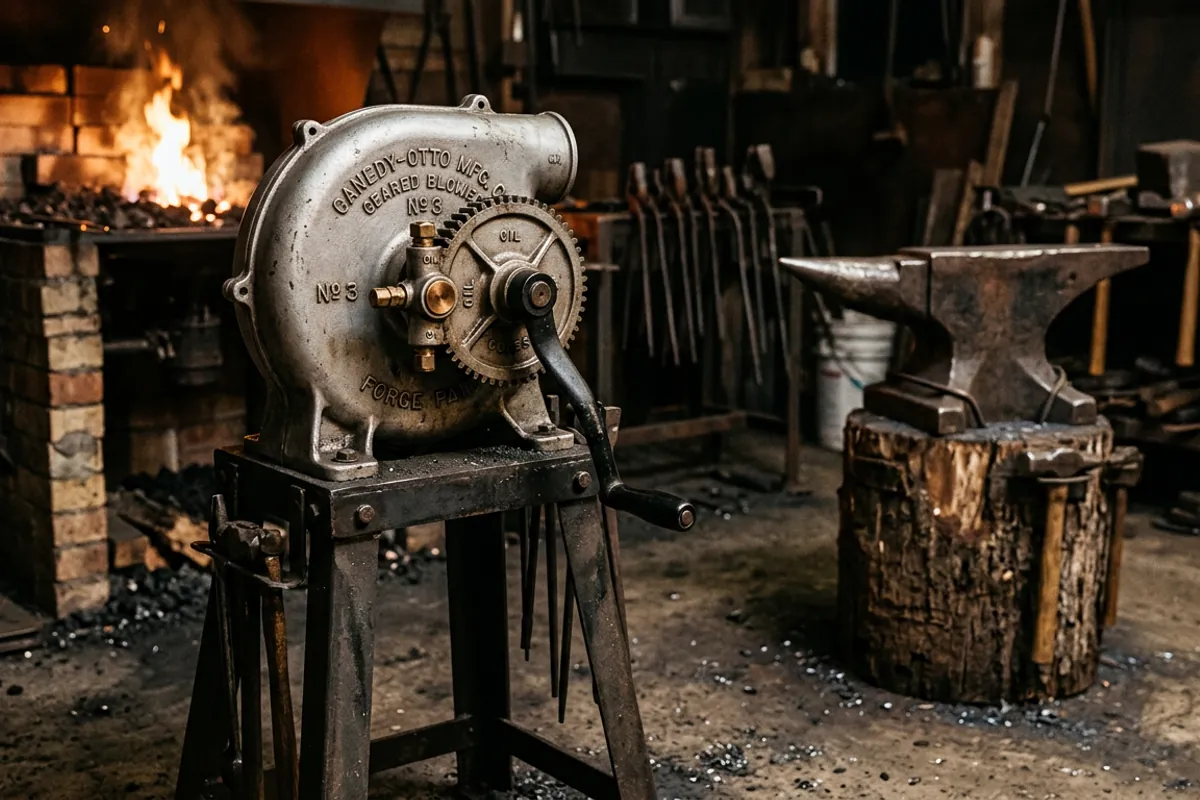
Who needs it? If you are forging light work and small stock, the 11 inch is more blower than you need, and the 8 inch will serve you better because it is easier to feed gently. If you are heating long pieces, welding, or running a deeper pot, the extra capacity earns its keep. Same honest caveat on the cast aluminum build and the oiled gears applies. Check price on Amazon (paid link)
The variable speed electric forge blower
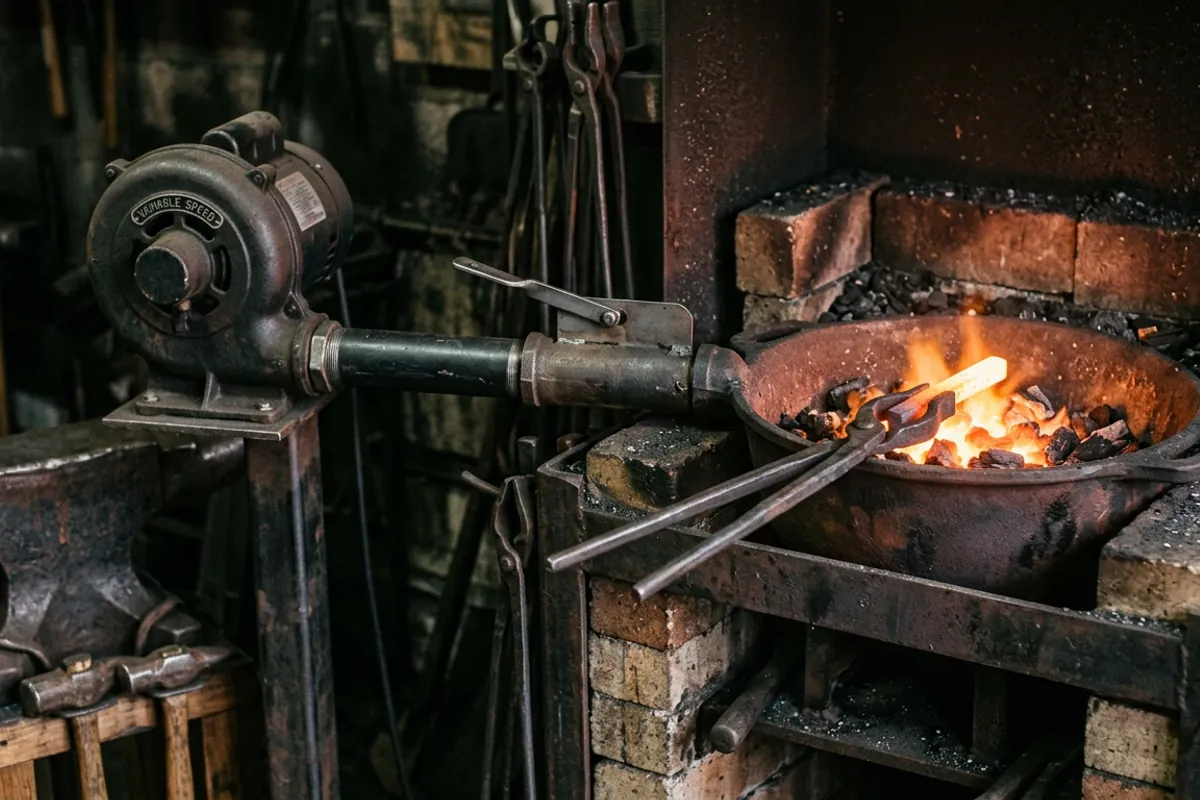
If you want hands free air on a budget, a small variable speed electric blower like this 40W unit is the low cost route. The variable speed is the important word: it means the blower has some built in throttle, which is exactly what a bare on-off electric fan lacks. At 40W it is a small blower, which is fine. For a modest home firepot or as forced air for a small forge you do not need a shop vac's worth of pressure, and a smaller blower is easier to control than an oversized one you have to choke down hard.
Be clear eyed about what it is. This is a generic import, the seller publishes little beyond the wattage, and the build is plastic and light metal rather than cast anything. It will not have the lifespan or the feel of a geared crank blower, and even with variable speed you will likely still want a simple air gate in the pipe so you can trim the last bit of airflow and dump excess without fighting the fire. For the money, it gets air moving and frees your hands, and that is a reasonable place for a beginner to start if electric is the way you want to go. Check price on Amazon (paid link)
What owners say
For the hand crank blowers, the consensus on I Forge Iron is consistent and worth repeating: smiths who run geared crank blowers value the control above everything, calling the flow easier to fine tune than electric and prizing the silence and the lack of a cord (the Thoughts on hand crank blowers thread lays this out well). The recurring complaint against the modern imports, SIMOND included, is not the airflow but the mechanical quality: gears and bearings are where the cost cutting shows, and owners who keep the oil ports fed and do not crank like they are angry at it report years of service, while the ones who run them dry wear them out. If you can find and afford a sound antique Champion or Buffalo, the old cast iron blowers are widely held to outlast anything new at this price, and forum members regularly rate a rebuilt vintage unit as the better long term buy if you are willing to hunt.
For the electric side, the loud and repeated warning is control. Owners who bolt on a bare electric blower with no throttle report blasting fuel out of the pot and burning through coal, and the fix they share is always the same: add a speed control or an air gate, as the Making an electric blower adjustable thread on I Forge Iron shows in a dozen variations. Owner signal on this specific cheap 40W import is thin, and I will say so plainly rather than dress up a handful of listings as a consensus. Treat it as a budget starting point, not a proven workhorse.
Sizing the air to your fire, and the safety part
Whatever you buy, get the air control right and get your PPE right. On control: you want to be able to take the fire from a low idle to full forging heat and back without drama, so if your blower runs hot and hard, put a blast gate or a simple sliding cover in the pipe between the blower and the tuyere. That gate is worth more than any spec on the box. It lets you bleed off excess and keep a small, tight, hot fire instead of a big lazy one that eats fuel.
On safety, coal forging throws off two things a blower makes worse: sparks and fumes. More air means a hotter fire and more flying scale and sparks, so eye protection rated to ANSI Z87.1 is not optional at the forge, and natural fiber clothing over synthetics matters because a spark that lands on a cotton shirt smolders while the same spark melts polyester into your skin. I learned the clothing lesson the hard way years ago with a quench oil flare that took my eyebrows, and I have been blunt about PPE ever since. Coal smoke and coke fumes also demand real ventilation and a working chimney; a blower feeding a fire in a closed shop is a carbon monoxide problem. My blacksmith safety gear rundown covers the eye and clothing side in full, and if you are building the forge itself, the DIY forge parts guide and my homemade forge build guide get into the tuyere and air plumbing the blower connects to.
What I would tell a friend
Buy the hand crank if you are learning. The SIMOND STORE 8 inch is the size I would start with for a normal home firepot, because the direct crank control teaches you to read a fire better than any electric blower will, and there is nothing to short out next to the coals. Step up to the 11 inch only if you are running a bigger pot or heavier stock. Go electric only if you specifically want both hands free and you commit to adding an air gate or speed control, in which case the small variable speed unit is a fine cheap start. And if you have the patience to hunt, a sound antique Champion or Buffalo will likely outlast any of them. Whatever you pick, spend your care on the air control and your PPE, not on chasing a bigger number on the box. A small hot fire you can steer beats a big loud one every time.