Twenty-five years ago I started on a chunk of railroad track and a fire I could barely control, and if I had to do it again I would skip the fight with the fire entirely. For most people the right beginner forge is a small propane gas forge, and the specific one I would put in a new smith's shop is the Hell's Forge single burner. It lights in seconds, holds an even heat while you learn to swing a hammer, and costs less than the pile of steel and coal you would burn learning to run a solid fuel fire. That is the short version. The longer version, and the honest tradeoffs, are below.
Before I go further, a piece of framing the site owes you: I run a coal forge for heavy stock and forge welding and a propane forge for most everything else, so I can speak to how these fuels behave from years on both. But I have not bought and bench tested every model in this guide. The picks here lean on published specs, owner reports from the forums, and what I know about what actually matters in a forge, weighed against time on my own two. Where a claim is owner consensus rather than something I have run down myself, I say so.
Why a propane forge is the beginner forge I recommend
The fuel argument for beginners is not close. A propane forge is turn the valve, hit the striker, and go. You set a rough heat and it holds while you focus on the work, which is the whole game when your hands are still learning. There is no fire to feed, no clinker to break up, no air blast to balance. A coal fire rewards a smith who already knows what a good fire looks like and punishes one who does not, and a brand new smith does not.
Owner consensus lands in the same place. Retailer and shop writeups comparing the two fuels almost all point beginners at gas for the same reasons I would: consistent heat, low maintenance, and cleaner burning in a small or semi enclosed space, per Red Label Abrasives' coal versus propane breakdown. The one honest knock on propane is upfront cost, since a bare bones coal setup can be cheaper to cobble together. I still send beginners to gas, because the money you save on a coal forge you spend twice over in wasted fuel and frustration while you learn.
If you want the full fuel argument laid out, I wrote it up separately in coal or propane, which first forge makes sense, and there is a deeper buying guide in the propane forge I would put in a home shop. This guide is narrower: three specific beginner forges, what their specs actually say, and which one I would hand a friend.
The three beginner forges at a glance
Only published figures are in this table. Where a maker does not state a number, it says so.
Scroll horizontally to see all columns.
| Forge | Burners | Max rated temp | Interior chamber | Insulation | Price tier |
|---|---|---|---|---|---|
| Hell's Forge single burner | 1 | 2300 F | Not published | 1 in ceramic fiber blanket plus firebrick | Budget to mid |
| Simond Store single burner | 1 | 2600 F | 4.8 x 4.8 x 10 in | 1 in ceramic fiber blanket plus 1 in firebrick | Budget |
| Hell's Forge MAX double burner | 2 | 2300 F | Not published | 1 in ceramic fiber blanket plus firebrick | Mid |
Sources: Hell's Forge published rating and insulation from the maker's stated specs, and Simond Store's chamber and insulation figures from Simond Store's own product page. I list interior chamber as not published for the Hell's Forge units because I could not confirm an exact chamber dimension from the maker, and I am not going to invent one. That matters more than it sounds: chamber size decides what fits, so measure against your intended work before you buy.
Hell's Forge single burner: the one I would start most people on
This is the forge I would hand the average weekend beginner. It is a single burner propane unit rated to 2300 F, insulated with a one inch high density ceramic fiber blanket and firebrick, and it ships with a can of the maker's refractory coating and instructions to apply it, which you should do before first real use. That 2300 F rating is hot enough to forge and to forge weld most common steels, and hot enough for the beginner projects that actually teach your hands, like hooks, drifts, and simple blades.
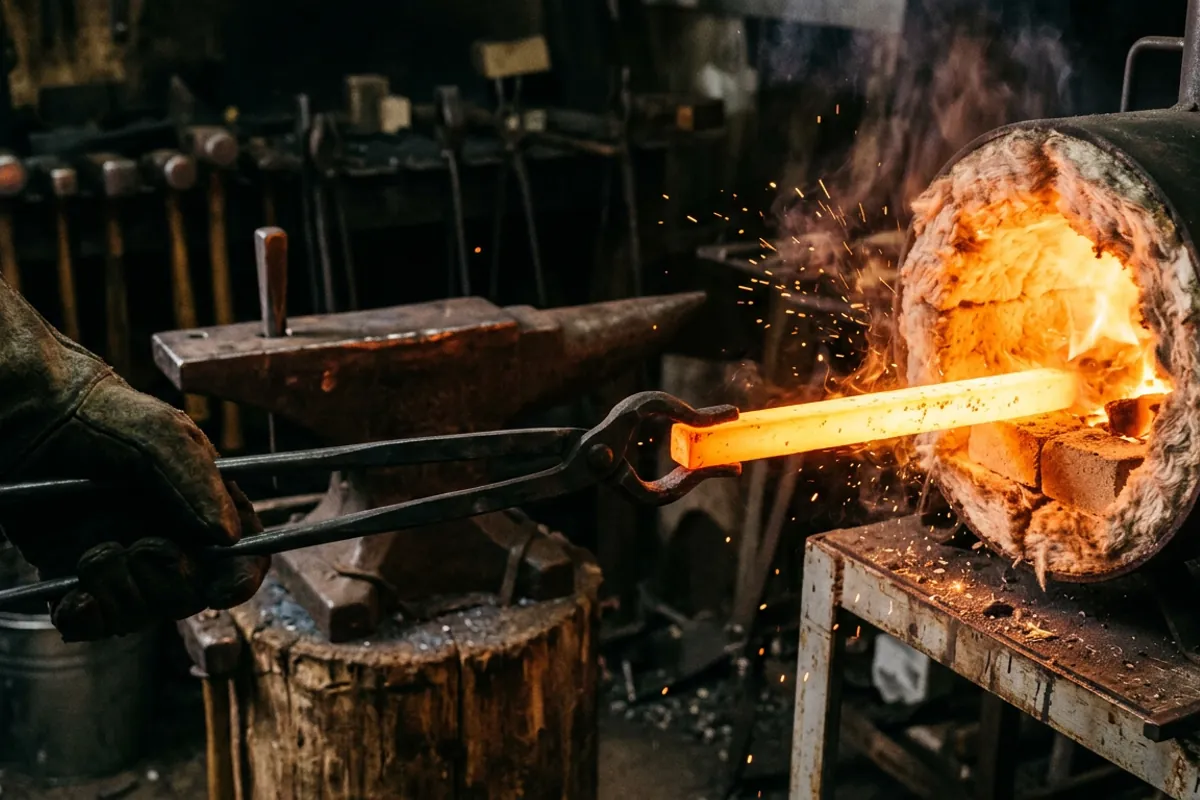
Who it suits: someone forging small work, knives up to a normal working length, hooks, bottle openers, tent stakes, the kind of projects in the beginner blacksmith projects that actually teach you to forge. A single burner keeps your fuel bill down and heats a small chamber fast, which is exactly what you want while you are still building muscle memory.
The honest tradeoff is the burner geometry. Hell's Forge uses a top down burner, and experienced knifemakers on the forums are not shy about the downside: a burner firing straight down creates a hot spot directly under the flame and heats less evenly along the length of a blade than a side angled burner does. It is a real limitation, not a dealbreaker for a first forge. You learn to move the work through the heat. For general beginner smithing it is a fine forge, and the price and the lifetime warranty the maker advertises make it easy to recommend as a starting point.
Check price on Amazon (paid link)
Simond Store single burner: the budget option with published numbers
If your budget is tight, the Simond Store single burner is the one I would look at next, and it earns a spot here partly because the maker actually publishes the numbers I care about. The chamber is 4.8 by 4.8 by 10 inches, it is rated to 2600 F, and it is insulated with a one inch pre rigidized ceramic fiber blanket over one inch of firebrick, built in polished SS 304 stainless sheet, per Simond Store's product page. A published chamber dimension is worth real money to a beginner, because you can hold a tape to your intended work and know whether it fits before you spend a dime.
That 2600 F rating is a higher published ceiling than the Hell's Forge, though I would not read too much into the last hundred degrees on a spec sheet. What matters in practice is that both reach forge welding heat, and both are single burner units sized for small work. The Simond two door layout lets you pass longer stock straight through the forge, which is genuinely useful once you start making longer blades.
The tradeoffs are the ones you expect at this price. It is a budget forge, the burner is a venturi like the rest of this class, and owner reports on the low cost import forges run the usual range: some arrive dialed in, some need the burner or regulator fiddled with to run clean. Buy it knowing you may spend an evening tuning it. For a first gas forge on a budget, that is a fair trade.
Check price on Amazon (paid link)
Hell's Forge MAX double burner: when to actually size up
The double burner MAX is the same family as the single, rated to the same 2300 F, but with a second burner and a longer chamber. I list it here because beginners ask for it constantly, and I want to be straight about who needs it: not most of you, not yet.
A second burner buys you a longer even heat zone, which matters if you already know you want to make longer blades or heat longer sections of bar at once. It also roughly doubles your propane consumption. Here is the part the forums are honest about and the sales pages are not: a lot of people who buy a double burner as their first forge end up running only one burner most of the time, because their projects never reach the far end of the chamber, and single burner running saves fuel. One I Forge Iron member said exactly that, that he tends to use just one of his two burners because his work does not reach the second, in this thread on running a double burner on one burner.
So my rule is simple. If you already have a concrete reason to want the length, buy the double burner. If you are not sure, you are not the buyer for it yet. Start on a single, and if you outgrow it, a bigger forge is a good problem to have.
Check price on Amazon (paid link)
What owners say
I have not run these specific forges down in my own shop, so here is what the forums report, product by product, with the sources so you can read them yourself.
On the Hell's Forge, a KnifeDogs moderator flat out said it will do fine for starting out, while more experienced members in the same KnifeDogs forge thread flagged the top down burner as a source of hot spots and criticized top firing designs for knife work, recommending side angled burners for even heat along a blade. The consensus there is not that it is a bad forge, it is that it is an acceptable beginner forge with a known limitation, and that serious knife work eventually wants a better burner layout. That squares with my own read of the design.
On single versus double burner more generally, the Bladesmith's Forum beginner board has the recurring one or two burner for a first forge question, and the answer that keeps coming back is that a single burner is enough heat for most beginner work and a double is capacity you grow into, not capacity you need on day one.
Owner signal on the budget import forges like Simond is real but noisy: plenty of satisfied first time buyers, alongside the expected complaints about tuning the burner and regulator out of the box. If someone tells you a sixty dollar difference buys a flawless forge, they are selling something. These are good value starter forges that occasionally need a little setup work.
Safety before you light anything
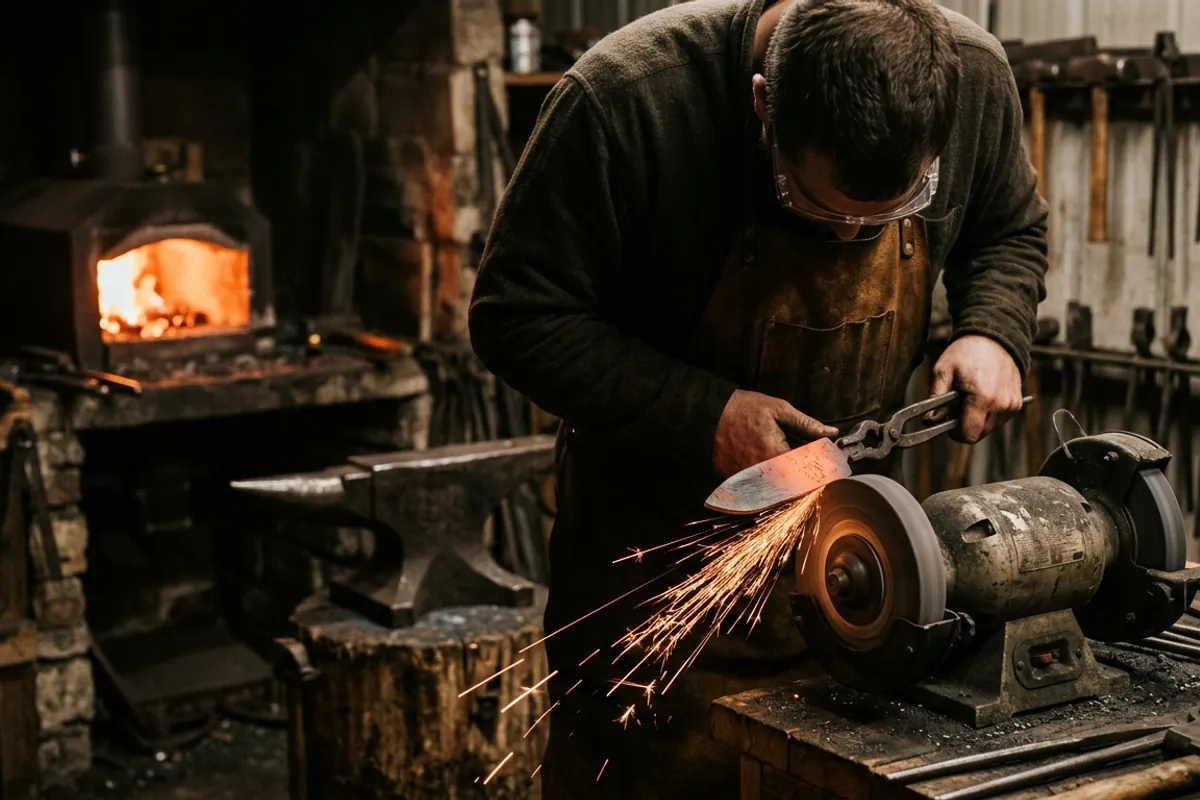
This is the part I will not soften, because I have the scar to explain why. Early on I quenched a blade in oil that was too cold, standing too close in a cotton shirt with no face shield, and the oil flared up and took my eyebrows. I kept my eyesight by luck. Luck is not a plan.
A propane forge is forgiving to run and unforgiving if you are careless. Ventilate. Gas forges produce carbon monoxide, so run it outdoors or in a space with real cross ventilation, never a closed garage. Check every fitting with soapy water for leaks before you light it, and keep the propane bottle out of the line of the burner. Wear eye protection rated to ANSI Z87.1, because forge scale and grinder sparks do not care that you were only going to work for a minute. Dress in natural fibers, cotton or wool or leather, never synthetics near that heat, because synthetic melts to skin. I lay the whole kit out in blacksmith safety gear, what matters and what to skip, and none of it is optional.
The forge is only part of the shop. You also need an anvil, a hammer, and tongs before you make anything, and I put the honest starter list together in the beginner blacksmith kit I would actually buy first. Read that before you spend, so the forge is not the only tool you own.
What I would tell a friend
Buy the Hell's Forge single burner if you want the easiest recommendation and a maker with a warranty behind it. Buy the Simond Store single burner if your budget is tight and you want a published chamber size you can measure your work against. Skip the double burner for now unless you already know you want to forge long blades, because it mostly buys you fuel bills and a second burner you will run half the time.
Whichever you pick, it is a propane forge, and that is the right beginner forge for almost everyone who asks me. Start small, light it safely, ventilate it, and put your money into hours at the anvil rather than into a forge bigger than the work you are ready to do. You can always buy up later. Nobody ever regretted learning on a forge that was easy to run. For where all of this fits in the bigger picture, the forges topic hub collects the rest.