Now writing the article.
What a smithing forge actually has to do
If you handed me a budget today and told me to put one smithing forge in a beginner's shop, I would buy a two burner propane forge with brick doors at both ends. The Simond Store double burner with two brick doors is the version most people can actually afford, and the Hell's Forge MAX is the American made take on the same idea. If money is tight, a single burner will still make hooks, tongs, bottle openers and small blades, and nobody ever regretted starting smaller than they planned.
Two things up front, because I would rather lose a sale than your trust. I run two forges of my own, a coal forge for heavy stock and forge welding and a propane forge for most of the day to day work, so I can speak to how gas behaves in a home shop. I have not run these specific units down in my own shop. The picks below lean on the specs the makers publish, on what owners report on the forums, and on about twenty five years of lighting forges and watching what breaks.
A forge has one job: bring steel to an even forging heat and hold it there without eating your fuel budget. Everything else is packaging. What that job breaks down into, in the order it matters:
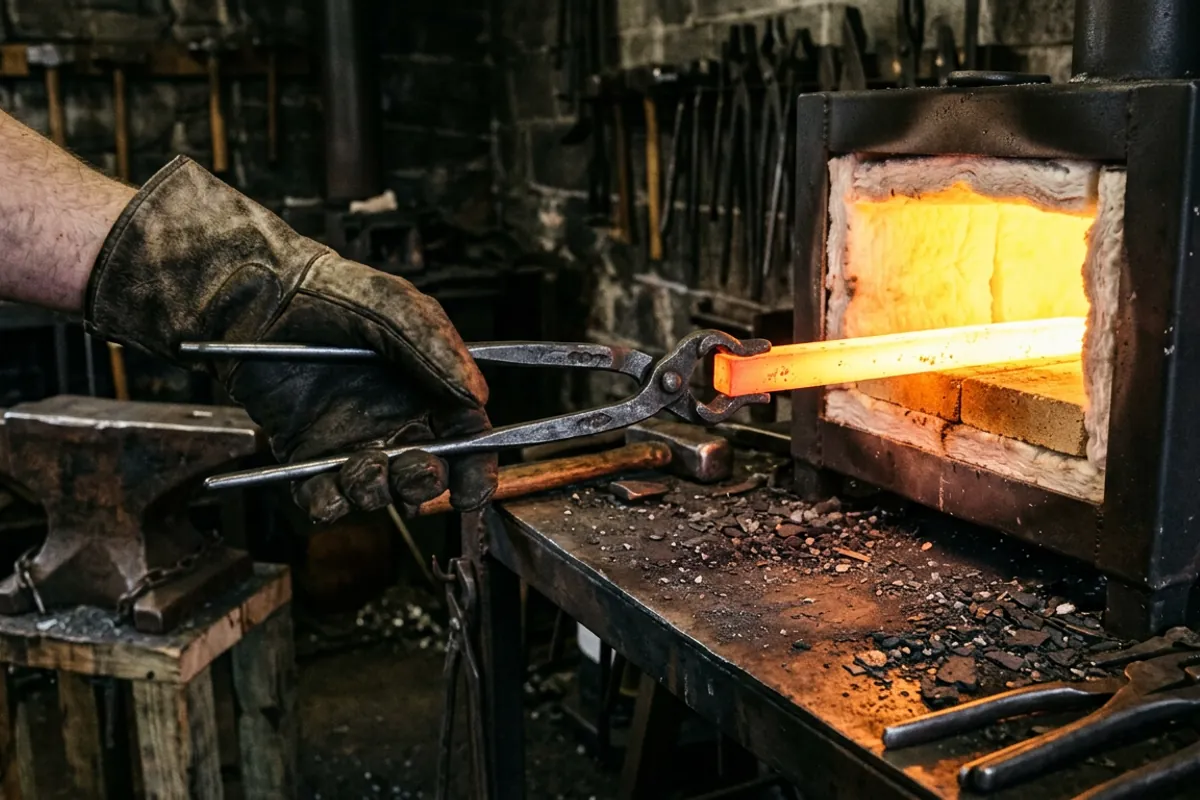
Chamber size. The single most common mistake I see in beginners is buying too much forge. A big chamber takes longer to come to heat and burns gas the whole time it is doing it. A small chamber heats fast and cheap, but it will not swallow a 1 inch square bar you want to draw out. Doors or pass through ports on both ends matter more than raw volume, because a forge with open ends will heat the middle of a long bar, which is where most scrollwork and hook work actually happens.
Insulation. Ceramic fiber blanket over a firebrick floor is the standard in every gas forge in this price range. Blanket heats up fast and holds heat well, but it is fragile and it sheds fibers, which is a real health issue I cover further down. A hard firebrick floor takes the beating from dropped stock and flux.
Burner count. One burner heats a short chamber. Two burners heat a longer one, and they give you enough heat to get to forge welding temperature if you are patient and your forge is coated. Three or more is farrier and production territory, and it is a gas bill you do not want yet.
What comes in the box. Regulator, hose, and gauge are usually included at this price. The regulator is the part cheap forges cut corners on, and it is the part owners most often replace first.
If you have not settled the fuel question at all yet, read Coal or propane: which first forge makes sense? before you spend a dollar, and the rest of the fuel and forge material lives on the forges topic hub.
The field at a glance
Published specs only. Where a cell says not verified, the maker states a figure somewhere in their own listings but I could not pin it to a maker page I could actually read, so I am not going to repeat a number I cannot check.
Scroll horizontally to see all columns.
| Forge | Burners | Interior chamber (published) | Lining (published) | Rated to | Sold through |
|---|---|---|---|---|---|
| Simond Store single burner, one door | 1 | 4.8 x 4.8 x 10 in | Ceramic fibre plus refractory firebrick floor | 2600 F | Marketplace |
| Simond Store double burner, two brick doors | 2 | 4.75 x 6 x 12 in | 1 in pre rigidized ceramic blanket, 10 pound density, 1.25 in firebrick | 2600 F | Marketplace |
| Hell's Forge single burner | 1 | Not verified | Not verified | Not verified | Marketplace |
| Hell's Forge MAX double burner | 2 | Not verified | Not verified | Not verified | Marketplace |
| Devil Forge DFPROF1+1D | 1, rated 80,000 BTU | 4.8 x 4.8 x 10 in | 1 in ceramic blanket, 20 mm firebrick floor | 2500 F | Direct from maker |
| NC Tool Whisper Baby | 1 | Firebox 3 x 7 x 6.5 in, ports 1.5 x 3 in | Not published | Not published | Farrier suppliers |
Sources for those figures: the Simond Store double burner with two brick doors product page and their single burner range, the Devil Forge DFPROF1+1D page, and Meader Supply's listing for the NC Whisper Baby.
One number worth staring at: those chambers are small. A 4.8 inch square by 10 inch long box is a knife and small tooling forge, not a gate hardware forge. That is fine. Most people never outgrow it, and the ones who do already know what they want next.
Simond Store single burner with one door
This is the cheapest start I would call honest rather than merely cheap. Simond Store publishes an internal dimension of 4.8 inches high by 4.8 inches wide by 10 inches long on their single burner models, insulated with refractory ceramic fibre and a firebrick floor, rated to 2600 F, per their own single burner page. Some of their single burner variants run a smaller 2.75 by 4 by 10 inch chamber, so read the exact model line before you click.
What that gets you is a forge that will bring 1/2 inch round to a working orange in a couple of minutes and hold it, which covers hooks, S hooks, drive hooks, punches, chisels, tongs if you are stubborn, and knife blanks up to about a 9 inch billet if you work in stages. The single door means you can only pass stock in from one end, so long bars get heated in bites.
The honest tradeoff: this is a budget import forge. The body steel is thinner than the American made units, the blanket is thin, and the regulator is the first thing I would put on my own upgrade list. Buy it because it gets you making things this month, not because it is the last forge you will own.
Check price on Amazon (paid link)
Simond Store double burner with two brick doors
This is the one I would point most first time buyers at. The maker publishes an interior of 4.75 inches high by 6 inches wide by 12 inches long, a 1/8 inch thick structural steel body, 1 inch of pre rigidized ceramic fibre blanket at 10 pound density, 1.25 inches of firebrick, and a 2600 F rating on the product page.
Two details there are worth more than the price difference over the single burner. Pre rigidized blanket means the fibers are bound at the surface from the factory instead of loose, which matters for your lungs and for how long the lining survives. And two brick doors means you can pull both bricks and run a long bar straight through the chamber, heating the middle of a 4 foot piece without moving your feet. That is the difference between a forge that makes small parts and a forge that makes railings.
The tradeoff is gas. Two burners burn roughly twice the propane of one, and on a cold day you will watch the frost climb your cylinder. Plan on a 20 pound tank per serious session and a second one full in the corner.
Check price on Amazon (paid link)
Hell's Forge single burner and the MAX double burner
Hell's Forge is the name that comes up most on American forums when someone asks about a bought gas forge, and their pitch is domestic manufacture with a ceramic blanket and firebrick floor. I am deliberately not quoting chamber dimensions or temperature ratings for these two, because the numbers I found floating around retail listings vary between models and I could not verify them against a maker page in this session. Get the figures off the maker's own listing for the exact model before you buy, and if a seller's number and the maker's number disagree, believe the maker.
Where these earn their price is fit and finish and the fact that parts and support are a domestic phone call away rather than an overseas seller account. The single burner suits the same work as the Simond single: knives, small tools, hooks. The MAX is the double burner, and it is the one I would buy in this brand if I were buying at all, for the same reason I like the Simond double: a longer chamber and room to work the middle of a bar.
Check price on Amazon (paid link) for the single burner, or check price on Amazon (paid link) for the MAX double burner unit.
Devil Forge DFPROF1+1D, bought direct
Worth knowing about even though it is not a marketplace purchase. Devil Forge publishes real numbers, which by itself puts them ahead of half this category: interior 4.8 by 4.8 by 10 inches, a single burner rated at 80,000 BTU, 1 inch of ceramic blanket with a 20 mm firebrick bottom, a body in 16 gauge steel, a shipped weight of 16 pounds, and a stated maximum of 2500 F. They also ship the forge with a regulator and gauge, hose, tongs, gloves, firebrick and refractory rigidizer, and they list the regulator fitting by region, which is a detail plenty of sellers ignore. All of that is on their DFPROF1+1D page.
The catch is that it ships from Europe, so lead time and shipping cost are part of the deal, and warranty work means an international conversation. If that does not bother you, the specs are the most transparent in the budget tier.
NC Tool Whisper Baby, the one you buy once
NC Tool has been making farrier forges for a long time and their gear turns up secondhand still working, which is the only durability test that means anything. The Whisper Baby is a single burner with a firebox published at 3 by 7 by 6.5 inches and pass through ports on each end at 1.5 by 3 inches, with hose, gauge and regulator included, listed at $665 by Meader Supply when I checked.
That is four to six times the price of the budget imports, and I will not pretend the heat it makes is four times better. What you are buying is a forge that holds its resale value, a maker who still sells you a reline kit in ten years, and a burner design that has been sorted out over decades rather than months. If you already know you are going to stick with this, buying here once is cheaper than buying twice. If you are not sure yet, it is a lot of money to spend finding out.
If you are leaning toward solid fuel
Nothing above is a coal forge, and that is a choice rather than an oversight. Gas is where most people should start: it lights in a minute, it holds an even heat, it does not need a fire tended, and it does not fill a suburban lot with coal smoke. My coal forge exists because forge welding and heavy stock are genuinely easier in a fire you can bank and pile, not because coal is more authentic.
If solid fuel is where you are headed anyway, the buying calculus is completely different and I laid it out in Coal or propane: which first forge makes sense?. The short version is that a coal forge is mostly a firepot, an air supply and a chimney, all three of which you can build, and the money is better spent on the blower and the ductwork than on a pretty table.
What owners say
Everything in this section is other people's experience, reported and attributed, not mine.
On Hell's Forge, the signal on I Forge Iron is broadly positive but practical rather than glowing. In the New Hells Forge thread a smith walks through receiving a two burner unit and assembling and lining it, which tells you these arrive as a kit to finish rather than a plug and play appliance. Another owner in the Forge Help thread had been running a two burner Hell's Forge for about a year and a half at the time and was still working through burner and heat questions. The most useful data point is in New forge no info, where an owner of a single burner oval unit describes replacing a regulator they did not trust. Budget your first upgrade for the gas train, whichever brand you pick.
On buying at all, the Buying first forge thread is the standard forum conversation: a chunk of experienced members will tell you to build rather than buy. They are not wrong on cost. They sometimes underweight how many beginners never finish the build and never start smithing.
On Simond Store, the owner signal is thinner than I would like for a brand selling this much volume, and I am going to say that plainly rather than manufacture a consensus. The one substantial thread I found is about their solid fuel offering, Simond Store blacksmithing coal forge, worth getting for small projects, where the discussion turns on whether a small portable unit is worth the money for jewelry scale and spoon scale work. Treat their gas forges as a reasonable value buy with a shallow track record, not as a proven long hauler.
The safety end of a gas forge
This is the part I will not soften, because I have the story that goes with it. Early on I quenched a blade in oil that was too cold, standing too close in a cotton shirt with no face shield. The oil flared and took my eyebrows off. I kept my eyesight on luck alone. Nothing about a hot shop is casual.
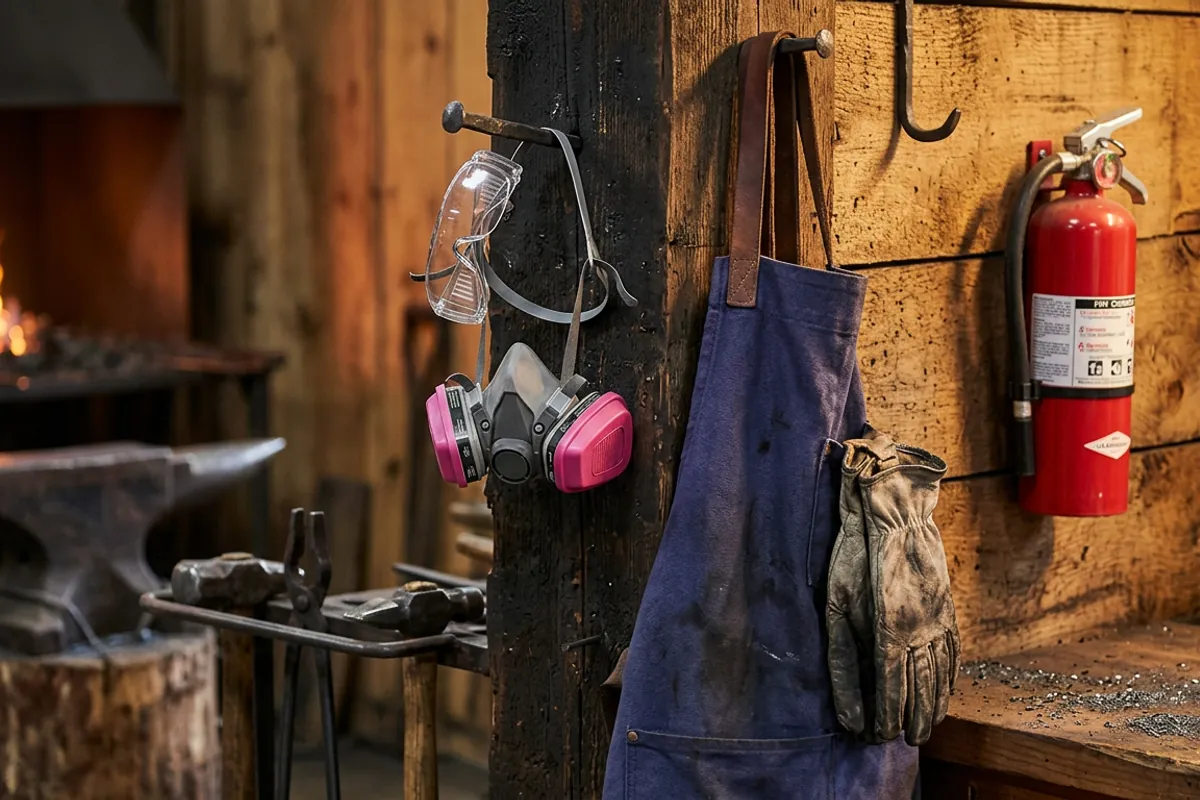
The lining is a respiratory hazard. Refractory ceramic fiber blanket sheds respirable fibers, and the US National Toxicology Program lists ceramic fibers of respirable size as reasonably anticipated to be a human carcinogen in its Report on Carcinogens profile; OSHA's synthetic mineral fibers health effects page covers the wider fiber family. Practical consequence: wear a proper respirator when you cut, fit, or tear out blanket, rigidize the blanket and coat it with a refractory so the surface is bound rather than loose, and do not run a forge with bare crumbling wool blowing out the door. The forums have argued this out at length in threads like Ceramic wool insulation, safety alert and Confused about rigidize, and the consensus lands where the toxicology does.
Carbon monoxide is the quiet one. A propane forge consumes oxygen and produces carbon monoxide, which you cannot see or smell. A forge belongs outdoors, or in a space with real cross ventilation and a working CO alarm, never in a closed garage with the door down because it is cold out. Cold is not a reason. Cold is how people get found.
Eye protection, every heat. Minimum is safety glasses rated to ANSI Z87.1, which is the standard printed on the frame or lens. Scale flies off hot steel at the anvil, and a grinder throws far worse.
Natural fibers only. Cotton, wool, leather. Synthetics melt onto skin instead of burning away, which turns a small burn into a graft. This and the rest of the kit are covered in Blacksmith safety gear: what matters and what to skip.
Treat the gas train like gas. Cylinder outside the shop and upright, hose routed away from the forge body and anything hot, connections leak checked with soapy water before every session, and a fire extinguisher within reach of where you stand, not across the shop.
What I would tell a friend
Buy the two burner with doors at both ends. The Simond Store double burner with two brick doors gets you there cheapest with published specs you can check, and the Hell's Forge MAX is the domestic option if that matters to you and your budget stretches. Buy the single burner only if the double is genuinely out of reach, and know you will want the longer chamber inside a year. Skip the Whisper Baby unless you already know you are in this for good, in which case it is the one you buy once.
Then stop shopping for the forge and start shopping for what actually holds you back, which is a hammer that fits your hand and an anvil with rebound. The forge just makes steel yellow. The anvil weight guide and the short list of tools that actually matter are where the rest of the money should go. My Bessie is a 148 pound Trenton and has outlasted three linings in my gas forge, which tells you where durability lives in this hobby.
And the note I would repeat if you only remember one thing: rigidize and coat the lining, wear the respirator when you handle blanket, put the forge where the air moves, and put ANSI Z87.1 glasses on your face before you light it.