Verified enough to write. Here's the article.
For most people starting out, the blacksmith forge I would put in a beginner's shop is a propane double burner in the Hell's Forge mold: fast to light, even in its heat, and big enough that you are not fighting the chamber every time you want to move a longer bar. That is the short version. The longer version is that the right forge depends on what you plan to make, whether you ever want to forge weld, and how much you want to fuss with fire. This guide walks the field of black smith forges I would actually point a weekend student toward, from a small single burner up to a coal firepot, and tells you where each one earns its keep.
One thing up front, because it is the whole basis of trust here. I run a coal forge and a propane forge in my own shop and have for years, so I can speak plainly about how each fuel behaves. But I have not bought and bench tested every model below. These picks lean on the makers' published specs, on what owners report across the forums, and on that general shop experience weighed against both. Where owner signal is thin, I say so. I am an experienced hobby smith, not a lab.
How I picked, and what these ratings are not
I care about three things in a first forge, in this order: does it get to working heat reliably, is the chamber a sane size for real work, and is it built so it will not fall apart or poison you in the first year. Brand marketing does not answer any of those. Published interior dimensions, burner count, and the maker's temperature rating do most of the work, and owner reports fill in the durability picture that no spec sheet will tell you.
What these are not: bench tests. I did not put a thermocouple in each chamber or run a weld heat in every one. If you want the deep decision between the two fuels before you spend a dollar, read my coal or propane forge breakdown first, then come back here for specific units. And if you are still deciding whether this hobby is for you at all, the plain owner-to-owner explanation of blacksmithing is the honest place to start. Everything below assumes you already know you want a forge.
The field at a glance
Only published figures here. Temperature ratings are the maker's stated numbers, not something I measured. "Rated" means the maker's claim for the lining or steel, not a promise your bar hits that temperature.
Scroll horizontally to see all columns.
| Forge | Fuel | Burners | Interior chamber | Max temp (maker) | Made in | Price tier |
|---|---|---|---|---|---|---|
| Simond Store single burner | Propane | 1 | 10 x 6 x 4.75 in | 2600 F rated | Import | Budget |
| Hell's Forge Portable double burner (HF2) | Propane | 2 | 19 x 6 x 4.75 in | 2300 F | USA | Mid |
| Hell's Forge MAX double burner | Propane | 2 | 19 x 6.75 x 3.5 in | 2300 F | USA | Premium |
| Simond Store coal firepot forge | Coal | n/a (10 x 12 in firepot, 4.5 in deep) | 2600 F rated | Import | Budget to mid |
Sources for those figures are the Hell's Forge USA double burner page, the Simond Store single burner category page, and the Simond Store coal forge product page. Where a maker does not publish a number, I leave it out rather than guess.
Simond Store single burner propane forge
This is the smallest sensible entry point in propane, and it suits one kind of smith very well: someone making small stuff. Knives, hooks, bottle openers, small tooling. The maker publishes an interior of 10 by 6 by 4.75 inches, a single burner, a 1 inch ceramic fiber blanket lining, a mild steel body with a stainless burner nozzle, and a 2600 F rating on the lining. That chamber is genuinely small, which is the point. A small chamber with one burner comes up to heat fast and sips propane, because you are not paying gas to heat empty space.
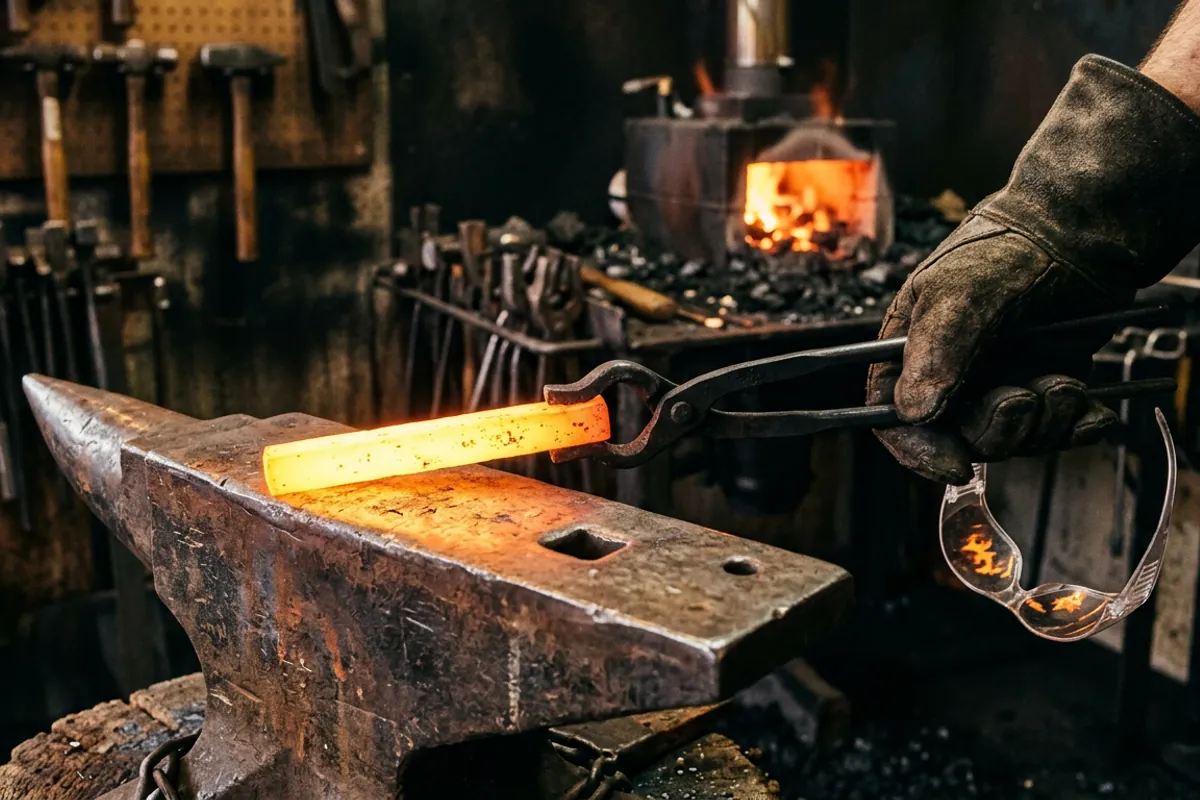
The tradeoff is exactly what the size implies. You will not fit a long bar through it comfortably, and forge welding in a single burner is possible but less forgiving because you have less heat in reserve. A mild steel body will also scale and discolor over time in a way a heavier build resists. For a first forge whose whole job is teaching you to move small stock, that is an honest budget tool, not a compromise you will regret in a month. Just know you may outgrow the chamber before you outgrow the hobby.
Check price on Amazon (paid link)
Hell's Forge portable double burner
This is the one I would hand most beginners. The maker publishes a 19 by 6 by 4.75 inch interior, two burners you can run together or one at a time, a 1 inch ceramic fiber blanket, a 2300 F rating, a high pressure regulator with a 48 inch hose rated to 20 PSI, and USA construction. The long, narrow oval chamber is the practical difference from the single burner: you can pass a longer bar clean through, heat a middle section for a bend, and shut one burner off to save gas when you are working small. That flexibility is worth real money to a new smith who does not yet know what they will end up making.
Made in the USA is not a patriotism argument, it is a parts and support argument. When a burner needs a jet or a regulator wears out, a domestic maker is easier to get parts from than an anonymous import. The honest caveat is that 2300 F is the maker's number, and hitting reliable forge welding heat in any gas forge depends as much on your lining, your coating, and your propane pressure on a cold day as it does on the sticker. For general forging it has ample heat. This is the sensible middle of the field, and for most home shops it is where I would stop shopping.
Check price on Amazon (paid link)
Hell's Forge MAX double burner
The MAX is the same family built heavier. The maker publishes a 19 by 6.75 by 3.5 inch interior, two burners, an 11 gauge steel body, a 1 inch high density ceramic fiber blanket reinforced with two firebricks, an upgraded 0 to 30 PSI regulator, and the same 2300 F rating with more capacity to hold it. The heavier gauge steel and the firebrick floor are the reasons to step up: a firebrick floor takes flux abuse during forge welding far better than bare blanket, and the beefier body warps less over years of heat cycling.
If you already know forge welding is on your near horizon, or you want a forge that will still be square in ten years, the MAX is the one to reach for. If you are not sure you will stick with the hobby, it is more forge than you need on day one, and there is no shame in the lighter double burner above until you have proven to yourself you are in this. Premium here means built to last, not built to do something the mid tier cannot.
Check price on Amazon (paid link)
Simond Store coal firepot forge
Everything above is propane. Coal is a different animal, and it is the fuel I reach for on heavy stock and serious forge welding, because you can build a deep, concentrated fire and bury a weld heat in it in a way a gas chamber does not match. The Simond Store firepot forge publishes a 10 by 12 inch firepot at 4.5 inches deep, welded from half inch steel plate, with a 2600 F rating. A firepot like this is a kit, not an appliance: you build or buy a table for it, you add a blower, and you learn to manage a coal fire, which is a skill of its own.
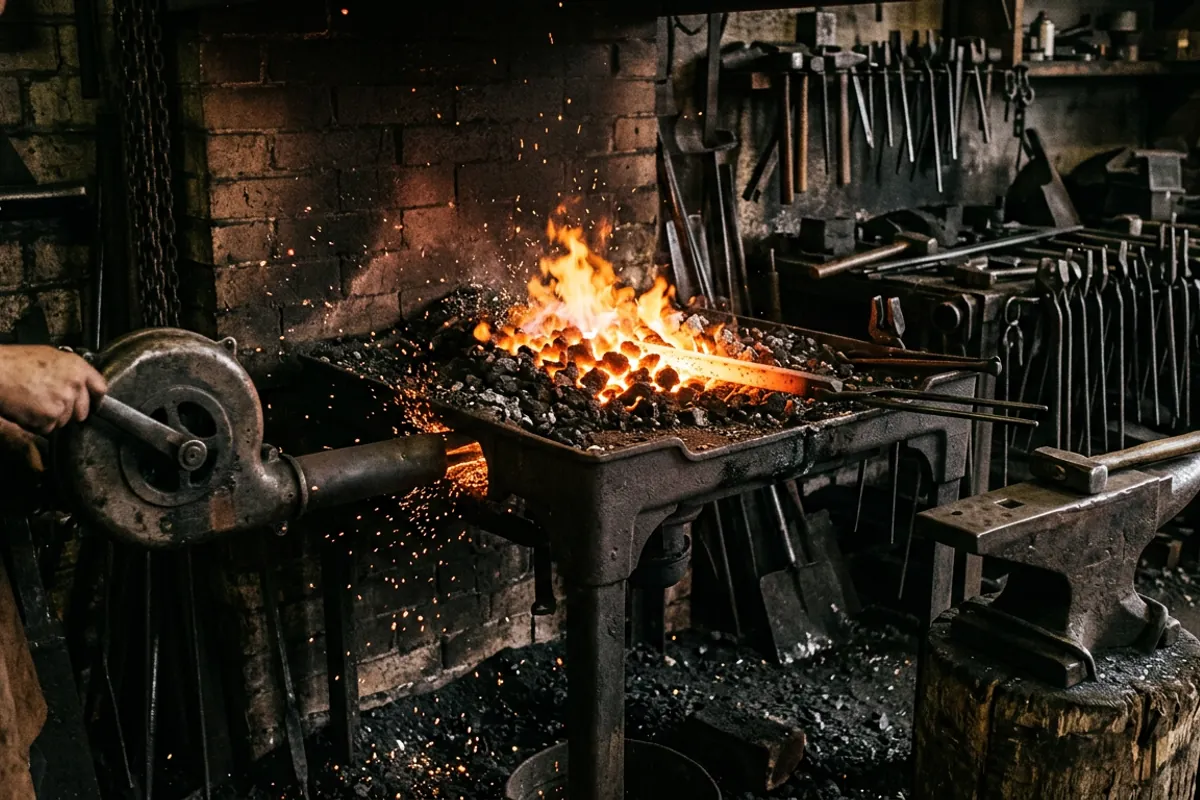
I will be blunt about who this is for. Coal is dirtier, needs real ventilation or outdoor use, and has a genuine learning curve on fire management that propane spares you. But if you want to forge weld regularly, work stock thicker than about an inch, or you just prefer the fire, a solid welded firepot is the foundation to build a coal forge around. Read the coal versus propane guide before you commit, because this choice shapes your shop more than any other forge decision.
Check price on Amazon (paid link)
What owners say about these forges
Here is where I stay honest about the difference between what I know and what I am relaying. The single strongest, best documented owner consensus across the forums is not about any one of these brands. It is about the ceramic fiber lining that most gas forges ship with, and it is a safety matter, so I put it first. On I Forge Iron, the long running threads on rigidizer and forge lining come back to the same point again and again: raw ceramic wool sheds fine fibers that you should not breathe, and the fix is to rigidize and coat the blanket rather than run it bare. See the I Forge Iron thread on ceramic wool and rigidizer and the parallel Home Shop Machinist thread on whether ceramic wool is safe. Take that consensus seriously regardless of which forge you buy.
On the specific products, the owner signal is thinner and I will not dress it up. Hell's Forge is widely owned and the general sentiment reflects its USA build and parts support: people keep them running for years and can get regulators and burner parts. The import single burner and the coal firepot draw the pattern you would expect from budget import gear, with occasional reports of fit and finish issues and the odd regulator you replace early. I am summarizing general forum sentiment there, not pointing you to a single definitive model review thread, because an honest read is that model-specific consensus on the budget units is limited. If a claim matters to your purchase, verify it against current threads yourself before you spend.
The safety work no forge ships ready to do
No forge in this guide arrives safe to run out of the box, and that is not a knock on any of them, it is the nature of the tool. Two jobs are on you.
First, the lining. If your gas forge has a bare ceramic fiber blanket, rigidize it and coat it before you run it hard, per the owner consensus above. Breathing that fiber is a real hazard, not a hypothetical one, and it is cheap to prevent.
Second, ventilation and your own gear. Any fuel-burning forge produces carbon monoxide. Run it outdoors or with real cross ventilation, never in a closed garage, and treat a CO alarm in the shop as basic equipment. On your body, wear ANSI Z87.1 rated eye protection any time you are at heat or at the grinder, and keep to natural fibers like cotton, wool, or leather near the fire. I learned the synthetic lesson the ugly way, standing too close to a quench that flared, and I kept my eyesight on luck alone. Do not run on luck. My full rundown of what protects you and what is a waste of money is in the blacksmith safety gear guide, and it pairs with these forges more than any accessory does.
What I would tell a friend
If you called me tonight and asked which one to buy, here is the whole answer. Get the Hell's Forge portable double burner. The long chamber, two burners, and USA parts support cover almost everything a new smith actually does, and it will not box you in the way the single burner might. Step up to the MAX only if you already know forge welding is coming soon or you want the heavier build to outlast you. Take the single burner if your budget is tight and you know for certain you are making small things. And reach for the coal firepot only if you genuinely want to run coal, understand it needs ventilation and a table and a blower, and are ready for the fire management that comes with it.
The one to be careful with is not a specific product, it is skipping the lining and ventilation work. A cheap forge run safely beats an expensive one run in a closed garage over bare fiber, every time. Buy within your budget, do the safety setup before the first real heat, and get to the anvil. If you still need that anvil, my beginner anvil picks are the natural next stop, and everything forge related lives on the forges topic hub.